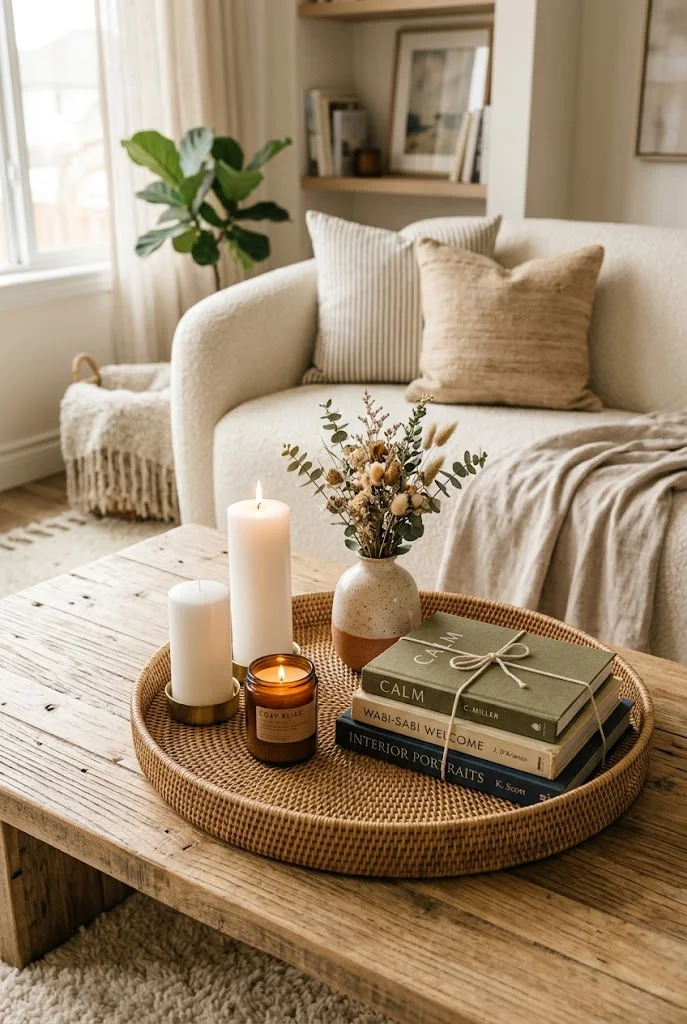
10 Tray Decor Ideas: How to Style a Tray Like a Professional
A styled tray is one of the smallest design moves that makes the biggest visual difference in a room — it takes a scatter of small objects (remotes, candles, coasters) and turns them into an intentional display in about five minutes. Below are 10 tray decor ideas, each with the actual styling logic behind why it works, plus the sizing and grouping rules that apply no matter which surface you’re styling.
The Core Styling Rules
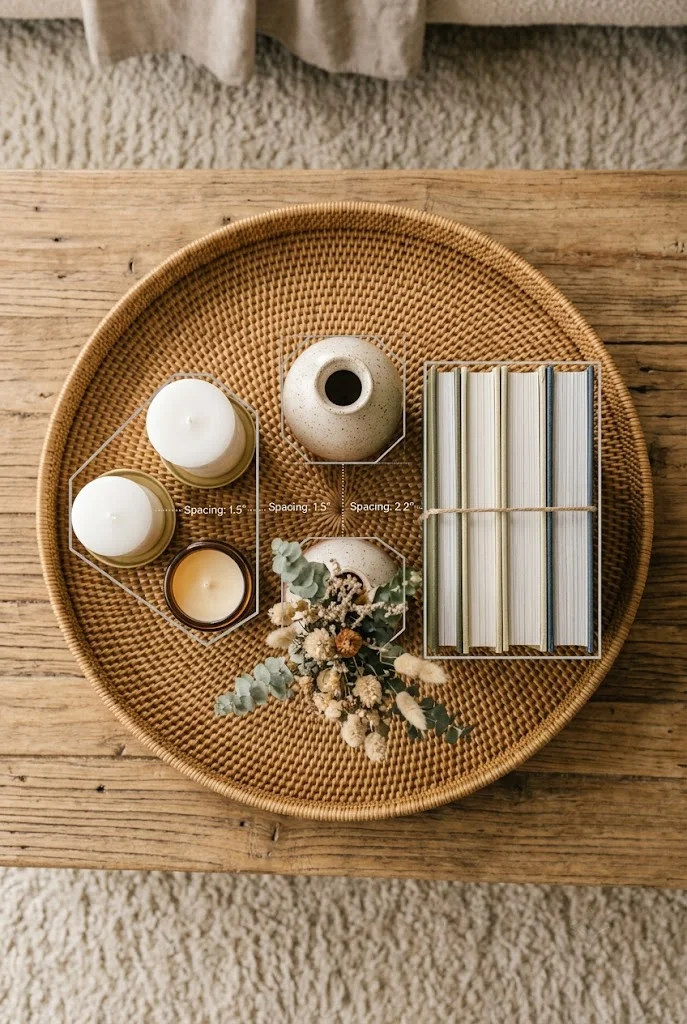
Tray size to surface ratio: A tray should take up roughly one-third to one-half of the surface it sits on (coffee table, ottoman, console). Too small and it looks lost; too large and it leaves no room for anything else on the surface.
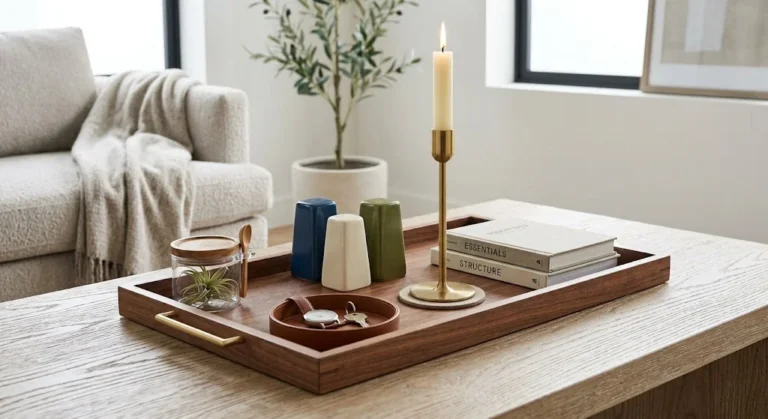
The rule of three: Group 2-4 items on a tray, varying in height, with an odd number typically reading as more natural than an even one. A tray with a single tall object, one mid-height piece, and one low, wider item creates the most visually balanced composition.
Leave breathing room: A tray packed edge-to-edge with objects reads as cluttered regardless of how nice the individual items are. I’d aim to leave roughly 20-30% of the tray’s surface visibly empty.
1. Coffee Table Candle Tray
A cluster of 2-3 candles in varying heights, grouped on a tray at the center or off-center of a coffee table, is one of the most straightforward styling wins available — it works with almost any decor style and takes minutes to assemble.
I’d vary candle holder materials slightly (a matte ceramic next to a glass hurricane) rather than using a fully matched set, which reads as more curated than a uniform trio.
2. Bar Cart or Bar Tray Styling

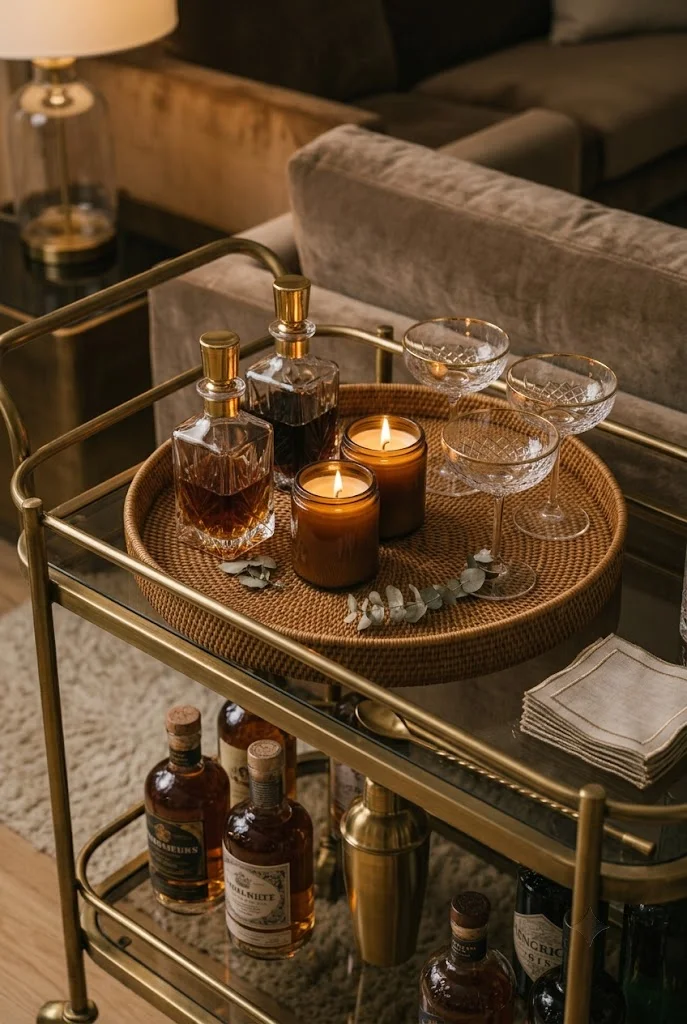
A tray on a bar cart or console corrals bottles and glassware into one defined zone rather than letting them spread across the whole surface, and it makes the whole setup look considered rather than accidental.
I’d choose a tray with a slight lip or edge specifically for this use, since it helps prevent glassware from sliding when the cart is moved.
3. Ottoman Tray for Function and Style
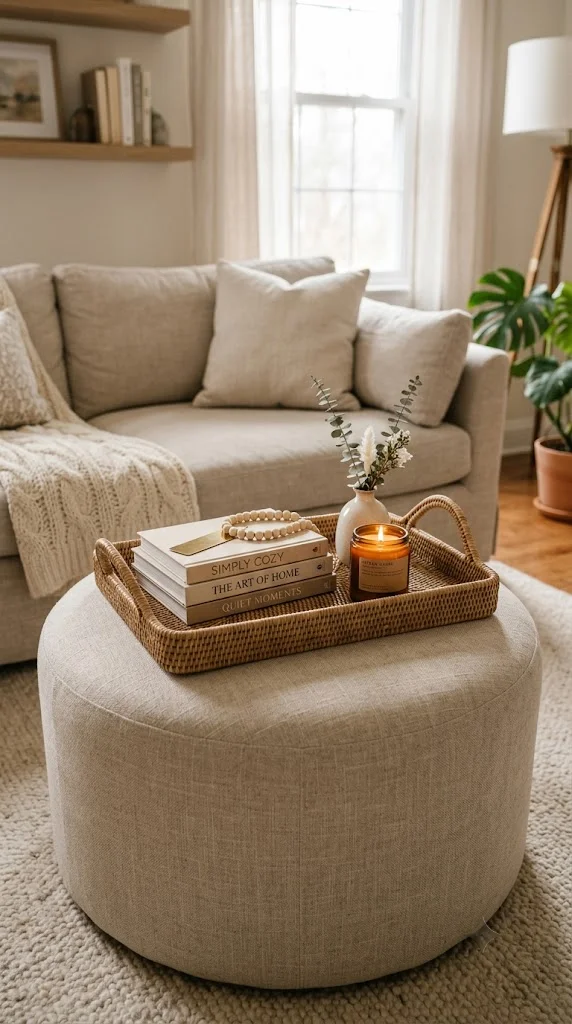
An ottoman used as a coffee table benefits enormously from a tray on top — it gives you a flat, stable surface for drinks or a book while still preserving the ottoman’s softer, upholstered look underneath.
I’d choose a tray with handles specifically for this application, since it needs to be lifted off before using the ottoman for its other function (seating or a footrest) and handles make that genuinely easier.
4. Vanity or Dresser Tray
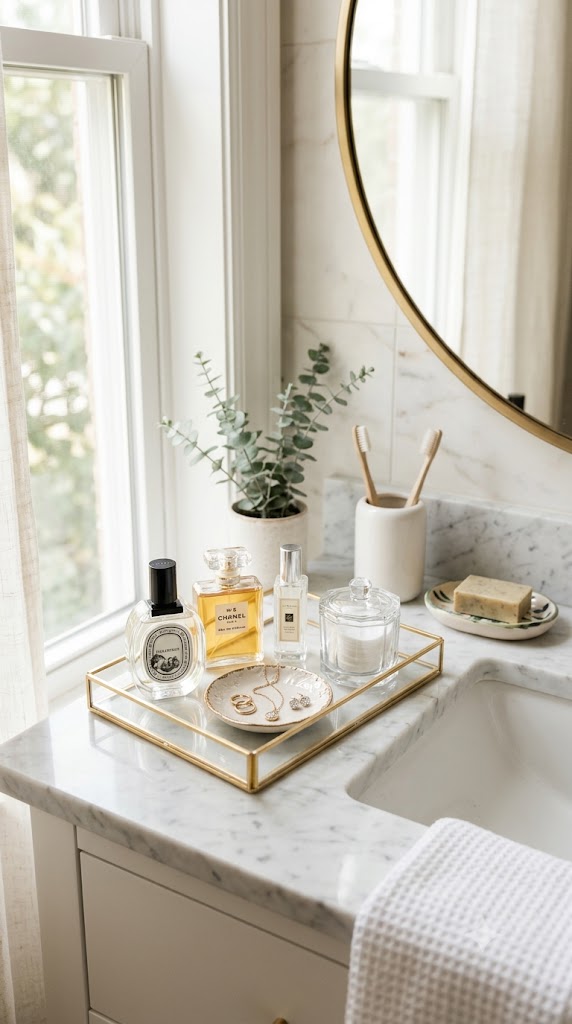
A tray on a bathroom vanity or bedroom dresser contains perfume bottles, jewelry, or skincare items that would otherwise spread across the surface, and it makes daily cleanup faster since you’re wiping down one contained area rather than the whole surface.
I’d choose a smaller tray here (8-12 inches) proportional to a vanity’s typically limited space, and prioritize a material that won’t stain from perfume or product spills — glass or metal over unsealed wood.
5. Kitchen Counter Utility Tray
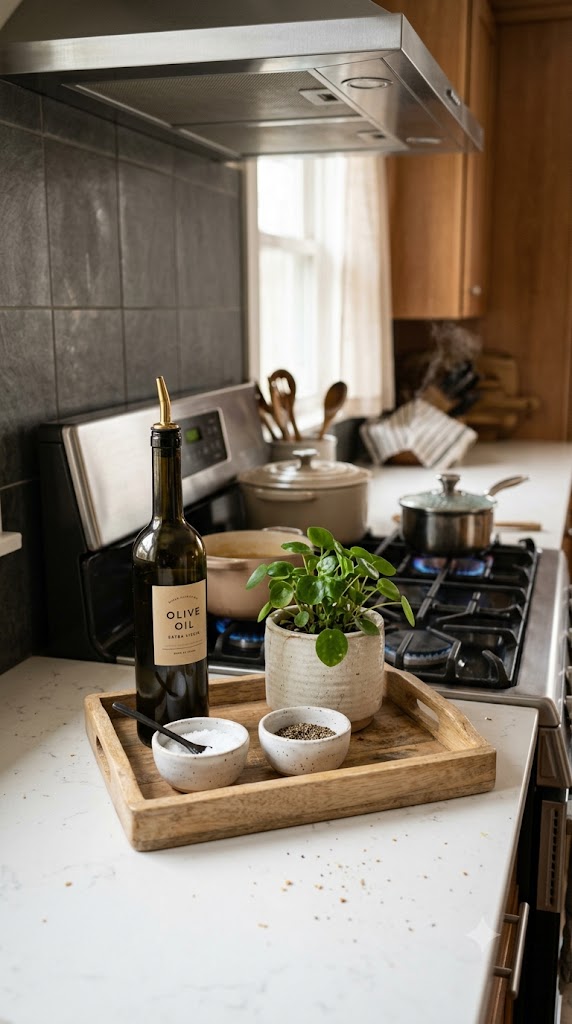
Grouping everyday items — olive oil, salt and pepper, a small plant — on a tray near the stove keeps frequently used items accessible while visually containing them, rather than letting bottles and jars spread across the whole counter.
I’d choose a material that can handle occasional spills and heat exposure near a stove specifically — metal or a sealed wood tray holds up better here than an unsealed or delicate finish.
6. Layered Book-and-Tray Styling
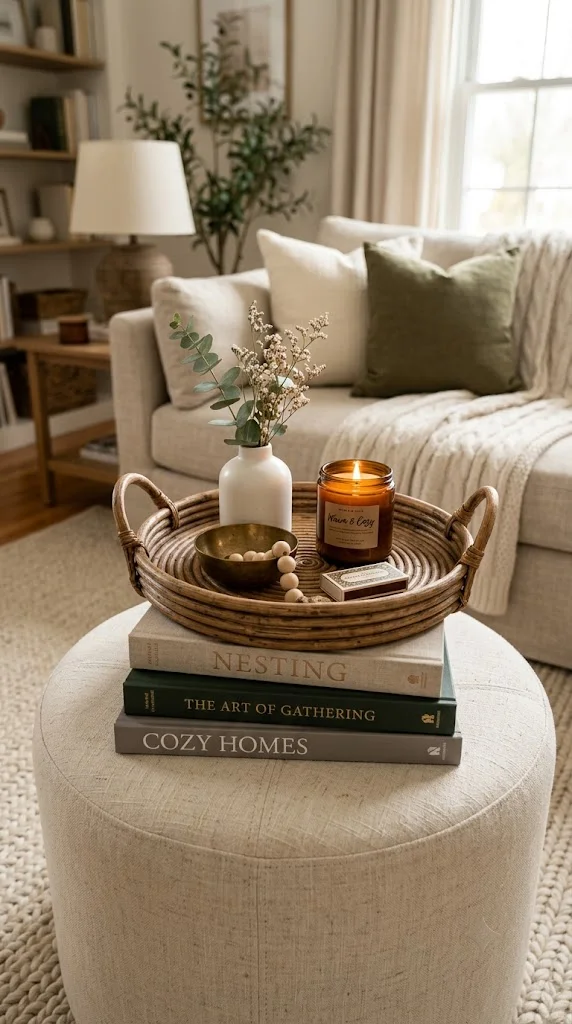
Placing a tray partially on top of a stack of coffee table books, rather than directly on the bare table surface, adds height variation and makes the whole coffee table vignette read as more intentionally layered.
I’d choose books with a cohesive cover color or spine tone for this application, since a tray sitting on mismatched, colorful book spines can look busier than the styling intends.
7. Bedside Table Nightly Essentials Tray
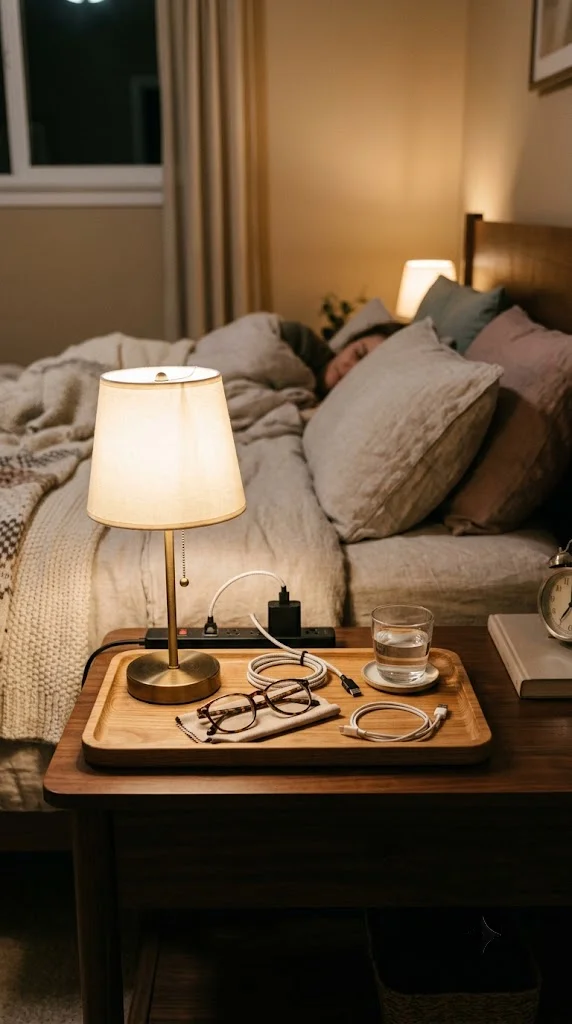
A small tray on a nightstand contains a lamp base area, a phone charger, glasses, or a book, keeping the nightstand surface visually tidy even with several functional items in daily rotation.
I’d choose a tray with slightly raised edges here specifically, since it helps keep smaller items (rings, earbuds) from sliding off during the night.
8. Entryway Catch-All Tray
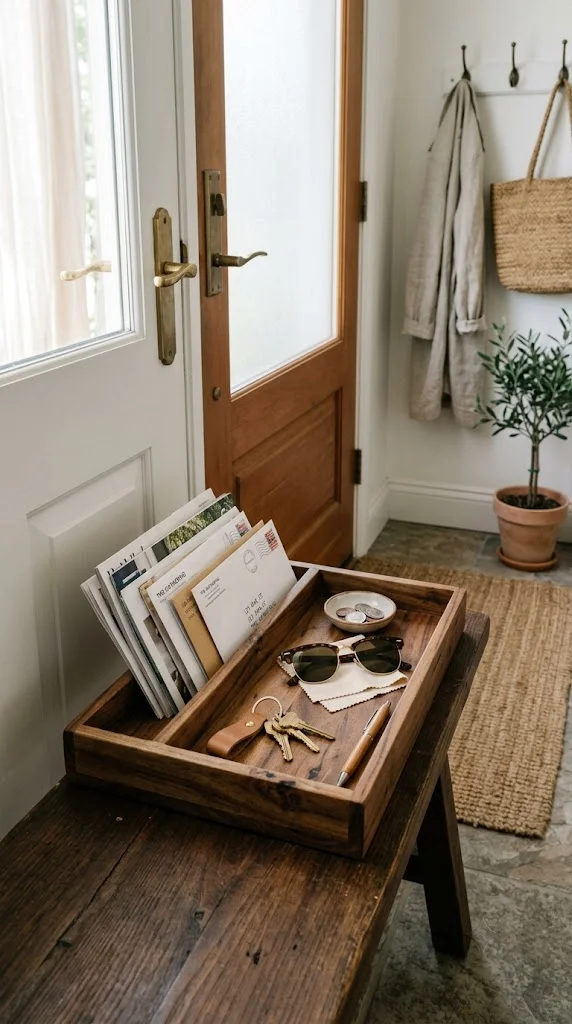
A tray by the front door for keys, mail, or sunglasses solves the common “stuff pile” problem most entryways develop, giving daily clutter one consistent, contained home.
I’d choose a deeper tray with some genuine depth (1-2 inches) for this specific use, since it needs to actually catch and hold small items rather than just display them decoratively.
9. Round Tray for a Round Coffee Table
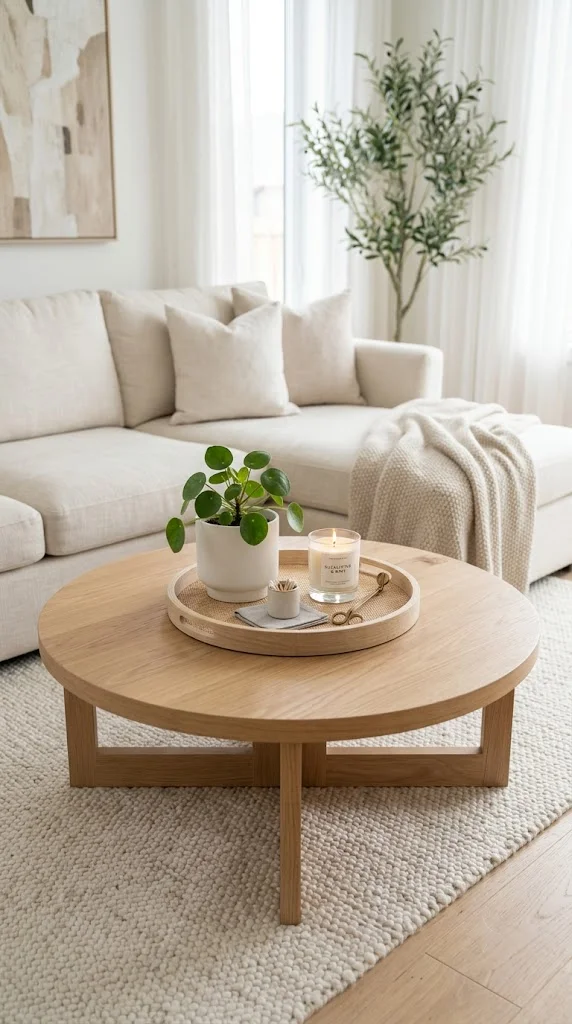
Matching a tray’s shape to the table beneath it — round tray on a round table, rectangular on a rectangular table — creates a more cohesive, intentional look than a mismatched shape, which can look like an afterthought addition.
I’d size a round tray to leave at least 4-6 inches of table surface visible around its edge, so the tray reads as a deliberate layer rather than covering the table’s shape entirely.
10. Multi-Tray Layered Display
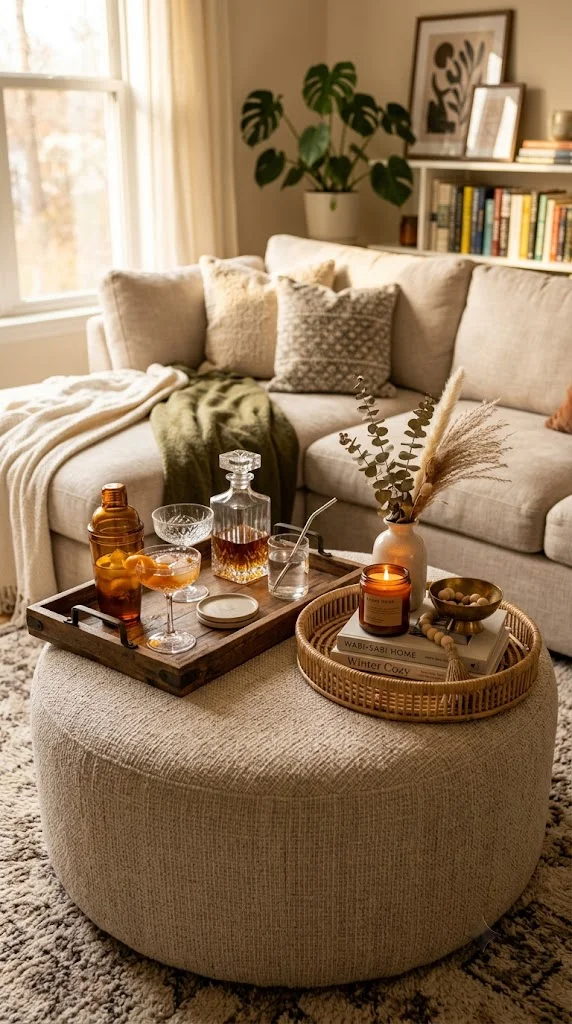
Using two trays of different sizes, one slightly overlapping the other, on a large ottoman or console creates more visual depth than a single tray alone, and allows you to separate item types (drinks on one, decor on the other) functionally as well as visually.
I’d choose two trays in a complementary but not identical material or finish for this approach — same finish but different shape, or same shape but different material — to keep the pairing looking intentional rather than mismatched.
Budget tier: mid ($40-100 for two trays.)
My Professional Guide to Styling Any Tray
I always start with the tray’s function before its styling — is this actually catching daily-use items (keys, remotes), or is it purely decorative (candles, a small plant)? A tray trying to do both often does neither well, so I’d pick a primary purpose and let the styling support that.
From there, I apply the same height-variation principle used in shelf styling: one taller anchor item, one or two mid-height pieces, and something low and horizontal (a small dish, a folded item) to keep the eye moving across the tray rather than landing on one flat plane.
Finally, I’d resist the urge to fill every tray to capacity. The empty space on a well-styled tray is doing as much visual work as the objects themselves — it’s what separates “styled” from “used storage surface.”
Conclusion
A styled tray is one of the fastest, lowest-cost ways to make a room feel more intentional — corralling everyday items into a defined, visually balanced grouping rather than letting them spread across a surface. Match the tray’s size to its surface, apply the rule of three when grouping objects, and leave genuine breathing room, and almost any tray placement on this list will read as considered rather than accidental.
Frequently Asked Questions
What size tray should I use on a coffee table?
Roughly one-third to one-half the width of the table surface — large enough to anchor a grouping of objects, small enough to leave visible table surface around it.
How many items should go on a decorative tray?
2-4 items is the general sweet spot, varying in height, with odd numbers typically reading as more natural and balanced than even ones.
What material tray is best for a kitchen or bar cart?
Metal or sealed wood holds up best against spills and occasional heat exposure, compared to unsealed wood or delicate finishes.
Should a tray’s shape match the table underneath it?
It’s not required, but a matching shape (round on round, rectangular on rectangular) tends to look more intentional than a mismatched pairing.