25 Small Bedroom Ideas 2026
25 Small Bedroom Ideas 2026: Furniture, Storage & Layout Tips That Actually Work
I’ve lived in more than one apartment where the bedroom barely fit a bed, let alone a “cozy retreat.” Over time, I learned that a small bedroom doesn’t need more square footage to feel calm and put-together — it just needs the right furniture choices, smart storage, and a few visual tricks that trick the eye into seeing more space than there actually is. Below, I’m sharing 25 ideas I personally recommend, based on what actually works in real small bedrooms, not just what looks good in a showroom.
Space-Saving Furniture
1. Bed with Built-In Storage
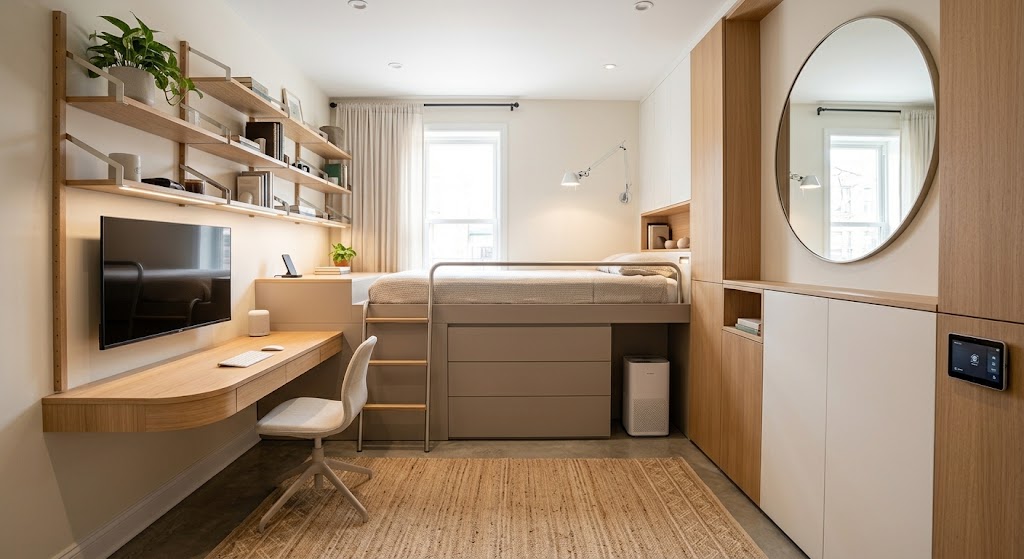
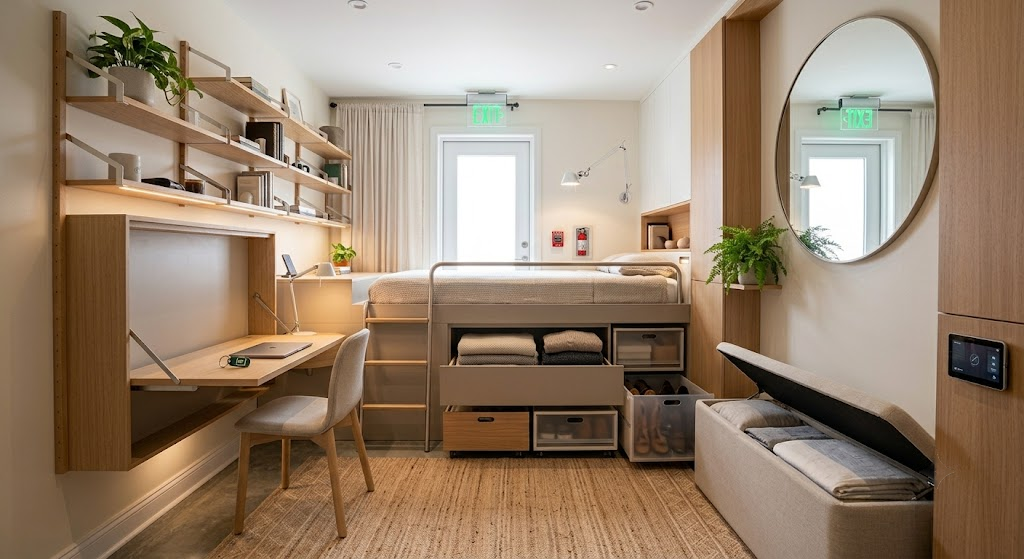
I always tell people this is the single highest-impact swap you can make in a small bedroom. A bed frame with drawers built into the base turns dead space — space you’re already using for nothing but dust — into a home for extra bedding, off-season clothes, or bulky items you don’t need daily.
I like this option because it doesn’t require you to buy or find room for a separate dresser or storage bin. The storage is already built into furniture you need anyway.
If your current frame doesn’t have drawers, you don’t need to replace it. Under-bed storage with wheels slides in and out just as easily, and it’s a much cheaper fix.
My tip: measure the clearance under your existing bed before buying anything — most standard frames leave just enough room for a slim rolling drawer.
2. Wall-Mounted Nightstands
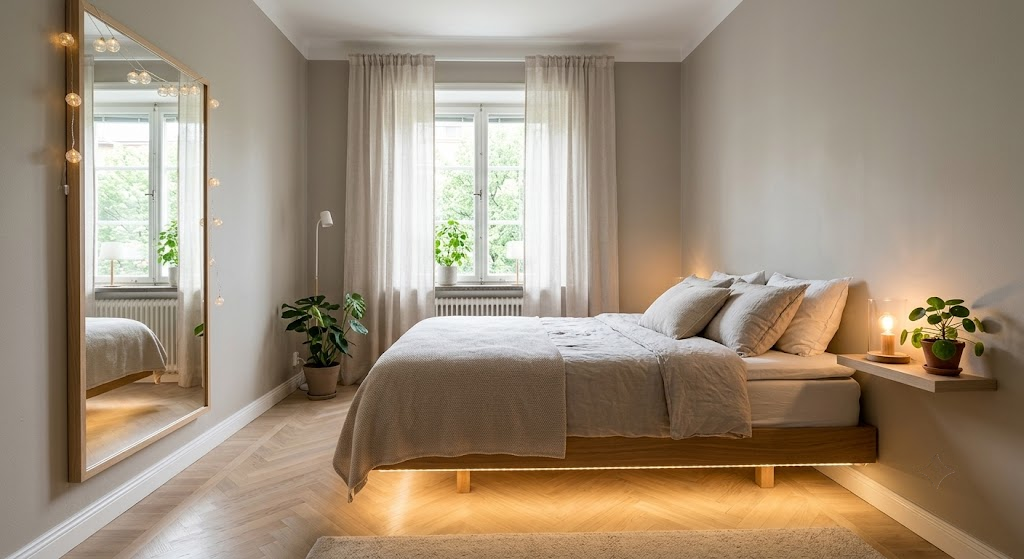
I’m a big believer in floating nightstands for tight bedrooms. They free up the floor completely, which matters more than people expect — a small patch of visible floor next to the bed makes the whole room read as more open.
You still get a functional surface for a lamp, a book, or your phone charger, which is really all a nightstand needs to do.
The trade-off is usually storage. I’d recommend picking a floating nightstand that includes a small drawer, so you don’t lose the “junk drawer” function in the process.
Installation is simple enough for most people to do themselves with basic wall anchors, though I’d always recommend checking wall type first if you’re in an older building.
3. Murphy Bed or Wall Bed
This is the one I recommend when a bedroom needs to double as something else — a home office, a workout space, a guest room. A murphy bed folds up into the wall during the day, and suddenly you have your entire floor back.
I know it sounds like a big investment, but I’ve seen budget versions that mount onto an existing wall without major construction, especially in newer product lines designed for apartments.
Pairing it with fold-down desks or wall-mounted shelving turns the room into something genuinely multi-purpose, not just a bedroom pretending to be an office for a few hours a day.
If you go this route, I’d plan the whole wall around it from the start, rather than adding pieces one at a time — it keeps the transformation from day-mode to night-mode much smoother.
4. Bench at the Foot of the Bed
I love a slim storage bench here because it does three things at once: it adds a place to sit while you get dressed, it gives you extra hidden storage, and it visually “finishes” the foot of the bed instead of leaving it bare.
The key is choosing one that’s genuinely slim — I’d stay under 16 inches deep for a small room, so it doesn’t eat into your walking path.
Storage benches with a lift-up lid are my personal favorite, since they hide bulkier items like extra pillows or seasonal linens without adding a second piece of furniture to the room.
5. Slim Wardrobe or Armoire
If your closet space is limited or nonexistent, I’d look at a narrow freestanding wardrobe before anything else. These are built to slot into corners or against a single wall, and they add real hanging space without a full closet renovation.
I recommend measuring your available wall space carefully first — even 24-28 inches of width is usually enough for a slim single-door wardrobe.
This is also one of the better options for renters, since it’s fully movable if you relocate.
Vertical & Wall Storage

6. Floating Shelves Above the Bed
The wall above your headboard is one of the most underused spaces in a bedroom, and I always point people here first. A row of floating shelves gives you a spot for books, plants, or décor without touching your floor space at all.
I’d keep the items on these shelves intentionally light and secured, simply because of where they’re positioned — directly above where you sleep.
Styled well, this can also double as your headboard, which saves you from buying one at all.
7. Over-the-Door Shoe Organizer
I know this one sounds obvious, but I don’t think enough people use it outside of actual shoes. A clear over-the-door organizer works just as well for accessories, skincare products, or folded small clothing items, and it clears your dresser top almost instantly.
8. Corner Shelving Units
Corners are, in my experience, the most consistently wasted space in any small bedroom. A corner shelf unit adds real storage and display space while staying completely out of the way of furniture placement or foot traffic.
9. Under-Bed Storage Bins
If your bed frame doesn’t already have drawers, slim rolling bins are the easiest retrofit. I’d use these specifically for off-season clothing or extra linens — things you need access to, but not daily.
10. Hooks Behind the Door
This is a small one, but I use it constantly — a row of hooks on the back of the bedroom door gives you a spot for a robe, a bag, or tomorrow’s outfit, without adding a single piece of furniture.
Light & Mirrors
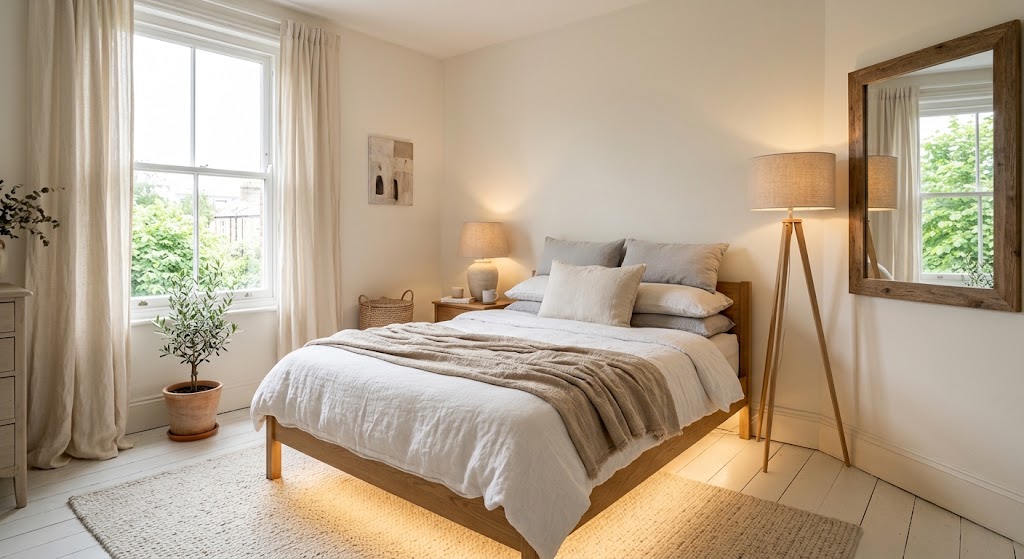
11. Mirror Facing the Window
I recommend this in almost every small room I help plan. A mirror placed to reflect the window doubles the natural light bouncing around the space and makes the whole room feel noticeably airier, especially in the morning.
12. Light, Airy Curtains
Heavy, dark drapes are one of the most common mistakes I see in small bedrooms — they visually box the room in. I’d switch to light linen or sheer curtains, which let in more light while still giving you privacy at night.
My tip: hang the curtain rod higher than the window frame itself — it’s a simple trick that makes the ceiling read as taller than it is.
13. Layered Lamp Lighting
I never rely on a single overhead fixture in a small room. A bedside lamp, a floor lamp, and maybe a small string of lights together create a softer, cozier glow, and — counterintuitively — make the room feel larger at night than one harsh overhead light does.
14. Under-Bed LED Lighting
This is a smaller detail, but soft LED strips under the bed frame create a subtle floating effect. It’s a small trick, but it genuinely makes the bed — and by extension the room — feel lighter.
Color & Visual Tricks
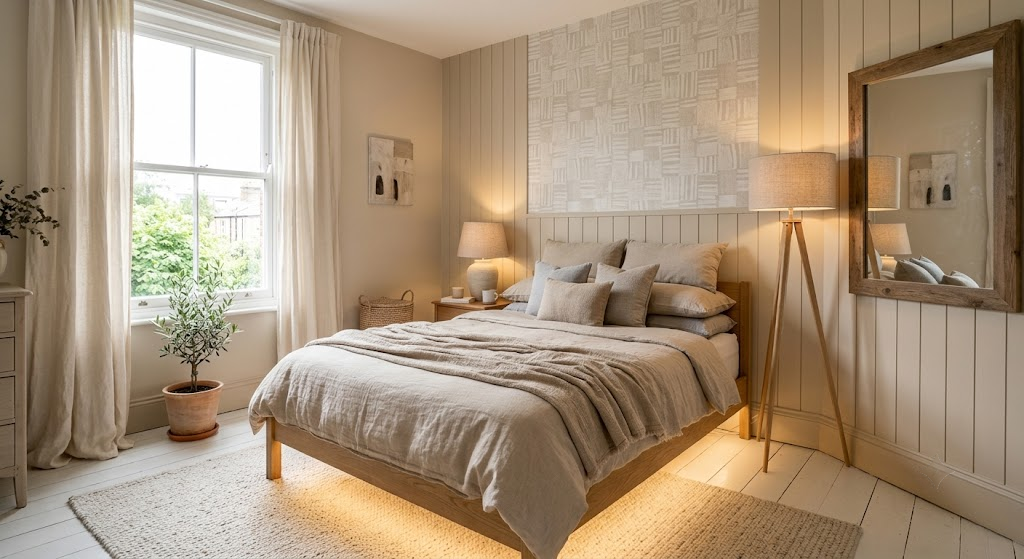
15. Monochromatic Bedding & Walls
I’d keep your walls and bedding in the same soft color family wherever possible. It removes visual “breaks” in the room and creates one seamless, open-feeling space instead of several competing zones.
16. Light Neutral Wall Colors
Soft whites, warm beige, and pale gray all do the same job — they make the walls feel like they recede, which is exactly the illusion you want in a small room.
17. Vertical Paneling or Wainscoting
I like adding vertical wood paneling to part of the wall, upper or lower, because it draws the eye upward and makes the ceiling read as higher than it actually is.
18. One Statement Wall
If you want more personality in the room, I’d contain it to one wall — bold wallpaper or a saturated color — and keep everything else light and neutral around it.
DIY & Budget Ideas
19. DIY Headboard
A fabric-wrapped plywood headboard, or even a few large floating shelves used as a headboard alternative, adds real style without the cost of upgrading your whole bed frame.
20. Repurpose a Ladder as a Blanket Rack
I genuinely think this is one of the most stylish budget hacks out there. An old wooden ladder leaned against the wall becomes a functional, good-looking spot to display extra blankets or throws.
21. Command Strip Wall Art
For renters especially, command strips let you decorate freely — framed art, tapestries, even light shelving — without a single nail hole to patch when you move out.
22. Thrifted Dresser Makeover
A secondhand dresser with a fresh coat of paint and new hardware can look completely custom for a fraction of what a new piece would cost.
Layout Tips
23. Float the Bed Away From the Wall (If Space Allows)
If your room is wide enough, I’d pull the bed even a few inches away from the wall. It sounds minor, but it makes the layout read as intentional rather than cramped into a corner.
24. Use a Rug to Anchor the Space
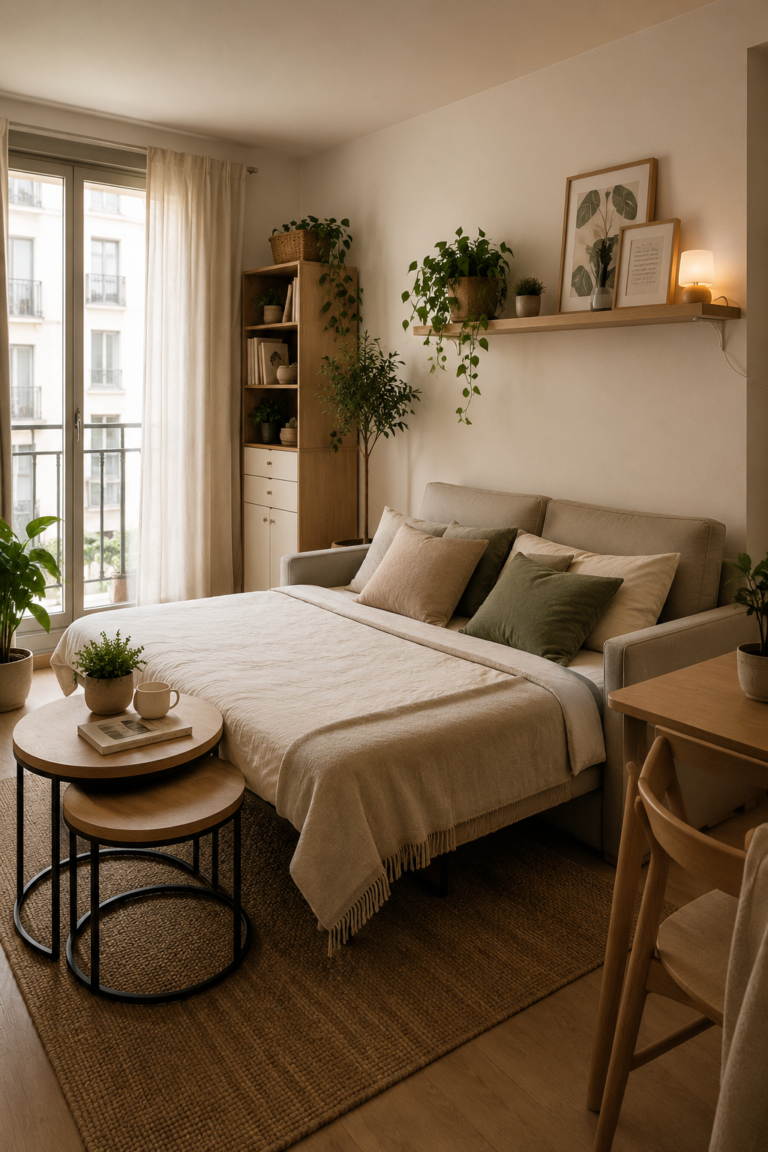
A rug under and around the bed adds warmth and visually defines the sleeping area — especially useful in studio layouts where the “bedroom” isn’t a separate room at all.
25. Keep Nightstands Proportional
I’d avoid oversized nightstands in a small room. They can overwhelm the space fast. Slim, proportional pieces that match the scale of the room will always look more intentional than standard full-size furniture crammed into a tight footprint.
My Professional Guide to Arranging a Small Bedroom
Beyond individual furniture pieces, the way you arrange a small bedroom matters just as much as what’s in it. I always start with the bed — it’s the largest piece, so its placement dictates everything else. Where possible, I keep at least one clear walking path from the door to the bed and closet, since a room that requires you to squeeze past furniture will always feel smaller than it is, regardless of how it’s decorated.
Next, I think about sightlines. Standing in the doorway, your eye should land on something intentional — a headboard, a mirror, a plant — not a wall of clutter. This is why storage that “disappears” (under-bed drawers, wall-mounted pieces, closed cabinets) tends to outperform open shelving in very small rooms, even though open shelving looks great in larger spaces.
Finally, I’d resist the urge to fill every wall. One or two focal points — a statement wall, a well-styled shelf — read as designed. A room where every surface has something on it reads as cluttered, even if each individual item is nice on its own.
Conclusion
A small bedroom is one of the easier rooms to transform, mainly because the fixes are so specific: reclaim vertical space, choose furniture that pulls double duty, and use light and color to do the visual heavy lifting. You don’t need a renovation budget to make a small bedroom feel calm and spacious — you need a handful of the right choices, made intentionally.
Frequently Asked Questions
How can I make my small bedroom feel bigger?
Use light, neutral colors, add mirrors to reflect natural light, and choose furniture with built-in storage so you don’t need extra pieces taking up floor space. Vertical storage like floating shelves also helps keep the floor clear.
What is the best bed size for a small bedroom?
A full or queen bed usually works well in most small bedrooms, but if space is very tight, a bed with built-in storage drawers helps you make the most of the footprint you do have.
How do I add storage to a small bedroom without a closet?
A slim freestanding wardrobe, under-bed storage bins, and wall-mounted hooks or shelves can replace most of what a closet would normally provide.
What colors make a small bedroom look bigger?
Soft neutrals like white, pale gray, beige, and light sage make walls feel like they recede, creating the illusion of more space.
Related Posts
- 25 Small Apartment Living Room Ideas 2026
- 25 Small Kitchen Ideas 2026
- 25 Small Bathroom Ideas 2026
Follow us on Pinterest for more small space bedroom inspiration!