Shelf Decor Ideas: 12 Ways to Style Shelves Like a Profession
I’ve styled more shelves than I can count, and the biggest thing I’ve learned is that good shelf decor isn’t really about the objects themselves — it’s about spacing, balance, and a few repeatable principles that make almost any collection of items look intentional. Below are 12 shelf decor styles, each with the actual technique behind why it works, not just what it looks like.
Foundational Styling Principles (Before You Start)
1. The Rule of Three
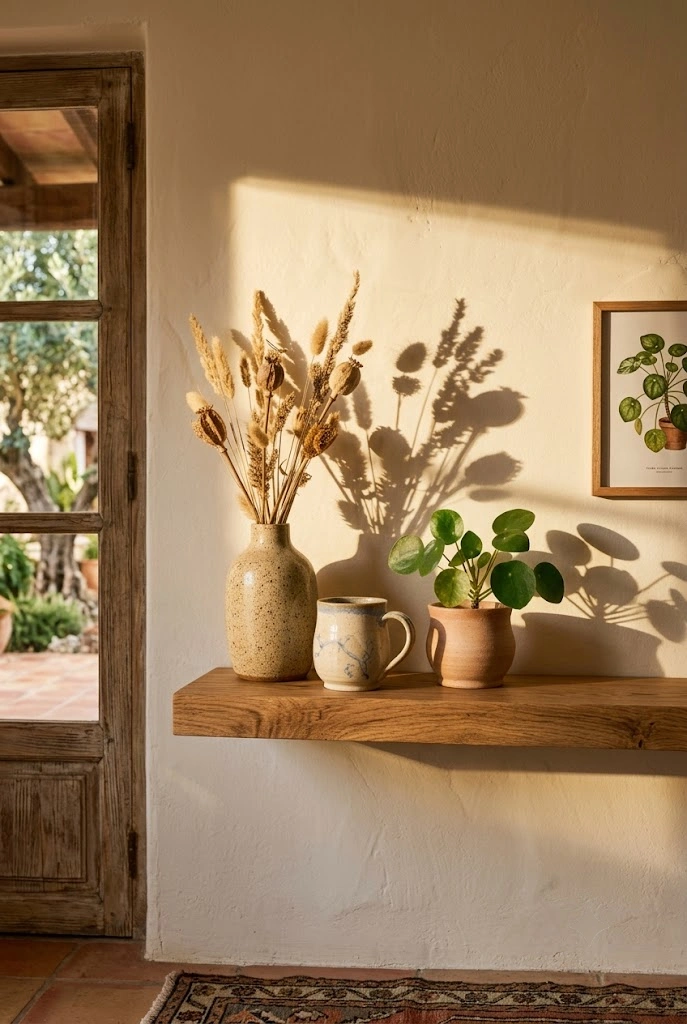
Grouping objects in odd numbers — especially threes — is one of the most consistently effective styling techniques there is. Odd-numbered groupings read as more natural and intentional than pairs, which the eye tends to perceive as too symmetrical and static.
I’d apply this at every scale: three objects per cluster, three clusters per shelf, varying in height, width, or visual weight within each group so nothing feels evenly matched.
2. Vary Height, Not Just Objects
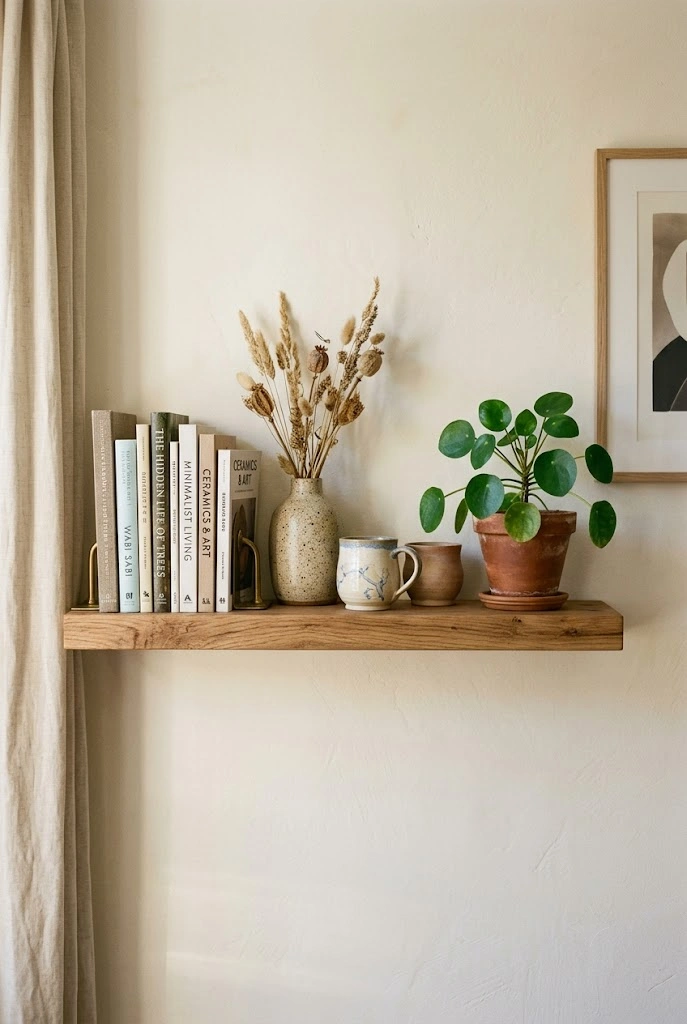
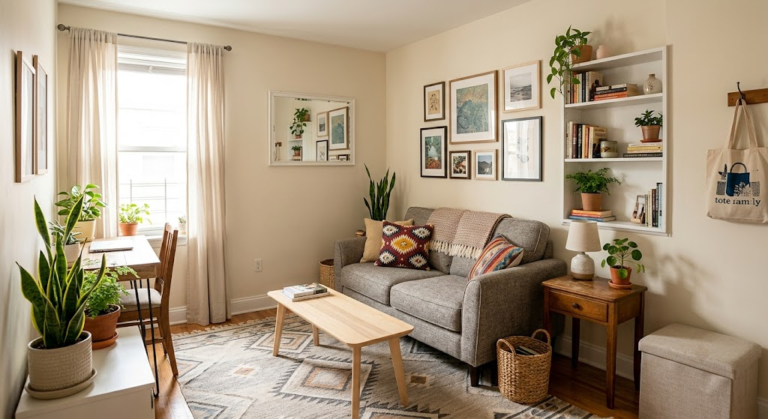
A shelf styled with everything at the same height reads as flat, regardless of how nice the individual pieces are. I’d stack books to create risers under smaller objects, or mix inherently tall items (vases, frames) with short ones (small bowls, stacked boxes) within the same grouping.
3. Leave Negative Space
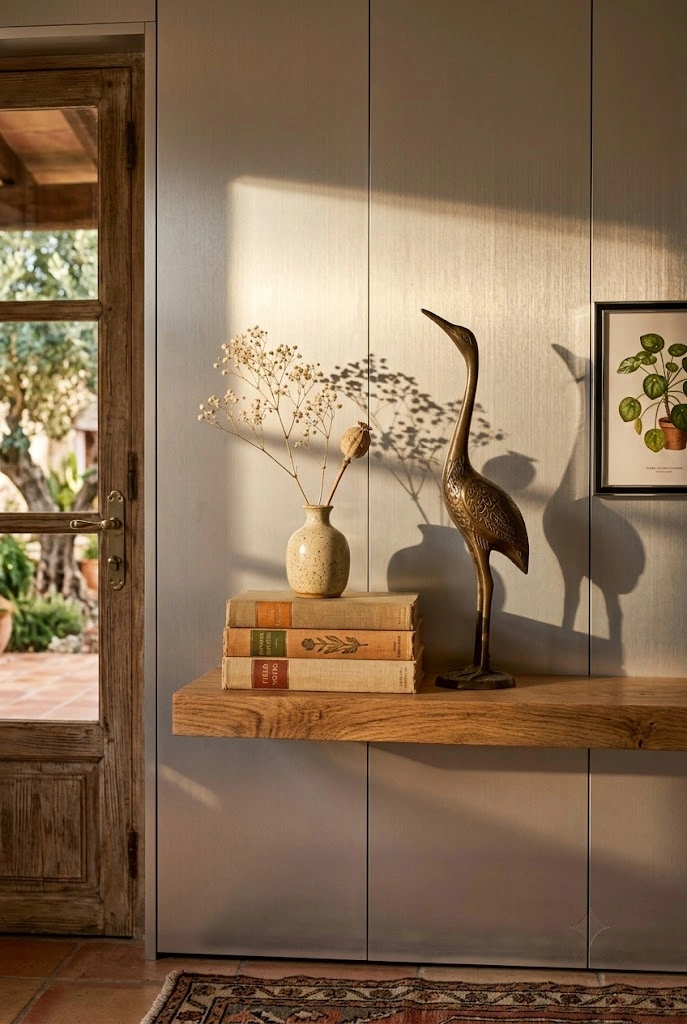
This is the principle most people get wrong first — the instinct is to fill every inch of a shelf. I’d resist that. Roughly 30-40% of visible shelf space left empty is what actually makes a styled shelf look curated rather than cluttered; a completely full shelf reads as storage, not display.
Style-Specific Approaches
4. Vintage Bookstack Styling
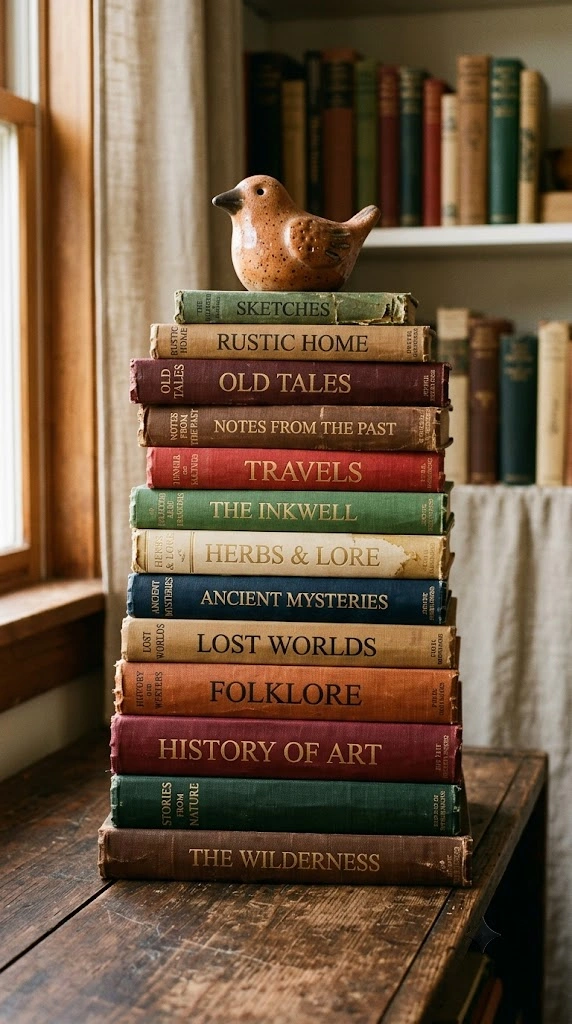
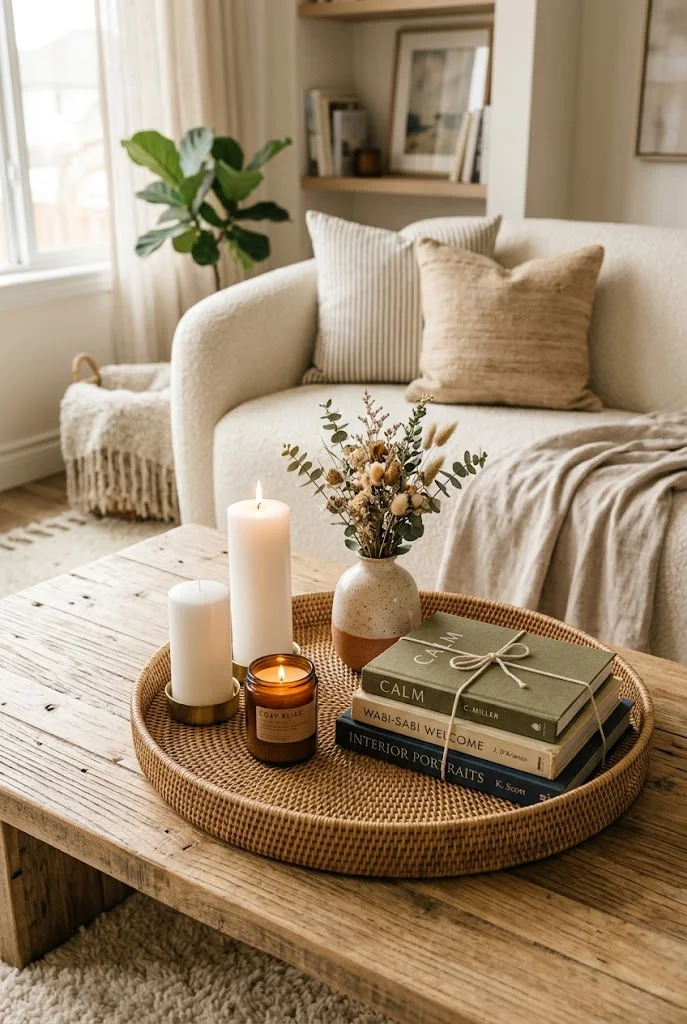
Stack hardcover books horizontally in groups of 3-5, varying spine colors and sizes, then top each stack with one small object — a candle, a small ceramic piece — rather than leaving stacks bare. This “book as pedestal” technique is one of the most reliable ways to add height variation cheaply.
5. Botanical Layering
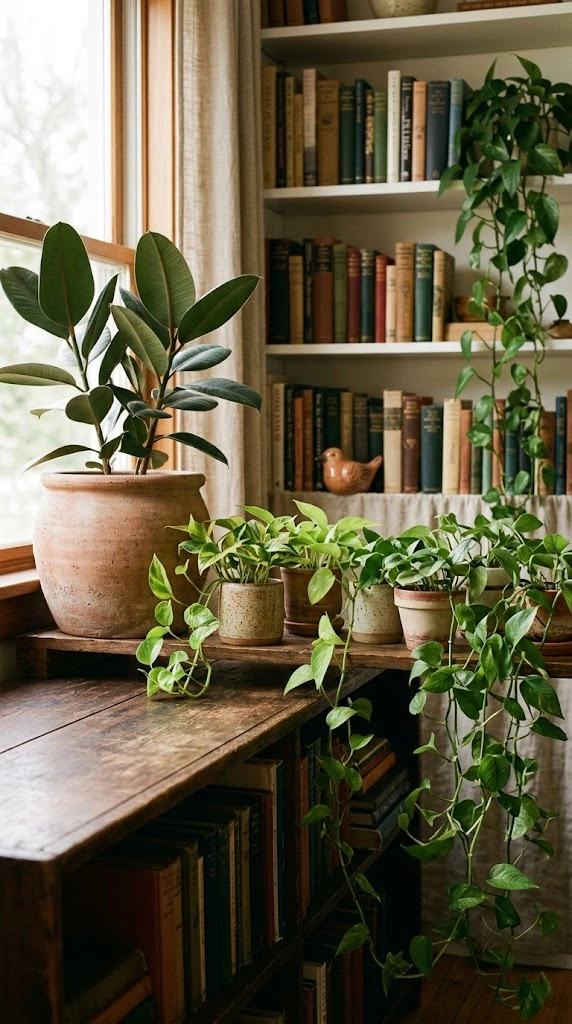
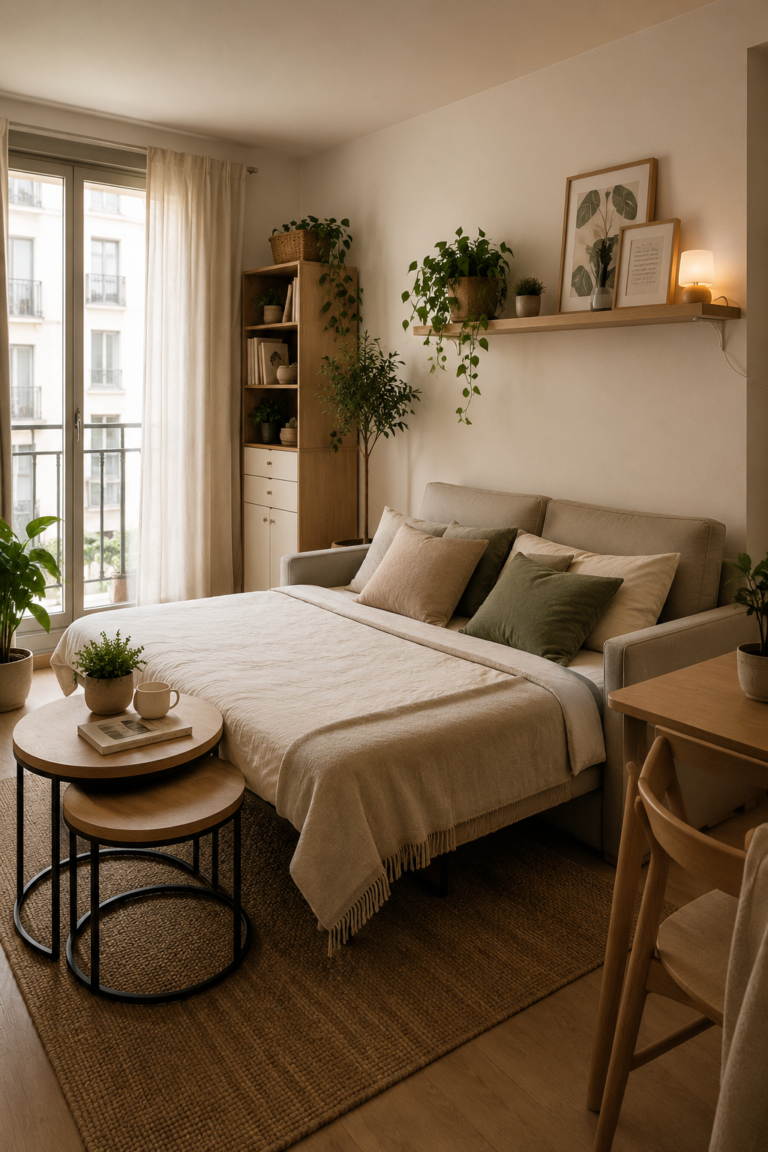
I’d place one larger plant at one end of the shelf as an anchor, then use smaller trailing plants (like pothos) at varying points to create movement across the shelf’s length rather than symmetry. Let vines trail down the shelf edge rather than staying contained — this is what creates the “lived-in” look this style is known for.
6. Monochrome Sculptural Styling
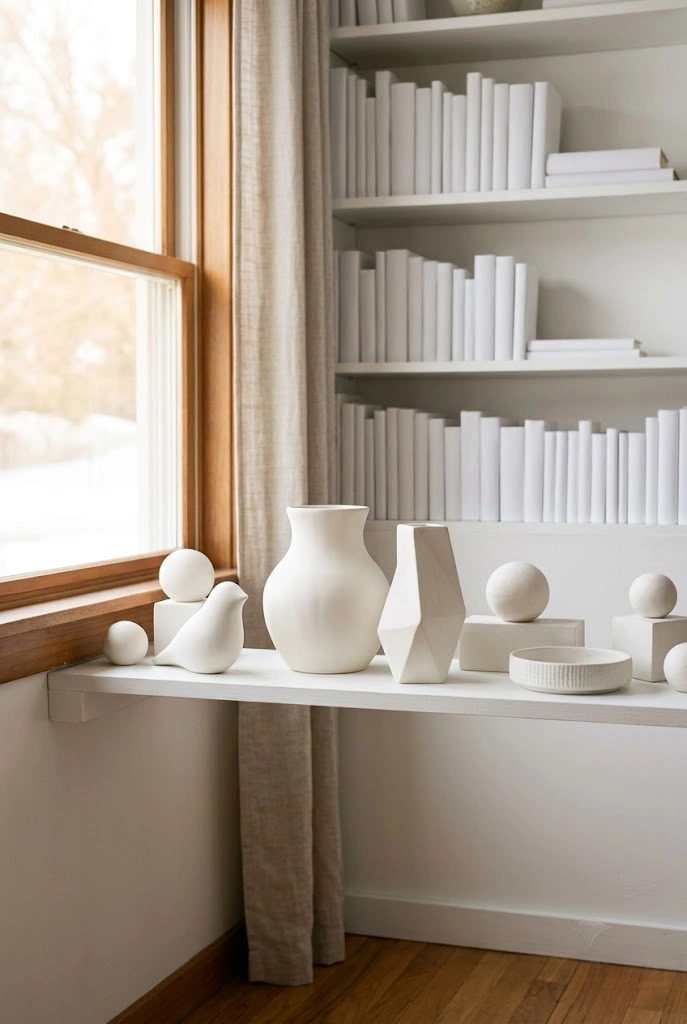
Restricting a shelf to a single color family (all white, or all black) forces you to rely on shape and texture for visual interest instead of color contrast. I’d choose objects with genuinely varied silhouettes — a curved vase next to an angular sculpture — since a monochrome shelf with same-shaped objects reads as boring rather than sophisticated.
7. Gallery Frame Layering
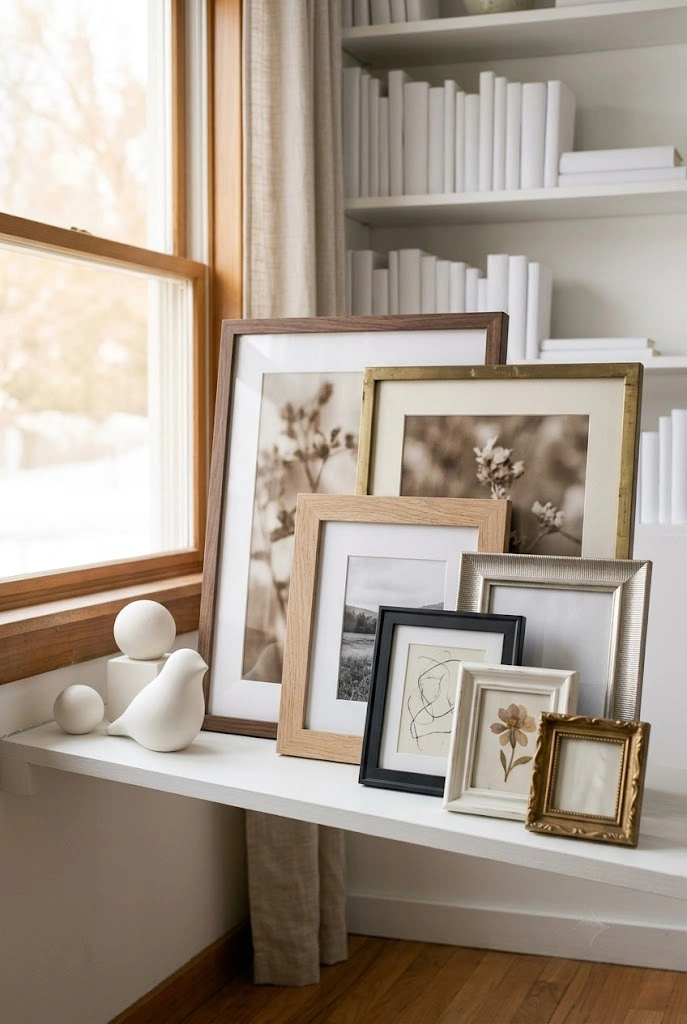
Rather than hanging frames, lean them against the wall on the shelf itself in overlapping layers — largest frame in back, smaller ones layered in front, slightly off-center. I’d mix frame finishes (wood, black metal, thin gold) rather than matching sets, which is what gives this style its collected-over-time feel.
8. Curated Collection Display (Travel, Antiques, Keepsakes)
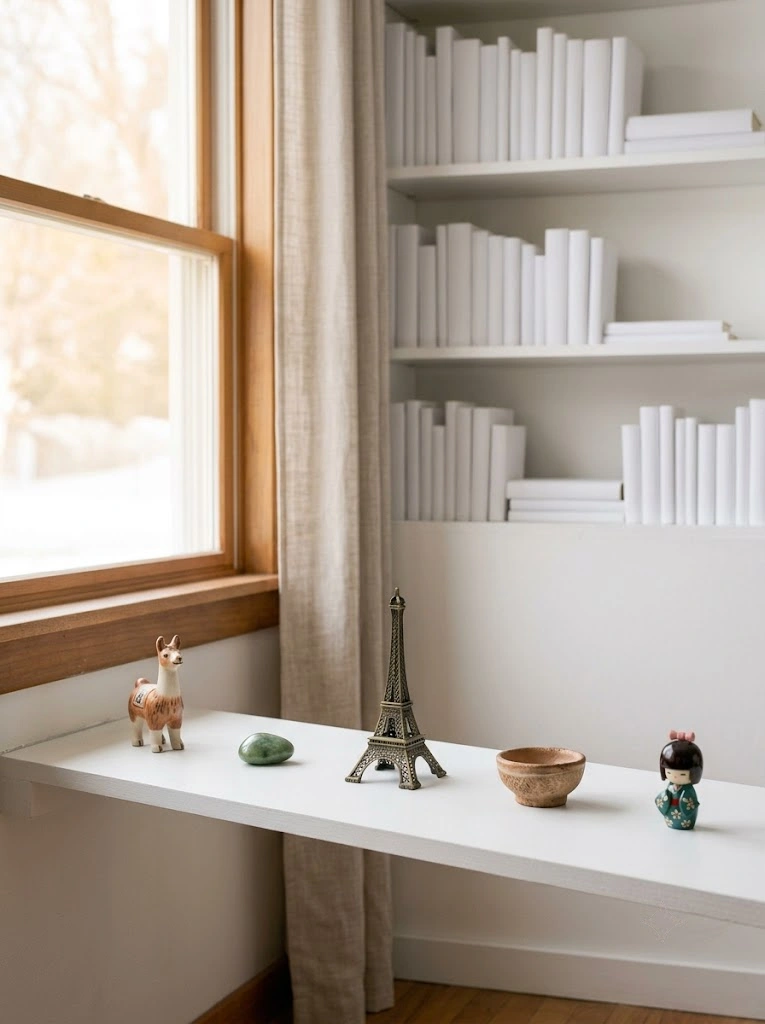
The key technique here is restraint, not display volume — I’d choose your best 5-7 pieces rather than showing an entire collection at once. Rotating pieces in and out periodically keeps the shelf feeling fresh and prevents it from reading as clutter, which is the most common failure point with sentimental-object shelves.
9. Woven Texture Styling
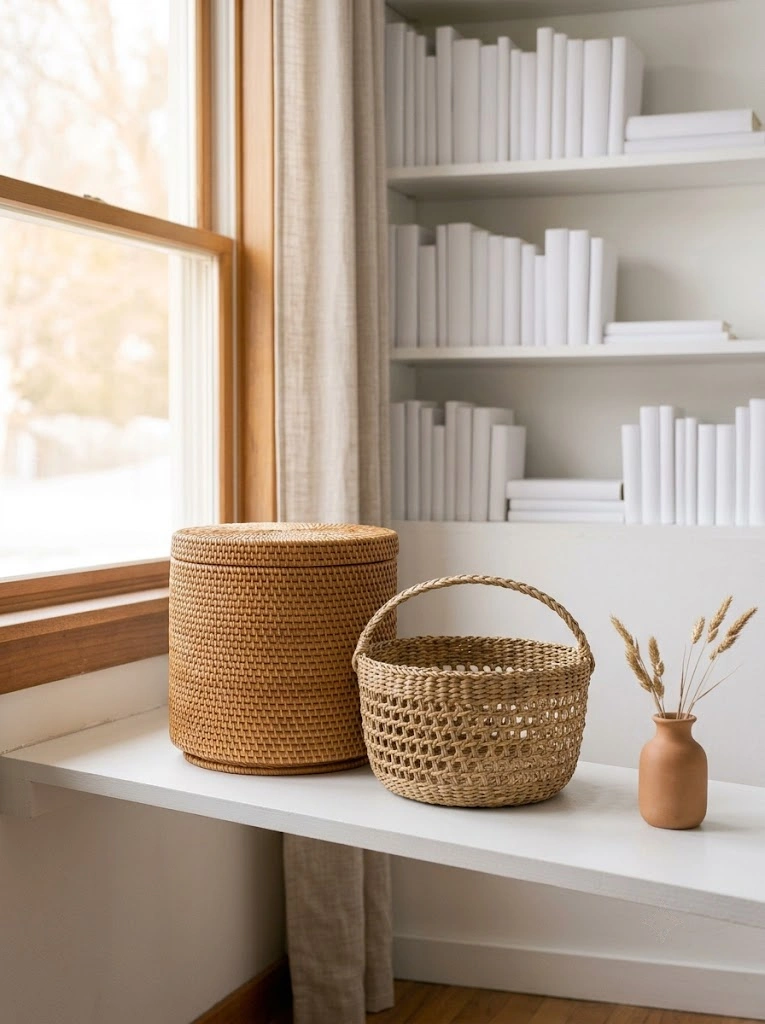
Group 2-3 woven baskets or textured vessels together at one end of a shelf, using them as both storage and visual texture. I’d vary basket size within the grouping (not matching sets) and let one basket’s handle or texture break the shelf’s straight lines slightly for visual interest.
10. Glass and Reflective Object Styling
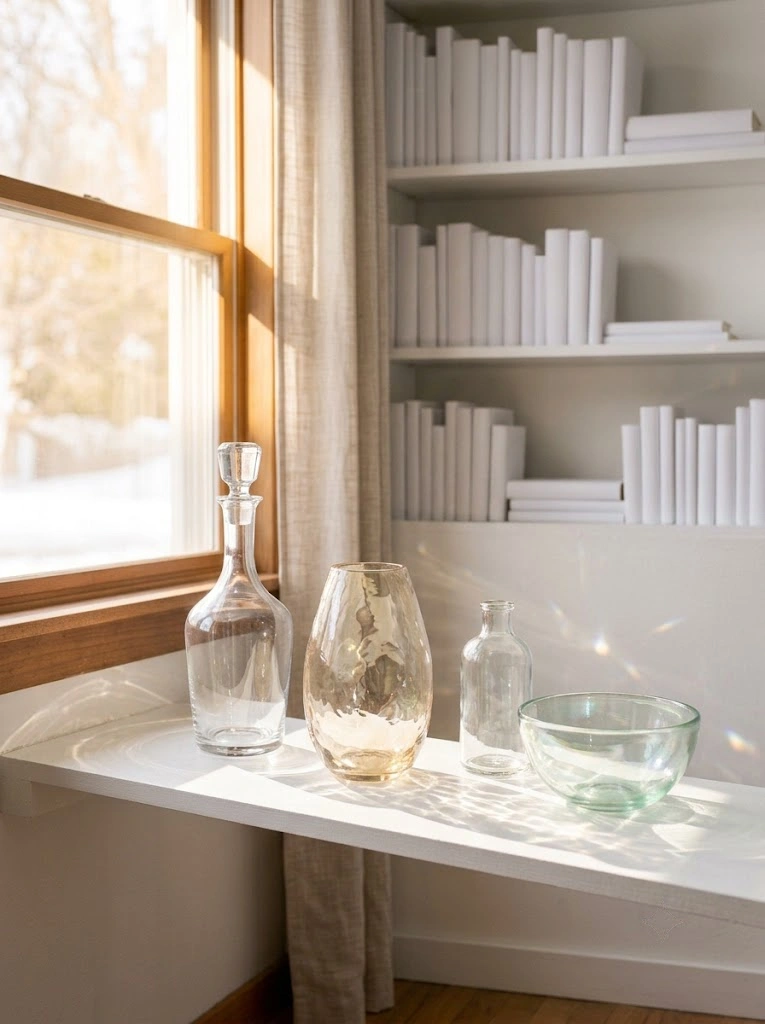
Position glass vessels where they’ll actually catch natural light during the day — near a window-facing wall rather than an interior one, since the visual effect this style relies on doesn’t work in consistently low light. I’d group 2-3 varying glass heights together rather than spacing single pieces evenly across the shelf.
11. Neutral Tonal Styling
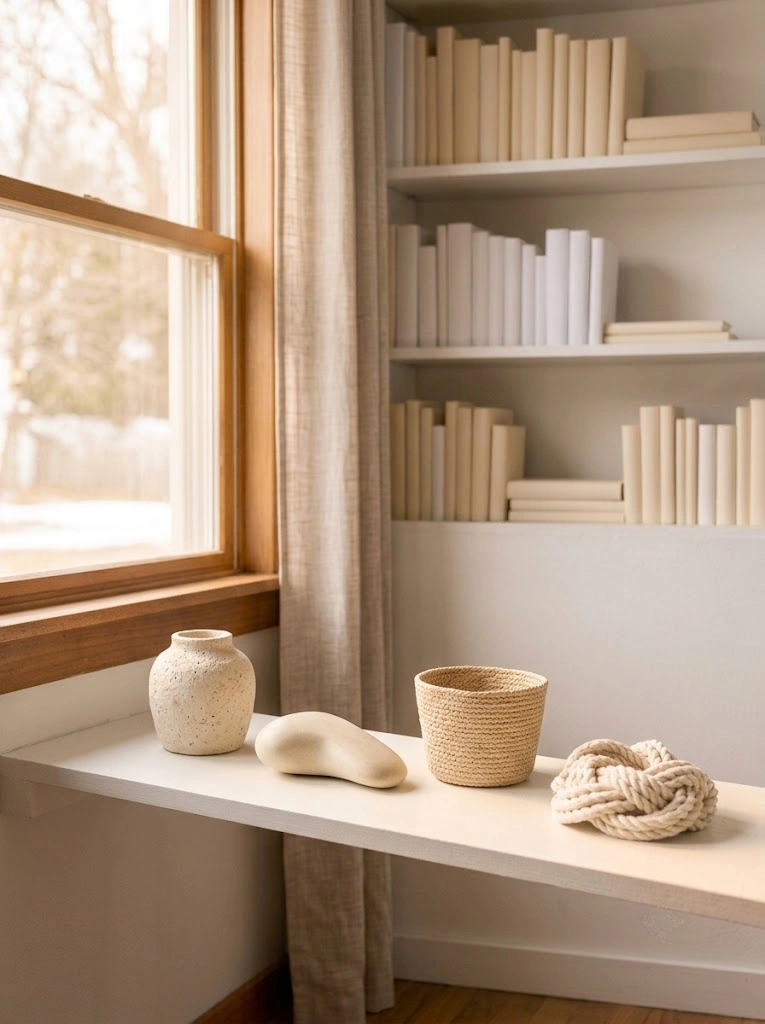
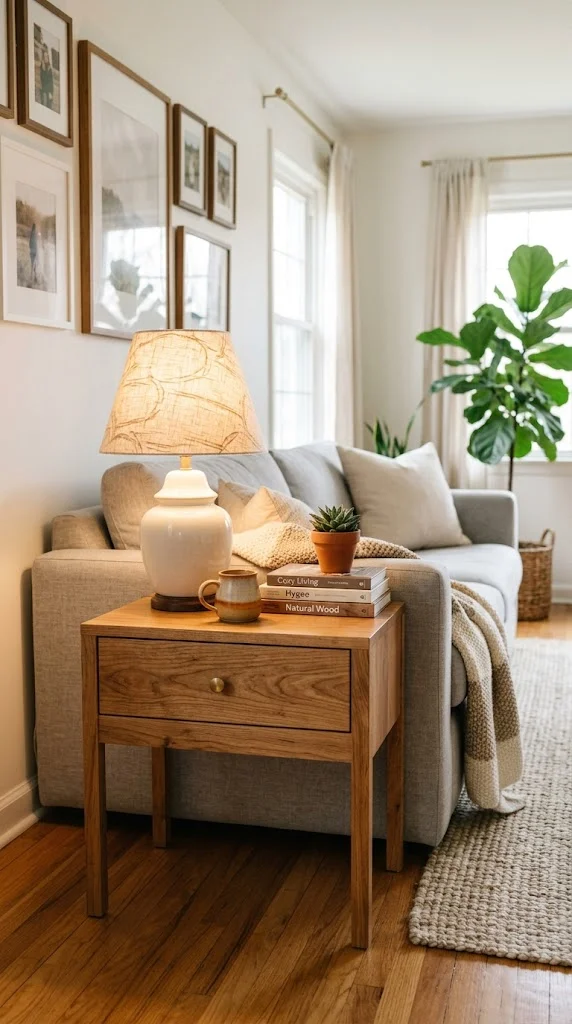
This style depends entirely on texture variation, since color variation is intentionally limited. I’d combine at least three different textures within a cream/beige/taupe palette — a rough ceramic, a smooth stone object, a woven element — or the shelf will read as flat despite the sophisticated color choice.
12. Dark, Moody Styling (Dark Academia / Industrial)
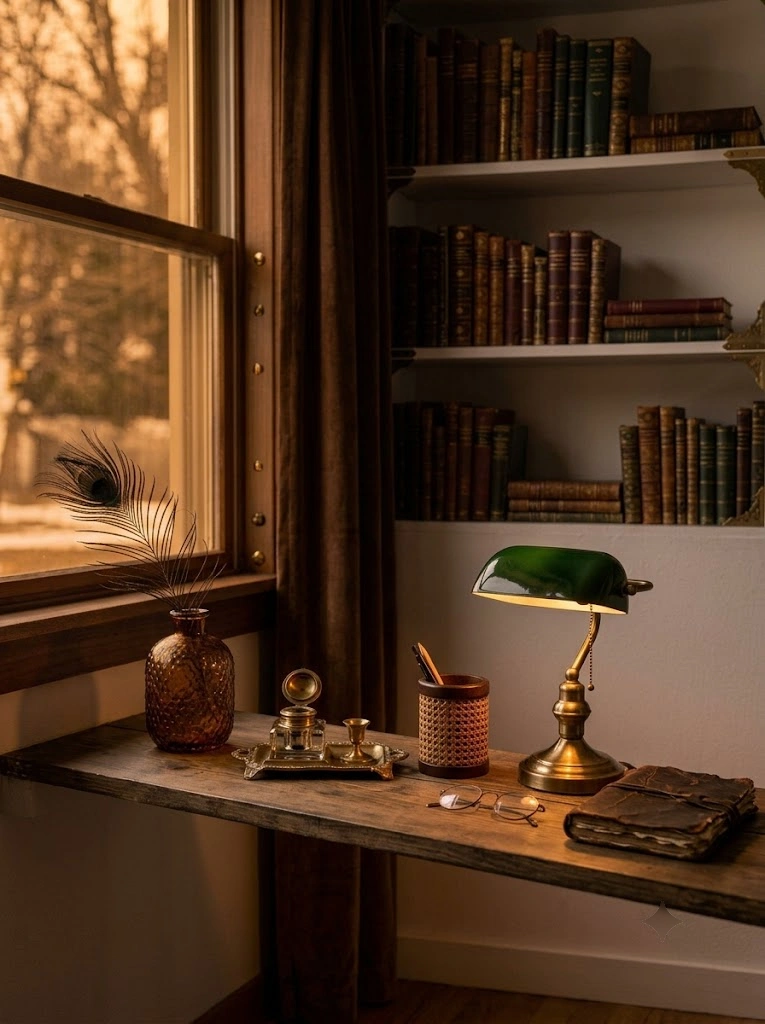
Deep tones absorb light, so this style needs a genuine light source nearby — a lamp or well-lit room — or the shelf will simply look dim rather than intentionally moody. I’d add one warm metallic accent (brass, aged gold) to keep the grouping from feeling flat or too heavy.
My Professional Guide to Styling Any Shelf
Regardless of which style you’re going for, I always start with the same three-step process. First, clear the shelf completely — restyling on top of an existing arrangement almost always results in overcrowding, since it’s hard to see what’s actually unnecessary until you start from nothing.
Second, place your largest or tallest item first, off-center rather than in the middle, and build the rest of the arrangement around it. This single decision does more to prevent a symmetrical, “showroom” look than almost any other styling choice.
Third, step back and photograph the shelf with your phone before finalizing it. Photos flatten a space the way a glance across a room doesn’t, and they make uneven spacing or overcrowding far more obvious than looking at it in person.
Conclusion
Good shelf styling comes down to a small set of repeatable techniques — odd-numbered groupings, varied height, and genuine negative space — applied consistently, regardless of which aesthetic you’re going for. Choose one or two styles from this list that match your existing decor, apply the underlying principles rather than just copying the look, and even a single blank shelf can become one of the more intentional-feeling spots in the room.
Frequently Asked Questions
What is the rule of three in shelf styling?
Grouping objects in odd numbers, especially threes, tends to look more natural and intentional than even-numbered groupings, which can read as too symmetrical and static.
How much empty space should a styled shelf have?
Roughly 30-40% of the shelf should remain visibly empty. A fully packed shelf tends to read as storage rather than an intentional display.
What household items work well for shelf styling?
Books (stacked as risers), plants, ceramics, framed art leaned rather than hung, and personal keepsakes all work well, especially when grouped in varied heights and textures rather than displayed individually.
How often should I restyle my shelves?
A full restyle isn’t usually necessary — rotating just the smaller accent pieces seasonally, while keeping one or two anchor pieces consistent, keeps a shelf feeling fresh without starting over each time.
Related Posts
- Small Space Storage Hacks
- 25 Small Apartment Living Room Ideas 2026
- 25 Small Bedroom Ideas 2026
Follow us on Pinterest for more shelf styling inspiration!