Bedroom Lighting Ideas: 10 Ways to Create a Cozy, Well-Lit Space
I’ve rewired the lighting plan in more bedrooms than I can count, and it’s consistently the change people underestimate the most. New furniture gets attention, but lighting is what actually decides whether a bedroom feels like a hotel suite or a dorm room. Below are 10 bedroom lighting ideas, each with the practical details — brightness, bulb temperature, and installation difficulty — that most lighting roundups skip entirely, so you can actually plan around them instead of just admiring a photo.
1. Layered Lighting Instead of a Single Overhead Fixture
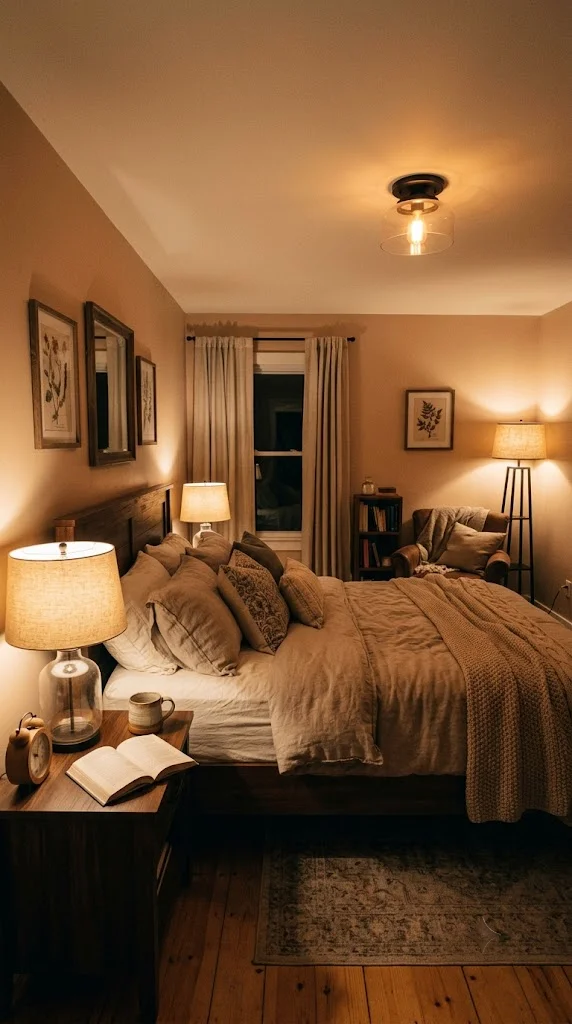
This is the foundation every other idea on this list builds on, so I’m putting it first. A single ceiling fixture forces one flat, often harsh light source to do every job in the room — reading, relaxing, getting dressed — and it can’t do all three well.
I’d plan for at least three light sources: an ambient source (ceiling fixture or recessed lighting), a task source (bedside lamp), and an accent source (a floor lamp, LED strip, or wall sconce). Each one gets used at different times, and together they let you shift the room’s whole mood without moving a single piece of furniture.
For bulb temperature, I’d aim for 2700K-3000K (labeled “warm white” or “soft white” on most packaging) throughout the room. Anything above 4000K starts to feel closer to office lighting, which works against the relaxing purpose of a bedroom.
Installation difficulty: low. Cost: budget-to-mid, since this is mostly a bulb and lamp swap, not new wiring.
2. Dimmable Ceiling Fixture or Recessed Lighting
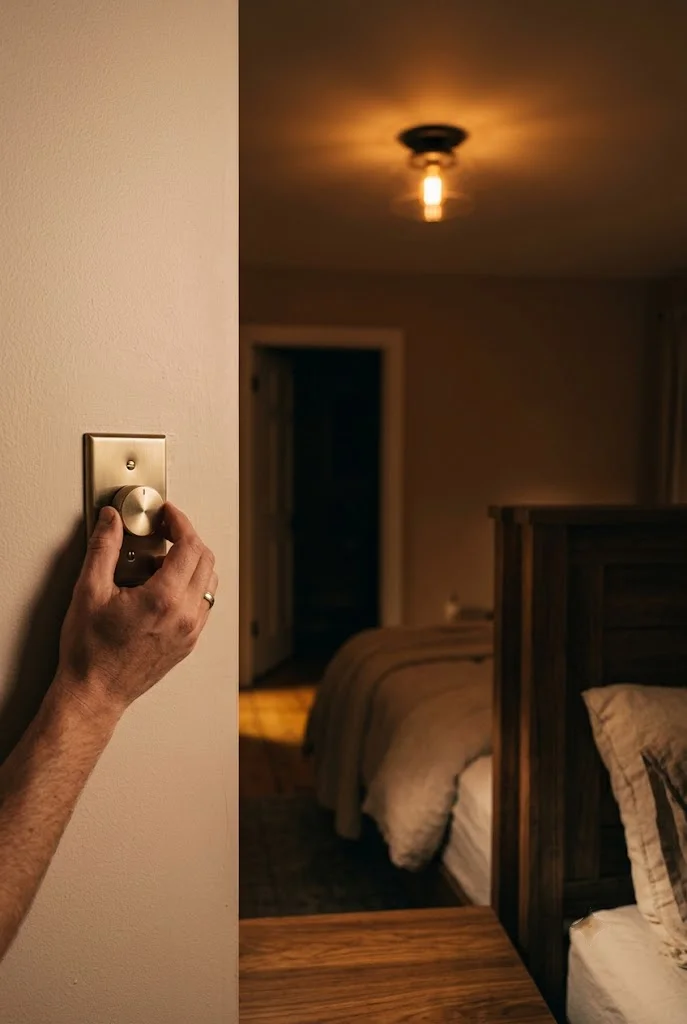
If your bedroom only has one overhead light, making it dimmable is one of the single highest-impact upgrades available, and it’s a common search specifically because so many bedrooms are built with only a bright, non-dimmable overhead option.
A dimmer switch lets one fixture serve both a bright “getting ready” function and a soft, relaxed evening function, which is normally what people are trying to solve for when searching for bedroom lighting ideas in the first place.
Most standard dimmer switches are compatible with LED bulbs rated as “dimmable” on the packaging — using a non-dimmable LED bulb with a dimmer switch can cause flickering or humming, so it’s worth checking the bulb box before buying.
Installation difficulty: low-to-moderate (a dimmer switch swap is a common beginner electrical project, though always turn off power at the breaker first, or hire an electrician if you’re not comfortable with basic wiring). Cost: budget.
3. Bedside Pendant Lights Instead of Table Lamps
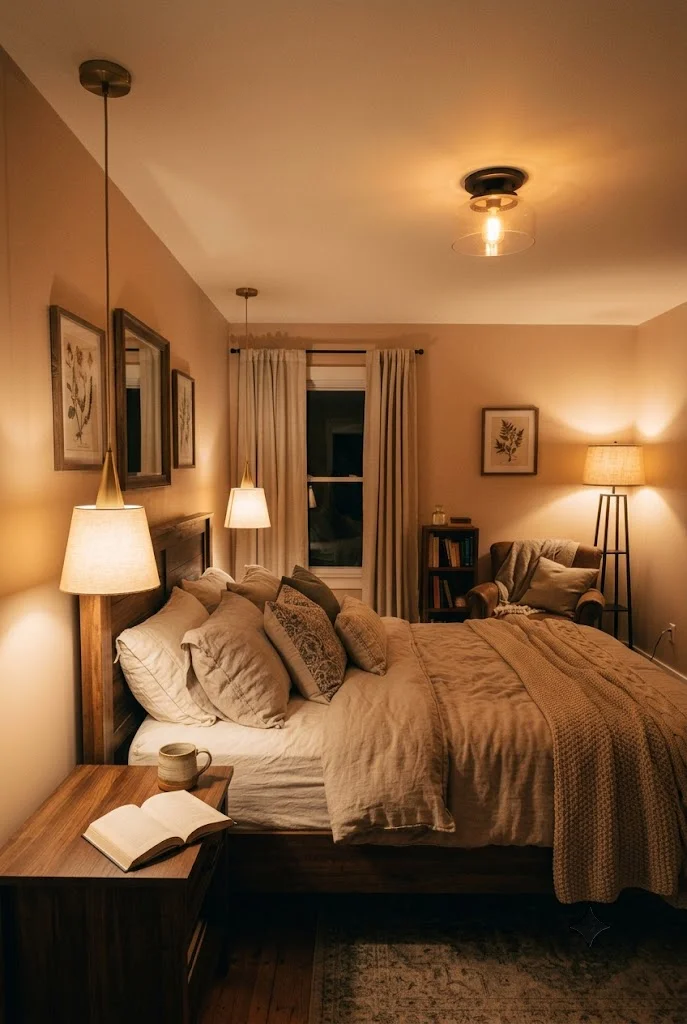
I recommend this specifically for small bedrooms, since it solves a problem a lot of people are searching for without realizing the solution: freeing up nightstand surface space. Hanging pendants on either side of the bed do the same job as table lamps without taking up any tabletop room, which matters if your nightstands are already tight on space.
(For more small-space furniture pairings, this works especially well alongside the wall-mounted nightstand ideas covered in our small bedroom ideas guide.)
I’d hang pendants so the bottom of the shade sits roughly 20-24 inches above the mattress top, angled slightly toward where you’d sit up to read.
Installation difficulty: moderate (requires an electrician or existing wiring above the bed, unless using plug-in pendant kits, which are widely available and require no wiring at all). Cost: mid.
4. LED Strip Lighting Behind the Headboard or Under the Bed
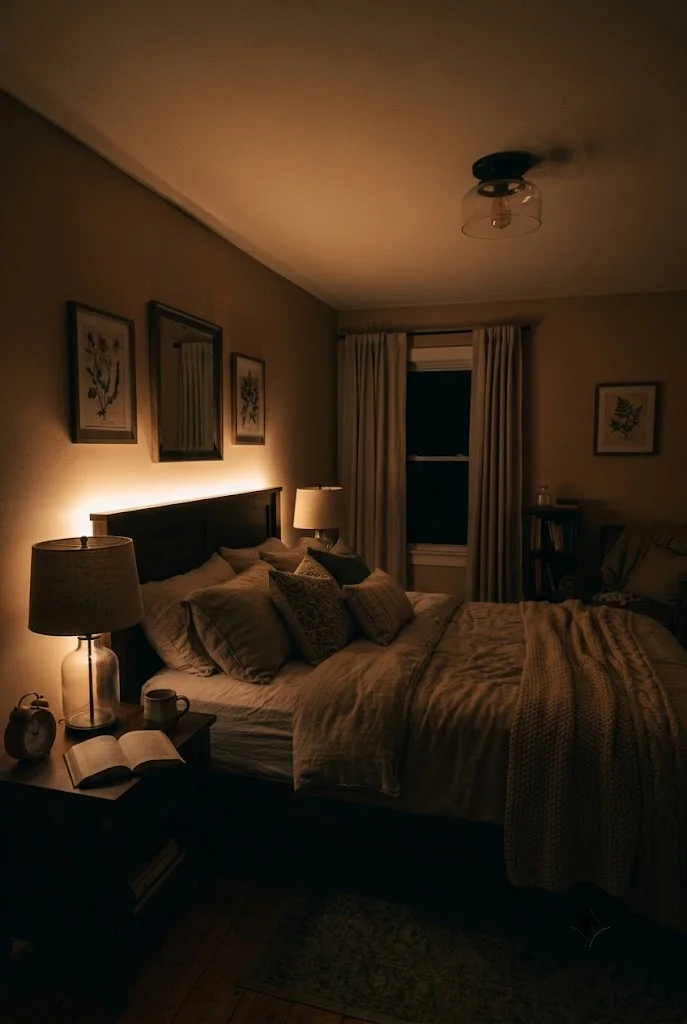
This is one of the most searched modern bedroom lighting trends, largely because it’s dramatic in photos but genuinely simple to install. LED strips behind a headboard create soft indirect backlighting, while strips under a platform bed frame create a “floating” effect at night.
For this application, I’d stick to warm white (2700K-3000K) rather than the multicolor RGB strips marketed for gaming setups — color-changing lighting can work for accent moments, but as a primary ambient source it tends to read as less calming over time.
Installation difficulty: low (most kits are peel-and-stick with a plug-in adapter, no wiring required). Cost: budget.
5. A Statement Chandelier or Pendant as the Room’s Focal Point
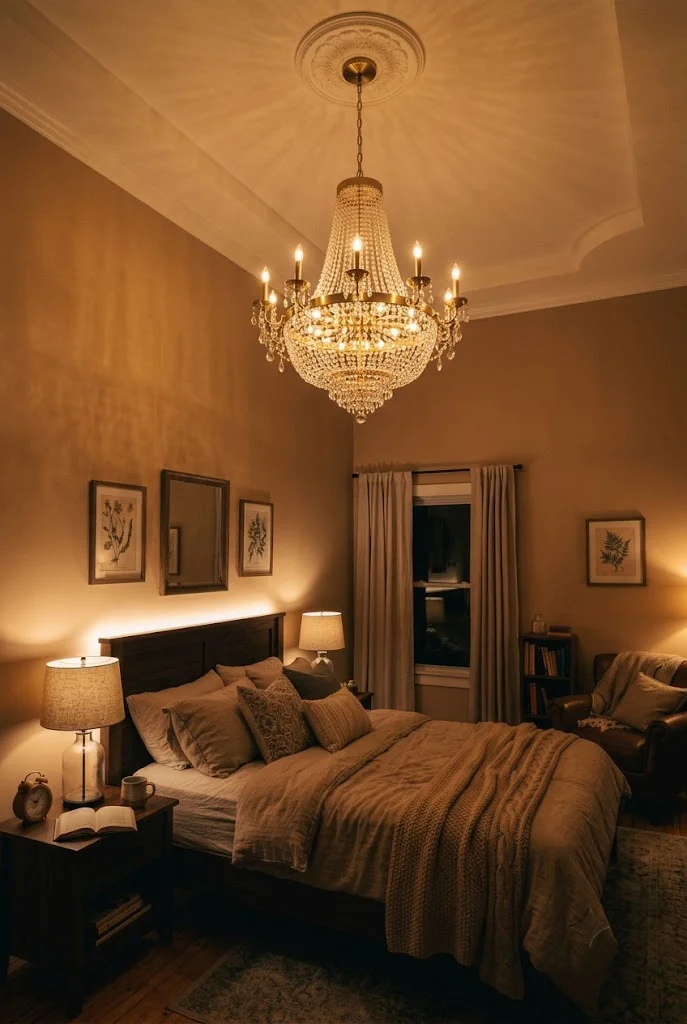
I’d reserve this for bedrooms with at least 8-foot ceilings, since a chandelier needs enough clearance to hang without feeling low or in the way. Positioned centered over the bed (not necessarily the exact center of the room), it becomes the room’s visual anchor the way a piece of art or an accent wall might in a living room.
This is a common search specifically from people trying to make a bedroom feel more elevated or “hotel-like” without a full renovation — a single well-chosen fixture does more visual work here than several smaller lighting changes combined.
Installation difficulty: moderate-to-high (typically requires existing ceiling wiring rated for the fixture’s weight; heavier chandeliers may need a support brace). Cost: mid-to-high.
6. Wall Sconces for a Reading Nook
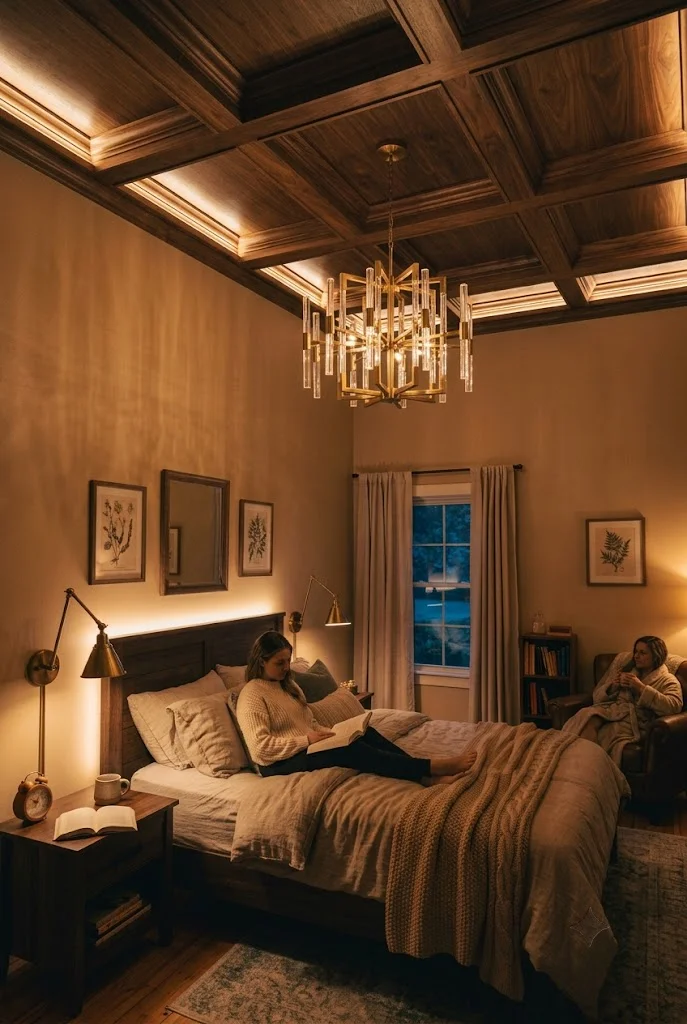
If you read in bed regularly, wall-mounted sconces on either side solve two problems at once: they free up nightstand space (like pendant lights) and they let you position light exactly where you need it for reading, rather than relying on ambient room light.
I’d choose sconces with an adjustable arm or swivel head specifically, since fixed sconces can’t be repositioned once installed, and reading position varies more than people expect.
Installation difficulty: moderate (hardwired sconces need an electrician unless using plug-in wall sconce versions, which have become widely available and avoid any wiring work). Cost: budget-to-mid.
7. Floor Lamp for an Unused Corner
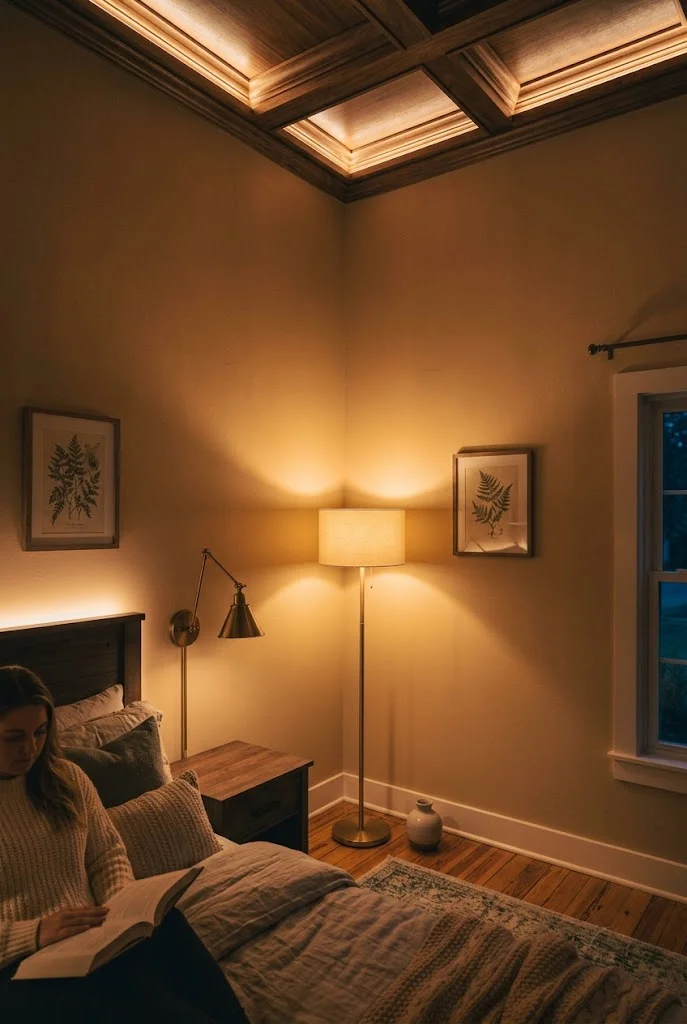
This is a low-commitment way to add a true third or fourth light source without touching any wiring. A floor lamp in an otherwise empty corner does double duty — it fills visually dead space (a common concern in the small bedroom layout ideas I’ve written about before) and adds warm accent lighting exactly where overhead light usually doesn’t reach well.
I’d choose one with a slim profile and a fabric shade specifically, since fabric diffuses light more softly than bare or glass shades, which matters for a light source this close to eye level.
Installation difficulty: none (plug-in only). Cost: budget.
8. Backlit or LED Mirror
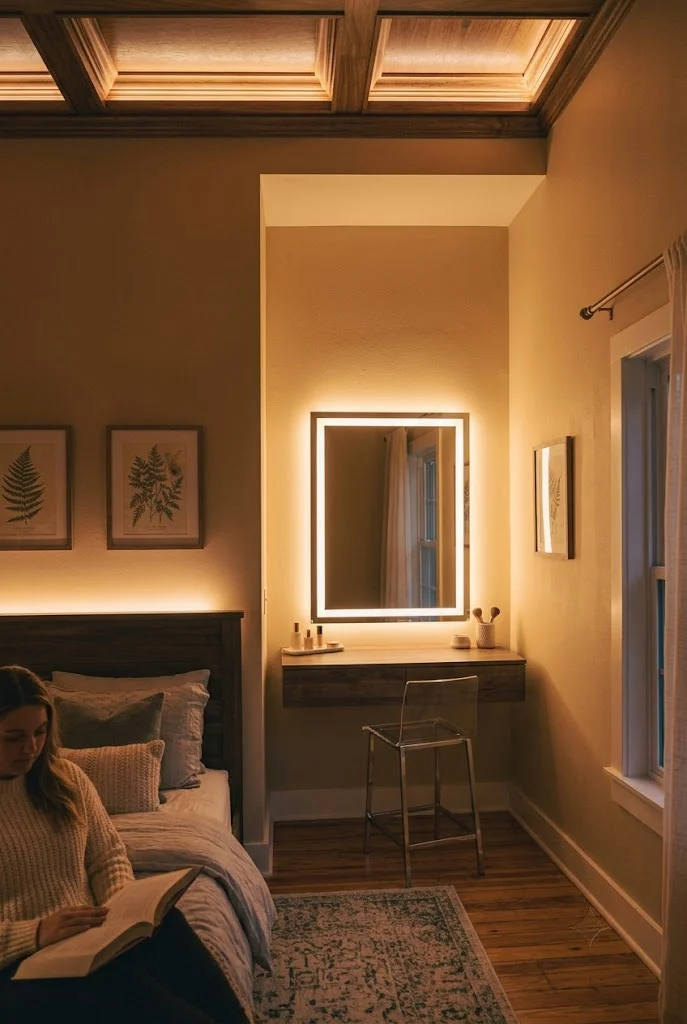
This idea crosses over from bathroom design, but it’s increasingly searched for bedrooms with an attached vanity or dressing area. An LED-backlit mirror gives you even, shadow-free light for getting ready, without needing a separate dedicated light fixture above it.
(This pairs naturally with the vanity and mirror placement ideas in our luxury bathroom design guide, if your bedroom includes a dressing area.)
Installation difficulty: low (most plug into a standard outlet; hardwired versions require an electrician). Cost: mid.
9. Smart Bulbs for Adjustable Color and Brightness
This is one of the fastest-growing searches in bedroom lighting, largely because it solves the “which color temperature should I choose” problem by letting you change it on demand instead of committing to one bulb permanently.
I’d install smart bulbs specifically in your ambient and accent fixtures (not necessarily your task lamp, where a consistent warm white is usually preferable), so you can shift from bright white for cleaning to warm, dim tones for winding down, all from the same fixture.
Installation difficulty: low (screws into any standard fixture, controlled via app or smart speaker). Cost: mid (per-bulb cost is higher than standard LEDs, but no electrician needed).
10. Candle-Style or Vintage-Inspired Fixtures for Warmth
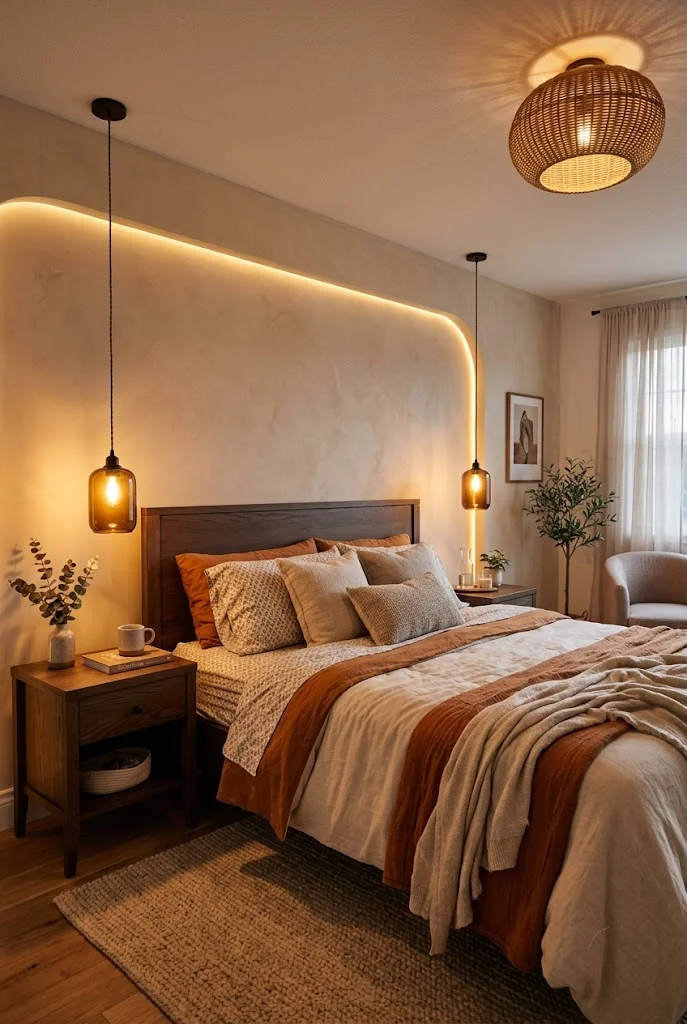
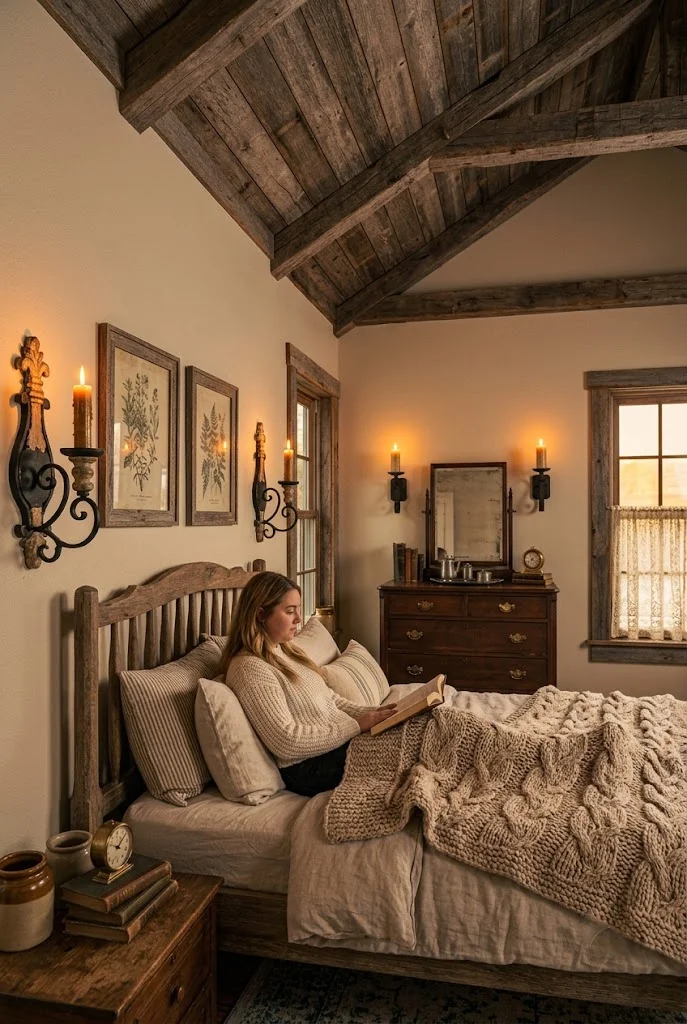
For anyone drawn to a more traditional or farmhouse-style bedroom, candle-style sconces or a vintage-inspired flush-mount fixture add warmth through form, not just bulb temperature. The visual softness of a candle-shaped bulb or fixture reads as cozy even before it’s turned on.
I’d pair this style specifically with warm white or amber-toned bulbs (2200K-2700K) to reinforce the vintage feel — a cool white bulb in a vintage fixture tends to look visually mismatched.
Installation difficulty: varies by fixture type (plug-in wall sconces are low-difficulty; hardwired ceiling fixtures are moderate). Cost: budget-to-mid.
How to Choose the Right Brightness and Color Temperature for a Bedroom
This is one of the most common points of confusion people run into, and it’s worth understanding the two numbers involved before buying anything.
Brightness (measured in lumens) determines how much light a bulb puts out. For general bedroom ambient lighting, I’d aim for roughly 1,500-3,000 total lumens across all fixtures combined for an average-sized room — task lighting like a reading lamp can be brighter and more focused, typically 400-800 lumens on its own, since it only needs to illuminate a small area.
Color temperature (measured in Kelvin, or “K”) determines whether light looks warm/yellow or cool/blue. For bedrooms specifically, I’d stay in the 2700K-3000K range for most fixtures — this is the same warm range used in most hotel rooms and is widely considered the most relaxing for a space meant for winding down. Reserve anything above 3500K for closets or a dedicated dressing area where true color accuracy matters more than ambiance.
A simple rule I give people: if a bulb’s packaging doesn’t list the Kelvin number, don’t buy it for a bedroom — “warm white” and “soft white” labeling alone isn’t always consistent between brands.
My Professional Guide to Planning a Bedroom Lighting Layout
I always start a lighting plan by mapping actual behavior in the room, not just fixture placement. Where do you read? Where do you get dressed? Where do you sit to wind down at night? Each of those spots needs its own light source rather than relying on one central fixture to cover the whole room evenly.
From there, I think about layering intentionally: ambient light sets the room’s base level, task lighting handles specific activities, and accent lighting (an LED strip, a statement fixture) adds visual interest without needing to be functional at all. A bedroom with only ambient lighting almost always feels flat, no matter how nice the fixture is.
Finally, I’d prioritize dimmability wherever the budget allows. A bedroom’s lighting needs change more throughout the day than almost any other room — bright for mornings, soft for evenings — and a dimmer switch or smart bulb setup is usually a smaller investment than people expect for how much control it adds.
Conclusion
Bedroom lighting has more impact on how a room actually feels to live in than almost any other single design choice, and it doesn’t require an electrician-heavy renovation to get right. Start with layered light sources in the 2700K-3000K range, add dimmability where you can, and choose one statement fixture if you want a true focal point. The right lighting plan will do more for your bedroom’s atmosphere than new furniture alone ever could.
Frequently Asked Questions
What is the best lighting for a bedroom?
Layered lighting — an ambient source, a task lamp, and an accent light — in the 2700K-3000K warm white range is generally considered the most relaxing and functional combination for a bedroom.
What color temperature is best for bedroom lighting?
2700K-3000K (“warm white” or “soft white”) is best for most bedroom fixtures, since it’s the same relaxing range used in hotel rooms. Reserve cooler temperatures (3500K+) for closets or dressing areas.
How many lumens do I need for a bedroom?
Roughly 1,500-3,000 total lumens across all ambient fixtures works well for an average bedroom, with a brighter, more focused 400-800 lumen source for task lighting like reading.
Is LED strip lighting good for a bedroom?
Yes — warm white LED strips behind a headboard or under a bed frame create effective, low-cost ambient or accent lighting, and installation typically requires no wiring.
Do I need an electrician to install bedroom lighting?
It depends on the fixture. Plug-in options (floor lamps, plug-in sconces and pendants, LED strips) require no electrician. Hardwired fixtures like chandeliers, recessed lighting, or wired wall sconces generally do.
Related Posts
- 25 Small Bedroom Ideas 2026
- Small Space Storage Hacks
- How to Design a Luxury Bathroom
- 25 Small Home Office Ideas
Follow us on Pinterest for more bedroom lighting inspiration!