28 DIY Pool Ladder Ideas: Materials, Costs, and Safety Tips for Every Backyard
A pool ladder does more than get you in and out of the water — it’s often the first thing people notice about a backyard pool setup, and it’s also one of the most safety-critical features if it’s built poorly. Below are 28 DIY pool ladder ideas, organized by material and style, along with real build considerations: durability, approximate cost tier, and what to watch out for with each option.
Wood Ladder Ideas
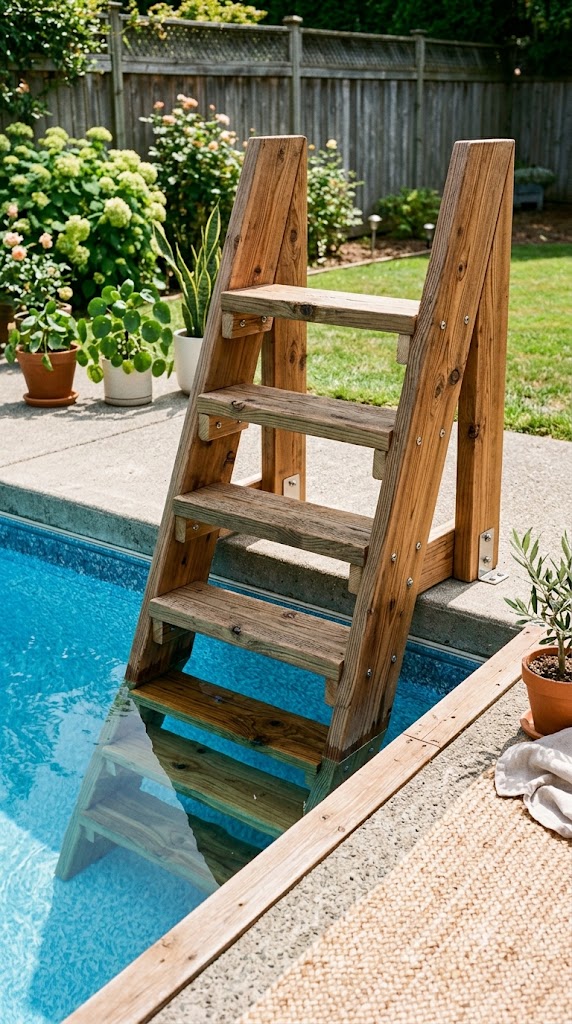
1. Rustic Cedar Step Ladder
Cedar is naturally resistant to rot and insects, which makes it one of the more forgiving woods for a DIY build near constant water exposure. Wide treads (I’d aim for at least 4-5 inches deep) give more confident footing than a standard narrow rung.
Cost tier: Budget-to-mid. Build tip: reseal annually with a marine-grade outdoor sealant to maintain rot resistance.
2. Modern Powder-Coated Steel Frame
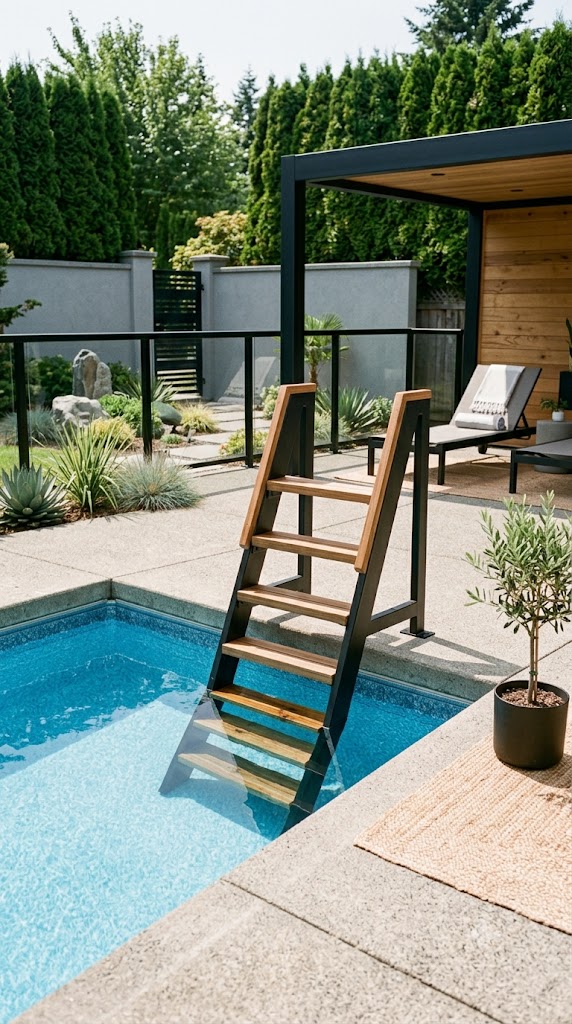
A steel frame with a powder-coated finish resists chipping and fading far better than standard painted metal, and it holds up well structurally under repeated weight-bearing use.
Cost tier: Mid-to-high. Build tip: pair with rubber or textured tread inserts, since bare powder-coated metal can still be slick when wet.
3. Bamboo Tropical Access Ladder
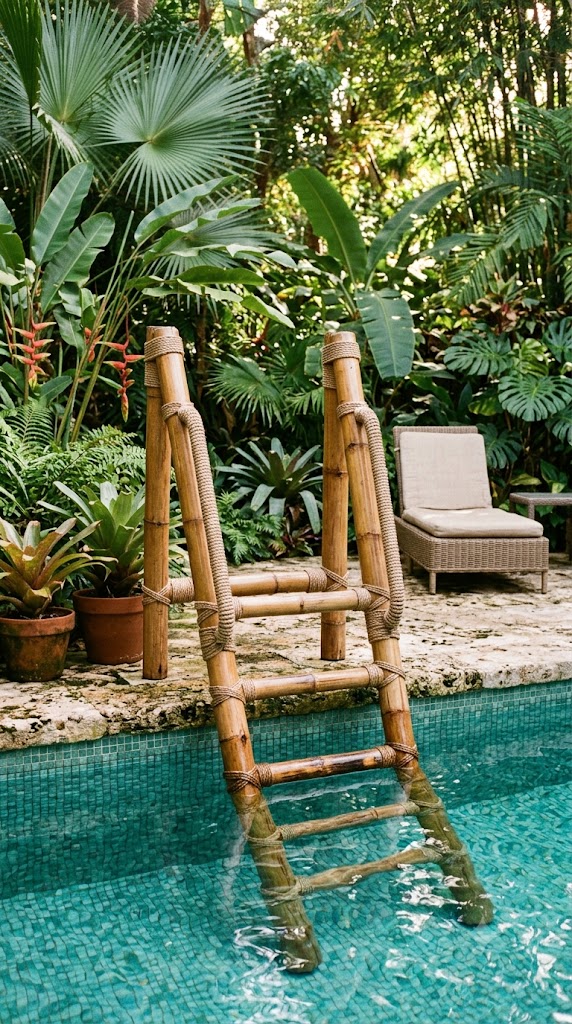
Bamboo is lightweight and visually distinct, but it’s less structurally durable long-term than hardwood or metal, so it’s best suited to lighter-use pools or as a decorative accent alongside a sturdier support frame.
Cost tier: Budget. Build tip: reinforce load-bearing joints with hidden metal brackets rather than relying on bamboo lashing alone.
4. Reclaimed Wood Ladder
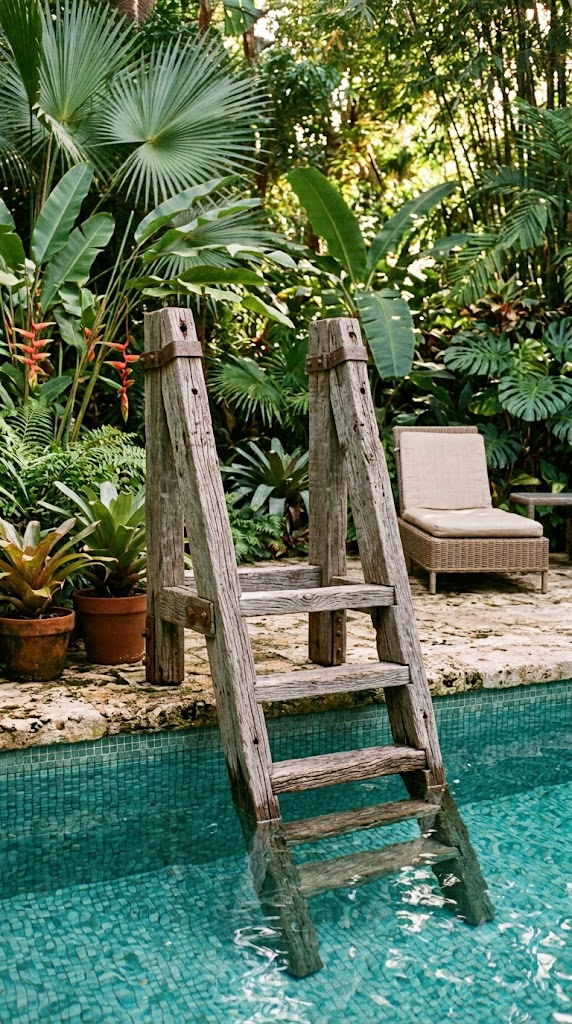
Reclaimed timber gives genuine character and keeps material costs low, but reclaimed wood often needs more inspection than new lumber — check for rot, insect damage, and structural integrity before building anything weight-bearing from it.
Cost tier: Budget. Build tip: sand and reseal thoroughly, since reclaimed wood’s existing finish may not be rated for pool-side moisture.
5. Floating Platform Landing Ladder
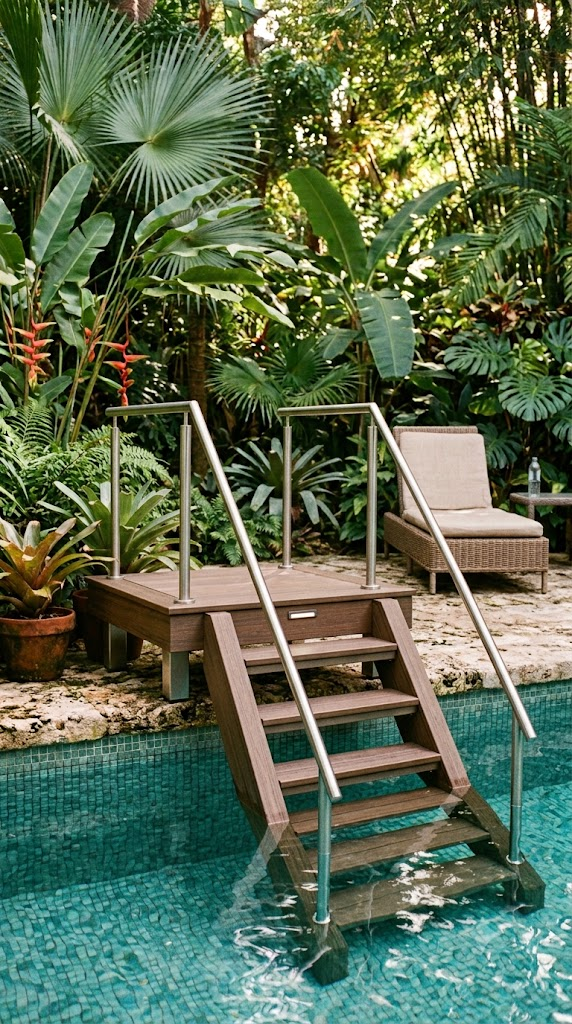
A broader landing platform before the final steps into the water is genuinely useful for households with kids or older adults, since it gives a stable place to pause rather than stepping directly from ladder to pool floor.
Cost tier: Mid. Build tip: use composite decking for the platform surface — it resists fading and requires far less annual maintenance than solid wood.
6. Farmhouse Timber Steps With Rails
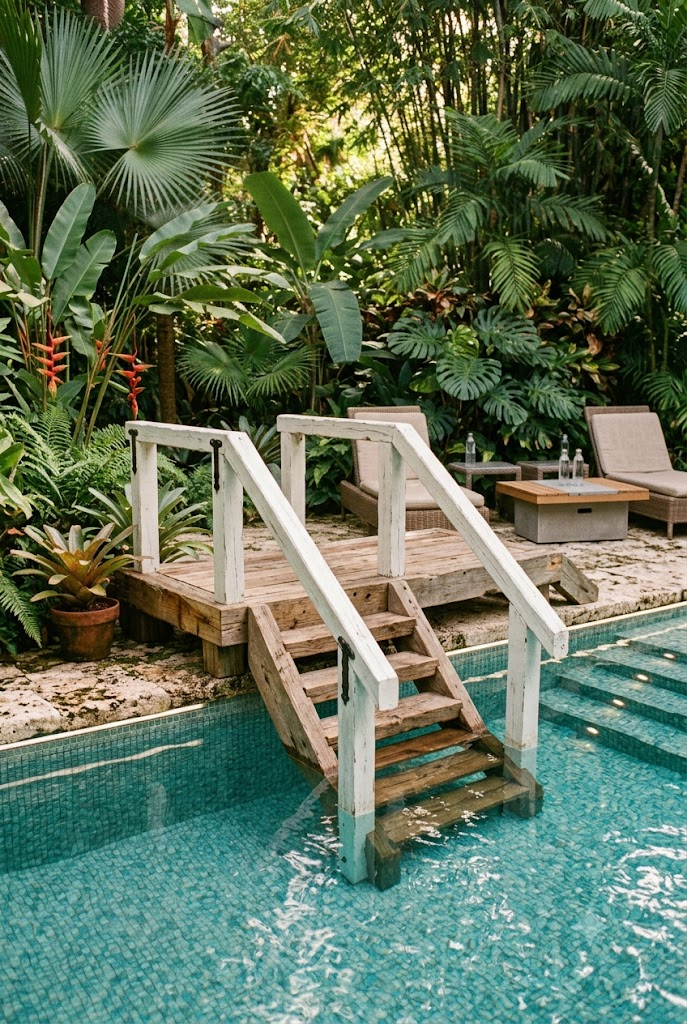
Chunkier lumber and white-painted rails give a more traditional, staircase-like feel. This style works especially well for above-ground pools with a surrounding deck, since it echoes typical porch or deck railing details.
Cost tier: Mid. Build tip: use galvanized fasteners throughout — standard steel screws will rust and stain the wood within a season or two of pool exposure.
Metal & Industrial Ideas
7. Galvanized Pipe Frame Ladder
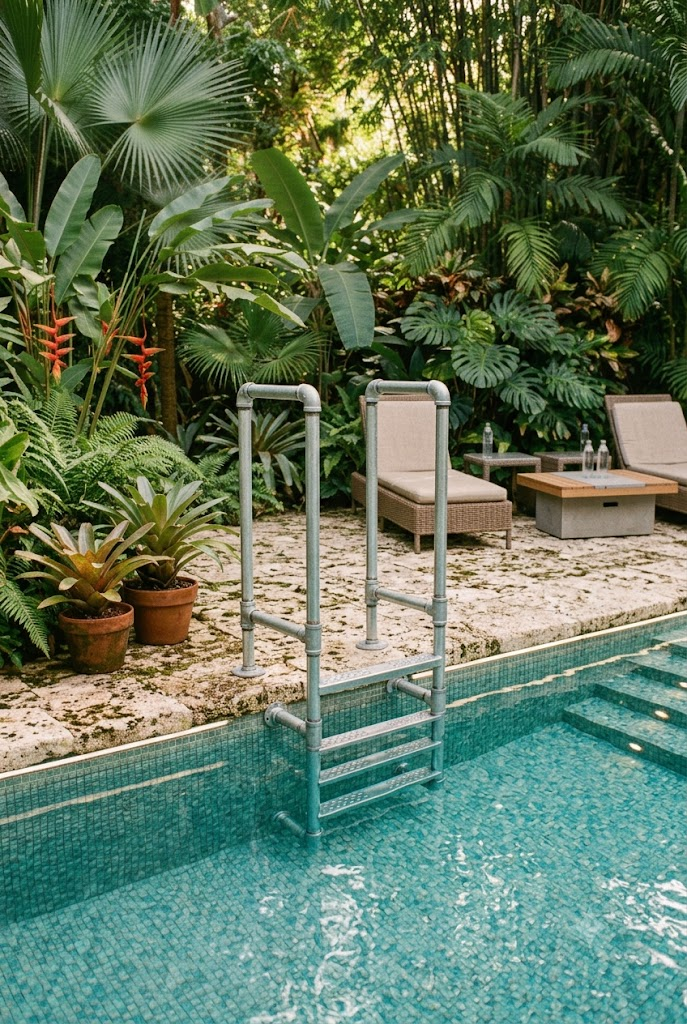
Galvanized steel pipe is one of the more affordable metal options and resists rust significantly better than untreated steel, though it’s not as corrosion-resistant as stainless steel over the long term, especially in saltwater pools.
Cost tier: Budget-to-mid. Build tip: inspect welds and joints yearly for early rust signs, particularly in humid climates.
8. Stainless Steel A-Frame Ladder
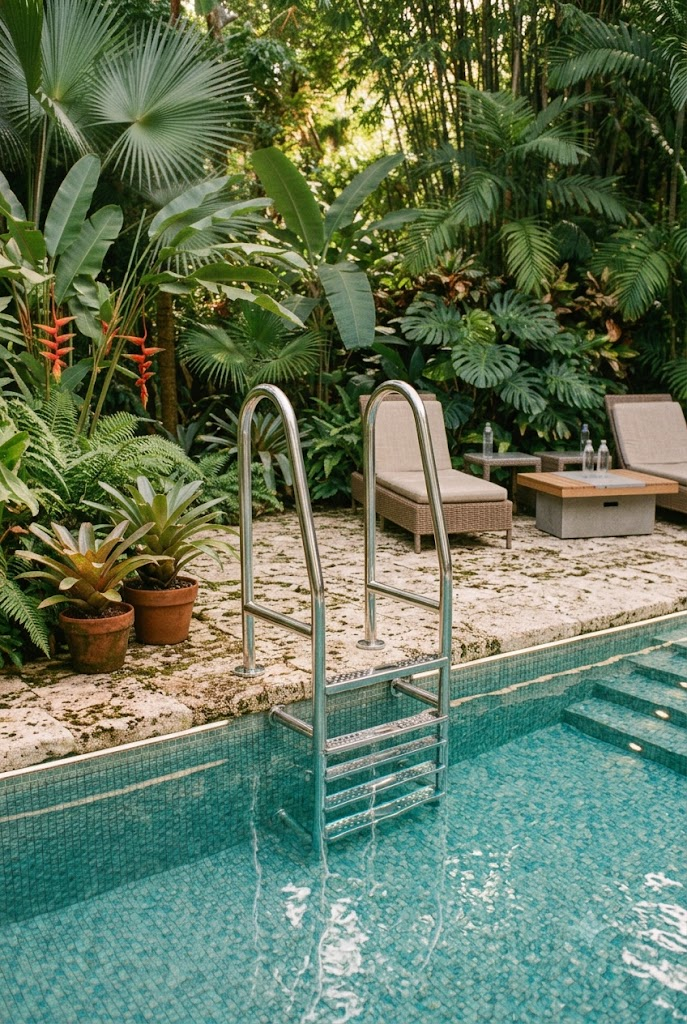
This is the standard for a reason — an A-frame straddles the pool wall for inherent stability, and stainless steel holds up better than any other common metal against both chlorine and saltwater corrosion.
Cost tier: High. Build tip: 316-grade stainless steel specifically is rated for saltwater use; standard 304-grade will corrode faster in salt systems.
9. Industrial Black Pipe Ladder
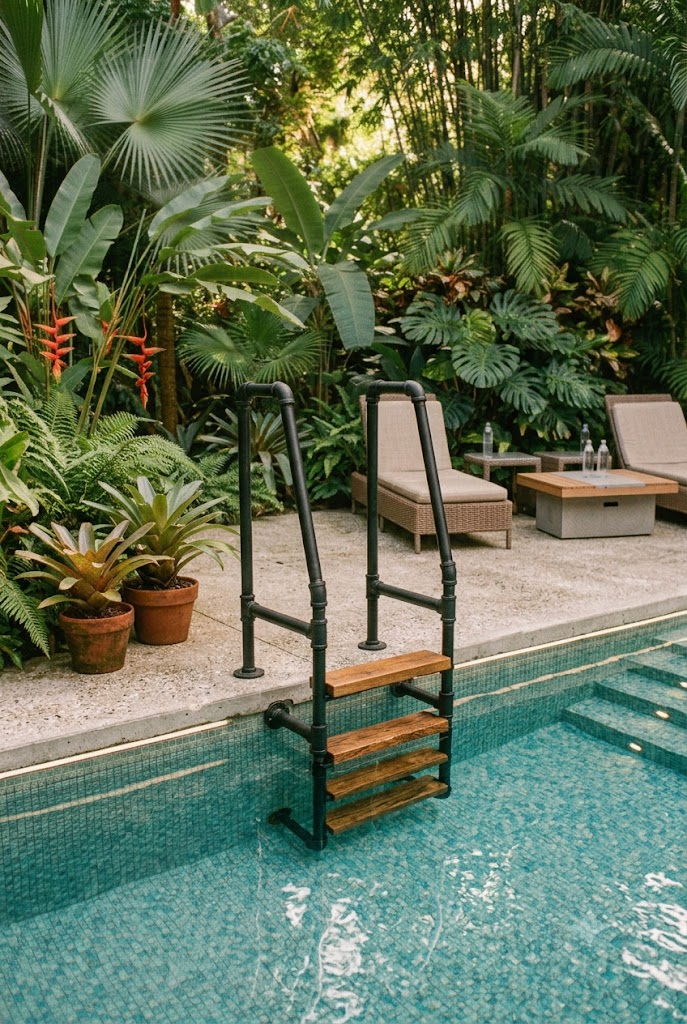
Black steel pipe fittings give a workshop-inspired look and are widely available at hardware stores in modular fittings, making this one of the more approachable metal builds for a first-time DIYer.
Cost tier: Budget-to-mid. Build tip: apply a rust-inhibiting primer and topcoat before installation — raw black pipe is not treated for constant outdoor moisture.
10. Minimalist Aluminum Ladder
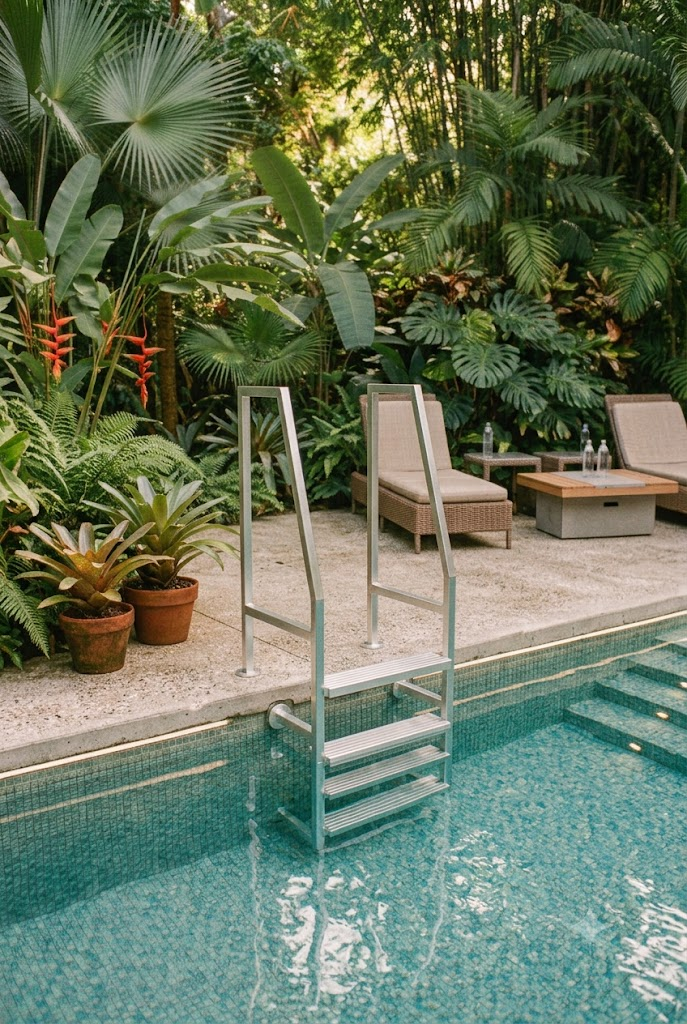
Aluminum is naturally corrosion-resistant and significantly lighter than steel, which matters if the ladder needs to be moved or repositioned, as is common with above-ground pools.
Cost tier: Mid. Build tip: choose marine-grade aluminum alloy (5000 or 6000 series) rather than standard aluminum stock for better long-term durability.
11. Recycled Metal Ladder Rebuild
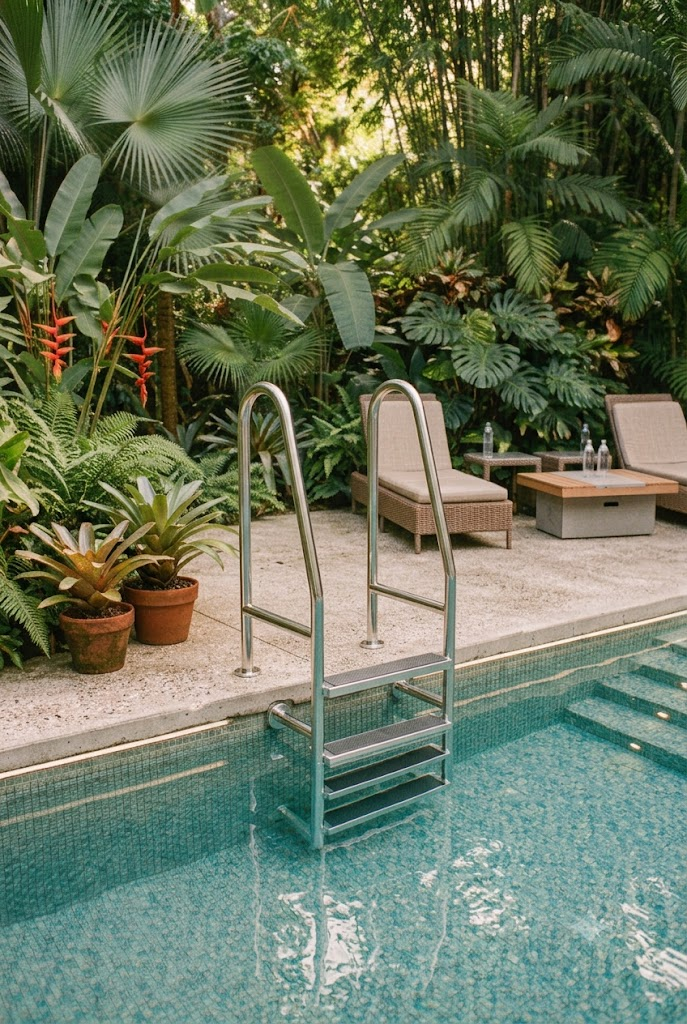
If you have an old, rusted ladder frame that’s still structurally sound underneath the surface rust, refurbishing it — new coating, new treads, new hardware — is often significantly cheaper than a full rebuild.
Cost tier: Budget. Build tip: use a wire wheel to fully remove rust before repainting, or the new finish will fail prematurely over old corrosion.
Rope & Alternative Material Ideas
12. Nautical Rope Ladder
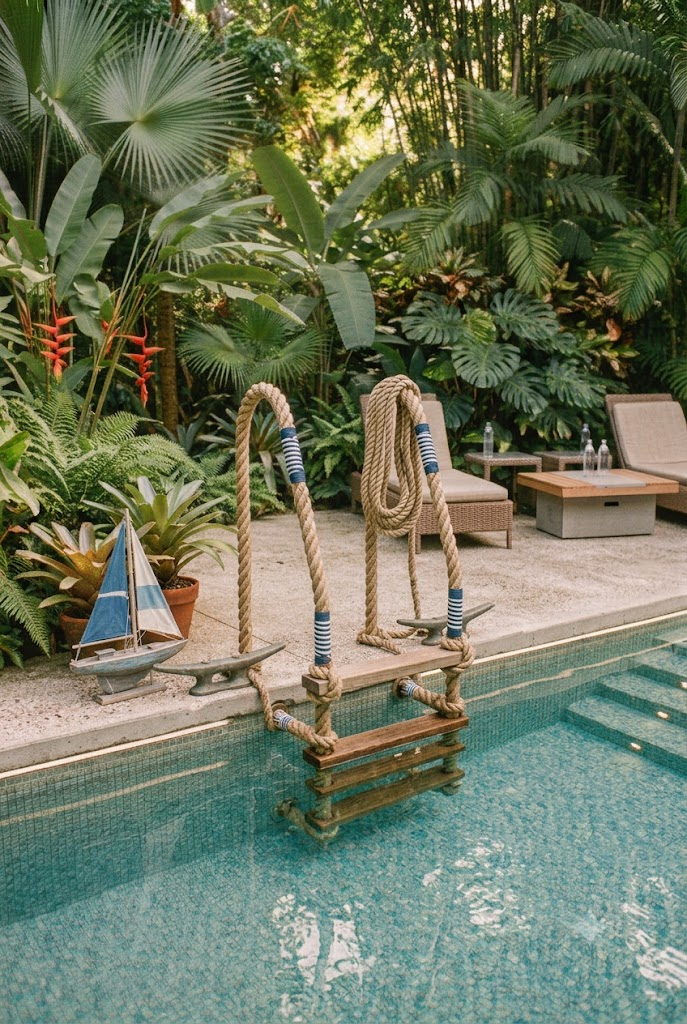
Thick marine-grade rope with hardwood rungs gives a lightweight, storable option that’s popular for above-ground and inflatable pools. It flexes more than a rigid ladder, which some users prefer and others find less stable.
Cost tier: Budget. Build tip: use polypropylene or nylon marine rope specifically — natural fiber rope degrades much faster with constant water exposure.
13. PVC Pipe Frame Ladder
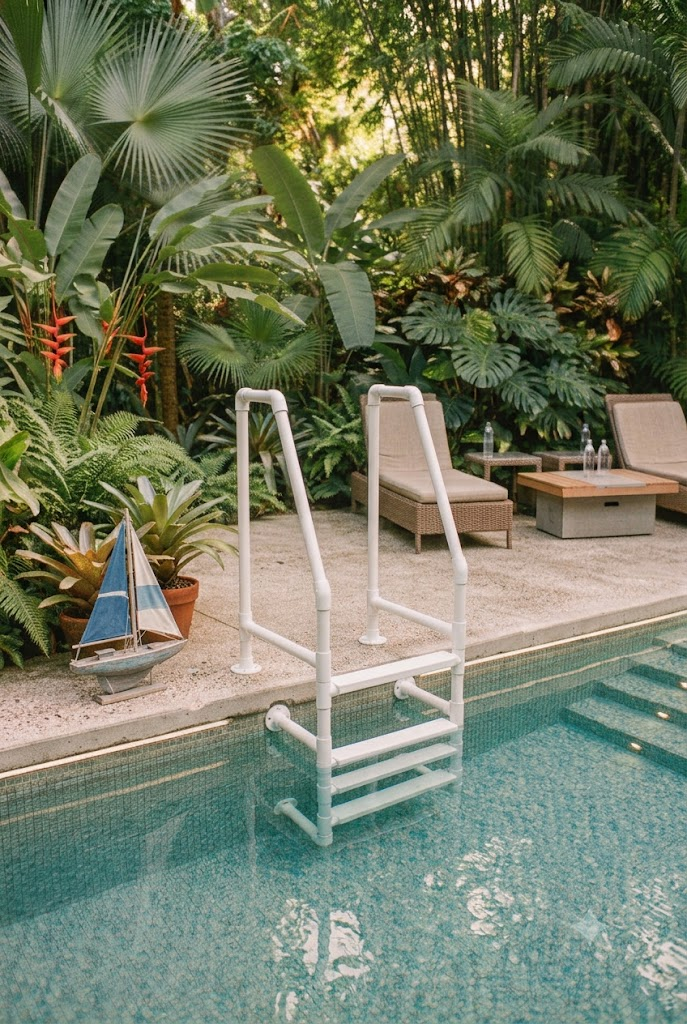
PVC won’t rust or corrode and is one of the cheapest materials available, making it a reasonable option for lighter-duty use, though it’s generally not rated for the same weight capacity as metal or hardwood frames.
Cost tier: Budget. Build tip: use schedule 40 PVC at minimum for any weight-bearing sections, not thin-walled decorative PVC.
14. Knotted Rope Steps
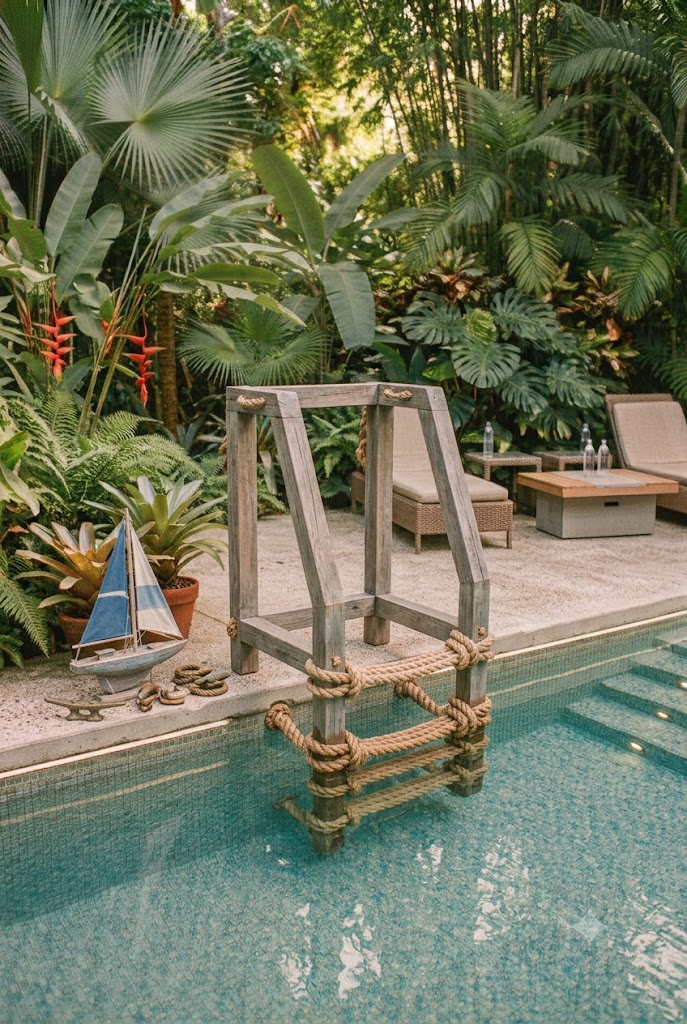
For a nautical or beach-themed pool area, thick knotted rope steps anchored to a simple wood frame double as a design feature rather than a purely functional element.
Cost tier: Budget. Build tip: space knots evenly and test each one under full body weight before regular use — inconsistent knotting is a common failure point.
In-Pool Step & Built-In Ideas
15. Poured Concrete Steps
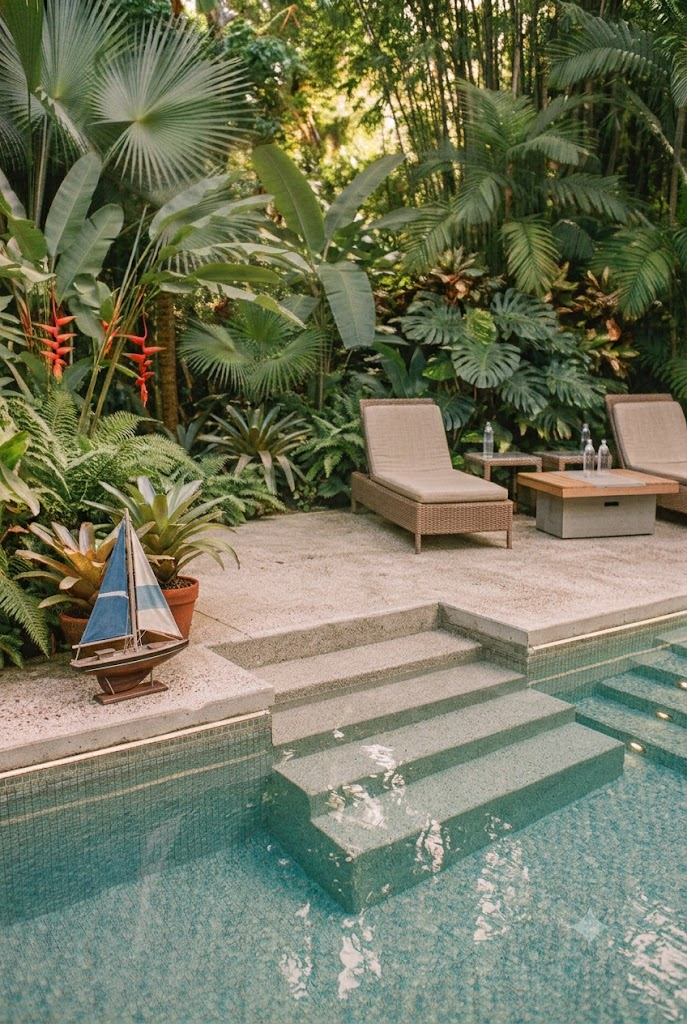
For built-in in-ground pools, wide poured concrete steps integrated into the pool structure are among the most permanent and stable entry solutions available, though this is a significantly larger project than a standalone ladder and typically requires professional pool contractor involvement.
Cost tier: High. Build tip: always specify a slip-resistant concrete finish or broom texture during the pour — smooth poured concrete is dangerously slick when wet.
16. Tiled Step Entry
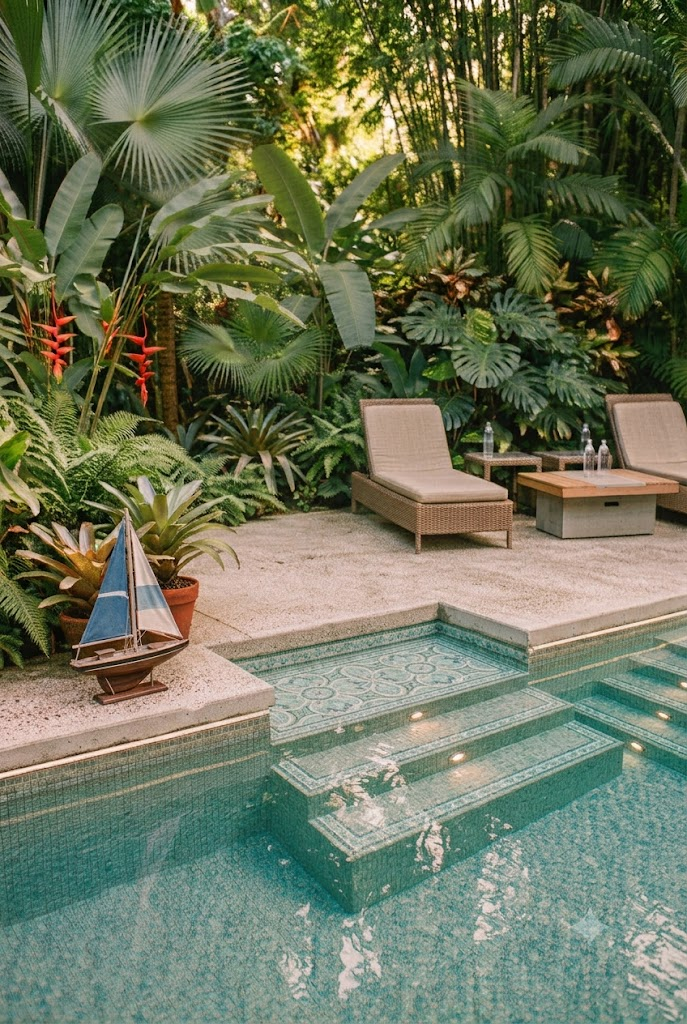
Adding slip-resistant tile to concrete steps elevates the visual design and allows color-matching to the rest of the pool, but tile selection matters — not all tile is rated for wet-slip resistance.
Cost tier: Mid-to-high. Build tip: look specifically for tile rated with a dynamic coefficient of friction (DCOF) of 0.42 or higher, the industry standard for wet-area flooring.
17. Stacked Paver Steps
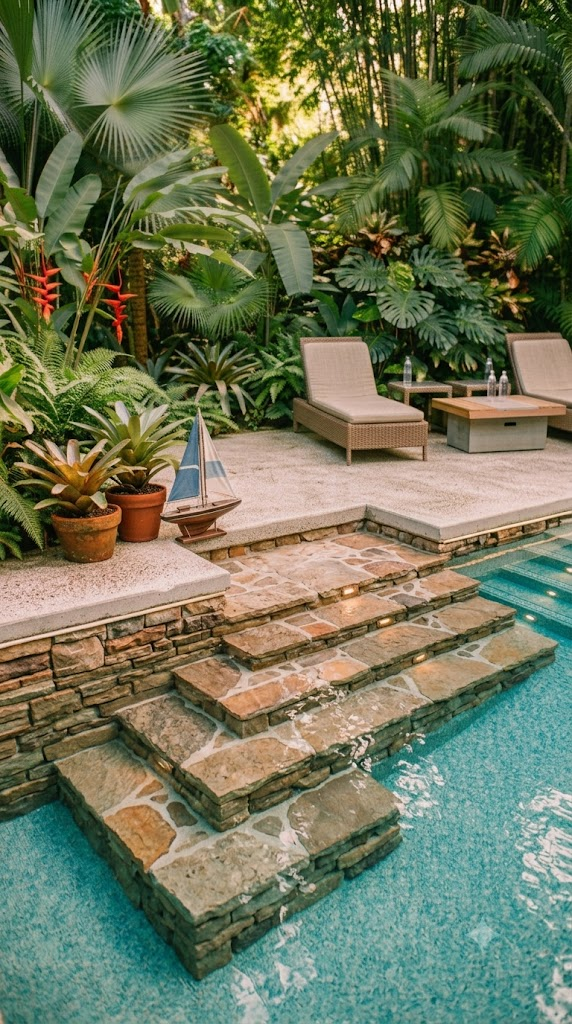
For above-ground or semi-inground pools, mortared stacked pavers create a sturdy, natural-looking step entry at a lower cost than a full concrete pour.
Cost tier: Mid. Build tip: use a solid compacted base beneath the first paver course — without it, steps can shift and settle unevenly over time.
18. Multi-Level Platform Ladder
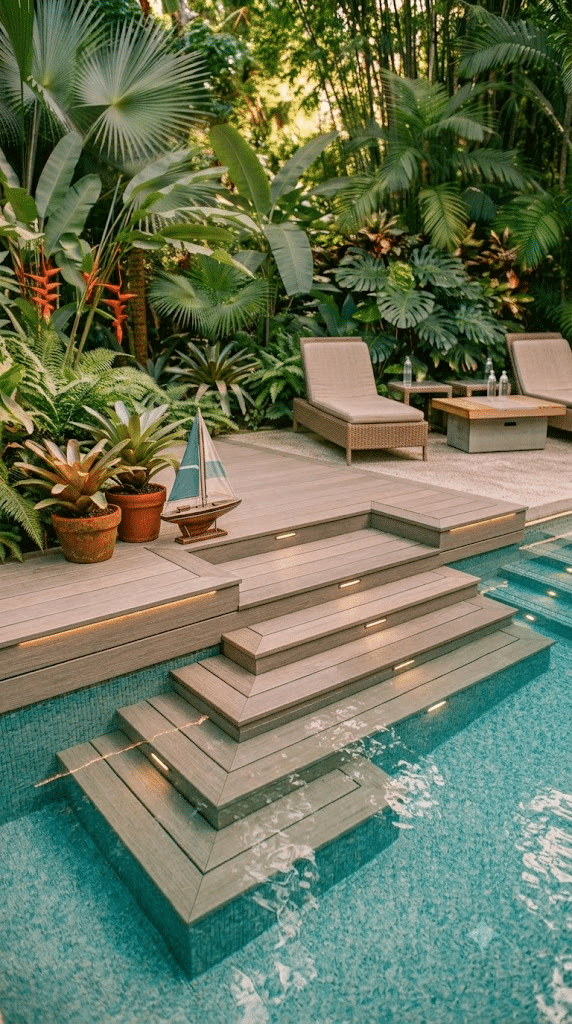
Stepped platforms rather than a single steep ladder create a more gradual entry, which is genuinely easier and safer for children, older adults, or anyone with mobility concerns.
Cost tier: Mid-to-high. Build tip: composite decking boards are a good surface choice here since they resist moisture and require minimal upkeep across multiple platform levels.
Safety-Focused Designs
19. Double-Rail Family Ladder

Most standard ladders include only one handrail. Adding a second, matching rail on the opposite side meaningfully improves stability for swimmers of any age, and it’s one of the simplest safety upgrades to add to almost any design.
Cost tier: Adds modest cost to any base design. Build tip: rails should be securely anchored at both top and bottom, not just at deck level.
20. Non-Slip Textured Step Ladder

Regardless of the base material, adding textured non-slip strips, grip tape, or a non-slip paint additive to every step is one of the highest-value, lowest-cost safety additions available.
Cost tier: Low add-on cost. Build tip: apply treatment to the full step surface, not just the center — most slips happen at the step edges.
21. Removable Child-Safety Ladder

For pools accessible to young children, a ladder that can be fully removed or locked when unsupervised is a genuine safety necessity, not just a nice-to-have feature. Many local pool safety codes actually require a barrier method for unsupervised access.
Cost tier: Mid. Build tip: check your local municipal pool safety code before finalizing this design — requirements vary by region and sometimes mandate specific barrier heights or lock types.
22. Wide-Base Platform Ladder

A wider platform at the ladder’s base gives swimmers a stable place to find their footing before stepping fully off, rather than transitioning directly from rung to open pool floor.
Cost tier: Mid. Build tip: a minimum 24-inch-wide base platform is a reasonable standard for comfortable footing.
Aesthetic & Design-Focused Ideas
23. Matching Deck-and-Rail Ladder

Building the ladder from the same material and finish as an existing deck railing creates a cohesive, intentional look rather than a mismatched, bolted-on afterthought.
Cost tier: Varies by material matched. Build tip: match both color and hardware finish, not just wood or metal type — mismatched hardware finishes are a common visual miss.
24. Recessed Wall Ladder

For in-ground pools, a ladder recessed directly into the pool wall keeps the surrounding deck visually clean and avoids a freestanding frame interrupting sightlines.
Cost tier: High. Build tip: this is typically a pool-construction-phase feature rather than a true retrofit DIY project — best planned during initial pool building or a major renovation.
25. Color-Matched Powder-Coated Ladder

Custom powder-coating a metal frame to match your pool tile, deck furniture, or home exterior trim is a relatively small additional cost over standard black or silver finishes, and it makes a significant visual difference.
Cost tier: Mid, with a modest premium over standard finishes. Build tip: bring an actual paint or tile sample to the powder-coating shop for accurate color matching rather than relying on a swatch photo.
26. Wood-and-Metal Hybrid Ladder

Combining a metal structural frame with wood treads gives you metal’s durability with wood’s warmer visual texture — a practical middle ground between the two material categories.
Cost tier: Mid. Build tip: use stainless steel fasteners specifically where wood meets metal, since dissimilar metal fasteners can accelerate corrosion at contact points.
Above-Ground & In-Ground Specific Ideas
27. Dual-Sided A-Frame With Safety Gate

Many manufactured above-ground pool ladders include an inside barrier or gate specifically to prevent unsupervised access — a feature worth replicating in any custom DIY build for the same safety reason.
Cost tier: Mid. Build tip: the gate mechanism should be difficult for young children to operate independently, typically meaning a latch positioned above typical child reach height.
28. Beach Entry Alternative (No Ladder Needed)

For those undertaking a larger project, a gradual, wide beach-style entry eliminates ladder-related safety concerns entirely and has become increasingly popular in newer in-ground pool designs, particularly for households prioritizing accessibility.
Cost tier: High — typically a pool-construction-phase decision rather than a retrofit. Build tip: this generally requires professional design and construction, since it affects the pool’s overall structural shape.
The Most Common Issues People Face With Pool Ladders
1. Rust and Corrosion
The single most common complaint, especially with untreated or lower-grade steel. Saltwater pools accelerate this significantly compared to standard chlorine pools.
Fix: choose 316-grade stainless steel, aluminum, or properly sealed wood, and rinse metal components periodically in saltwater systems.
2. Slippery Steps
Wet, smooth metal or unfinished wood becomes dangerously slick, and this is a leading cause of poolside injuries generally.
Fix: add non-slip texture to the entire step surface, not just the top, and reapply as treatments wear down over time.
3. Wobbling or Structural Instability
Often caused by improper anchoring or a frame not rated for the specific pool depth or wall angle.
Fix: anchor any DIY frame securely to a stable structure and test under full weight before regular use — don’t rely on the frame’s own weight for stability.
4. Sharp Edges or Exposed Hardware
Common in DIY builds using repurposed materials — exposed screws, rough cuts, or unfinished metal edges.
Fix: sand all wood edges, countersink or cap screws, and file down sharp metal edges before installation.
5. Poor Fit for Pool Depth or Wall Angle
A ladder that doesn’t match your actual pool wall height or angle creates an awkward, sometimes unsafe entry point.
Fix: measure your specific pool wall carefully before building — don’t assume a standard size or angle will fit.
6. Difficult Access for Kids or Older Adults
Standard single-rail ladders can be genuinely hard to use safely for young children or anyone with limited mobility.
Fix: consider a dual-handrail design, wider steps, or a multi-level/beach-style entry if accessibility is a household priority.
7. Design Clashing With the Pool Area
A purely functional, mismatched ladder can make an otherwise well-designed pool deck look unfinished.
Fix: match materials and finishes to your existing deck, railing, or tile rather than treating the ladder as an unrelated purchase.
8. Inability to Restrict Access When Unsupervised
For households with young children, a ladder that can’t be removed or locked creates an ongoing safety risk — and in many areas, local pool safety codes specifically address this.
Fix: build or install a removable ladder, or add a gate/barrier feature, and check your local municipal pool safety requirements before finalizing the design.
9. Cost of Durable Materials
High-grade stainless steel and marine hardware can get expensive quickly, which is a major reason people look toward DIY builds in the first place.
Fix: galvanized steel, aluminum, or well-sealed cedar offer a reasonable durability-to-cost balance for most residential pools.
My Professional Guide to Choosing a DIY Pool Ladder Design
I’d start any pool ladder project with two practical questions: what’s your pool’s specific wall depth and angle, and who in the household will actually be using it. A design that looks great but doesn’t match your pool’s structure, or isn’t safe for the kids or older adults using it, isn’t the right choice regardless of appearance.
Material selection should follow your climate and pool chemistry next. Saltwater pools are significantly harder on metal than standard chlorine pools, so stainless steel or aluminum earns its higher cost there, while a standard residential chlorine pool has more flexibility to use budget-friendly galvanized steel or properly sealed wood.
Finally, I’d never skip non-slip treatment and, if young children have access to the pool, some form of barrier or removable design — these are the two additions that address the most common and most serious issues people run into with pool ladders, and they’re also the two most likely to be required by local safety codes.
Conclusion
A DIY pool ladder can range from a simple weekend rope-and-wood build to a more involved poured-concrete or recessed wall installation — but the designs that hold up best over time share the same core decisions: material matched to your specific pool chemistry and climate, a properly anchored and correctly sized frame, and safety details like non-slip treads and, where needed, a restricted-access feature. Start with your pool’s actual measurements and your household’s needs, then choose the style that fits from there.
Frequently Asked Questions
What is the best material for a DIY pool ladder?
316-grade stainless steel and aluminum hold up best against corrosion, especially in saltwater pools, while galvanized steel and properly sealed cedar are solid, more budget-friendly options for standard chlorine pools.
How do I make a pool ladder less slippery?
Add non-slip texture, grip strips, or a slip-resistant paint additive across the full surface of every step, not just the center or top step, and reapply as it wears.
Are there safety codes for pool ladders?
Yes — many municipalities have specific requirements for barrier or removable-access features on pools accessible to young children. Check your local pool safety code before finalizing a design, especially for above-ground pools.
Can I build a pool ladder myself safely?
Yes, with careful measurement of your pool’s wall depth and angle, weather-and-chemistry-appropriate materials, and testing the finished structure under full weight before regular use.
Whatever material or style you choose, matching it to your pool’s actual dimensions and your household’s safety needs will matter far more for long-term satisfaction than the design alone.