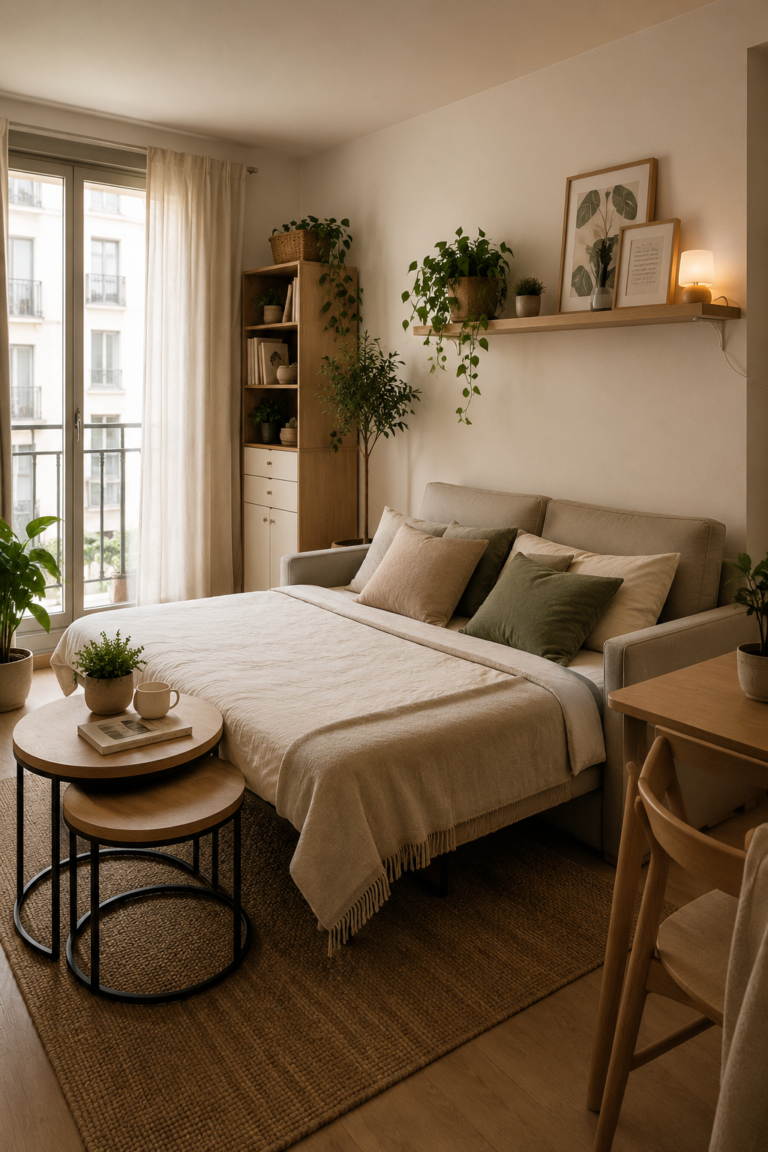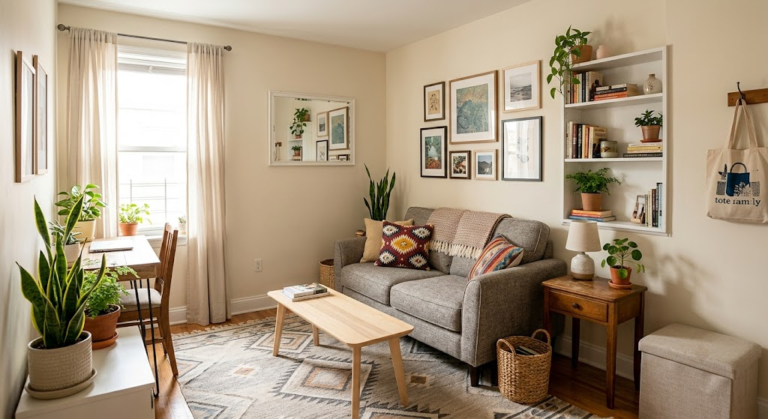
Discover 12 coffee table decor ideas
I’ve styled more coffee tables than I can count, and it’s consistently the fastest way to make a living room feel finished — or, done poorly, the fastest way to make it feel cluttered. Below are 12 coffee table decor ideas, each with the actual styling logic behind why it works, plus the core rules that apply no matter your table’s size or shape.
The Core Styling Rules
The rule of three: Group 2-4 objects, varying in height, with odd numbers typically reading as more balanced than even ones. One tall anchor item, one mid-height piece, and one low, horizontal object creates the most visually complete composition.
Coverage ratio: Decor should occupy roughly 30-50% of the table’s surface. Less than that reads as sparse and unfinished; more than that leaves no room to actually use the table.
Leave room for function: A coffee table is still meant to hold a drink or a plate. I’d keep one open “landing zone” clear, especially in households that actually use the table daily rather than styling it purely for display.
Scale to the table size: A small side-table-sized coffee table needs a lighter touch (2-3 small objects) than a large sectional-facing table, which can support a full tray plus a book stack plus a plant without feeling crowded.
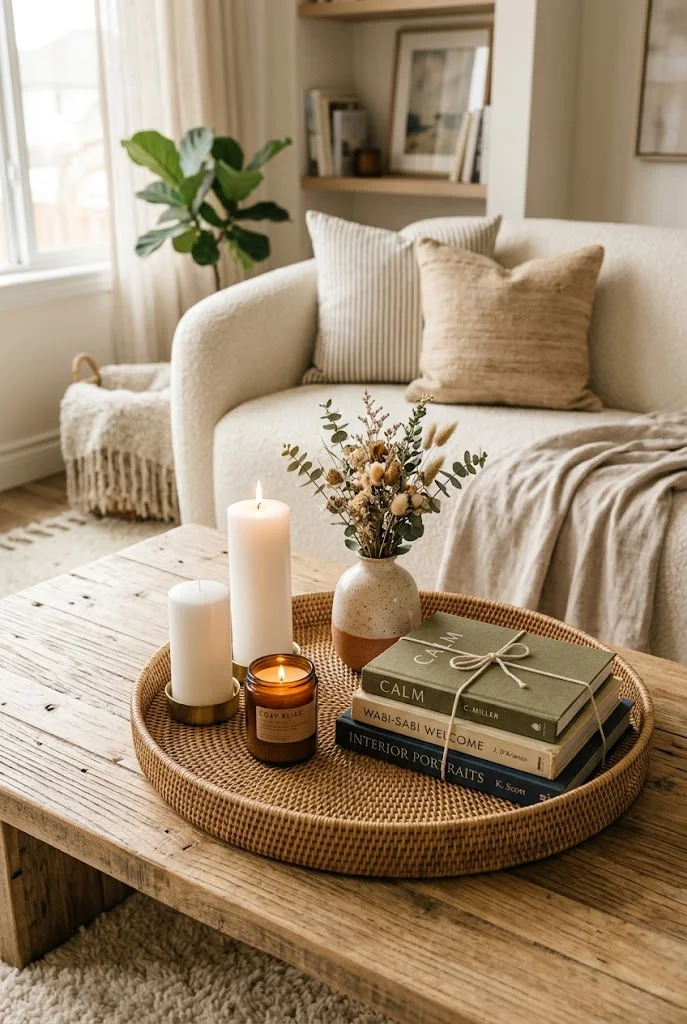
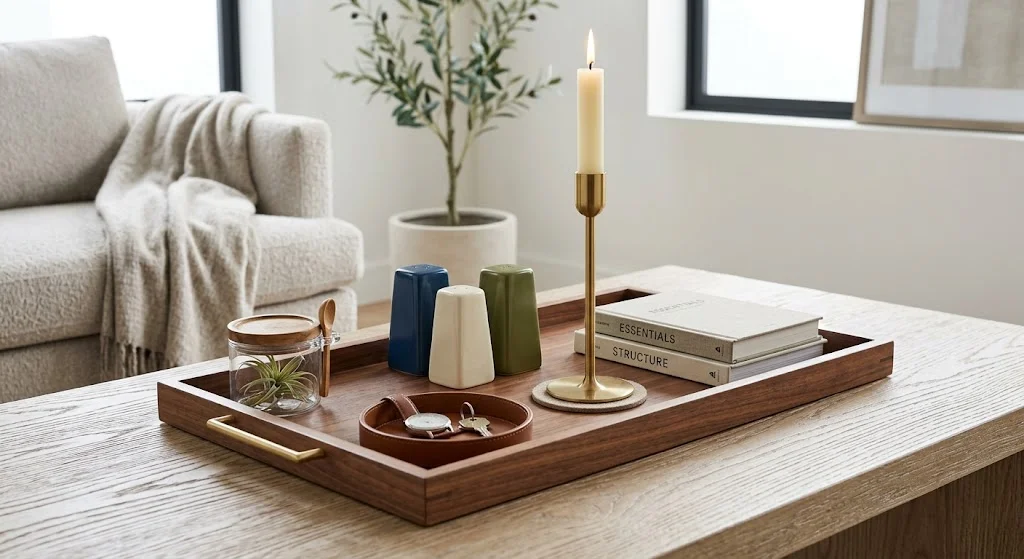
1. Tray-Anchored Styling
Starting with a decorative tray gives every other object a defined “home,” visually organizing loose items (coasters, remotes, candles) into one contained, intentional grouping rather than scattered pieces.
I’d choose a tray sized to roughly one-third to one-half of the table’s surface, leaving room around it for anything not on the tray itself, like a book stack or a plant.
Best for: any coffee table shape. Budget tier: low ($25-70.)
2. Layered Coffee Table Books
A stack of 2-4 books, chosen for cover color or spine tone rather than just content, creates an easy height anchor and doubles as a display surface for a smaller object placed on top.
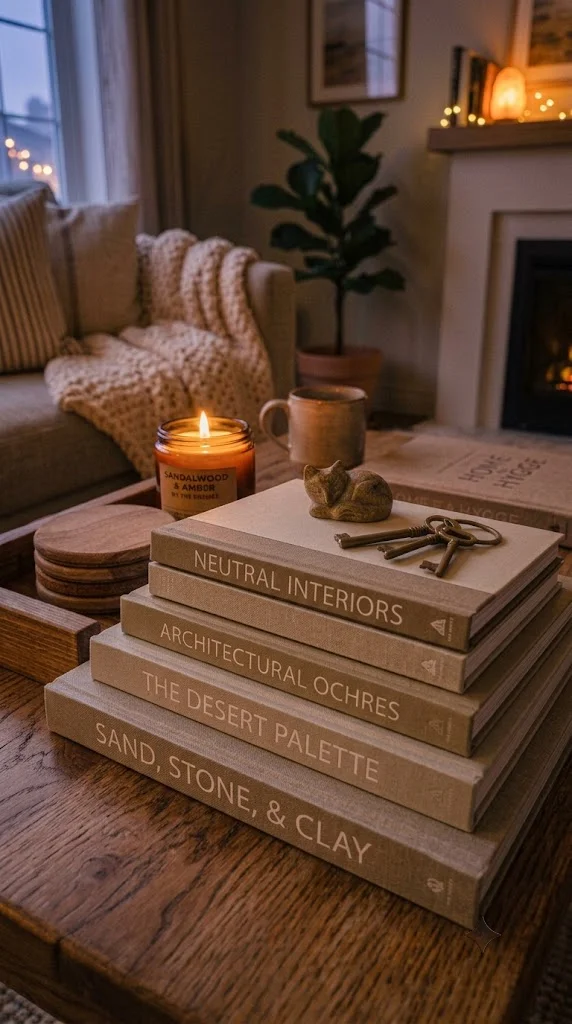
I’d choose books in a cohesive color family (all neutral tones, or all one accent color) rather than a random mix, since matched spines read as considerably more styled than a mismatched stack.
Best for: living rooms wanting a classic, collected look. Budget tier: low, especially using books already owned ($0-40 for new additions.)
3. Books Topped With a Small Object
Placing a small vase, a piece of sculpture, or a candle on top of a book stack combines two styling elements into one cohesive height-anchor, rather than treating books and objects as separate groupings.
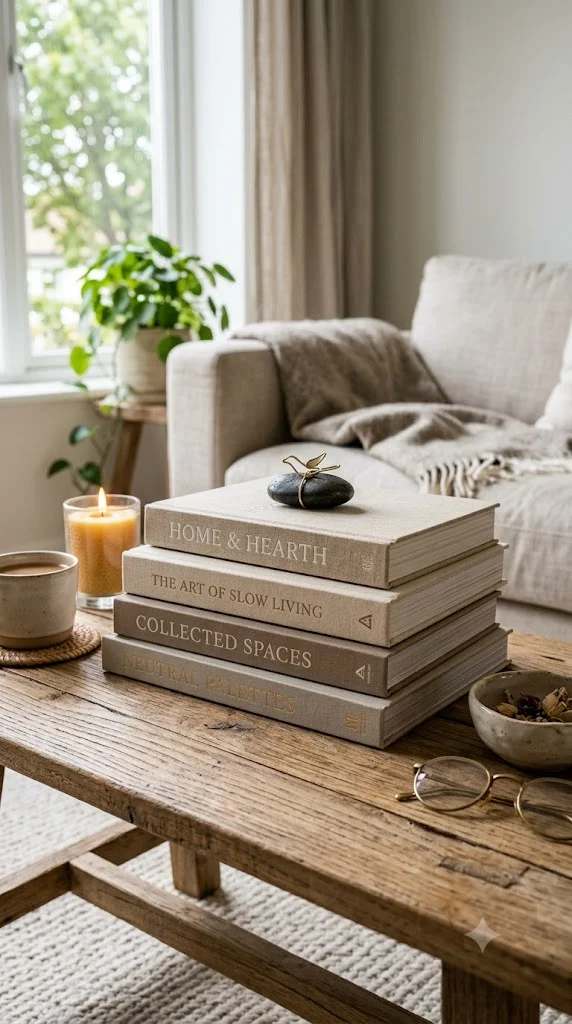
I’d choose an object proportional to the book stack’s width — something too large will look precariously balanced, while something too small gets visually lost.
Best for: adding height variation to a low-profile coffee table. Budget tier: low-to-mid ($20-60 for the topping object.)
4. Fresh or Faux Greenery
A single plant or a small arrangement in a low vase brings life and organic texture to a coffee table, balancing out harder materials like glass or metal that make up much of the rest of a typical living room.
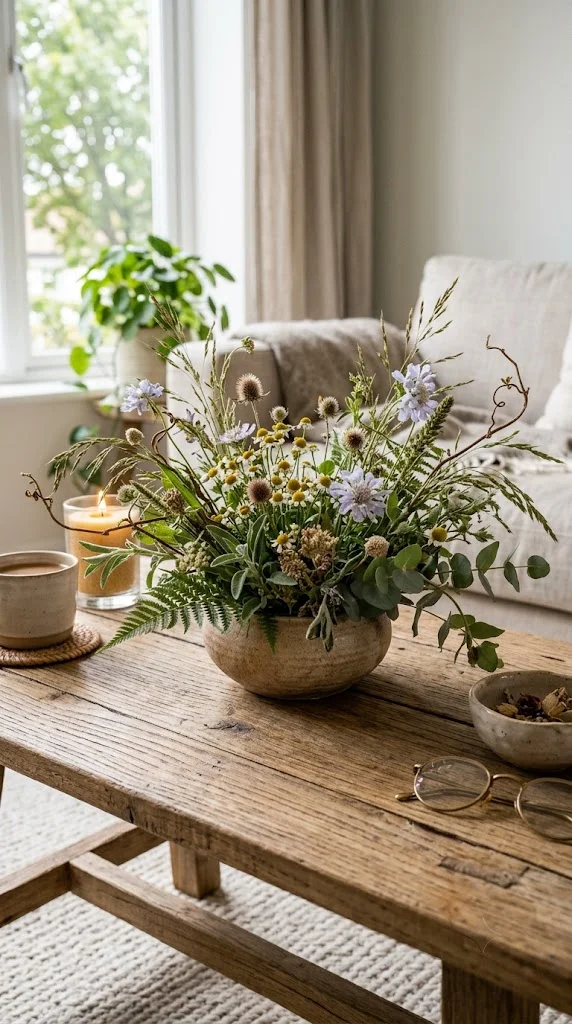
I’d choose a low, wide arrangement rather than a tall one for a coffee table specifically, since tall greenery can block sightlines across the room when people are seated around it.
Best for: any living room wanting a natural, lived-in feel. Budget tier: low ($15-45.)
5. Candle Cluster
Grouping 2-3 candles in varying heights and materials (a matte ceramic beside a glass hurricane) creates ambiance for evening use while serving as a genuinely simple daytime styling element too.
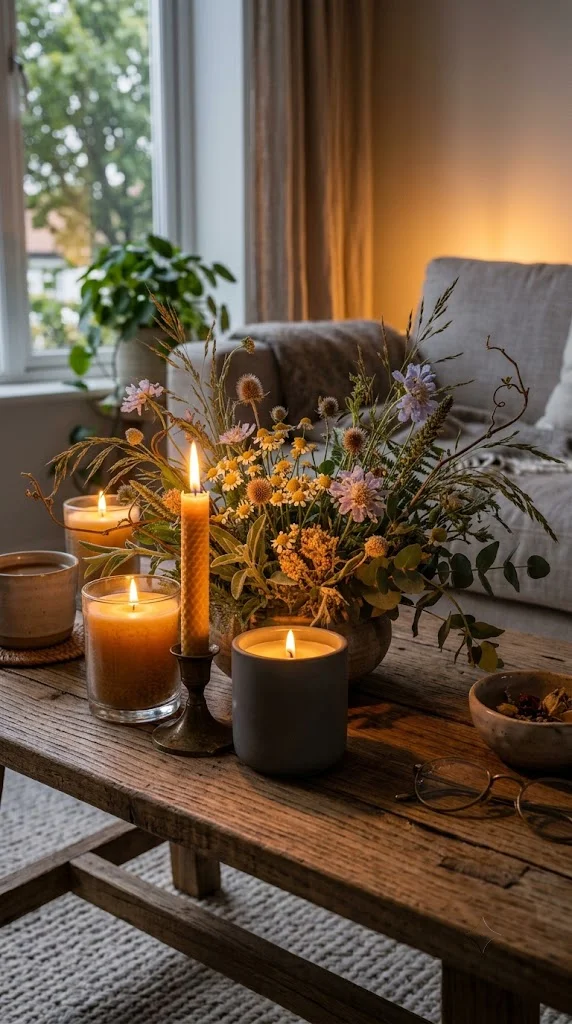
I’d keep candle groupings toward one side or corner of the table, rather than dead center, to leave the more functional open space for actual use.
Best for: any coffee table, especially in living rooms used frequently in the evening. Budget tier: low ($20-55 for a full grouping.)
6. Sculptural Bowl or Vessel
A single decorative bowl — ceramic, wood, or stone — serves a dual purpose: it’s a genuine catch-all for small items (keys, remote batteries) while also functioning as a piece of sculptural decor on its own.
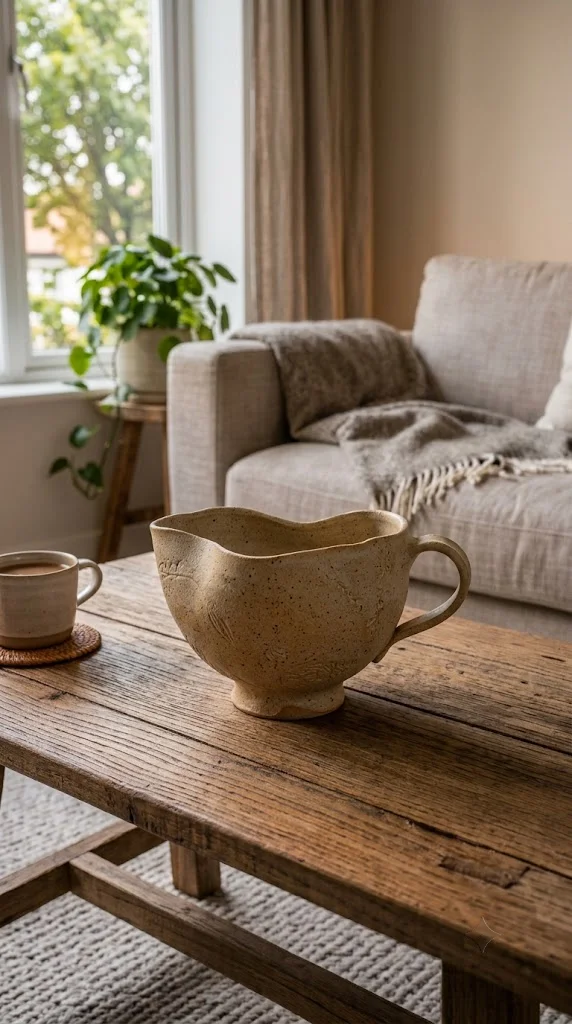
I’d choose a bowl with genuine depth (at least 2-3 inches) if you intend to actually use it functionally, rather than a purely flat decorative dish that can’t hold anything without items sliding out.
Best for: coffee tables that also serve as a household catch-all surface. Budget tier: low-to-mid ($20-60.)
7. Coffee Table with a Games or Puzzle Element
Displaying a stylish game (chess, backgammon, or a puzzle in a decorative box) on part of the table signals a lived-in, entertaining-friendly living room while doubling as a genuine activity for guests.
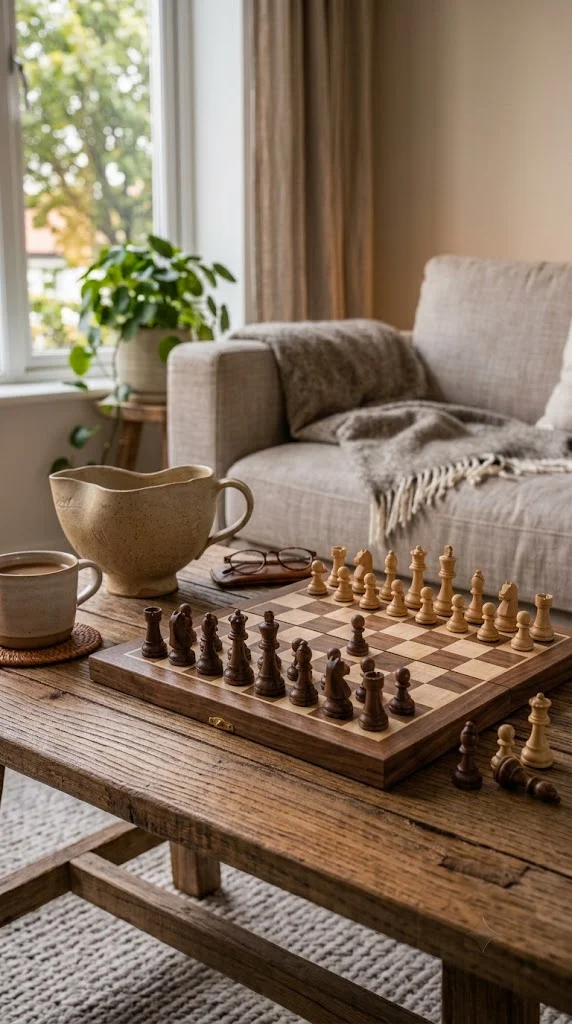
I’d position a games element toward one end of a larger table, leaving the remaining surface for the more standard tray-and-book styling, rather than letting the game dominate the entire tabletop.
Best for: larger coffee tables in households that entertain. Budget tier: mid ($30-100 depending on the game’s material and craftsmanship.)
8. Coffee Table Runner
A narrow fabric or woven runner placed diagonally or lengthwise across the table adds texture and visually anchors a grouping of objects, similar to how a tray functions but with a softer, more textile-driven look.
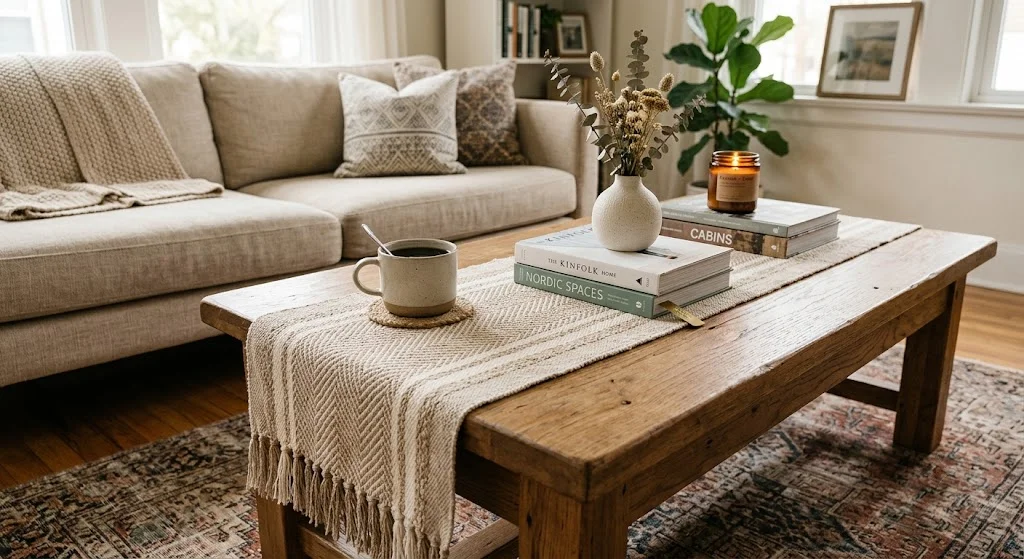
I’d choose this specifically for wood or stone tables where you want to introduce texture without fully covering the table’s natural material.
Best for: wood or stone coffee tables wanting added texture. Budget tier: low ($15-40.)
9. Minimalist Single Statement Object
Rather than a full grouping, styling a coffee table with exactly one substantial object — a sculptural bowl, a single large-format book, a piece of art propped upright — creates a restrained, modern look well suited to minimalist interiors.
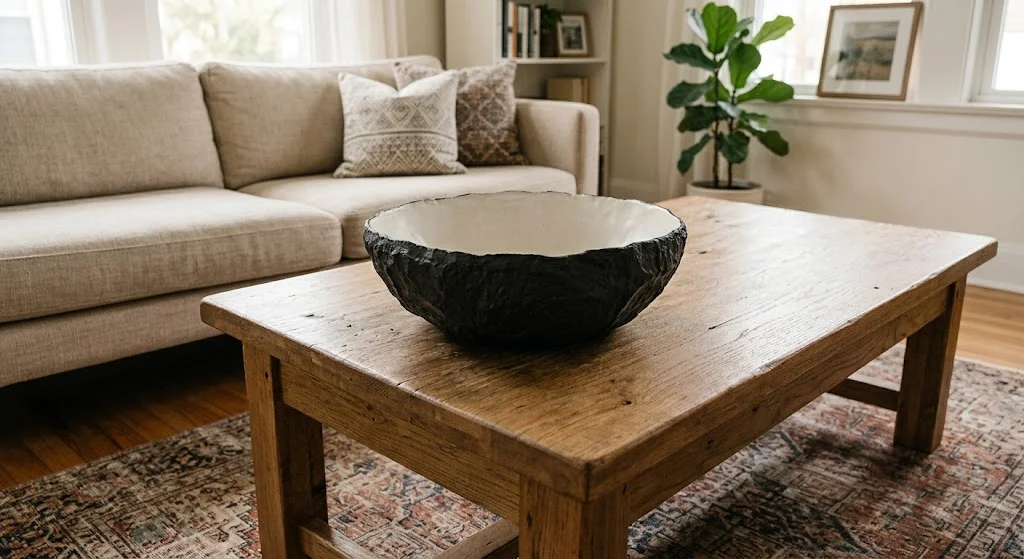
I’d choose this approach specifically for smaller coffee tables where a full grouping would feel cluttered relative to the table’s size, letting one confident choice carry the whole surface.
Best for: minimalist or Scandinavian-styled living rooms, smaller tables. Budget tier: varies by the chosen piece ($30-200+.)
10. Seasonal Rotation Styling
Choosing one or two “anchor” pieces that stay on the table year-round (a tray, a favorite vase) and rotating smaller seasonal accents around them (dried branches in fall, fresh blooms in spring) keeps the table’s styling fresh without requiring a full restyle each season.
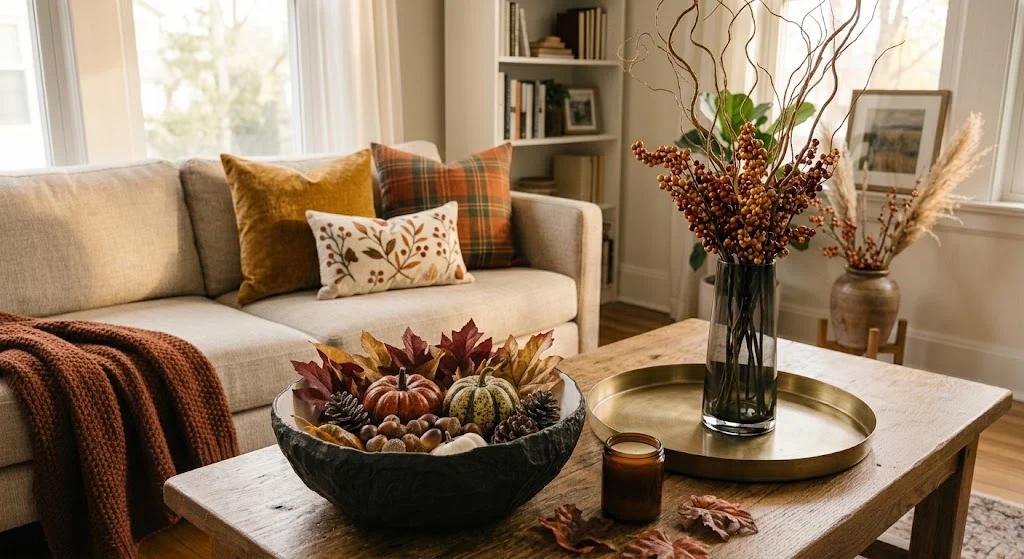
I’d keep the seasonal element to just one or two pieces specifically, so the swap feels like a refresh rather than requiring you to rebuild the whole arrangement every few months.
Best for: anyone who enjoys periodically refreshing their home’s styling. Budget tier: low, ongoing ($10-30 per seasonal refresh.)
11. Layered Textures Without Excess Color
Combining varied materials — a woven tray, a smooth ceramic vase, a rough stone object, a glass candle holder — while keeping the color palette limited to neutrals creates depth and visual interest without needing bold color to carry the styling.
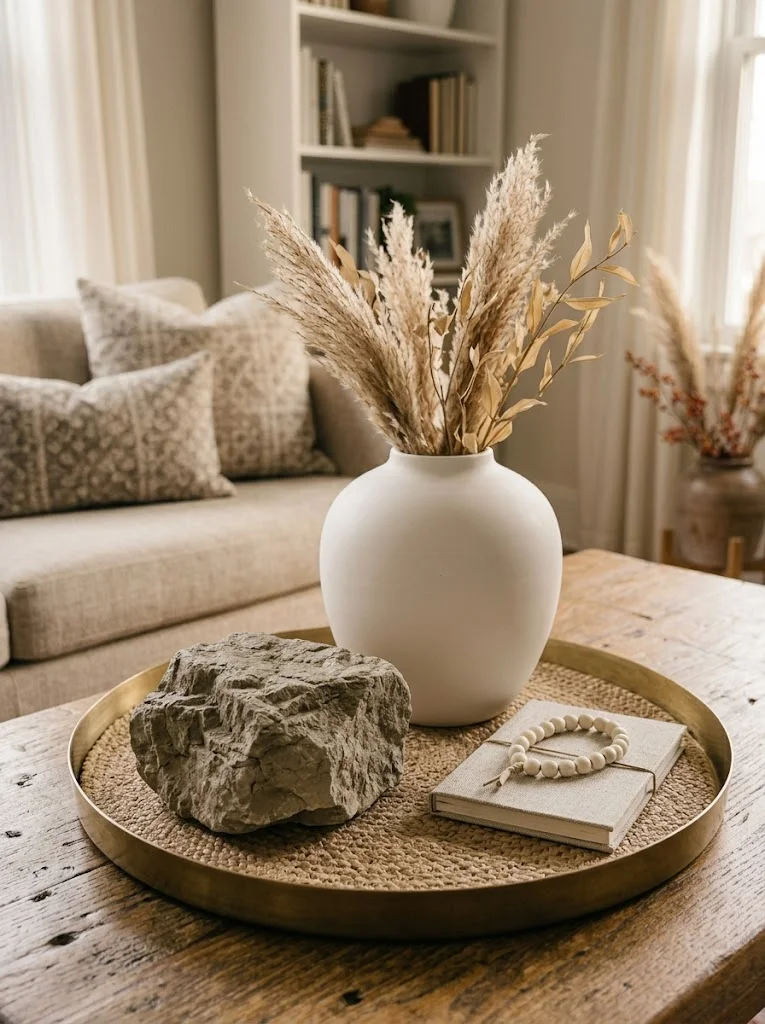
I’d rely on this approach specifically in a living room where the walls, sofa, or rug already carry strong color, letting the coffee table’s neutral texture variety provide contrast rather than competing for color attention.
Best for: living rooms with an already color-rich palette elsewhere in the room. Budget tier: low-to-mid ($40-120 for a full grouping.)
12. Coffee Table Styled for a Specific Ritual
Styling around a genuine daily habit — a coffee or tea station with a small tray, mugs, and a coaster set, or a reading corner setup with a book, glasses, and a small lamp within reach — makes the table feel functional and personal rather than purely decorative.
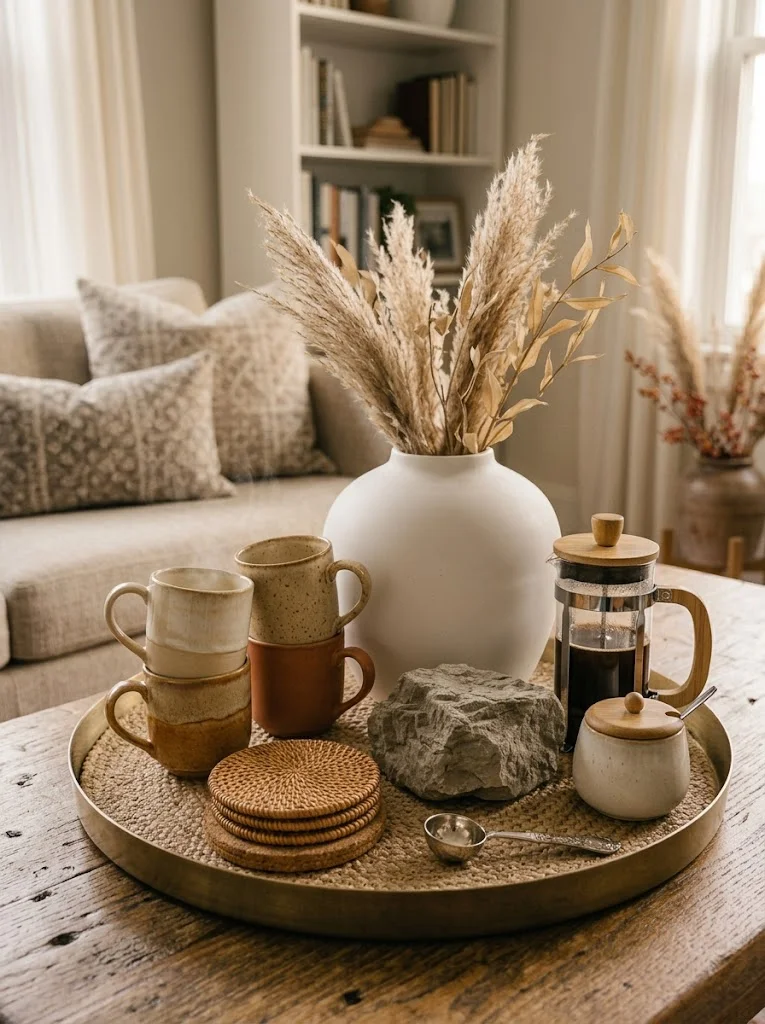
I’d choose this approach specifically if your coffee table sees frequent daily use, since it embraces the table’s function rather than styling it as though it’s purely for display.
Best for: households that use their coffee table daily rather than treating it as a display-only surface. Budget tier: low ($20-60.)
My Professional Guide to Styling Any Coffee Table
I always start with the table’s actual function before its styling — is this a table that gets used daily for drinks and remotes, or is it more of a display surface in a formal living room? A heavily styled table in a household that needs daily table space just creates friction between the styling and how the room actually gets used.
From there, I apply the same height-variation principle used in shelf and tray styling: one taller anchor, one mid-height piece, one low horizontal element. This single structure works across nearly every material, color palette, and room style, and it’s the fastest way to make an arrangement feel intentional rather than randomly placed.
Finally, I’d resist filling the entire surface. The empty space around a coffee table grouping is doing real visual work — it’s what separates a styled table from a cluttered one, and it also happens to be the space that keeps the table genuinely usable.
Conclusion
Coffee table styling comes down to the same handful of principles regardless of your specific decor style: group objects using the rule of three, vary height for visual interest, and leave enough open surface for both breathing room and actual function. Choose one or two ideas from this list that match how you actually use your living room, and the table will read as considered rather than either bare or overcrowded.
Frequently Asked Questions
How many items should be on a coffee table?
Generally 2-4 objects grouped together, following the rule of three, with varying heights for visual balance. More than that starts to compete with the table’s practical function.
What’s the best way to add height to a coffee table display?
Stacking books as a base, then topping them with a smaller object like a candle or vase, is one of the simplest ways to add height variation without needing tall furniture-scale pieces.
Should a coffee table match the rest of the room’s decor?
It doesn’t need to match exactly, but coordinating materials or colors with nearby furniture and decor creates a more cohesive look than styling the table in complete isolation.
How do I style a coffee table that gets used every day?
Keep one section of the table clear as a genuine landing zone for drinks or a plate, and consider styling around an actual daily habit — like a coffee station or reading setup — rather than a purely decorative arrangement that competes with everyday use.