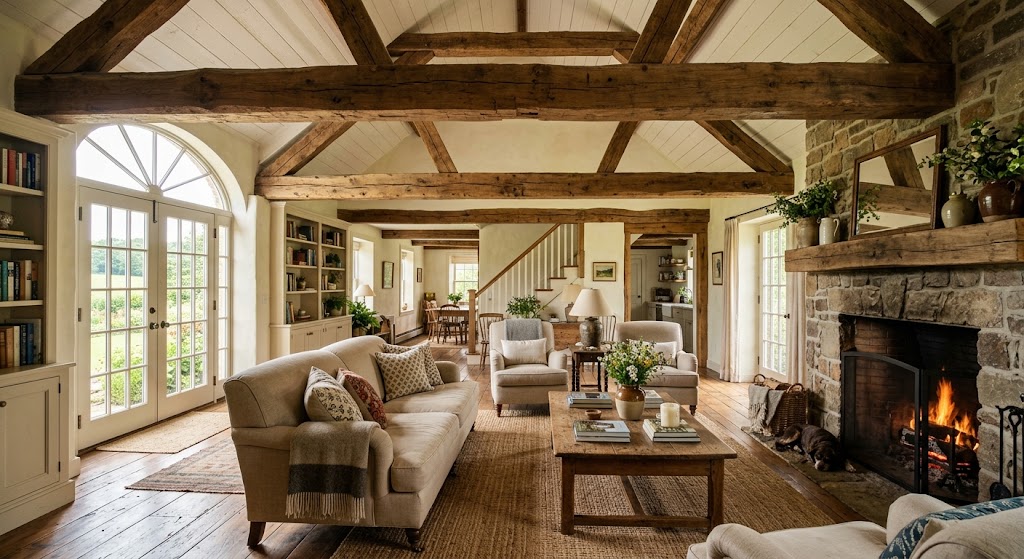
Farmhouse Living Room Ideas: 12 Ways to Get the Look Right
I’ve noticed farmhouse style is one of the easiest looks to get slightly wrong — too many people chase the “signature” pieces (a single shiplap wall, one barn door) without understanding the underlying principles that actually make the style feel authentic rather than themed. Below are 12 farmhouse living room ideas, each with the material and styling logic behind why it works, so the result reads as genuinely lived-in rather than assembled from a single big-box aisle.
The Core Principles of Farmhouse Style
Warm neutrals, not stark white: Farmhouse style leans on off-whites, creams, and warm grays rather than the cool, stark white often associated with modern farmhouse trends online. True warmth in the base palette is what separates farmhouse from generic modern minimalism.
Mix old and new deliberately: At least one or two genuinely vintage or well-worn pieces — even a single one — do more for authenticity than an entire room of new furniture styled to look old.
Texture over pattern: Farmhouse style relies more on varied texture (rough wood, soft linen, woven baskets) than bold pattern, which tends to read as more traditional country rather than modern farmhouse.
1. Shiplap or Board-and-Batten Accent Wall
A single wall of shiplap or board-and-batten panelling remains the most recognisable farmhouse architectural detail, adding texture and dimension without requiring a full-room commitment.
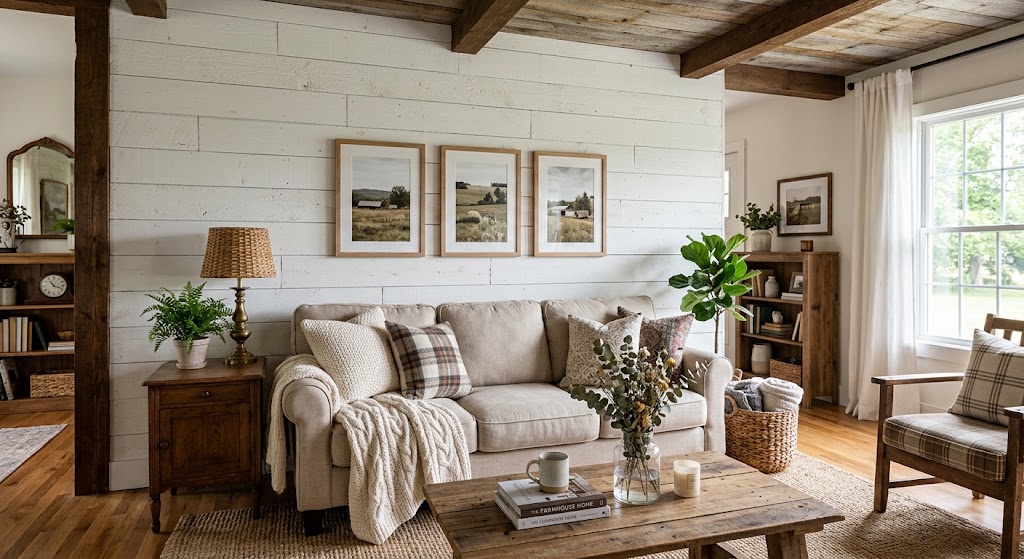
I’d choose one wall — typically behind the sofa or around a fireplace — rather than covering every wall, since a fully shiplapped room can tip into theme rather than authentic style.
Budget tier: mid ($200-600 depending on wall size and material.)
2. Reclaimed Wood Coffee Table
A coffee table built from genuinely reclaimed or distressed wood anchors a farmhouse living room in a way new furniture styled to look old rarely achieves as convincingly.
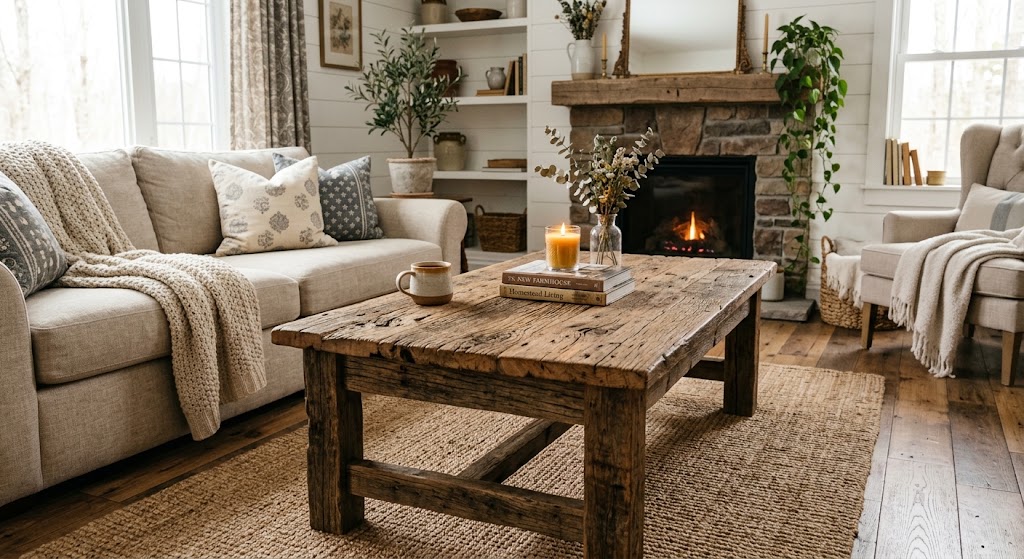
I’d prioritize sourcing this piece secondhand or from a reclaimed materials specialist specifically, since authentic wear and grain patterns are difficult to replicate convincingly in new manufacturing.
Budget tier: mid ($200-600.)
3. Neutral Slipcovered Sofa
A slipcovered sofa in a warm white, cream, or soft linen tone is a farmhouse staple, offering a relaxed, lived-in silhouette that contrasts intentionally with more rustic, weathered accent pieces around it.
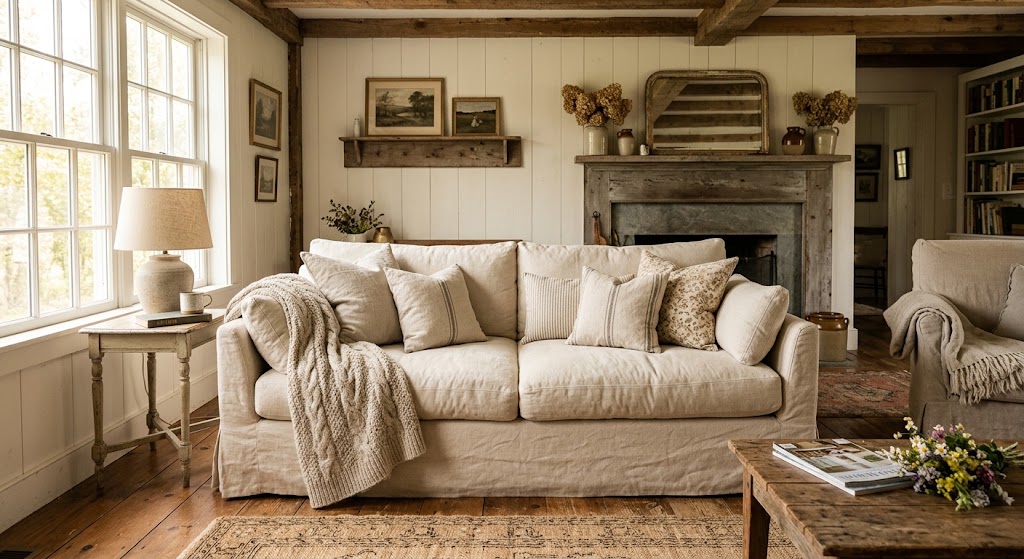
I’d choose a removable, washable slipcover specifically for households with kids or pets, since this practicality is part of the farmhouse style’s original functional appeal, not just its look.
Budget tier: mid-to-high ($600-1,800.)
4. Vintage or Vintage-Inspired Rug
A worn, faded, or vintage-style area rug — often in muted florals, stripes, or simple geometric patterns — adds warmth and softens the harder textures (wood floors, reclaimed furniture) common in this style.
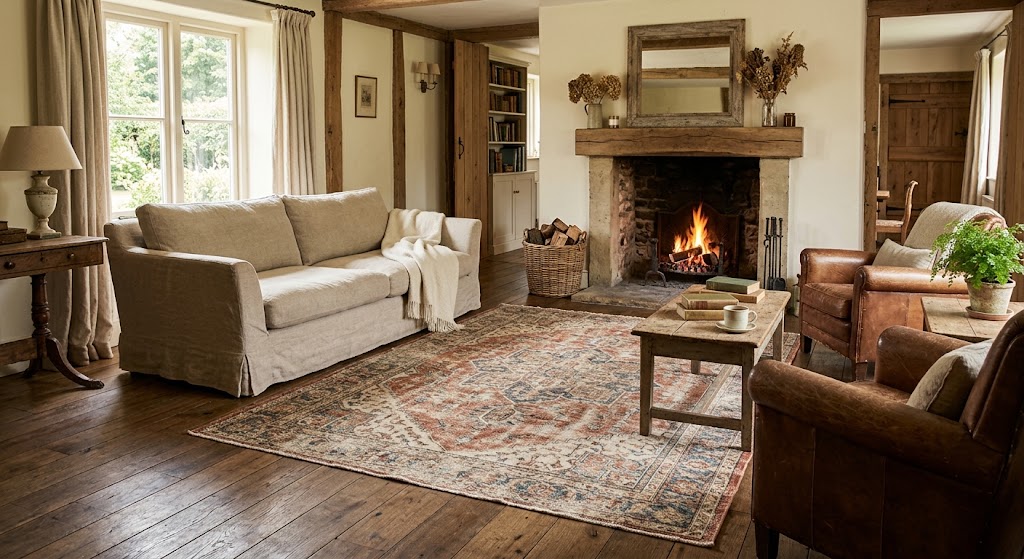
I’d choose a rug with genuine texture (wool, jute) over a flat, printed pattern, since texture reads as more authentically farmhouse than pattern alone.
Budget tier: mid ($150-500 depending on size and material.)
5. Open Wood Shelving
Open shelves — either freestanding or built directly into a wall — display curated collections (books, ceramics, baskets) in a way that closed cabinetry can’t, and are a defining feature of the farmhouse kitchen aesthetic extended into the living room.
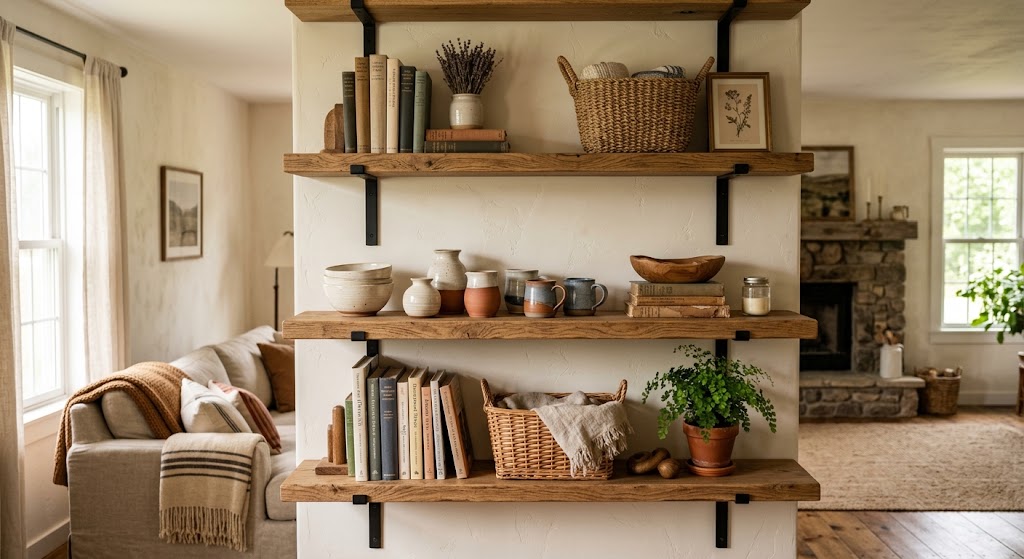
I’d style these shelves with genuine restraint, using the same height-variation and rule-of-three principles that apply to any shelf styling, since overloaded shelves undercut the intentional, curated feel this style depends on.
Budget tier: low-to-mid ($75-250.)
6. Woven Baskets for Storage
Woven baskets — for blankets, magazines, or toys — solve genuine storage needs while adding natural texture that plastic or metal bins simply can’t replicate in this style.
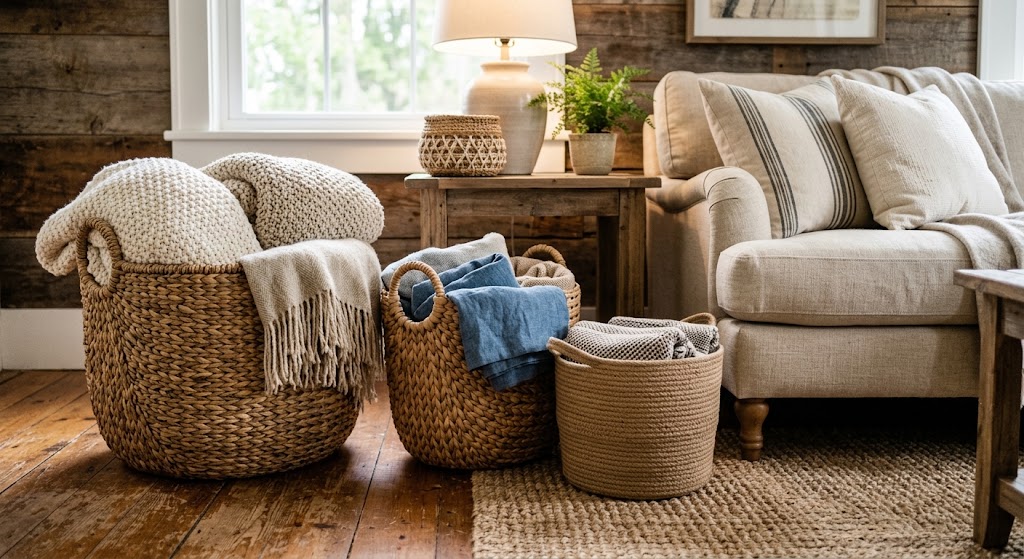
I’d choose baskets in varying sizes rather than a matched set, since slight variation reads as more collected-over-time than a uniform, purchased-as-a-set look.
Budget tier: low ($20-60 per basket.)
7. Exposed Wood Beams (Real or Faux)
Exposed ceiling beams — genuine structural beams or faux beam cladding — add architectural character overhead, drawing the eye upward and reinforcing the farmhouse aesthetic’s connection to older barn and farmhouse construction.
I’d choose faux beams specifically in homes without existing structural beams, since modern faux beam products convincingly replicate the look at a fraction of the cost and effort of adding genuine structural elements.
Budget tier: mid-to-high ($300-1,000+ depending on room size and beam material.)
8. Vintage-Style Lighting Fixtures
Lantern-style pendants, exposed-bulb fixtures, or aged metal sconces reinforce the farmhouse aesthetic through lighting, which is often an overlooked detail compared to furniture and wall treatments.
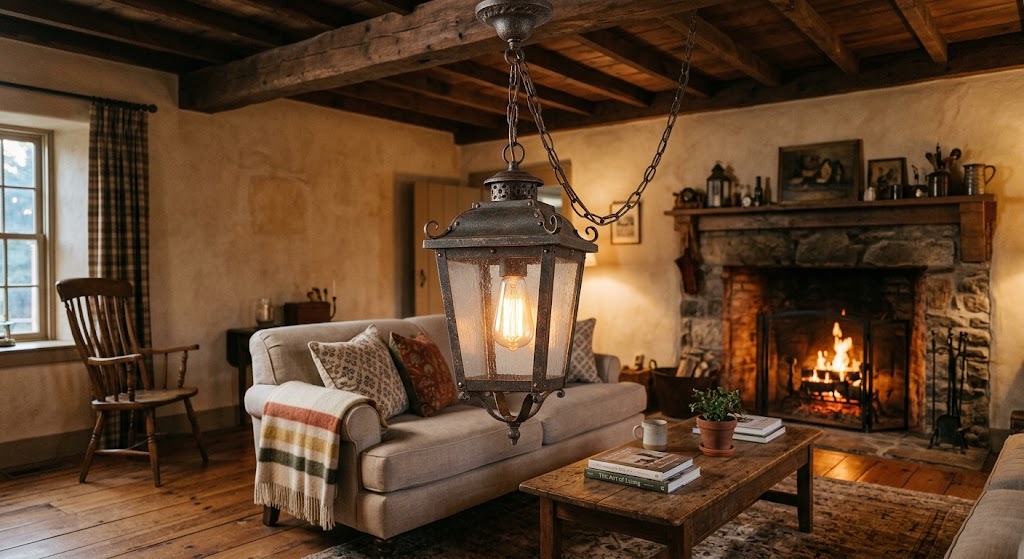
I’d choose warm white bulbs (2700-3000K) consistently across all fixtures, since this warmth matters more to the overall farmhouse feel than any single fixture style choice.
Budget tier: mid ($100-350 per fixture.)
9. Neutral Walls with a Black Accent
Pairing warm white or cream walls with black accents — window frames, a fireplace surround, light fixtures, or furniture legs — creates the high-contrast look strongly associated with modern farmhouse style specifically.
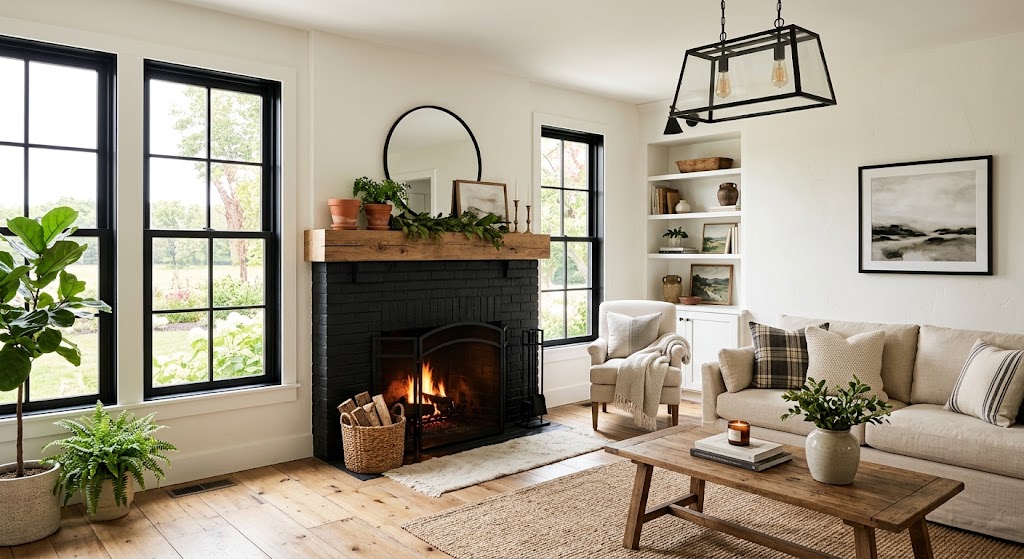
I’d limit black accents to two or three consistent elements rather than scattering them throughout the room, since restraint keeps the contrast feeling intentional rather than random.
Budget tier: low-to-mid, largely a paint and hardware update ($100-400.)
10. Antique or Vintage Furniture Pieces
At least one genuinely antique or vintage piece — a weathered trunk used as a coffee table, an old ladder repurposed as a blanket rack, a distressed dresser as a media console — does more for authentic farmhouse character than any amount of new furniture styled to match.
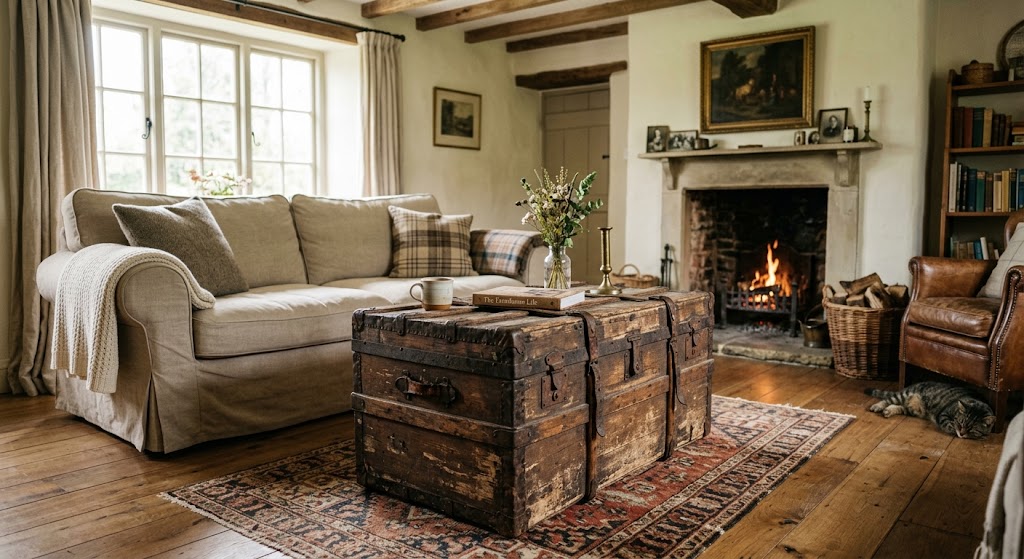
I’d prioritize function alongside authenticity when choosing these pieces, since farmhouse style historically valued practicality as much as appearance.
Budget tier: varies widely, generally low-to-mid if sourced secondhand ($50-300.)
11. Neutral Linen and Cotton Textiles
Soft, natural-fiber textiles — linen throw pillows, cotton blankets, simple burlap or linen curtains — reinforce the warm, textural feel central to farmhouse style, avoiding the synthetic sheen of more formal fabric choices.
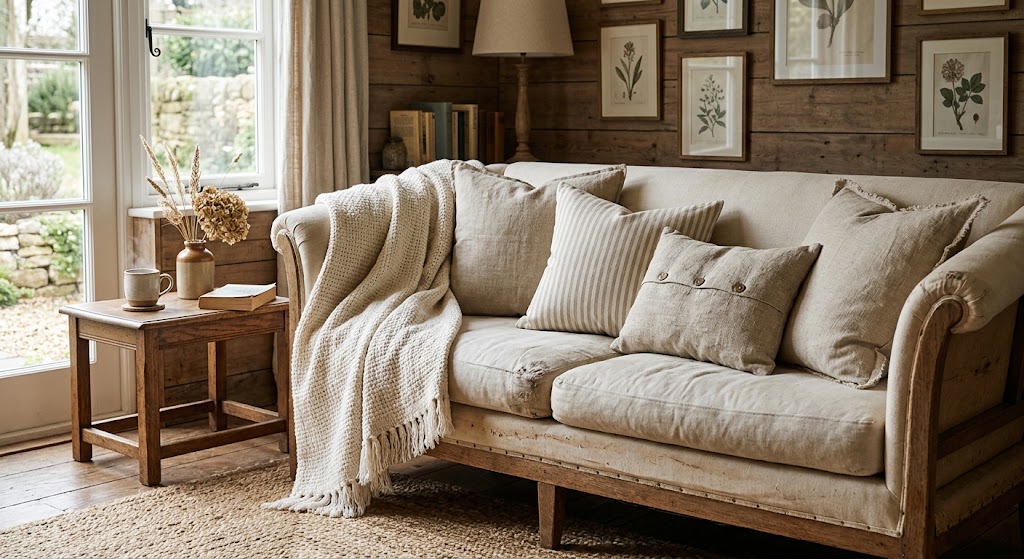
I’d choose slightly rumpled, relaxed-looking textiles over crisp, perfectly pressed ones specifically, since a lived-in softness is part of the aesthetic rather than a styling oversight.
Budget tier: low ($40-150 for a full textile refresh.)
12. Fresh Greenery in Simple Containers
Plants in simple terracotta, galvanized metal, or ceramic containers add life and color without competing with the room’s otherwise muted, neutral palette.
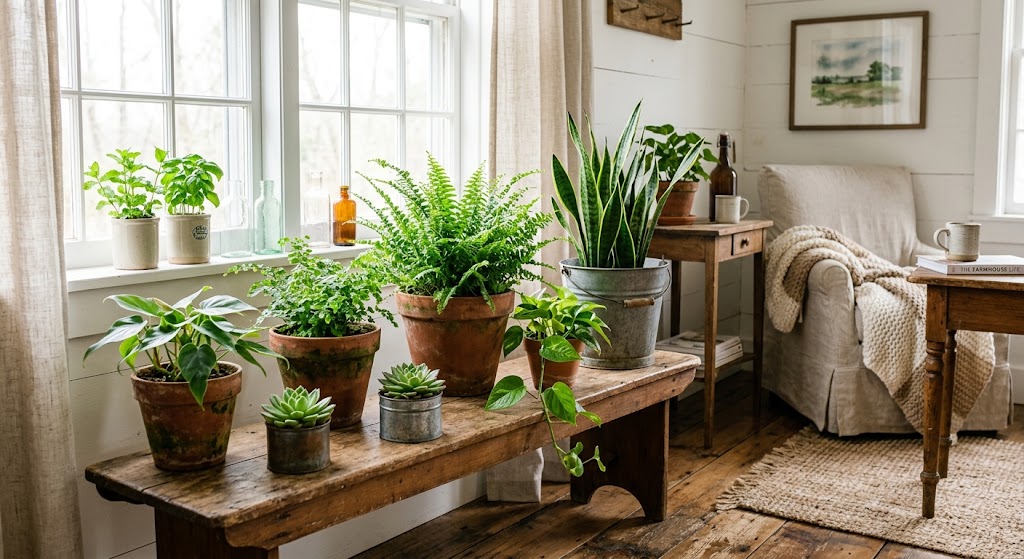
I’d choose containers with visible texture or slight imperfection (aged terracotta, hammered metal) over polished, uniform planters, keeping the greenery consistent with the room’s broader textural approach.
Budget tier: low ($20-60 per plant and container.)
My Professional Guide to Getting Farmhouse Style Right
I always start with the base palette — warm neutrals, not stark cool white — since this single decision affects how every other element in the room reads. A room with cool white walls and warm wood furniture creates visual tension that undercuts the cohesive warmth farmhouse style depends on.
From there, I prioritize sourcing at least one or two genuinely aged or secondhand pieces before filling the rest of the room with new furniture. This single decision does more for authenticity than any amount of “distressed” new furniture, which often reads as costume rather than character.
Finally, I’d resist over-committing to every farmhouse signature element at once — shiplap, exposed beams, black accents, and a barn door all in a single room starts to feel like a theme rather than a genuine aesthetic. Choose two or three defining elements and let the rest of the room support them quietly.
Conclusion
Farmhouse living room style succeeds through warm neutrals, genuine texture, and at least a few authentically aged or vintage pieces — not through assembling every recognizable farmhouse signature at once. Choose a warm base palette, mix in real texture and secondhand character deliberately, and the result will read as a genuinely lived-in farmhouse living room rather than a themed reproduction.
Frequently Asked Questions
What colors are used in farmhouse living rooms?
Warm neutrals dominate — off-whites, creams, warm grays, and soft beiges — often paired with black or dark wood accents for contrast, rather than stark, cool-toned white.
Do I need a shiplap wall for farmhouse style?
No — shiplap is one recognizable element of the style, but genuine farmhouse character comes more from warm neutrals, natural texture, and at least a few authentically aged pieces than any single architectural feature.
How do I make farmhouse style look authentic and not themed?
Prioritize genuine texture and at least one or two real vintage or secondhand pieces, and avoid combining every recognizable farmhouse signature (shiplap, exposed beams, black accents, barn doors) in a single room at once.
Is farmhouse style budget-friendly?
It can be — many defining elements (woven baskets, secondhand furniture, simple textiles) are inherently affordable, though larger architectural changes like exposed beams or full accent walls add more to the budget.