
15 Bedroom Ideas for Every Style, Size, and Budget
The most effective bedroom ideas start with one clear style direction (minimalist, boho, Scandinavian, or moody) rather than mixing several. A neutral color palette, layered textiles, and one intentional focal point — usually the bed or an accent wall are the three highest-impact changes for almost any bedroom, regardless of size or budget.
I’ve styled bedrooms in everything from studio apartments to full master suites, and the ones that feel finished always commit to one clear direction instead of borrowing a little from everywhere. Below are 15 bedroom ideas across different styles, sizes, and budgets, each with materials, exact steps, a styling tip, and a ready-to-use image prompt so you can visualize the room before you buy anything.
At-a-Glance Comparison Table
| Idea | Best For | Difficulty | Approx. Budget |
|---|---|---|---|
| Minimalist Neutral Bedroom | Any bedroom | Easy | $$ |
| Boho Layered Textile Bedroom | Bedrooms wanting warmth/texture | Medium | $$ |
| Scandinavian Cozy Bedroom | Small to mid-size rooms | Easy | $$ |
| Small Bedroom Space-Saving Layout | Studio/small bedrooms | Medium | $$ |
| Dark Moody Bedroom | Larger rooms with good light | Medium | $$$ |
| Coastal Bedroom | Bright, airy rooms | Easy | $$ |
| Rustic Farmhouse Bedroom | Larger bedrooms | Medium | $$ |
| Industrial Bedroom | Loft-style or open rooms | Medium | $$ |
| Japandi Bedroom | Any bedroom, minimalist lovers | Medium | $$$ |
| Romantic Canopy Bed Bedroom | Bedrooms with higher ceilings | Medium | $$ |
| Kids/Teen Bedroom Refresh | Children’s and teen rooms | Easy | $ |
| Reading Nook Corner | Bedrooms with a spare corner | Easy | $ |
| Multi-Function Small Apartment Bedroom | Studios, small apartments | Medium | $$ |
| Budget Bedroom Makeover | Any bedroom, tight budget | Easy | $ |
| Statement Accent Wall Bedroom | Any bedroom, quick upgrade | Easy | $$ |
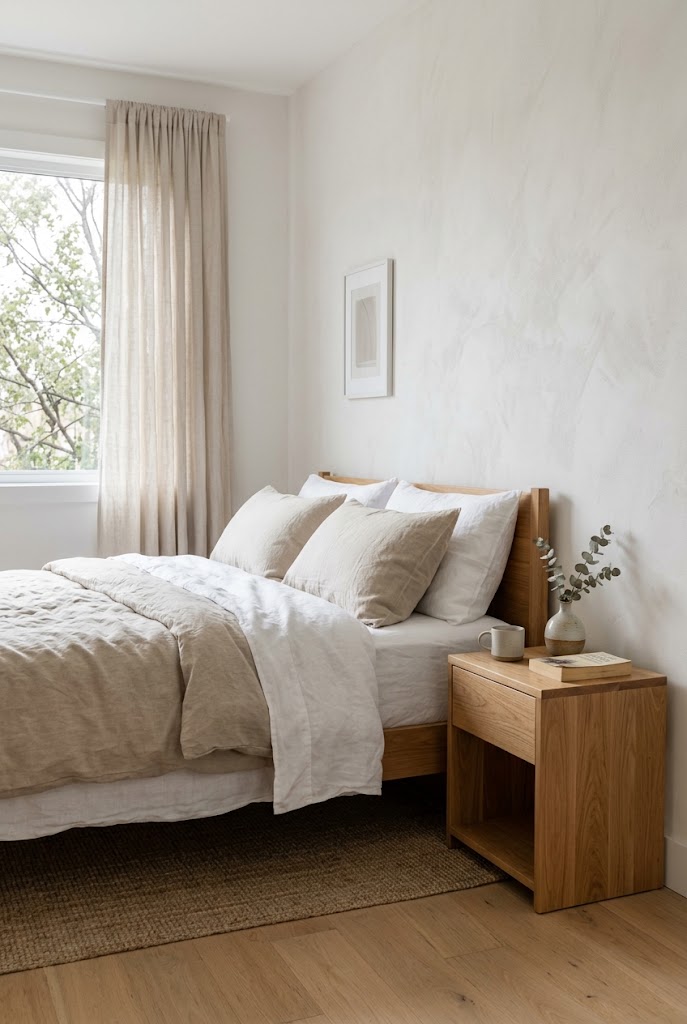
1. Minimalist Neutral Bedroom
A minimalist bedroom relies on restraint more than any specific product — a limited palette of whites, warm beiges, and one natural material keeps the room feeling calm rather than empty. I always start by removing, not adding, before styling anything new.
What You’ll Need: neutral bedding (white, cream, or oatmeal), one natural-material accent (wood nightstand or rattan lamp), simple curtains, minimal wall art.
Quick How-To: Clear surfaces first — nightstands, dresser tops, floor. Choose bedding in one or two neutral tones, add a single natural-material piece, and hang one piece of simple art or leave the wall bare.
Styling Tip: Resist adding a second accent color — minimalist bedrooms lose their calm effect the moment a third tone enters the room.
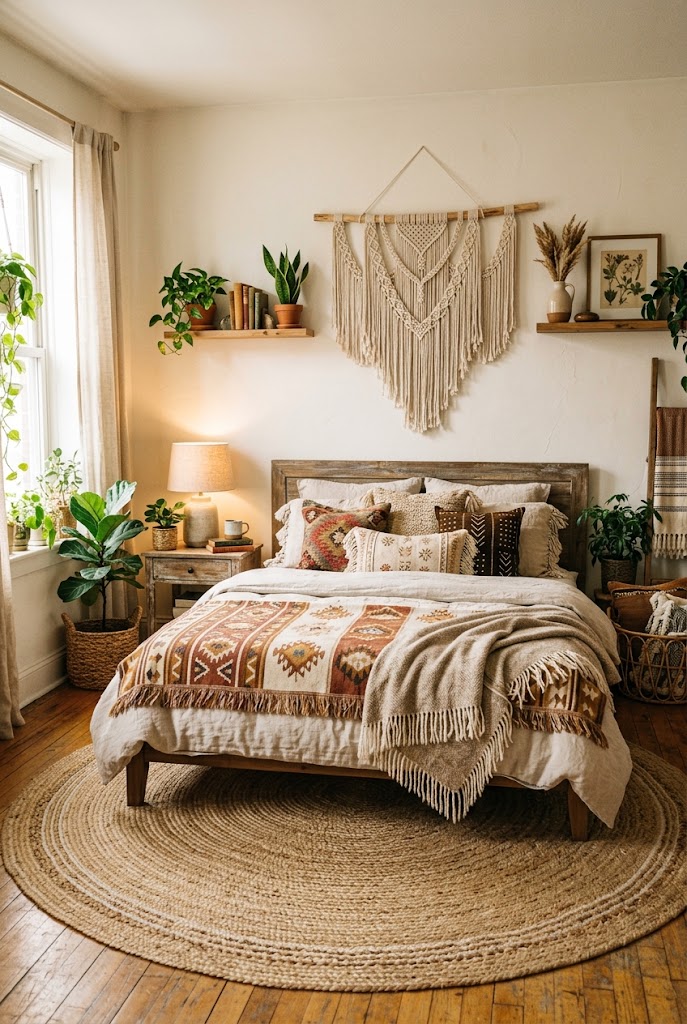
2. Boho Layered Textile Bedroom
Boho bedrooms thrive on texture rather than color intensity — a mix of woven throws, patterned pillows, and a textured rug creates warmth without needing bold wall colors or furniture.
What You’ll Need: woven throw blanket, 3–4 patterned or textured pillows, a jute or patterned area rug, macrame wall hanging, rattan or wood accents.
Quick How-To: Layer the rug first, then build the bed with a base blanket and mixed-pattern pillows in coordinating (not matching) tones. Add one macrame or woven piece on the wall above the headboard.
Styling Tip: Mix textures (woven, knit, smooth cotton) more than patterns — too many competing patterns can tip boho into cluttered.
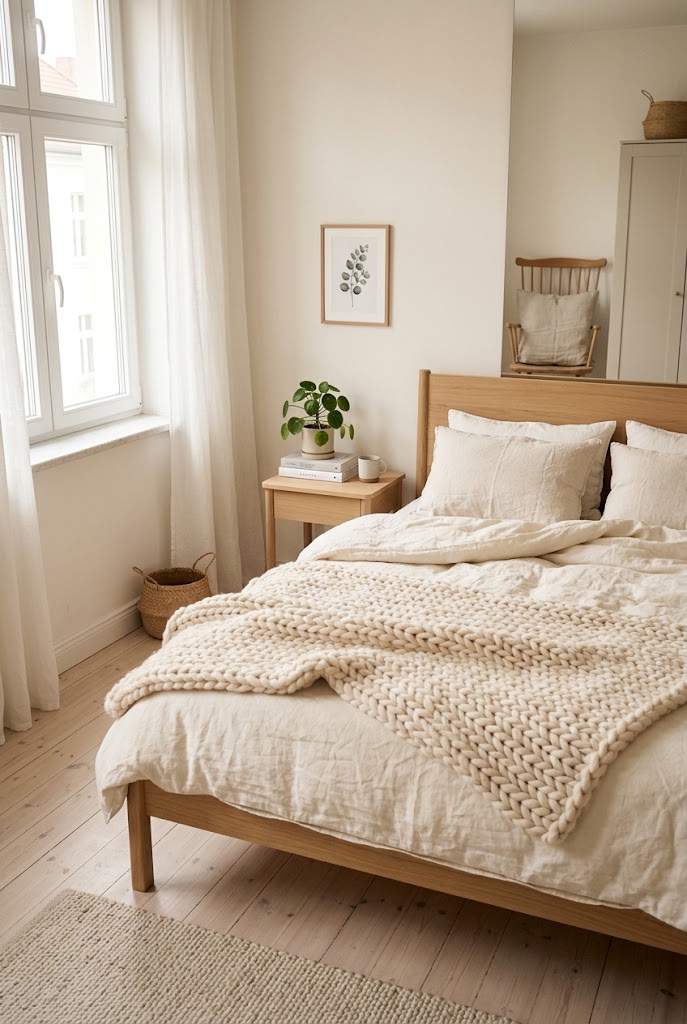
3. Scandinavian Cozy Bedroom
Scandinavian style balances minimalism with warmth — light wood tones, soft neutral textiles, and simple functional furniture create a room that feels both calm and lived-in.
What You’ll Need: light wood bed frame or nightstand, cream or soft gray bedding, a chunky knit throw, simple pendant or table lamp.
Quick How-To: Choose light wood furniture as your base tone. Layer bedding in soft neutrals, add one chunky knit throw at the foot of the bed, and keep lighting warm and simple.
Styling Tip: Add one small plant in a simple ceramic pot — it’s a signature Scandinavian touch that keeps the room from feeling sterile.
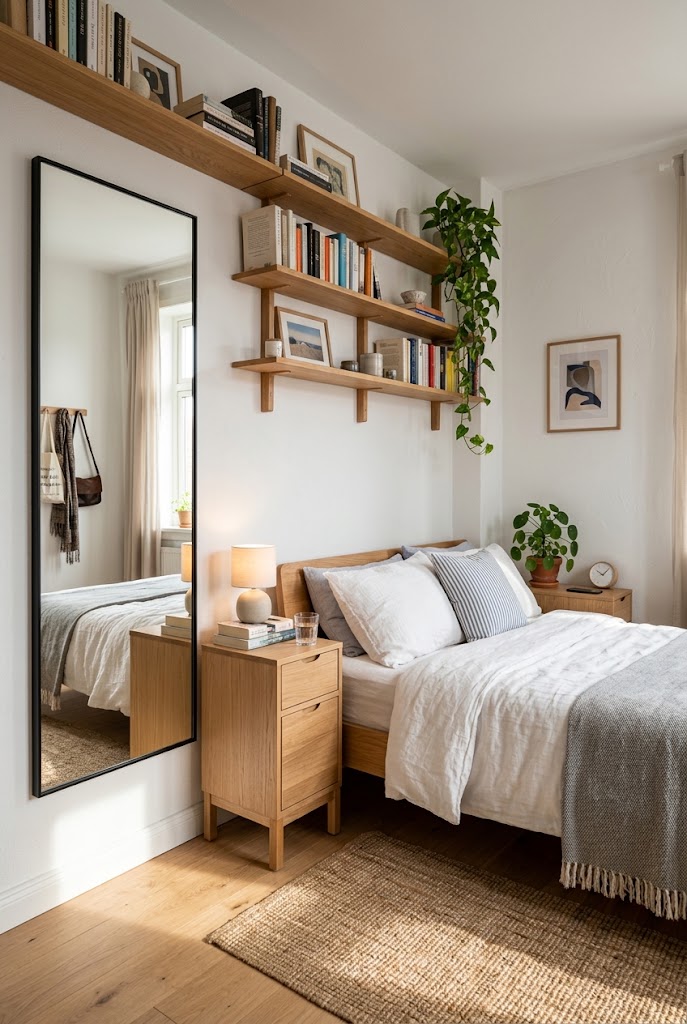
4. Small Bedroom Space-Saving Layout
In a small bedroom, the bed’s position and furniture footprint matter more than any decor choice. I always push the bed against the longest wall and choose furniture that does double duty — a nightstand with drawers, an ottoman with storage.
What You’ll Need: slim nightstands with storage, a bed frame with under-bed storage (optional), wall-mounted shelves instead of a dresser if space is tight, a large mirror.
Quick How-To: Position the bed against the longest uninterrupted wall. Choose furniture with built-in storage wherever possible, and mount shelves rather than adding floor furniture where you can.
Styling Tip: A large mirror opposite the window doubles natural light and makes the room feel significantly larger.
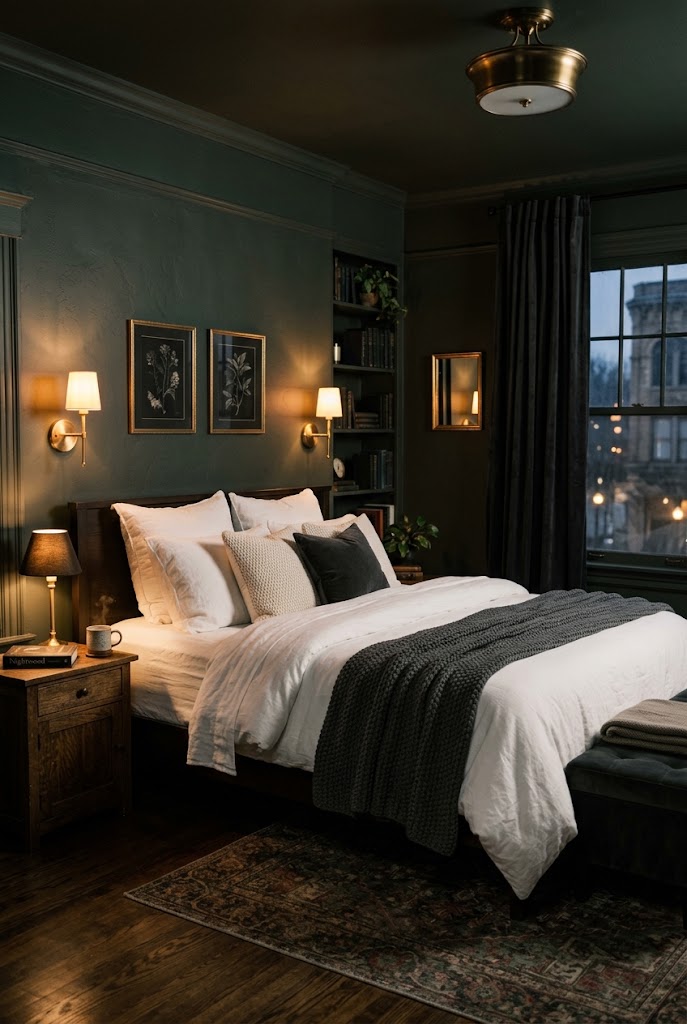
5. Dark Moody Bedroom
A dark bedroom — deep green, charcoal, or navy walls — reads as intentional and cozy rather than cave-like when paired with enough warm lighting and at least one lighter contrasting element, like white bedding or light wood.
What You’ll Need: dark paint (charcoal, deep green, or navy), warm-toned lamps or sconces, white or cream bedding for contrast, brass or gold accent hardware.
Quick How-To: Paint all four walls (not just one) in the dark tone for the most cohesive moody effect. Layer in warm lamp lighting rather than relying on overhead light, and add white or cream bedding to keep the room from feeling too heavy.
Styling Tip: Warm brass or gold hardware and light fixtures make a dark room feel elevated rather than dim.
6. Coastal Bedroom
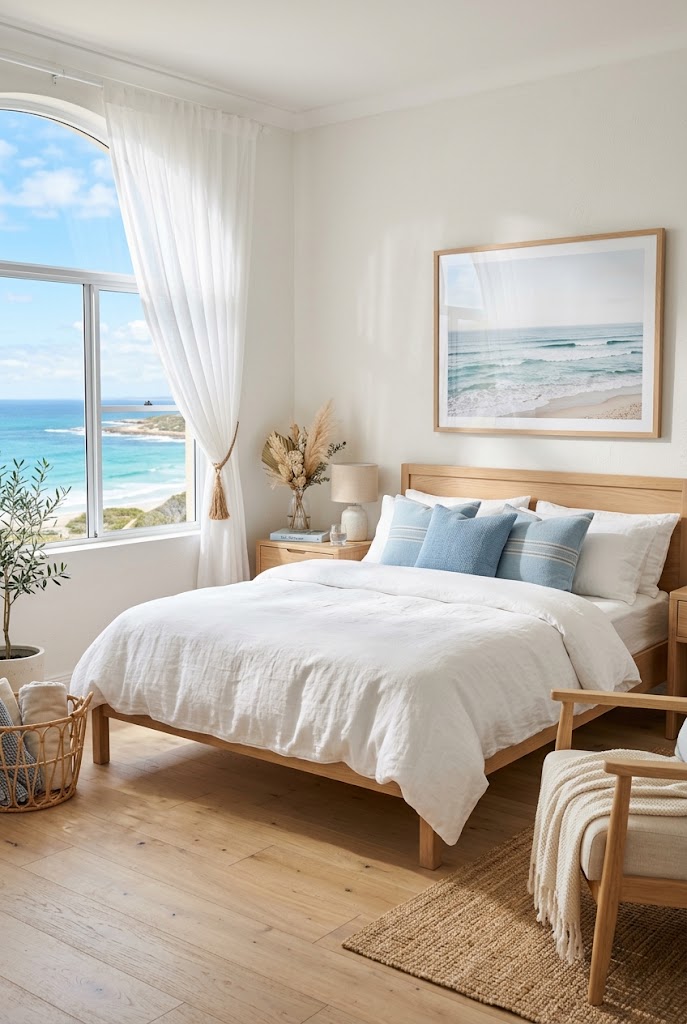
Coastal bedrooms lean on light, breezy materials — linen, light wood, and a blue-and-white palette — to create a room that feels bright and relaxed regardless of climate or location.
What You’ll Need: light linen bedding, blue and white accent pillows, light wood or rattan furniture, sheer curtains, one nautical or natural-texture accent (rope mirror, woven basket).
Quick How-To: Start with linen bedding in white or light blue. Layer in one or two navy accent pillows, hang sheer curtains to maximize light, and add a single natural-texture accent piece.
Styling Tip: Keep the blue tones muted (dusty or soft navy) rather than bright — it reads as more elevated coastal, less novelty beach theme.
7. Rustic Farmhouse Bedroom
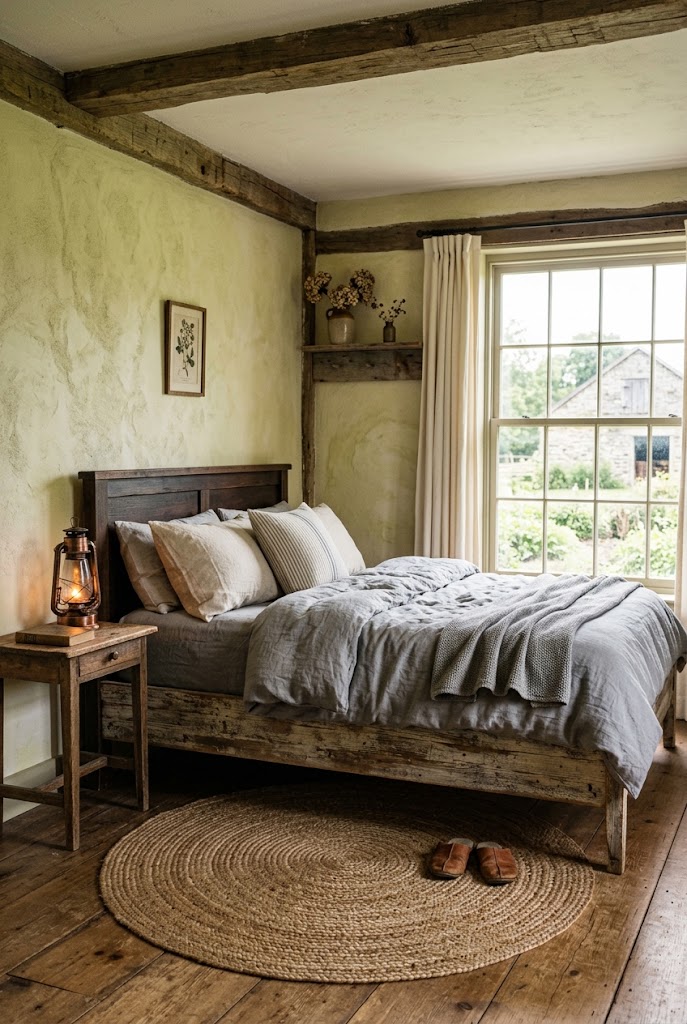
Farmhouse style pairs a neutral base with weathered wood and simple, slightly worn textiles — the goal is a room that feels collected over time rather than newly furnished.
What You’ll Need: wood bed frame (distressed or natural finish), cotton or linen bedding in white or soft gray, a woven or braided rug, vintage-style accents (a lantern, an old crate as a side table).
Quick How-To: Choose a wood-frame bed as the anchor piece. Layer simple cotton bedding, add a woven rug underneath, and place one or two vintage-style accents rather than filling every surface.
Styling Tip: One authentic vintage or weathered piece does more for the farmhouse look than several new “farmhouse-style” mass-produced items.
8. Industrial Bedroom
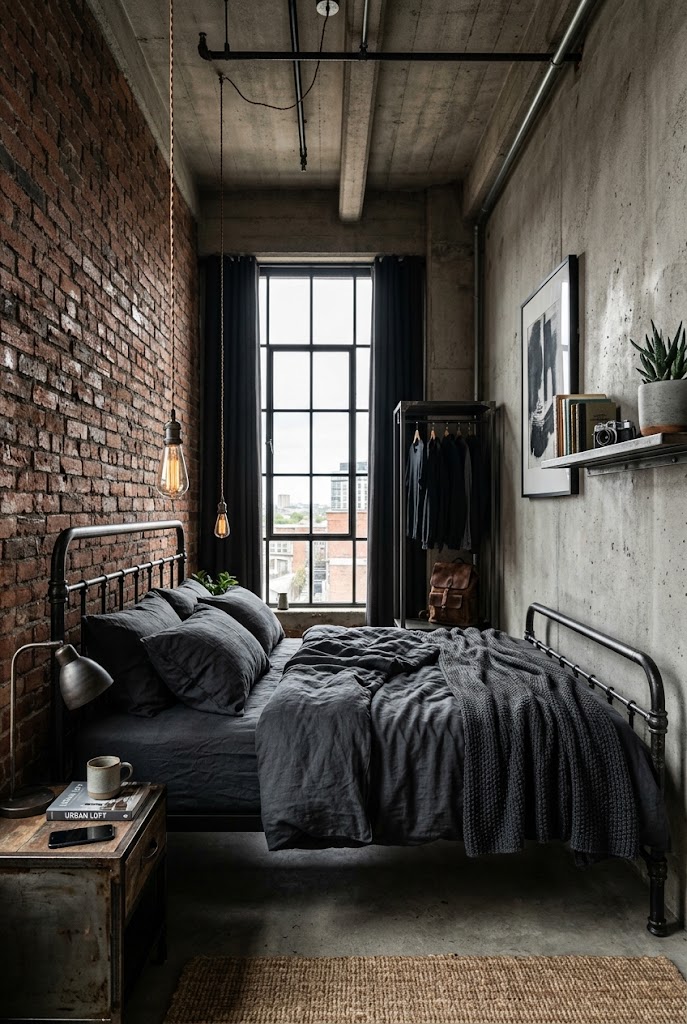
Industrial bedrooms work best in rooms with some existing architectural character — exposed brick, high ceilings, or large windows — paired with metal-frame furniture and a muted, urban color palette.
What You’ll Need: metal-frame bed, dark or charcoal bedding, exposed-bulb or metal-shade lighting, leather or canvas accent pieces.
Quick How-To: Choose a metal-frame bed as the anchor. Keep the color palette to grays, blacks, and browns, and add one exposed-bulb fixture or metal-shade lamp for the signature industrial lighting look.
Styling Tip: Leave one wall visually “raw” (exposed brick, unpainted concrete-look wallpaper) if your room doesn’t have real architectural texture — it sells the style more than furniture alone.
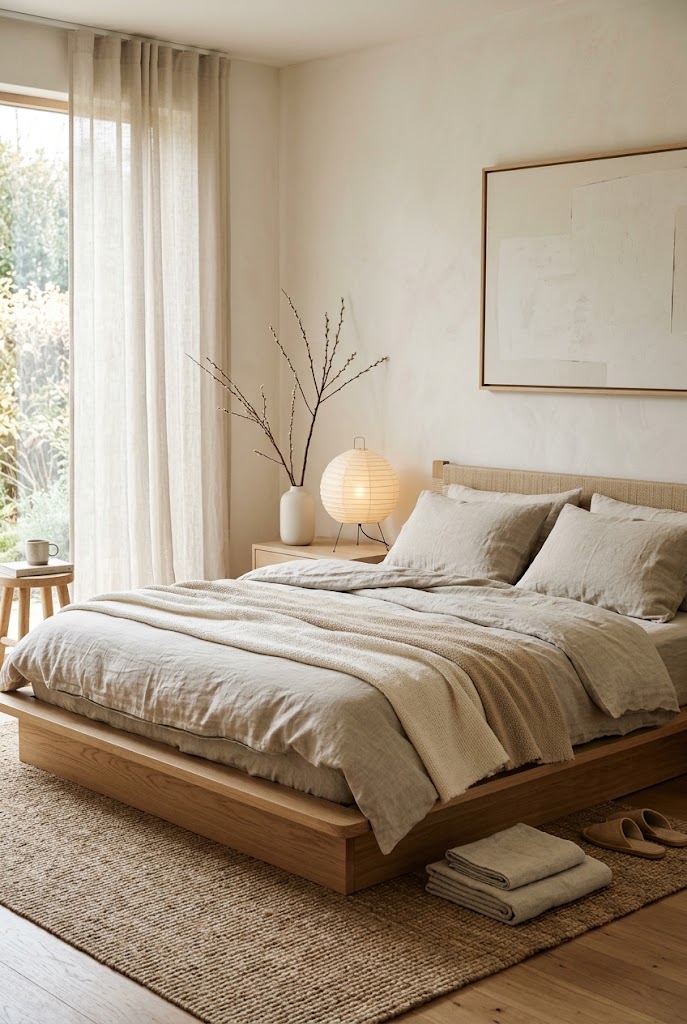
9. Japandi Bedroom
Japandi combines Japanese minimalism with Scandinavian warmth — low-profile furniture, natural materials, and a muted palette create a bedroom that feels both calm and grounded.
What You’ll Need: low-profile platform bed, natural linen or cotton bedding in muted tones, a simple wood or paper lantern lamp, one piece of understated wall art or a single branch in a vase.
Quick How-To: Choose a low platform bed rather than a tall frame. Layer bedding in muted neutral tones, add one paper or wood lantern-style lamp, and keep the walls nearly bare except for one simple piece.
Styling Tip: A single branch or dried stem in a simple vase does more for Japandi styling than any framed art — it reinforces the natural, unforced feel of the aesthetic.
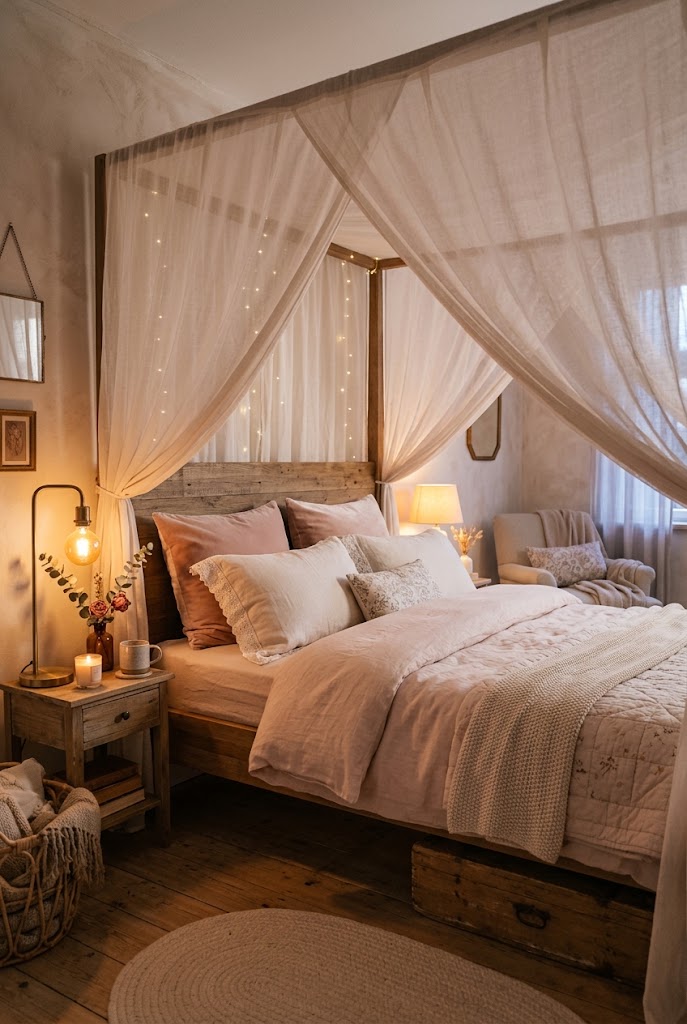
10. Romantic Canopy Bed Bedroom
A canopy bed, real or a simple curtain-rod version, gives a bedroom an instant focal point and a softer, more romantic feel — especially effective in rooms with higher ceilings.
What You’ll Need: canopy bed frame or four ceiling-mounted curtain rods, sheer or lightweight fabric panels, soft bedding in blush, cream, or white.
Quick How-To: If not using a true canopy frame, mount four curtain rods above the bed’s four corners at ceiling height, and drape sheer fabric panels between them. Style the bed underneath with soft, layered bedding.
Styling Tip: Use fabric that’s lightweight enough to move slightly with air flow — heavy fabric reads as more formal or costume-like than romantic.
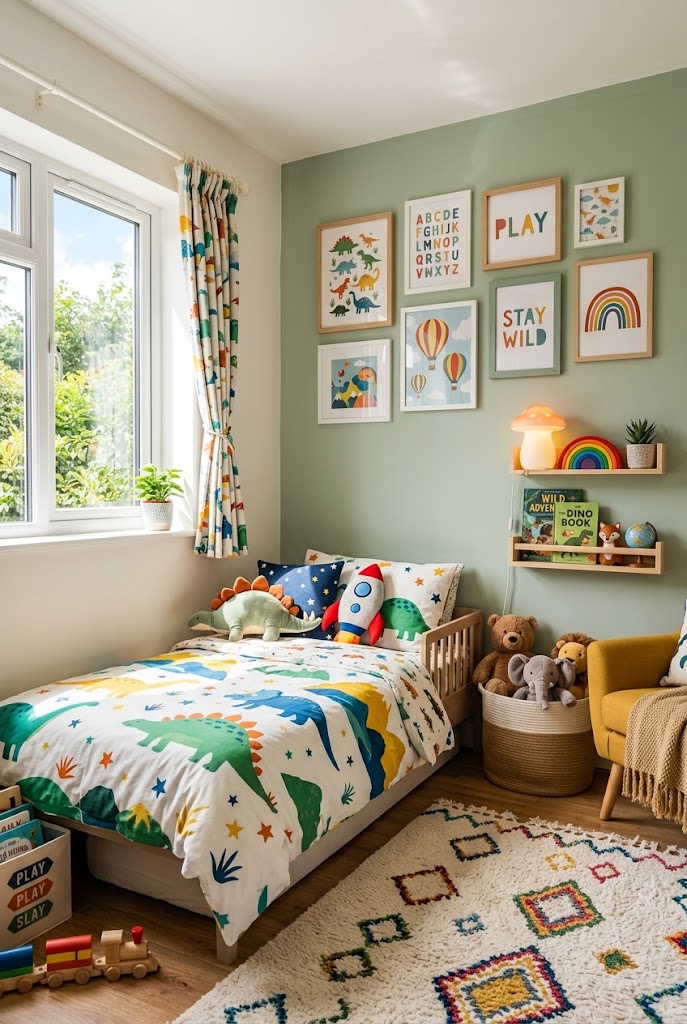
11. Kids/Teen Bedroom Refresh
For kids’ and teens’ rooms, the fastest refresh comes from swapping bedding, adding one statement wall element, and giving the room one dedicated “hobby zone” rather than a full furniture overhaul.
What You’ll Need: new bedding in the child’s chosen colors/theme, removable wall decals or a gallery of prints, a small shelf or bin system for the hobby zone, string lights (optional).
Quick How-To: Start with new bedding as the anchor. Add one wall feature (decals, a gallery wall, or a large piece of art) and dedicate one small area with shelving to whatever hobby or interest the room’s occupant is currently into.
Styling Tip: Choose bedding and wall elements the child picks out themselves — buy-in on the color and theme is what makes the room actually feel like theirs.
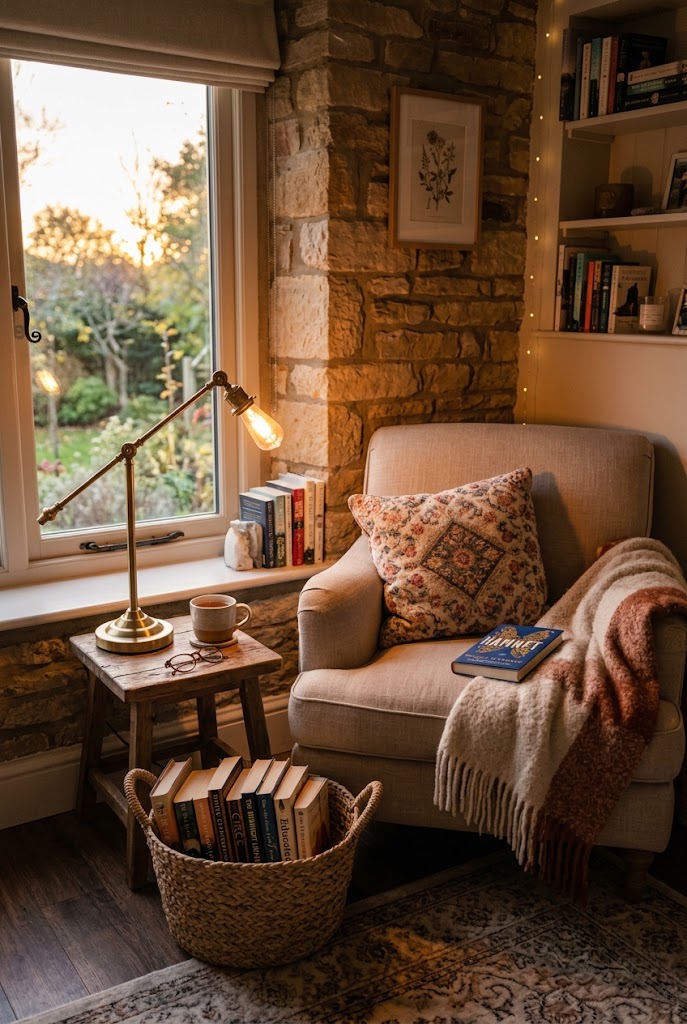
12. Reading Nook Corner
An underused bedroom corner becomes a reading nook with just a comfortable chair, good task lighting, and a small side table — no renovation required, and it adds function without touching the sleeping area.
What You’ll Need: a comfortable armchair or floor cushion, a small side table, a floor or reading lamp, a small basket or shelf for current books.
Quick How-To: Choose the least-used corner of the room. Place the chair at a slight angle rather than square to the wall, add the side table within arm’s reach, and position the lamp to shine directly onto the reading area.
Styling Tip: A small basket for current reads next to the chair keeps books from migrating to the nightstand or floor.
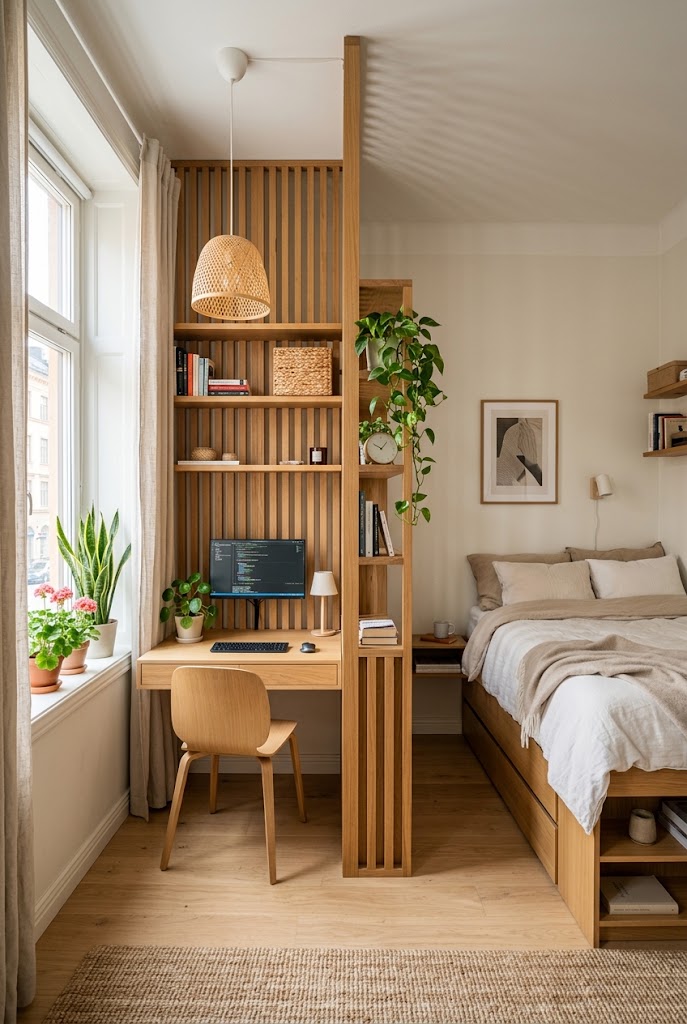
13. Multi-Function Small Apartment Bedroom
When a bedroom also has to function as a home office or living space, defining clear visual zones — even in a small footprint — keeps the room from feeling chaotic.
What You’ll Need: a room divider or open bookshelf (used as a soft partition), a slim desk that tucks against a wall, storage ottoman that doubles as extra seating.
Quick How-To: Position the bed in the section with the least foot traffic. Use an open bookshelf or slim divider to visually (not fully) separate a small desk area from the sleeping zone. Choose furniture that serves two purposes wherever possible.
Styling Tip: Keep the “workspace zone” visually distinct with a different rug or lighting fixture — it helps signal a mental shift between work and rest in a shared space.
14. Budget Bedroom Makeover
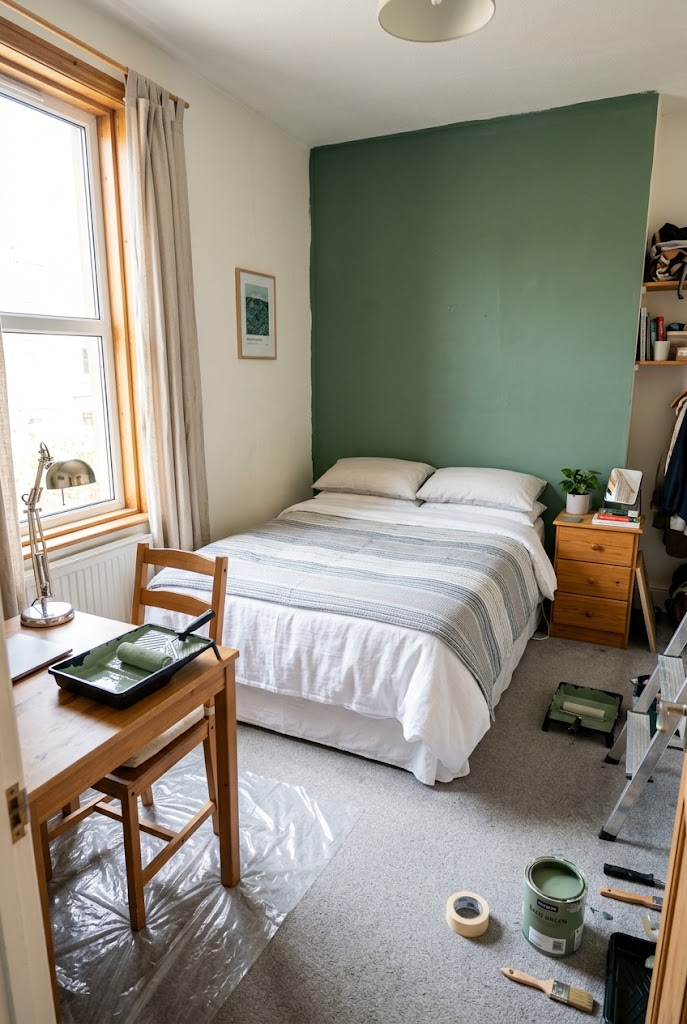
You don’t need new furniture for a noticeable bedroom refresh — new bedding, a fresh coat of paint on one wall, and rearranged existing furniture can transform the feel of a room for well under $150.
What You’ll Need: one gallon of paint for an accent wall, new bedding set, existing furniture rearranged, a few inexpensive throw pillows.
Quick How-To: Choose one wall to repaint in a new accent color. Swap in a new bedding set that complements the new wall color, and reassess your furniture layout — often simply pulling the bed away from a corner improves the whole room.
Styling Tip: Spend your limited budget on bedding and paint before furniture — these two changes have the highest visual impact per dollar in a bedroom.
15. Statement Accent Wall Bedroom
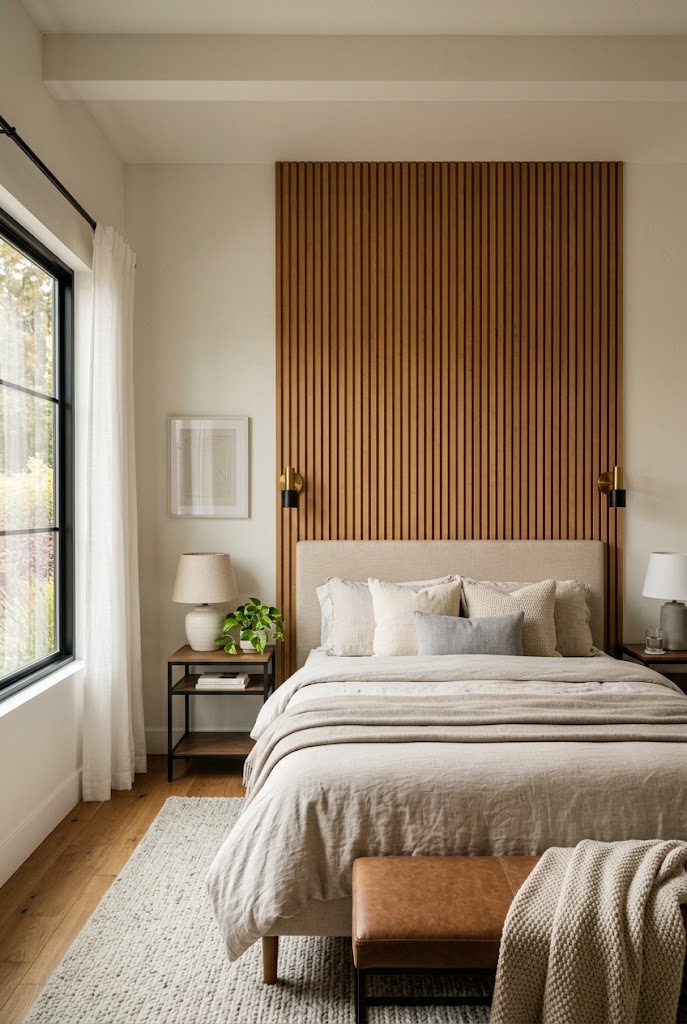
A single accent wall — paint, wallpaper, or wood paneling — behind the headboard gives a bedroom an instant focal point without requiring changes to the rest of the room.
What You’ll Need: paint, peel-and-stick or traditional wallpaper, or wood paneling/slat boards for the chosen wall, painter’s tape and basic tools.
Quick How-To: Choose the wall directly behind the headboard as your accent wall. Apply your chosen material (paint, wallpaper, or paneling), keeping the other three walls in a neutral tone so the accent wall reads clearly as the room’s focal point.
Styling Tip: Vertical wood slats or a bold wallpaper pattern read as more “designed” than a simple paint color if you want the accent wall to be the room’s main visual story.
My Professional Guide
Choosing a Style That Lasts
Pick a base style you can commit to for at least a few years, then update through smaller, swappable elements (bedding, pillows, art) rather than repainting or buying new furniture every season.
Lighting Layers
Every bedroom benefits from three light sources: an overhead or ambient light, a task light (reading lamp), and one warm accent light (a small lamp or string lights) — relying on overhead lighting alone makes any style feel flatter than intended.
Measuring Before You Buy
Always measure your room’s total floor space and the clearance needed around the bed (at least 24–30 inches on walking sides) before purchasing a larger bed frame or furniture piece.
Conclusion
A great bedroom doesn’t require a full renovation — it requires committing to one clear style direction and making a few intentional choices around color, texture, and layout. Whether you’re working with a small apartment bedroom or a spacious primary suite, start with the idea that matches your existing room’s light, size, and your own daily habits, then build outward from there.
FAQ
What is the easiest way to update a bedroom on a budget?
New bedding, one freshly painted accent wall, and rearranging existing furniture typically deliver the biggest visual change for the lowest cost.
How do I make a small bedroom feel bigger?
Position the bed against the longest wall, choose furniture with built-in storage, and add a large mirror opposite a window to reflect natural light.
What colors work best for a calming bedroom?
Neutral, muted tones — soft whites, warm beiges, dusty blues, and sage greens — tend to read as calming, especially when kept to two or three colors total.
Can a dark-colored bedroom still feel cozy instead of small?
Yes, as long as warm lighting and at least one lighter contrasting element (like white bedding) are included — painting all four walls consistently also helps the color feel intentional rather than closing in the space.
How do I decorate a bedroom that also functions as a home office?
Use a visual divider (an open shelf or room screen) to separate the two zones, and choose multi-functional furniture like a storage ottoman or a slim desk that tucks against a wall.
How often should I update my bedroom decor?
Committing to your base style (furniture, wall color) for several years while refreshing smaller elements like bedding, pillows, and art every season or two keeps the room feeling current without a full redo.