Living Room Shelf Decor: 12 Ideas for Every Type of Shelf
I’ve styled shelves in dozens of living rooms, and the biggest factor in whether they actually work isn’t the objects on them — it’s whether the shelf type and placement suit the room’s specific layout in the first place. A floating shelf that works beautifully beside a fireplace can look stranded on a blank wall with no anchor nearby. Below are 12 living room shelf ideas, organized by placement and type, each with real styling guidance for that specific situation.
The Styling Fundamentals (Apply to Any Shelf)
Rule of three: Group objects in odd numbers, varying height, rather than even pairs or a single centered item.
Leave 30-40% empty: A shelf filled edge to edge reads as storage, not a styled display — visible negative space is what makes a shelf look curated.
Vary height deliberately: Use books as risers under smaller objects, and mix inherently tall pieces (vases, frames) with low ones (bowls, stacked boxes) within the same grouping.
1. Built-In Shelves Flanking a Fireplace
Symmetrical built-in shelving on either side of a fireplace is one of the most classic living room shelf configurations, and works best when both sides are styled with a similar (not identical) balance of books, objects, and negative space.

I’d avoid mirroring the exact same items on each side — instead, match the overall visual weight and color palette while letting the specific objects differ slightly, which reads as more intentional than a fully matched, symmetrical display.
Best for: living rooms with an existing fireplace and flanking wall space. Budget tier: high if built new ($1,000-3,000+), low if the built-ins already exist.
2. Floating Shelves Above a Console or TV
A floating shelf mounted above a TV console or media unit adds display space without competing with the screen itself, best styled with lower-profile objects so nothing interrupts sightlines during actual TV use.

I’d keep items on this shelf under roughly 10-12 inches tall and positioned toward the outer edges, away from the direct center where the TV screen draws the eye.
Best for: living rooms with a TV as a focal point. Budget tier: low-to-mid ($40-150 per shelf.)
3. Corner Shelving Unit
A corner shelf — floating or a freestanding ladder-style unit — makes use of one of the most commonly wasted spaces in a living room, without interfering with furniture placement or walking paths.

I’d choose this specifically for smaller living rooms where floor space is at a premium, since a corner unit adds real storage and display capacity without extending into the room’s usable floor area at all.
Best for: smaller living rooms, awkward corner spaces. Budget tier: low-to-mid ($50-180.)
4. Full-Wall Floor-to-Ceiling Shelving
A full wall of shelving — built-in or a large freestanding unit — turns an entire wall into genuine storage and display capacity, well suited to living rooms doubling as a home library or media collection space.
I’d mix practical storage (books) with decorative breaks (art, plants, a few empty gaps) at roughly a 70/30 ratio, since a fully packed wall reads as storage rather than a styled feature.

Best for: living rooms with a large blank wall and genuine storage needs. Budget tier: high, especially built-in ($800-2,500+, less for freestanding units.)
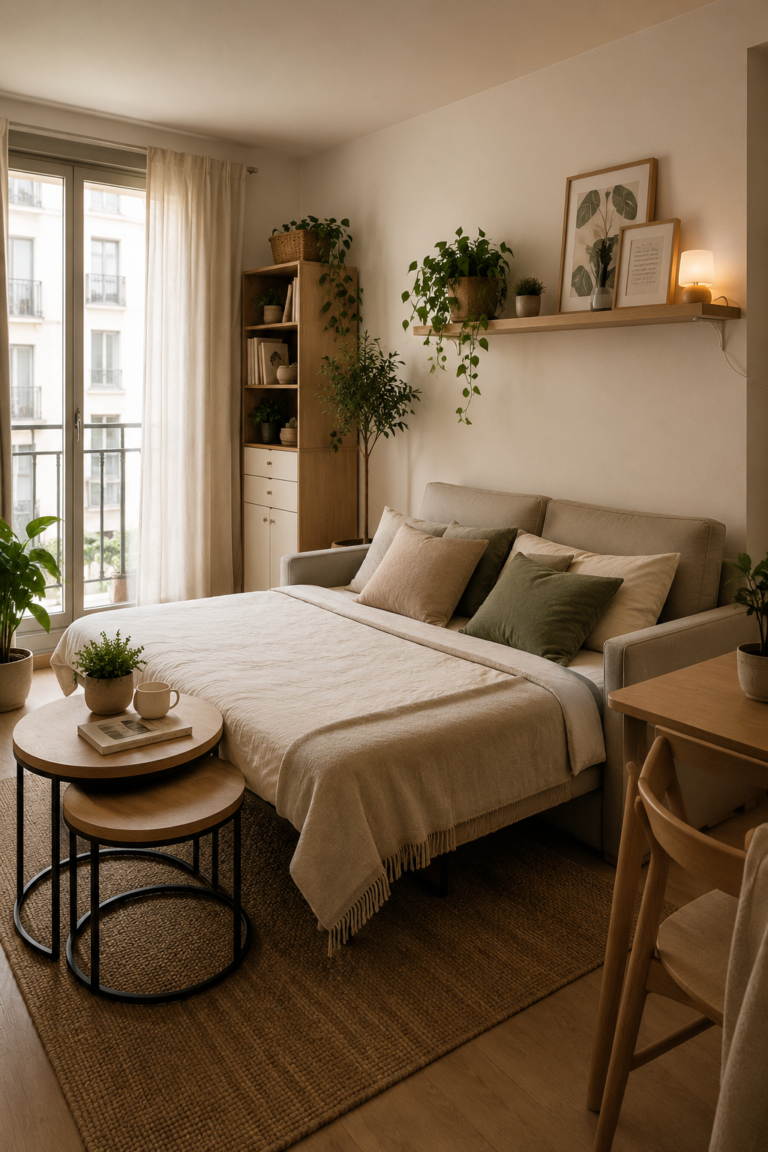
5. Single Floating Shelf as a Sofa Backdrop
A single floating shelf mounted above a sofa (in place of, or alongside, hung art) creates a display surface that can be restyled more easily than fixed wall art, genuinely useful for anyone who likes to update their styling periodically.

I’d size the shelf to roughly 60-75% of the sofa’s width for proper visual proportion, and mount it with brackets rated for the combined weight of everything you plan to display, not just the shelf itself.
Best for: living rooms wanting flexible, changeable styling above the sofa. Budget tier: low-to-mid ($40-120.)
6. Ladder Shelf as a Freestanding Piece
A ladder-style shelf leaned against a wall adds tiered display space without any mounting or wall damage, genuinely useful for renters or anyone wanting flexibility to rearrange.

I’d choose a ladder shelf specifically for a living room with an awkward, hard-to-furnish gap between larger furniture pieces, since its slim footprint fits spaces a standard bookshelf wouldn’t.
Best for: renters, awkward gaps, flexible or frequently rearranged rooms. Budget tier: low-to-mid ($60-200.)
7. Bookshelf as a Room Divider
In an open-concept living space, a tall, open-backed bookshelf can visually divide the living room from an adjacent dining or entry area without fully closing off sightlines the way a solid wall would.

I’d keep the shelf partially open (not fully packed) specifically for this application, so light and sightlines still pass through from both sides, maintaining the open feel while still providing genuine zoning.
Best for: open-concept living rooms wanting soft zoning. Budget tier: mid ($150-500.)
8. Shelves Styled for a Media or Record Collection
Shelving designed around displaying a media collection (records, books, DVDs) treats the collection itself as the primary decor, with minimal additional styling needed beyond the collection’s natural visual rhythm.

I’d organize this by color or category specifically to introduce visual order, since a large collection displayed randomly can look cluttered even when each individual item is intentional.
Best for: living rooms centered around a genuine media or record collection. Budget tier: mid, depending on shelf capacity needed ($150-400.)
9. Floating Shelves for a Reading Nook
A small grouping of floating shelves beside a reading chair creates a personal display and storage spot for current books, a small lamp, or a favorite blanket, reinforcing the nook as a distinct zone within the larger living room.

I’d keep this styling more personal and less formally “designed” than the room’s main shelving, since a reading nook benefits from feeling genuinely used rather than purely decorative.
Best for: living rooms with a dedicated reading chair or corner. Budget tier: low ($30-90.)
10. Glass-Front Cabinet Shelving
Glass-front cabinets combine the display benefit of open shelving with genuine dust protection and a slightly more formal, curated feel, well suited to displaying more delicate or valuable items.

I’d add interior lighting specifically for this option if displaying anything with real detail (ceramics, glassware), since the enclosed cabinet otherwise relies entirely on ambient room light.
Best for: formal living rooms, delicate or valuable collections. Budget tier: high ($400-1,200+.)
11. Modular Cube or Geometric Shelving
Modular cube shelving units, often hexagonal or square, offer flexible, expandable storage that can grow with your needs, and add a more contemporary, graphic visual element than traditional flat shelving.

I’d start with a smaller cluster (3-4 units) and expand later rather than committing to a large modular layout immediately, since it’s easier to gauge the right final size once you see how the initial units function in the room.
Best for: modern or eclectic living rooms wanting a graphic, flexible storage solution. Budget tier: mid ($150-450 for an expandable starter set.)
12. Shelves Styled Seasonally
Rather than a fixed, permanent display, choosing a living room shelf (or section of a larger shelving unit) specifically for seasonal rotation — holiday decor, seasonal branches or blooms — keeps the space feeling current without requiring a full restyle.

I’d keep one or two “anchor” pieces constant on this shelf year-round, rotating only the smaller seasonal accents around them, so the shelf’s core identity stays consistent even as the seasonal details change.
Best for: any living room shelf, as a styling strategy rather than a fixed shelf type. Budget tier: low, ongoing ($10-40 per seasonal refresh.)
My Professional Guide to Choosing Living Room Shelving
I always start with the room’s actual layout and existing focal points — a fireplace, a TV, a blank wall — before choosing a shelf type, since the best-performing shelf configurations work with the room’s natural anchor points rather than competing with them or sitting isolated in unrelated space.
From there, I think about genuine function alongside styling: does this shelf need to hold a real book or media collection, or is it primarily decorative? A shelf built for heavy daily use (a media collection, frequently accessed books) needs sturdier construction and simpler styling than a purely decorative display shelf.
Finally, I’d apply consistent styling principles (rule of three, height variation, negative space) across every shelf in the room, even when the shelf types themselves differ, since this consistency is what makes several different shelving elements read as one cohesive room rather than disconnected features.
Conclusion
Living room shelf decor works best when the shelf type matches its specific placement and function — flanking a fireplace, above a TV, filling a corner, or dividing an open floor plan all call for slightly different approaches. Choose the configuration that fits your room’s actual layout and needs, apply consistent styling principles throughout, and even multiple different shelf types across one room will read as intentional rather than mismatched.
Frequently Asked Questions
What is the best shelf placement for a living room?
This depends on the room’s existing focal points — shelves flanking a fireplace, above a media console, or filling an unused corner are all strong options, chosen based on your specific layout rather than a single universal answer.
How do I style open shelves in a living room without them looking cluttered?
Follow the rule of three (grouping objects in odd numbers with varied height) and leave roughly 30-40% of the shelf visibly empty — a fully packed shelf reads as storage rather than a styled display.
What’s the difference between floating shelves and a bookshelf for a living room?
Floating shelves are typically shallower, wall-mounted, and used more for display than heavy storage, while a full bookshelf offers more capacity and structural support for a genuine book or media collection.
Can shelving work as a room divider in an open-concept living room?
Yes — a tall, open-backed bookshelf can visually separate zones (like a living room from a dining area) while still allowing light and sightlines to pass through, unlike a solid wall.