12 Bathroom Mirror Lighting Ideas With Real Brightness and Color Specs
I’ve planned enough bathroom vanity lighting to know the fixture style is actually the easier decision — the details that make lighting genuinely functional (color temperature, brightness, mounting height) are what most guides skip entirely. Below are 12 bathroom mirror lighting ideas, each with the real Kelvin range, brightness guidance, and mounting specs that determine whether your lighting actually works for grooming tasks, not just how it looks in a photo.
Understanding Color Temperature and Brightness (Before You Choose a Fixture)
Color temperature (Kelvin/K) determines whether light looks warm or cool. For bathroom vanity lighting specifically:
- 2700-3000K (warm white): cozy, flattering, best for evening use and traditional-style bathrooms
- 3500-4000K (neutral white): balanced, good general-purpose choice for most vanities
- 5000K+ (cool/daylight white): closest to true daylight, best for detailed grooming tasks like precise makeup application, though it can read as clinical for general ambiance
Brightness (lumens): For task lighting directly around a mirror, I’d aim for 400-800 lumens per fixture (or per side, if using two symmetrical fixtures), with the overall vanity area reaching roughly 1,500-2,000 total lumens for comfortable, shadow-free grooming.
Color Rendering Index (CRI): Look for a CRI of 90 or higher specifically for vanity lighting — this measures how accurately a light source renders true colors and skin tones, which matters more here than in almost any other room in the house.
1. LED Strip Lighting Above the Mirror
A slim LED strip mounted directly above the mirror, or hidden behind a trim piece for softer diffusion, gives modern bathrooms clean, unobtrusive illumination that blends into the architecture rather than adding a visible fixture.
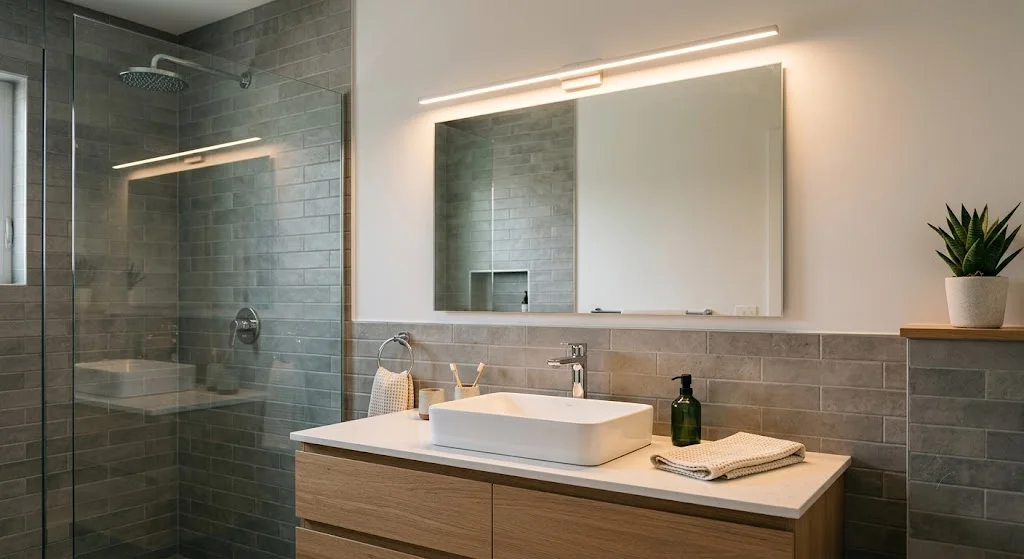
I’d choose a strip rated at 90+ CRI specifically, and in the 3000-4000K range for a balance between flattering warmth and task-appropriate clarity.
Budget tier: low-to-mid ($30-100 for strip and driver.)
2. Backlit Mirror for Ambient Glow
A backlit mirror integrates lighting and mirror into one fixture, with LEDs positioned behind the mirror’s edge creating a soft, floating glow — better suited to ambient lighting than precise task lighting on its own.
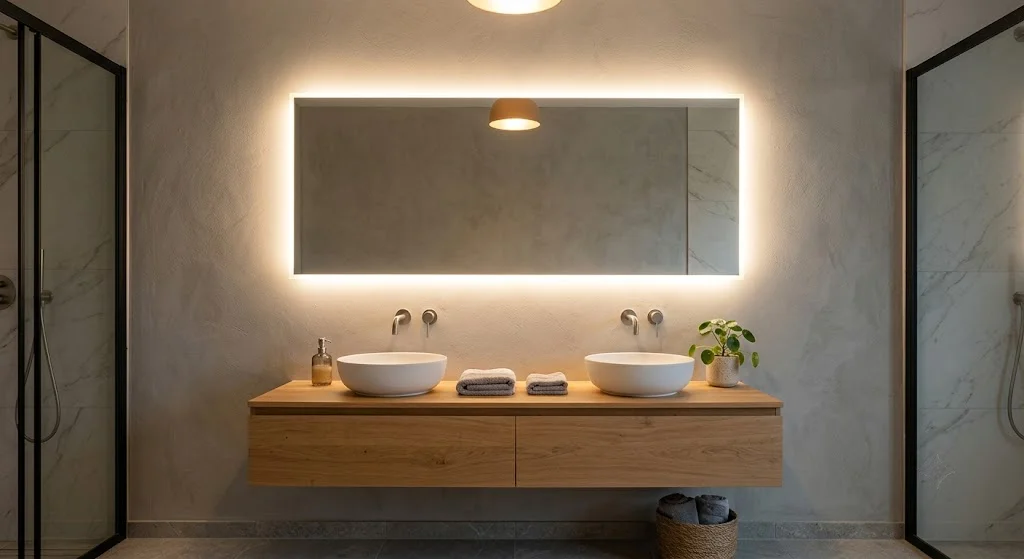
I’d pair a backlit mirror with additional task lighting at the sides for actual grooming use, since the diffused backlight alone tends to underlight the face directly, even though it looks polished as a standalone feature.
Budget tier: mid-to-high ($150-500 depending on size and features.)
3. Vertical Light Bars on Each Side
Vertical fixtures flanking the mirror provide more even, shadow-free illumination across the face than a single overhead fixture, since light hits from both sides rather than casting shadows downward from above.
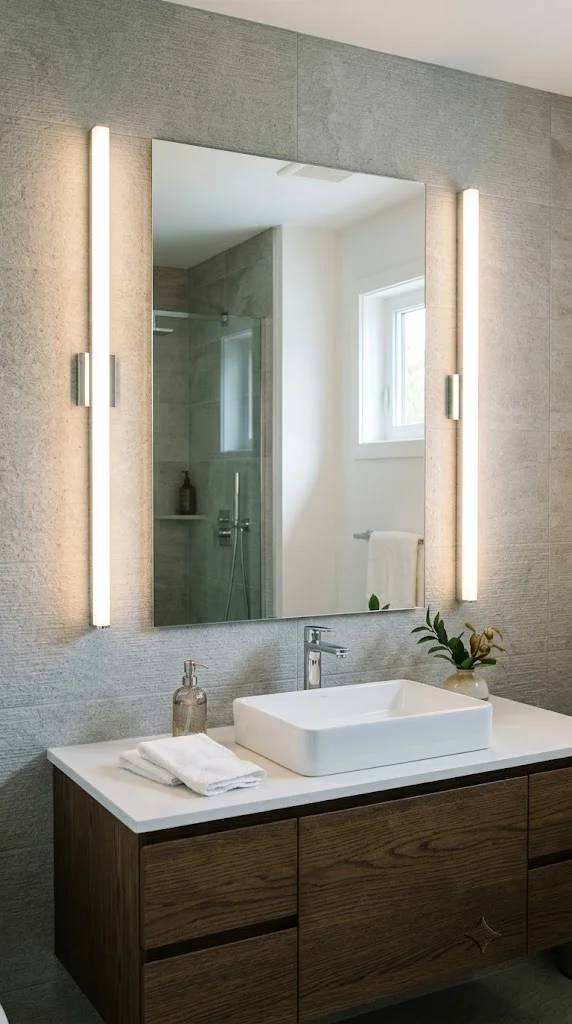
I’d mount each bar at the same height, centered roughly at face level for the household’s average user (typically 60-66 inches from the floor), with 24-36 inches of separation between the two fixtures depending on mirror width.
Budget tier: mid ($80-250 per pair.)
4. Adjustable Swing-Arm Lights
Swing-arm fixtures let you redirect light toward the vanity, mirror, or elsewhere as needed, adding both flexibility and a decorative, often vintage-inspired character well suited to traditional or industrial bathrooms.
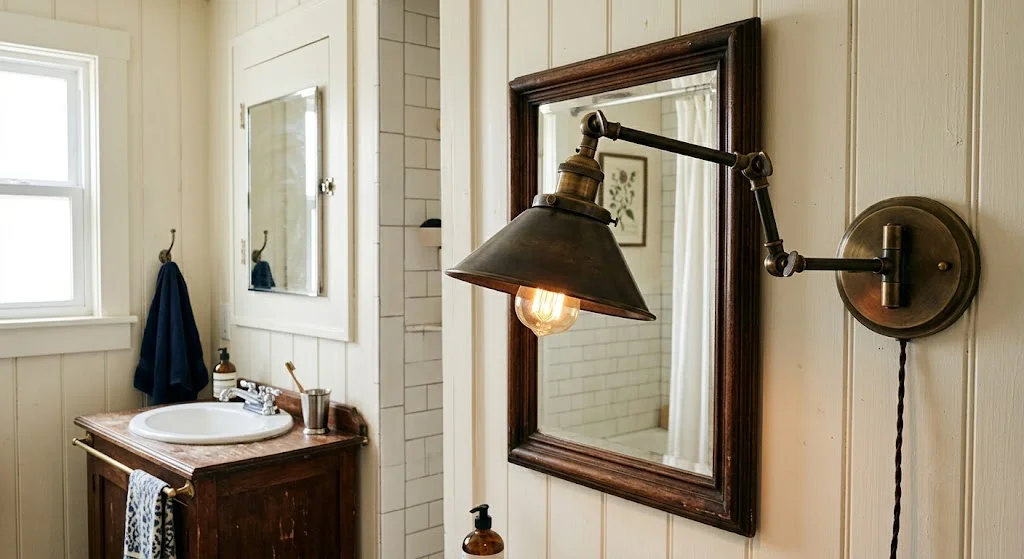
I’d confirm the fixture is rated for damp or bathroom-specific use before installation, and position it beside rather than directly above a smaller mirror where a single overhead fixture wouldn’t provide adequate side coverage.
Budget tier: mid ($60-200 per fixture.)
5. Pendant Lights Flanking the Mirror
Two smaller pendants positioned on either side of a mirror create a more decorative, elevated look than standard sconces, especially effective with tall mirrors or double vanities.
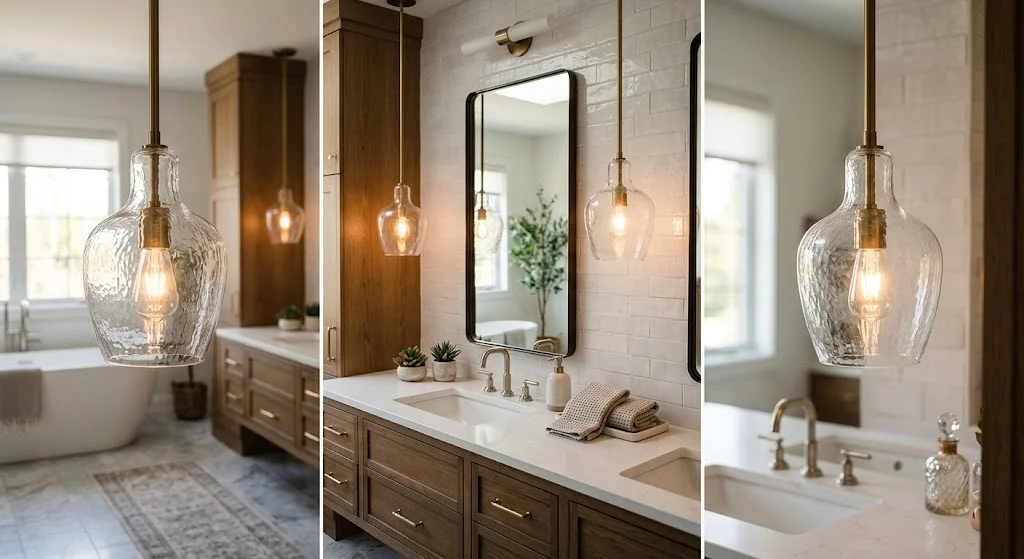
I’d keep pendant scale proportional to the mirror — oversized shades overwhelm a small bathroom — and choose fixtures specifically rated for bathroom moisture exposure, confirming they don’t obstruct the mirror’s usable reflective surface.
Budget tier: mid-to-high ($100-350 per pair.)
6. Classic Wall Sconces
Sconces mounted on either side of the mirror remain one of the most reliable, versatile options, working across traditional, modern, and farmhouse styles depending on the fixture finish chosen.
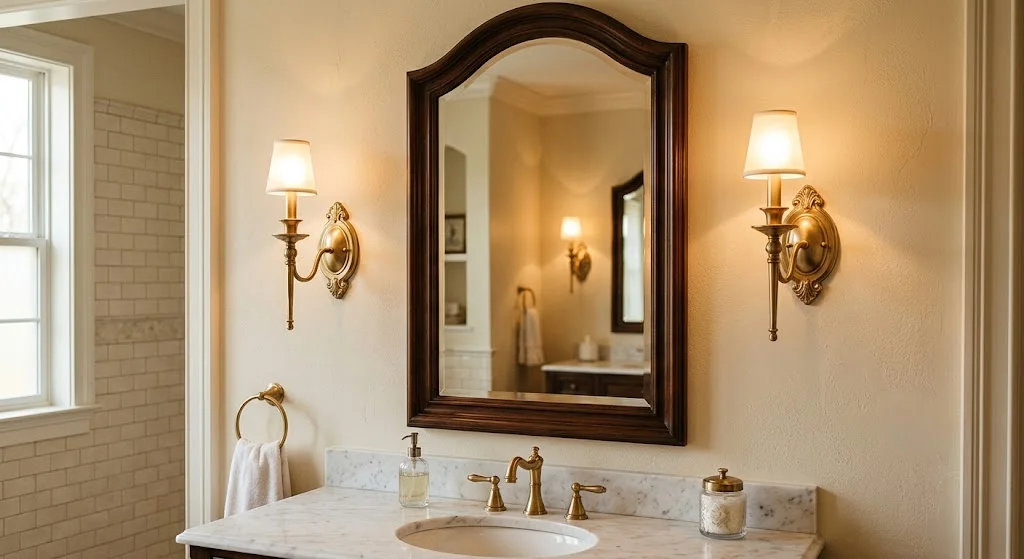
I’d position sconces at eye level (roughly 60-65 inches from the floor) with 28-36 inches of horizontal separation for balanced facial lighting, and match the finish to existing bathroom hardware — brushed brass for warm-toned spaces, matte black for contemporary ones.
Budget tier: low-to-mid ($50-180 per pair.)
7. Layered Recessed and Wall Lighting
Recessed ceiling lights alone often create shadows on the face since light falls straight down, so I’d combine them with wall-mounted fixtures at mirror height for genuine three-layer coverage: ambient (recessed), task (wall-mounted at the mirror), and any accent lighting elsewhere in the room.
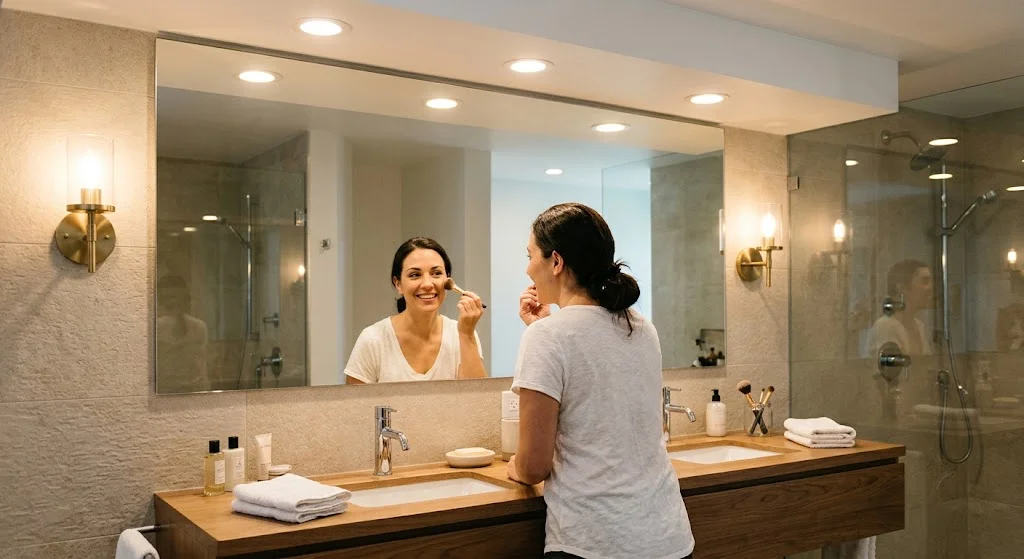
This layered approach — the same ambient/task/accent framework that applies in any well-lit room — solves the single most common bathroom lighting complaint: harsh under-eye shadows from overhead-only lighting.
Budget tier: mid ($150-400 for a combined recessed and wall fixture setup.)
8. Dimmable Vanity Lighting
A dimmer switch lets one fixture serve both a bright, task-appropriate morning routine and a softer, calmer evening atmosphere, without needing separate lighting systems for each use case.
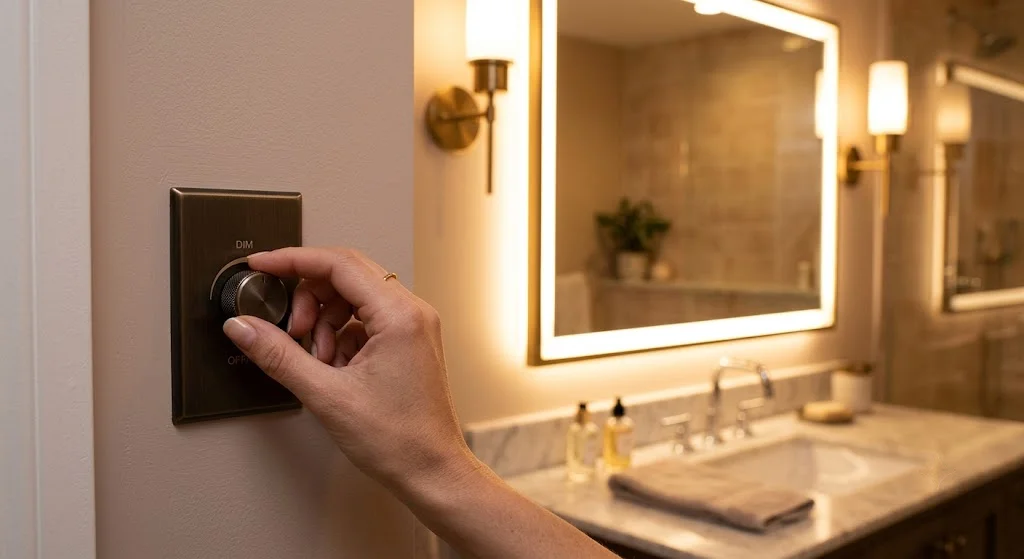
I’d confirm your specific LED fixture is labeled “dimmable” before installing a dimmer switch — pairing a non-dimmable LED with a dimmer switch commonly causes flickering or humming.
Budget tier: low ($15-40 for the dimmer switch itself, assuming compatible existing fixtures.)
9. Smart Mirror Lighting with Adjustable Temperature
Smart fixtures or mirrors that let you shift color temperature on demand — cooler for detailed grooming, warmer for evening — solve the common dilemma of choosing a single fixed Kelvin value for a room used very differently throughout the day.
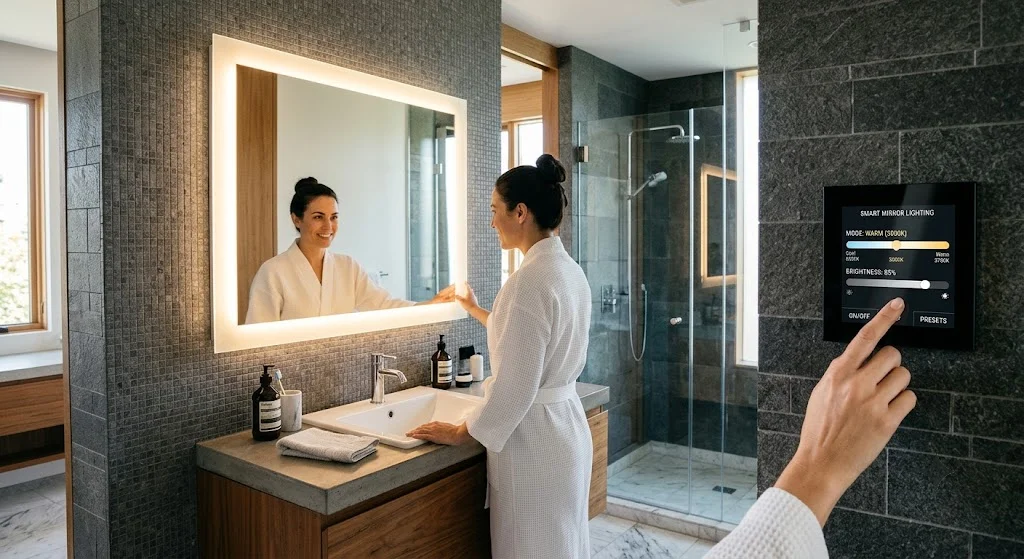
I’d prioritize moisture-resistant construction and straightforward controls specifically, since overly complex smart features tend to go unused in a genuinely daily-use space like a bathroom vanity.
Budget tier: mid-to-high ($150-450.)
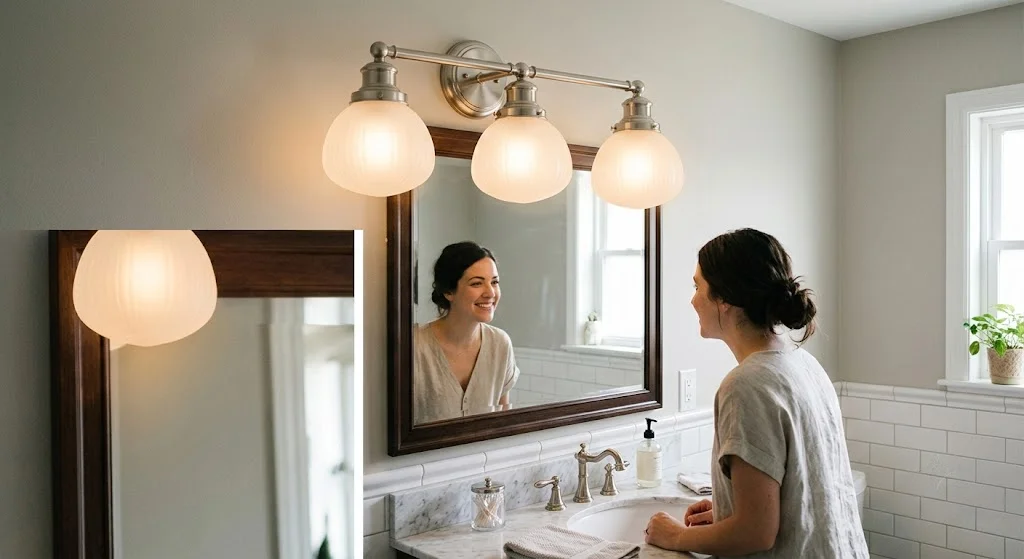
10. Frosted Glass Fixtures for Softer Light
Frosted glass diffuses light more evenly than clear glass or exposed bulbs, reducing glare and harsh shadowing, particularly useful in bathrooms without much natural light where fixture output needs to do more of the work.
I’d prioritize the fixture’s actual lumen output over its appearance in a darker bathroom specifically, since frosted glass’s softer look can sometimes mask genuinely insufficient brightness until it’s already installed.
Budget tier: low-to-mid ($40-150.)
11. Globe Bulb Vanity Lighting
Multiple globe bulbs arranged above or around the mirror create a classic, Hollywood-vanity-inspired look, achievable now with energy-efficient LED globe bulbs rather than older incandescent options.
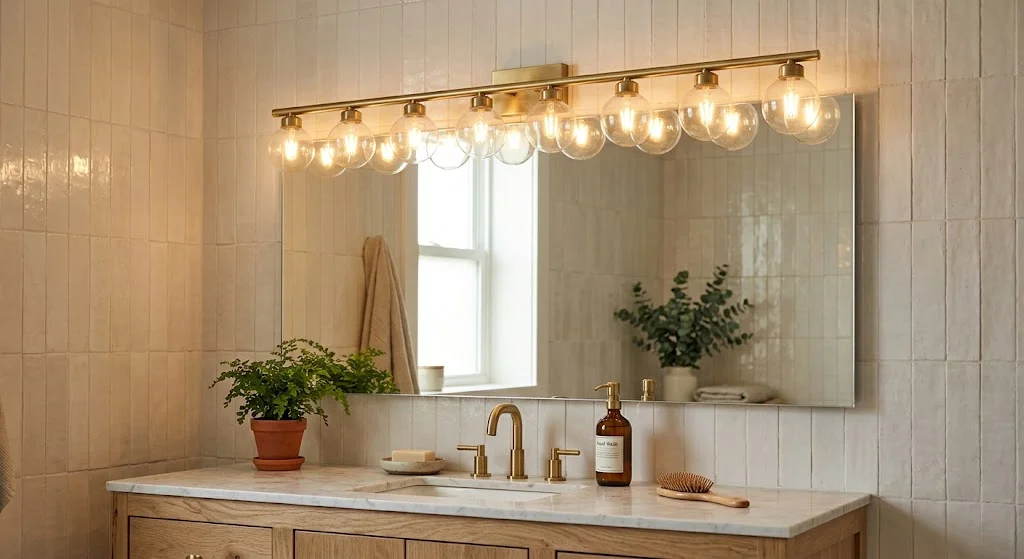
I’d choose 3000K LED globes specifically to keep the vintage aesthetic from reading as dated, paired with a simple frameless mirror and minimal surrounding hardware for a more contemporary overall feel.
Budget tier: mid ($80-250 depending on the number of bulbs and fixture style.)
12. Linear Fixtures for Wide or Double Vanities
A single horizontal linear fixture spanning the width of a wide mirror provides more even coverage across a double vanity than two separate smaller fixtures might, visually connecting both sinks into one cohesive lighting plan.
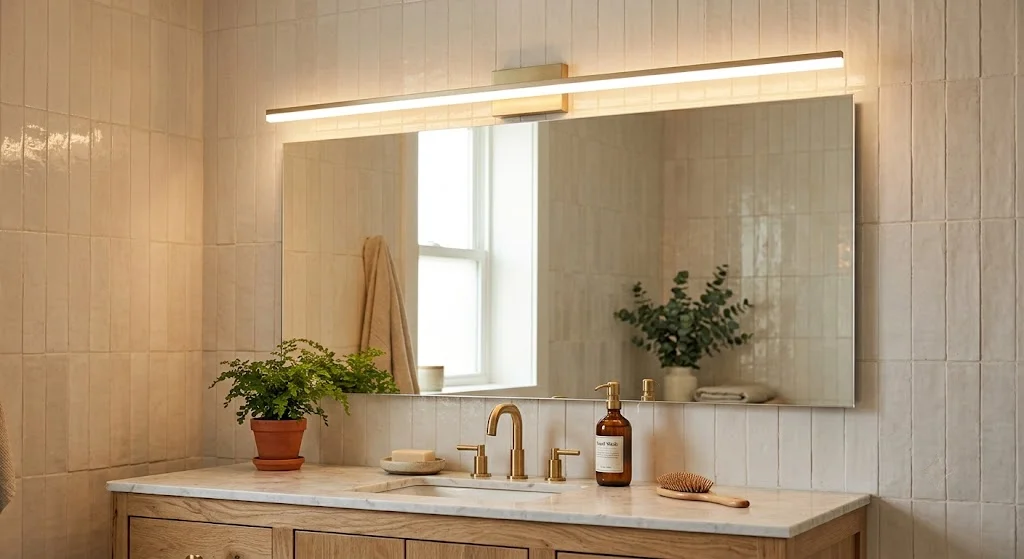
I’d size the fixture close to the mirror’s actual width rather than significantly longer, and choose integrated LED versions at 3500-4000K for a clean, contemporary look suited to most double-vanity bathrooms.
Budget tier: mid ($120-350.)
My Professional Guide to Planning Bathroom Mirror Lighting
I always start with color temperature and brightness before fixture style, since these two specs determine whether the lighting actually works for daily grooming tasks — a beautiful fixture with the wrong Kelvin range or insufficient lumens will underperform regardless of how it looks.
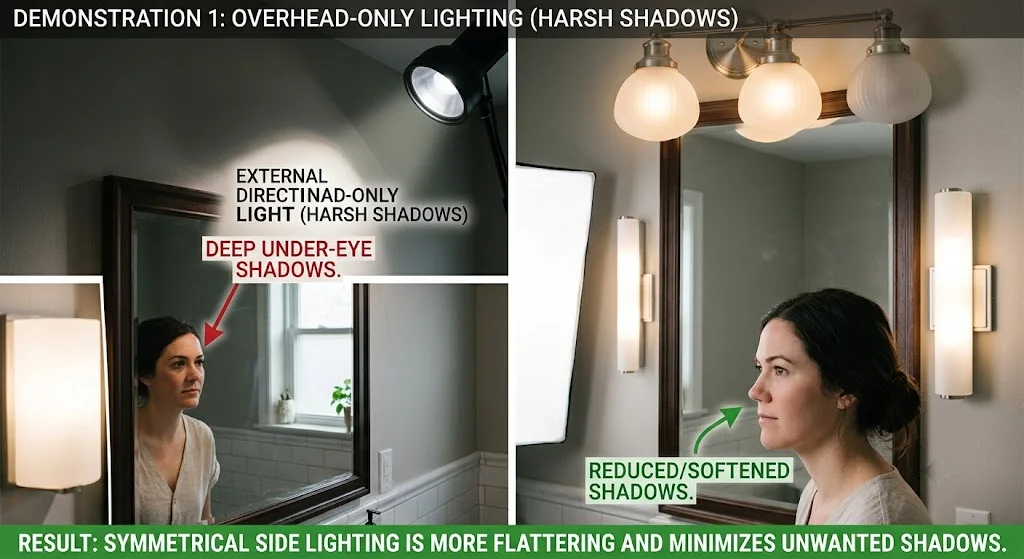
From there, I prioritize side lighting over purely overhead lighting wherever the layout allows. Light from above alone consistently creates shadows under the eyes and chin, while light from the sides — sconces, pendants, or vertical bars — illuminates the face far more evenly for tasks like makeup application or shaving.
Finally, I’d add dimmability wherever possible, since a bathroom’s lighting needs shift more throughout the day than almost any other room — bright and clear in the morning, softer in the evening — and a dimmer switch is usually a smaller investment than people expect for the flexibility it adds.
Conclusion
Bathroom mirror lighting comes down to matching real specs — color temperature, brightness, and mounting position — to how the space actually gets used, not just choosing a fixture style you like. Prioritize side lighting for even facial illumination, choose a 90+ CRI fixture in the 3000-4000K range for most vanities, and layer in dimmability where you can, and the result will genuinely support daily use rather than just looking good in photos.
Frequently Asked Questions
What color temperature is best for bathroom mirror lighting?
3000-4000K (neutral white) works well for most vanities, balancing flattering warmth with enough clarity for grooming tasks. Cooler temperatures (5000K+) suit detailed tasks like precise makeup application, while warmer temperatures (2700-3000K) suit evening ambiance.
How many lumens do I need for bathroom vanity lighting?
Aim for 400-800 lumens per task fixture, with the full vanity area reaching roughly 1,500-2,000 total lumens for comfortable, shadow-free use.
Are side lights better than overhead lighting for a bathroom mirror?
Yes, generally — overhead-only lighting tends to create shadows under the eyes and chin, while side lighting (sconces, pendants, or vertical bars) illuminates the face more evenly for everyday grooming tasks.
What is CRI and why does it matter for bathroom lighting?
CRI (Color Rendering Index) measures how accurately a light source renders true colors and skin tones. A CRI of 90 or higher is recommended for bathroom vanity lighting specifically, since color accuracy matters more here than in most other rooms.