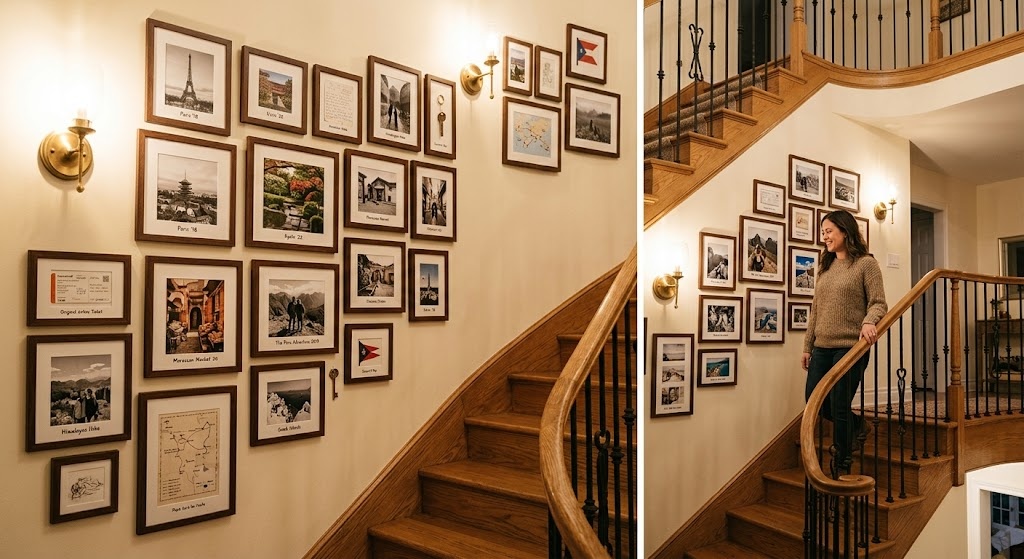
Staircase Wall Decor Ideas: 12 Ways to Elevate an Overlooked Space
I’ve noticed staircase walls are one of the most consistently under-decorated spaces in a home, even though they’re often visible from multiple rooms and levels at once. A blank stair wall has genuine architectural advantages — height, movement, natural drama — that make it one of the more rewarding spaces to style well. Below are 12 staircase wall decor ideas, each with real sizing, spacing, and safety guidance, plus a few “formula” combinations you can copy directly.
The Rules for Decorating a Staircase Wall
Following the stair angle: When hanging a gallery arrangement along a staircase, I’d stagger each frame’s center point to rise at roughly the same rate as the stair pitch itself — measure the rise of two or three steps, then keep that same vertical spacing between each frame’s center as you move up the wall, rather than eyeballing it.
Clearance from the walking line: Keep any protruding decor (shelves, sconces, sculptural pieces) at least 4-6 inches clear of the natural walking path, and avoid anything sharp-edged at shoulder height on narrower staircases specifically.
Anchoring for a high-traffic zone: Stairwell walls get bumped more than a typical living room wall. I’d use wall anchors rated for the full weight of anything hung here, and locate studs where possible for heavier pieces like mirrors or shelving.
1. Staggered Gallery Wall Following the Stair Line
A gallery wall arranged to rise with the staircase creates movement and personalizes the space more than almost any other single idea — family photos, prints, and sketches all work well when the arrangement’s angle genuinely tracks the stairs.
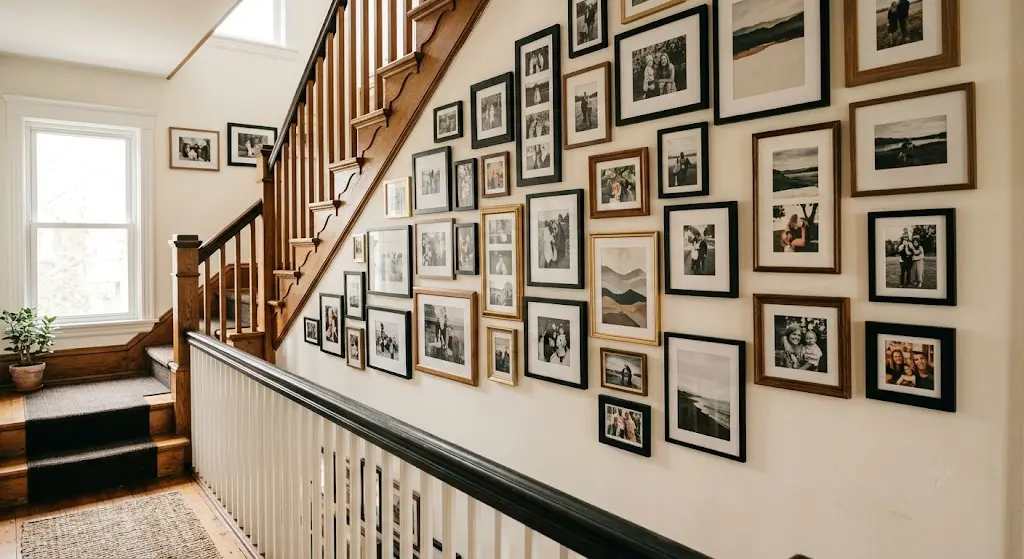
I’d lay the full arrangement out on the floor first, measuring the stair’s actual rise-per-step to replicate that same spacing between frames, then transfer the plan to the wall with painter’s tape before hanging anything.
Budget tier: low-to-mid, since it can mix thrifted and new frames ($75-250 total.)
2. One Oversized Statement Piece
A single large artwork, sized to roughly one-half to three-quarters the width of the wall, creates a clean, confident look well suited to narrow stairwells or modern interiors where a busier gallery wall might feel cluttered.
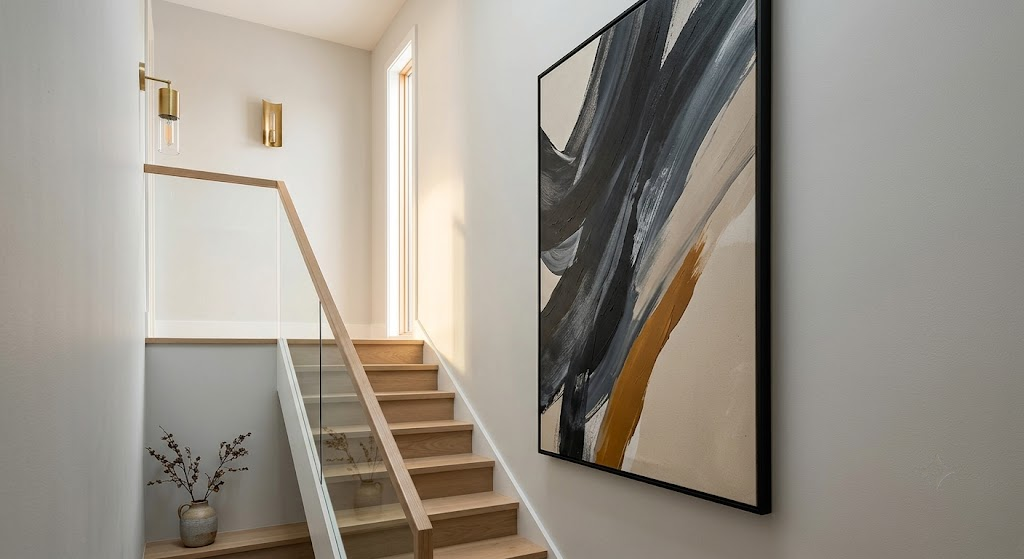
I’d choose a vertical orientation specifically for a tall, uninterrupted stair wall, since it emphasizes the architecture’s natural height rather than competing with it.
Budget tier: mid-to-high ($150-500+ depending on size and medium.)
3. Restyleable Picture Ledges
Floating picture ledges let you layer frames and small objects without committing to fixed nail placement, genuinely useful if you like to rearrange periodically rather than settle on one permanent display.
I’d mount ledges with at least 3-4 inches of depth for genuine layering capacity, and keep protruding objects toward the back of the ledge, away from the walking line below.
Budget tier: low-to-mid ($60-180 for a full ledge run.)
4. Staircase Library Wall
Slim shelving running alongside the stair wall adds real storage and a collected, lived-in character, especially effective in older homes or family spaces wanting a custom-built feel.
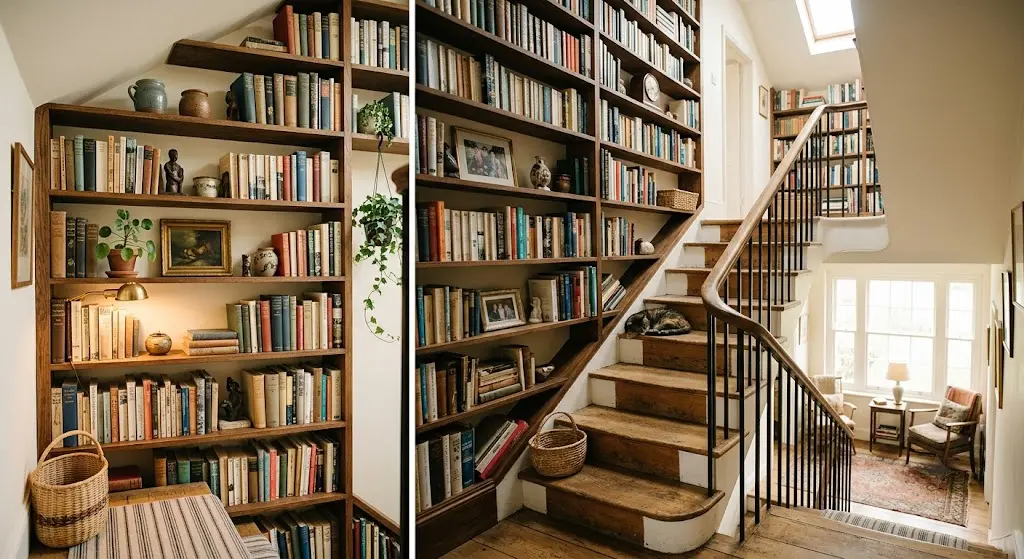
I’d keep shelf depth to 6-8 inches maximum to preserve walking clearance, and secure anything fragile toward the back rather than the shelf edge, given the high-traffic nature of a stairwell.
Budget tier: mid ($150-400 depending on shelf material and total run length.)
5. Wallpaper to Soften Awkward Angles
Wallpaper handles the irregular angles of a stair wall better than most other decor choices, since pattern and texture can visually soften sharp transitions that flat paint alone leaves feeling stark.
I’d choose lighter tones and subtler patterns for a narrow stairwell to keep it feeling open, and reserve bolder, larger-scale prints for stairwells with strong natural light that can support a deeper, richer look.
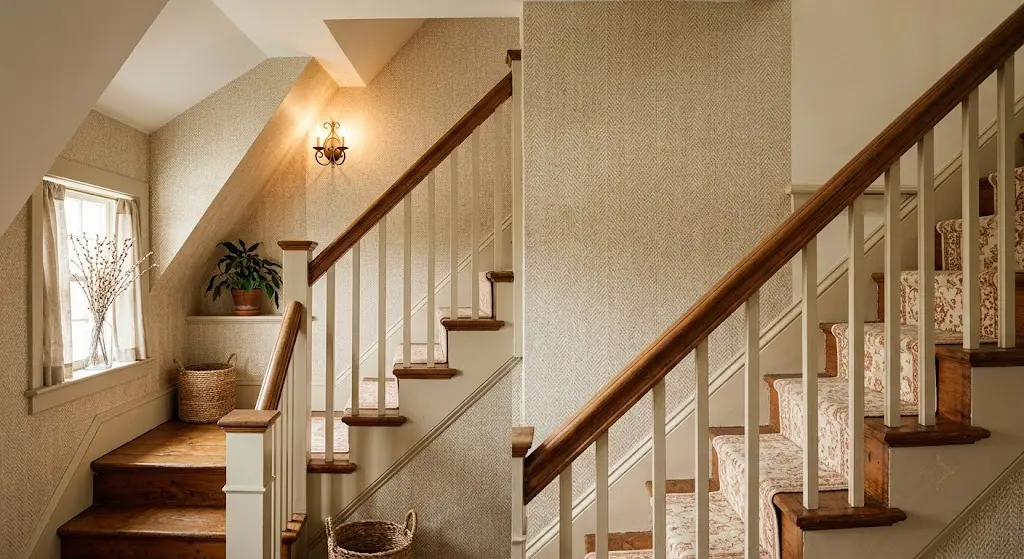
Budget tier: mid ($150-500 including installation, depending on wall area.)
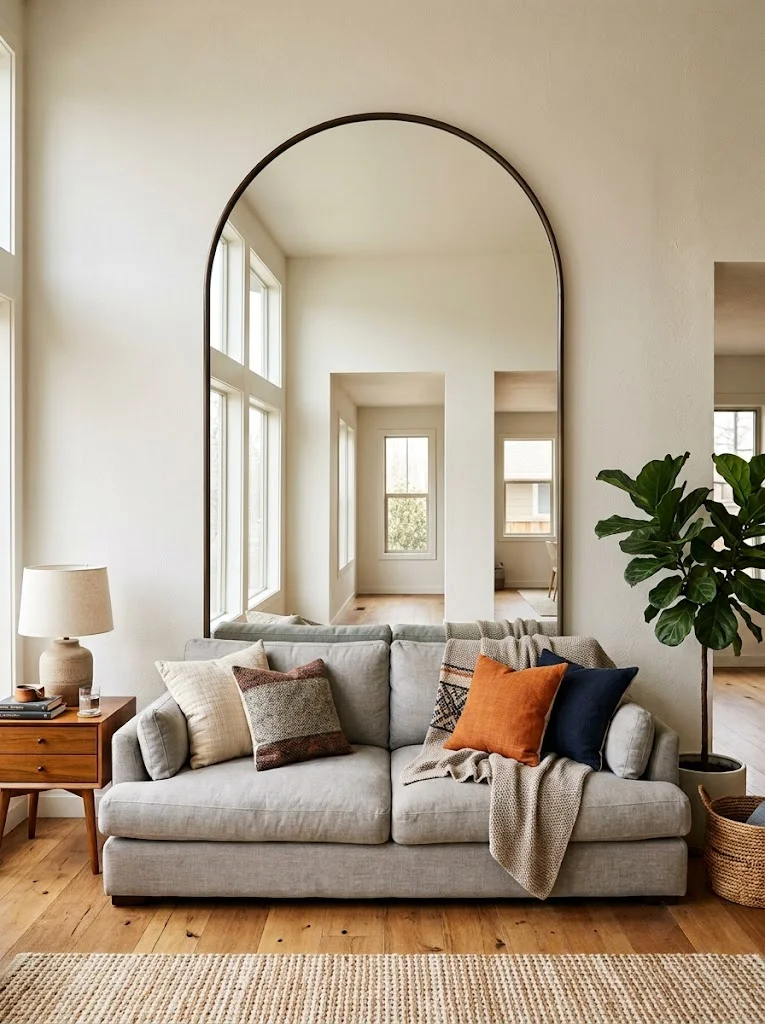
6. Statement Mirror or Mirror Cluster
A single oversized mirror, or a cluster of smaller mirrors in varying shapes, reflects light and helps a darker stairwell feel noticeably brighter and larger.
I’d position mirrors specifically where they’ll catch natural light from a nearby window or existing fixture, and if clustering multiple mirrors, keep one consistent frame finish even while varying shape, so the grouping reads as cohesive from every angle of the stairs.
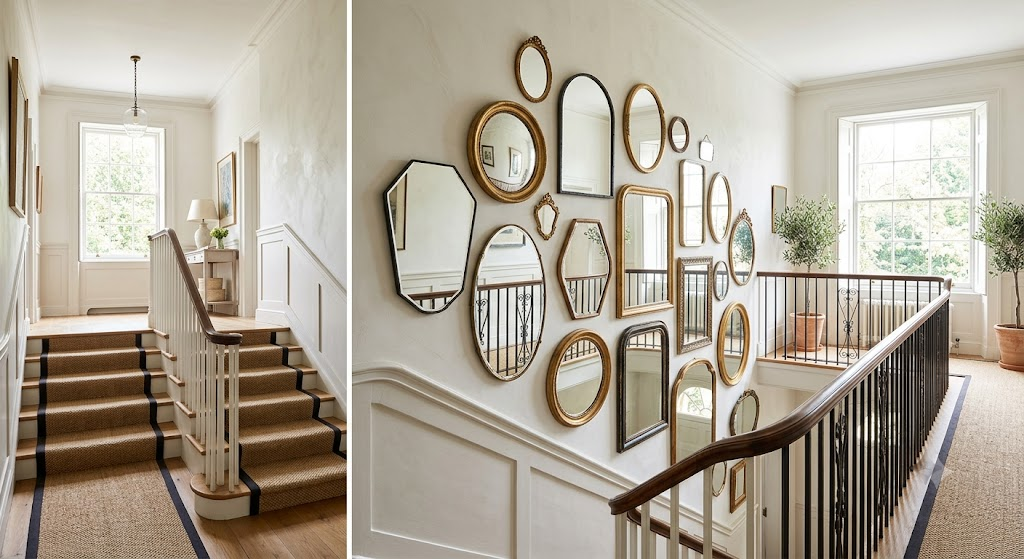
Budget tier: mid-to-high ($150-450 for a single large mirror, similar total for a cluster.)
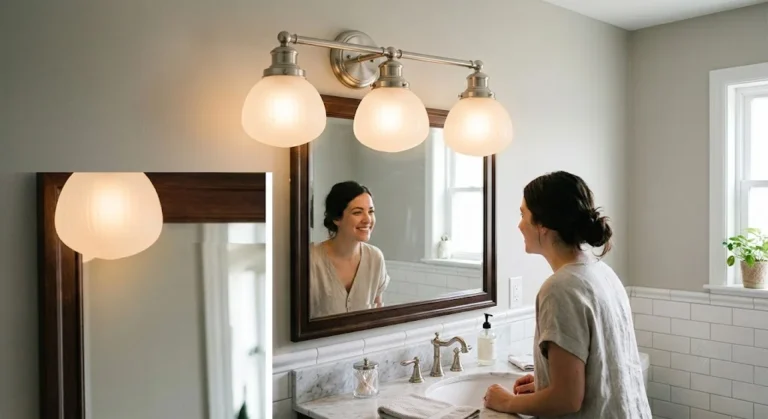
7. Sculptural Sconces for Layered Lighting
Wall sconces do double duty on a staircase — lighting the path safely while adding architectural interest that reads as intentional decor during the day, not just a functional fixture.
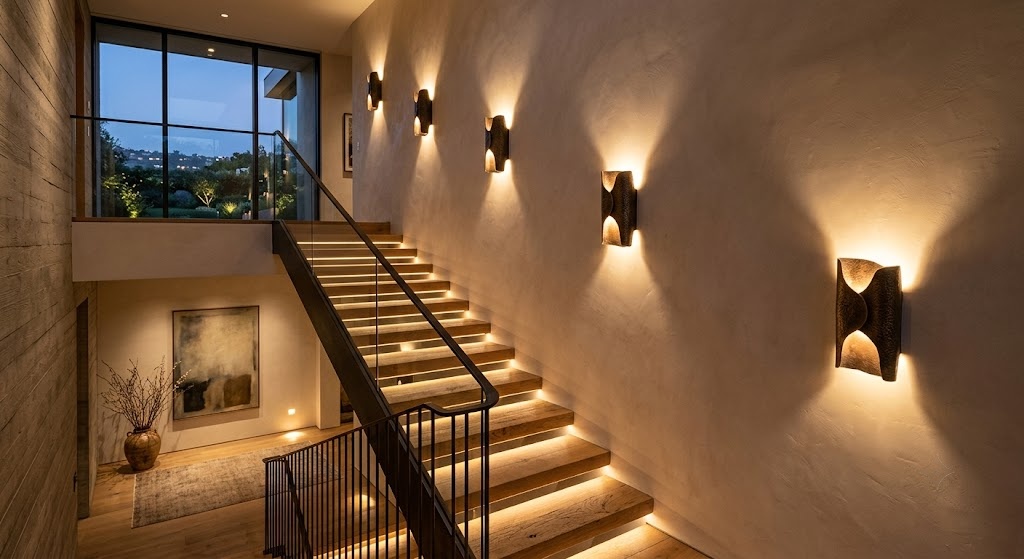
I’d space sconces at consistent height relative to each stair tread as you move up the wall, and choose slim, low-profile designs specifically for narrower staircases where a bulkier fixture could interfere with the walking line.
Budget tier: mid ($100-350 for fixtures and installation.)
8. Woven Textile or Tapestry
A textile piece — a woven hanging, tapestry, or framed fabric — introduces warmth and pattern to a stairwell’s typically hard surfaces (painted drywall, wood treads, metal railings) without the permanence of wallpaper.
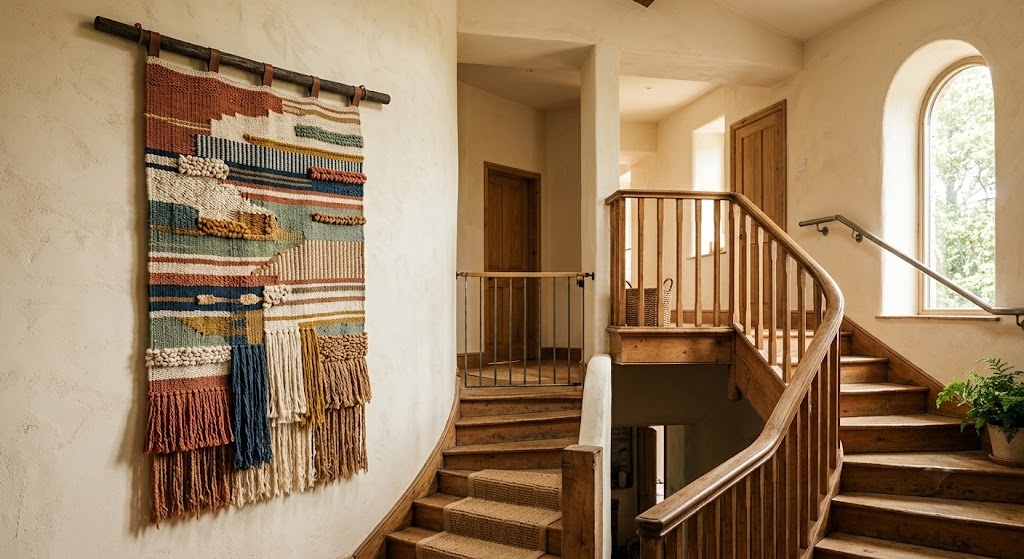
I’d size the piece generously enough to hold visual weight on a tall wall — a small textile can get visually lost in a space with this much vertical scale.
Budget tier: low-to-mid ($50-200 depending on size and craftsmanship.)
9. Architectural Molding or Board-and-Batten
Adding trim detail — board-and-batten, panel molding, simple wainscoting — gives a staircase wall genuine dimension even before any art or decor goes up, and works as a strong backdrop for whatever you layer on top later.
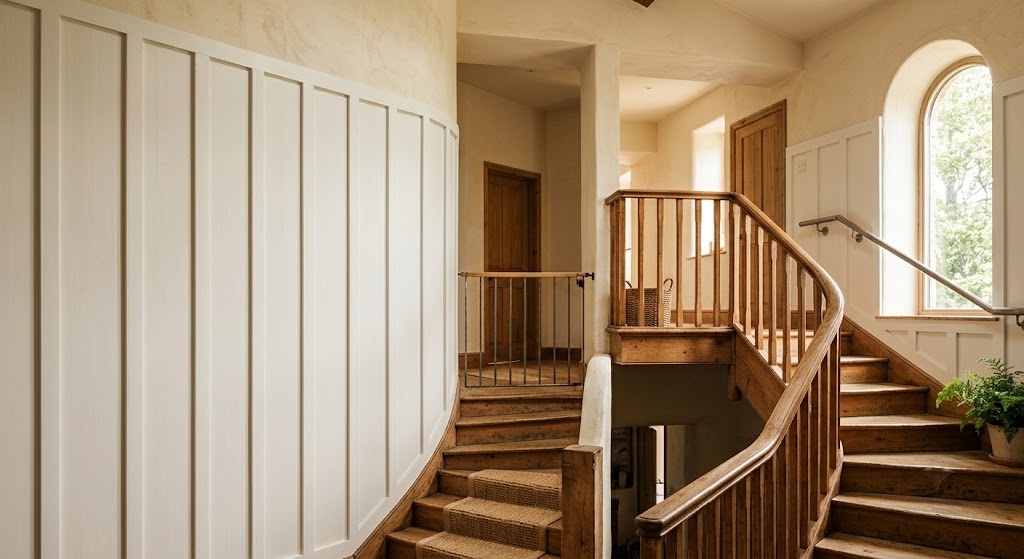
I’d paint the molding the same tone as the wall for subtle texture, or a contrasting color for a bolder statement, and commit to one direction rather than mixing partial contrast across the same wall.
Budget tier: mid-to-high ($300-900+ depending on molding style and total wall area.)
10. Color Story Instead of Exact Matching
Rather than matching every element precisely, repeating a few consistent tones across art, textiles, and any painted details gives a staircase wall clear direction without requiring a fully matched, formal look.
| Style | Palette | Effect |
|---|---|---|
| Modern | Black, white, taupe | Clean and graphic |
| Warm classic | Cream, camel, brass | Soft and timeless |
| Coastal | Blue, sand, white | Light and airy |
| Moody | Forest, charcoal, walnut | Rich and dramatic |
Budget tier: varies widely depending on chosen elements, generally low-to-mid if working with existing pieces ($0-300.)
11. Curated Travel or Memory Wall
A personal collection — travel photos, postcards, meaningful keepsakes — turns the staircase into a genuine visual story, with each step revealing something new as you move up or down.
I’d use consistent framing or a shared color palette across the collection specifically, since a personal display needs some visual structure to read as curated rather than simply sentimental clutter.
Budget tier: low, since it typically uses items already owned ($30-100 for framing.)
12. Rail-Mounted Hooks for Function and Display
A row of hooks or pegs mounted along the stair rail or wall blends practical function (hats, bags, seasonal accents) with a genuinely decorative layer, especially useful in an entryway-adjacent stairwell.
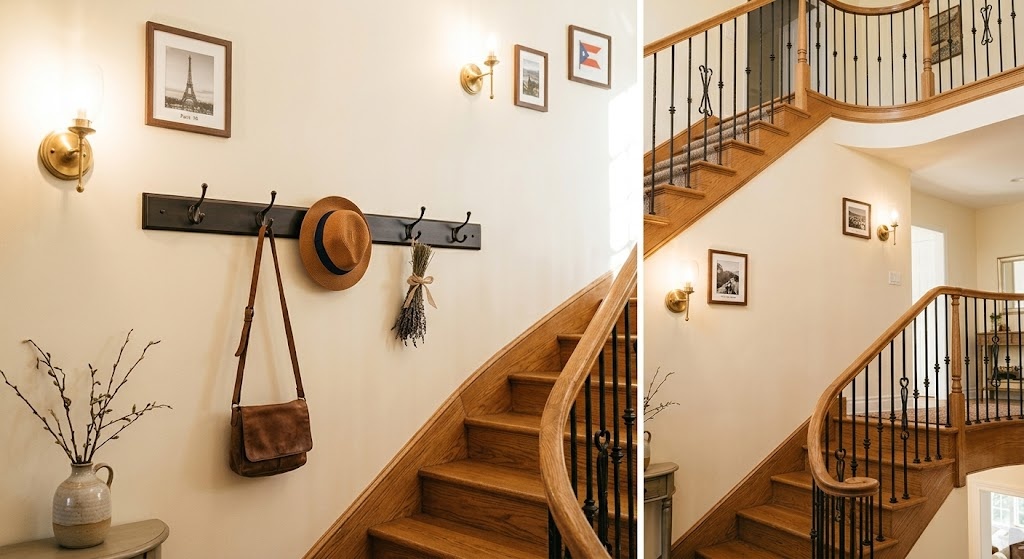
I’d keep this display intentionally light — a few well-chosen items rather than a fully loaded rail — so it reads as styled rather than like an overflow coat closet.
Budget tier: low ($20-60 for hooks or a pegboard rail.)
Quick Styling Formulas You Can Copy
If you want a fast way to plan without overthinking it, these combinations work reliably:
- Classic: matching frames + black-and-white photography + brass sconces
- Modern: one oversized art piece + a clean, neutral wall color + a single statement mirror
- Cozy: picture ledges + layered mixed frames + a woven textile accent
- Collected: a memory wall + travel finds + one shared, consistent color palette
My Professional Guide to Planning a Staircase Wall
I always start by walking the stairs myself — both up and down — before choosing decor, checking sightlines from the bottom landing, the top landing, and mid-stair, since a staircase wall reads differently from each of these vantage points in a way a flat living room wall doesn’t.
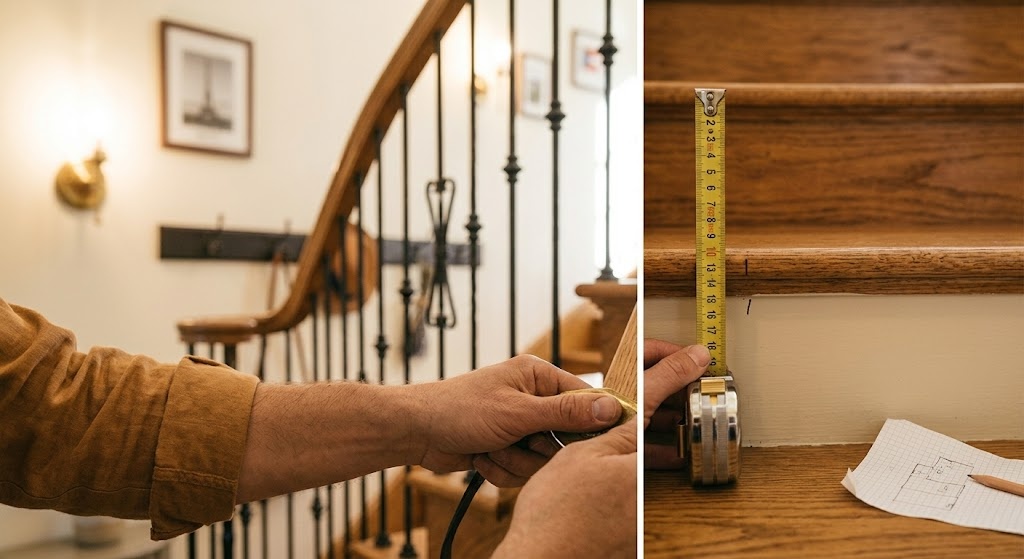
From there, I measure the actual stair pitch before planning any gallery-style arrangement, since eyeballing the spacing between frames on an angled wall is one of the most common mistakes — a plan that looks even on the floor can look inconsistent once transferred to the actual staircase angle.
Finally, I’d prioritize anchoring and clearance over any other design decision on a staircase specifically. This is one of the highest-traffic, most frequently bumped walls in a home, and the safety considerations here matter more than on nearly any other wall you’d decorate.
Conclusion
A staircase wall has real architectural advantages — height, movement, high visibility — that make it worth decorating with the same intention as any other major wall in the home. Match the spacing to your stairs’ actual pitch, prioritize safe anchoring and clearance in this high-traffic zone, and choose one of the styling formulas above if you want a fast, reliable starting point rather than building an arrangement from scratch.
Frequently Asked Questions
What is the best decor for a narrow staircase wall?
Oversized art, mirrors, and a slim gallery wall all add visual impact without requiring much physical depth, which matters most in a genuinely narrow stairwell.
How high should I hang art on a staircase wall?
Align the arrangement’s spacing with the stair’s actual pitch rather than a fixed height, and check placement from both the top and bottom landing before making any permanent holes.
Can I mix different frame styles on a staircase gallery wall?
Yes, as long as one unifying element — consistent matting, a shared color palette, or matching frame finish — ties the collection together, so it reads as curated rather than random.
What makes a staircase wall look more expensive?
Consistent framing, proper scale relative to the wall, layered or architectural lighting, and a clear color story all contribute more to an elevated look than any single expensive piece alone.