Dining Room Trends 2026: 10 Ideas and How to Actually Achieve Them
I’ve noticed dining rooms are having a genuine moment again after years of open-concept layouts pushed them toward extinction — and the trends shaping 2026 reflect that shift toward intentional, dedicated gathering spaces. Below are 10 dining room trends, each with the practical detail — paint undertones, table sizing, lighting specs — that turns a trend you’ve seen in a photo into something you can actually plan for your own room.
1. Architectural Warmth Through Millwork and Paneling
Paneled walls, plaster-effect finishes, and statement millwork are bringing back a sense of depth and craftsmanship to dining rooms that flat drywall and minimal trim spent the last decade stripping away.
I’d start with wainscoting or picture-frame molding on a single wall if a full-room treatment isn’t in the budget, painted in the same tone as the wall for subtle texture, or a contrasting warm wood tone (walnut, dark oak) for a bolder statement.
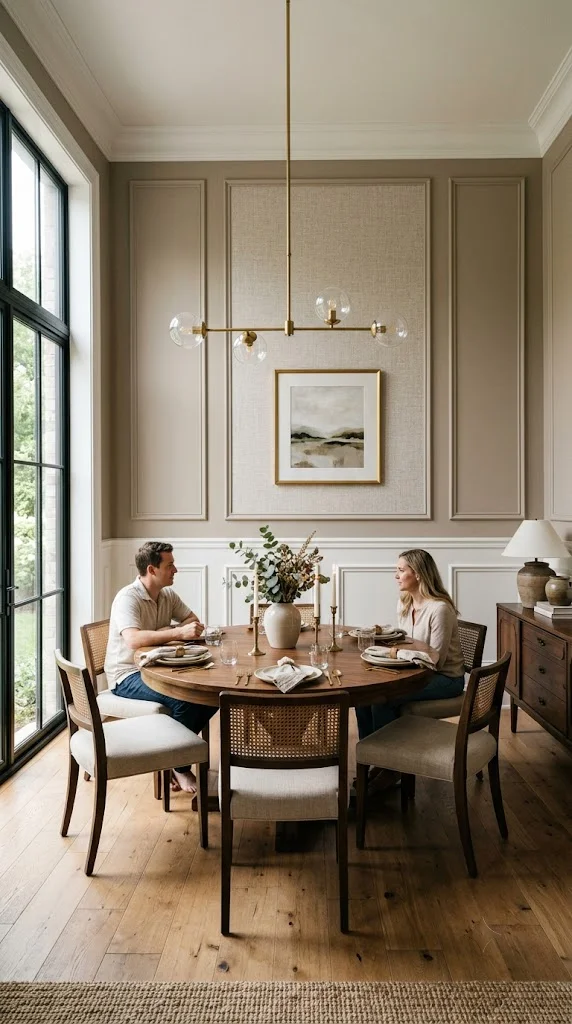
Budget tier: mid-to-high ($300-1,500+ depending on scope.) Implementation tip: focus millwork on the wall behind the table’s head seats, where it reads most clearly during actual use of the room.
2. Layered, Warm Statement Lighting
Dining room lighting is shifting away from a single bright overhead fixture toward layered warmth — a statement chandelier in aged brass, linen, or alabaster, combined with wall sconces or picture lights rather than one central source doing all the work.
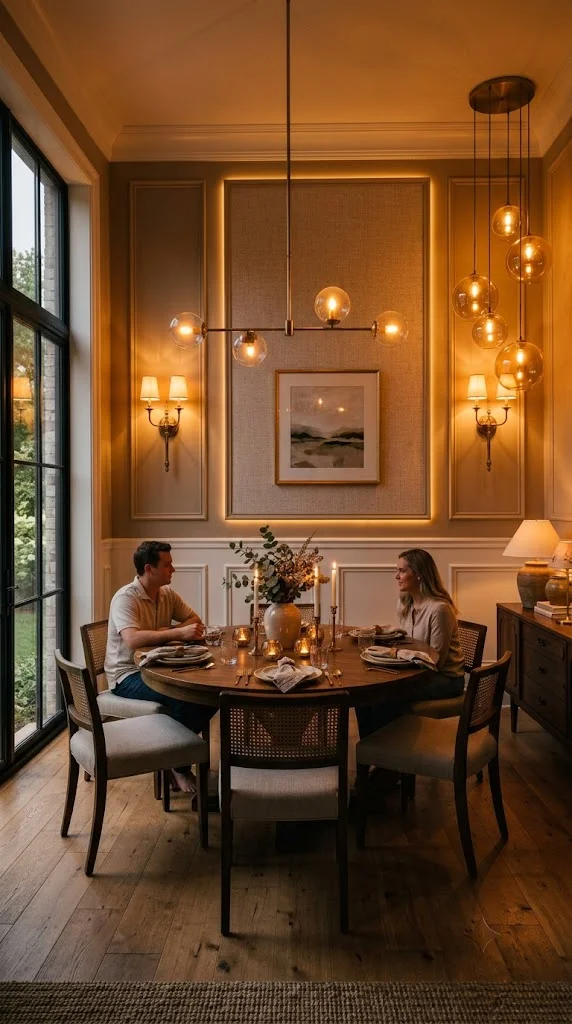
I’d keep every bulb in the 2700-3000K warm white range for this specific application, and size a chandelier to roughly one-half to two-thirds the width of your table for proper visual proportion.
Budget tier: mid-to-high ($300-1,000+ for a statement fixture, more with added sconces.) Implementation tip: hang the chandelier’s bottom edge 30-34 inches above the table surface for both proper lighting and headroom.
3. Playful Pattern Over Formal Restraint
Traditional formal dining rooms are giving way to more personality-driven spaces — bold wallpaper, glossy painted walls, and curated art collections (vintage prints, plaster casts, or a themed collection) are replacing the matched, restrained dining sets of the past.
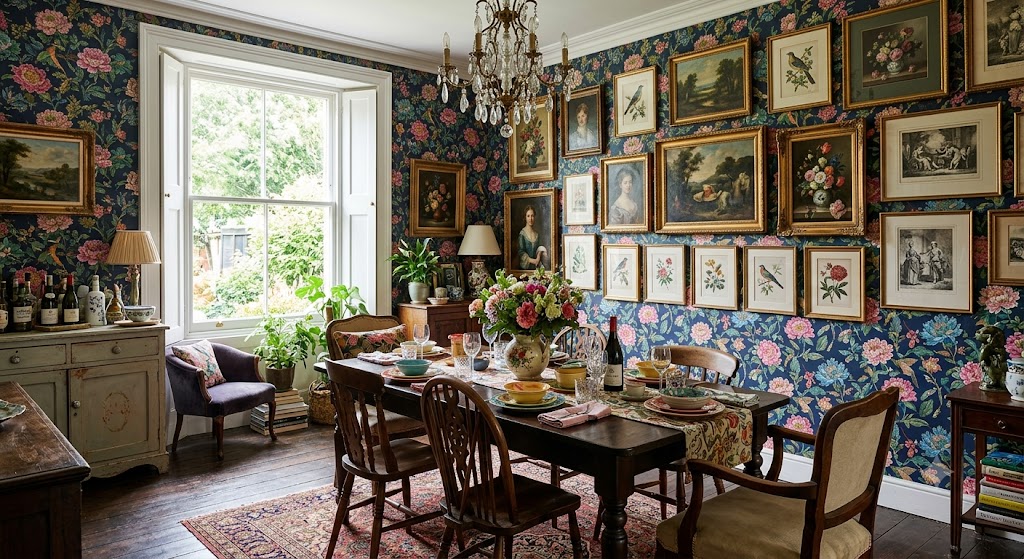
I’d choose one dominant pattern source (wallpaper or a bold paint finish) and keep furniture relatively simple around it, rather than layering multiple bold patterns in a room this size.
Budget tier: mid ($150-500 for wallpaper on a feature wall, more for full-room coverage.) Implementation tip: since dining rooms see less daily wear than a living room, this is a lower-risk space to commit to a genuinely bold wallpaper choice.
4. Casual Dining Nooks Instead of Formal Rooms
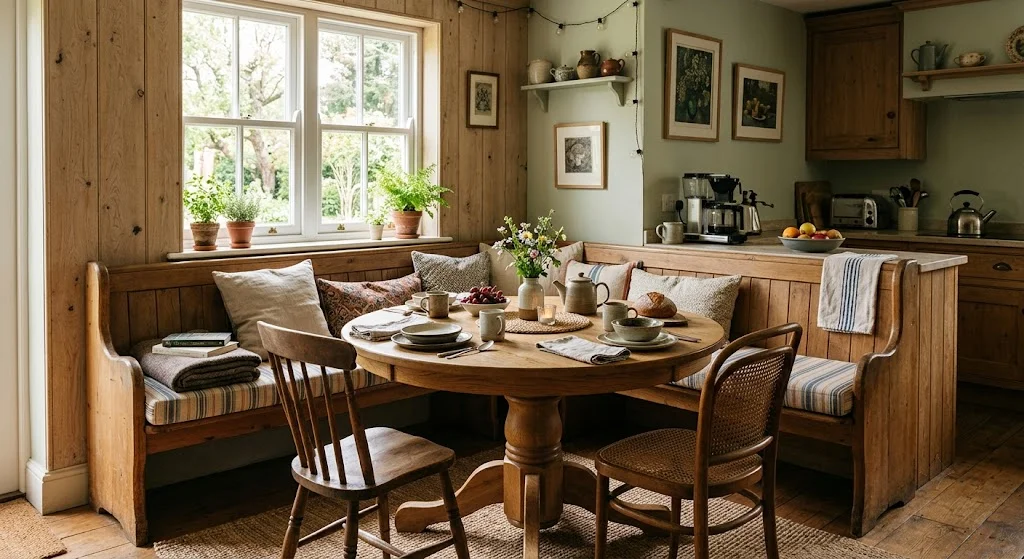
Not every home has space for a dedicated dining room, and the trend toward built-in banquette seating paired with a small bistro or café-style table in a kitchen corner reflects that — prioritizing comfortable, everyday togetherness over formal occasion-only dining.
I’d size a banquette bench to at least 18 inches deep for genuine comfort, and pair it with a round or oval table specifically, since these shapes tend to fit more comfortably into a corner nook than a full rectangular table.
Budget tier: mid ($400-1,200 for a built-in banquette, less for a simple bistro table and chairs.) Implementation tip: built-in seating with a hinged lid adds real storage capacity, which matters more in a nook replacing a full dining room’s storage.
5. The Hallway Dining Room Revival
For homes with a genuinely large entryway or hallway, positioning a dining table there — used as a display surface day-to-day and a dining space when hosting — creates a sense of occasion without dedicating a rarely-used room solely to dining.
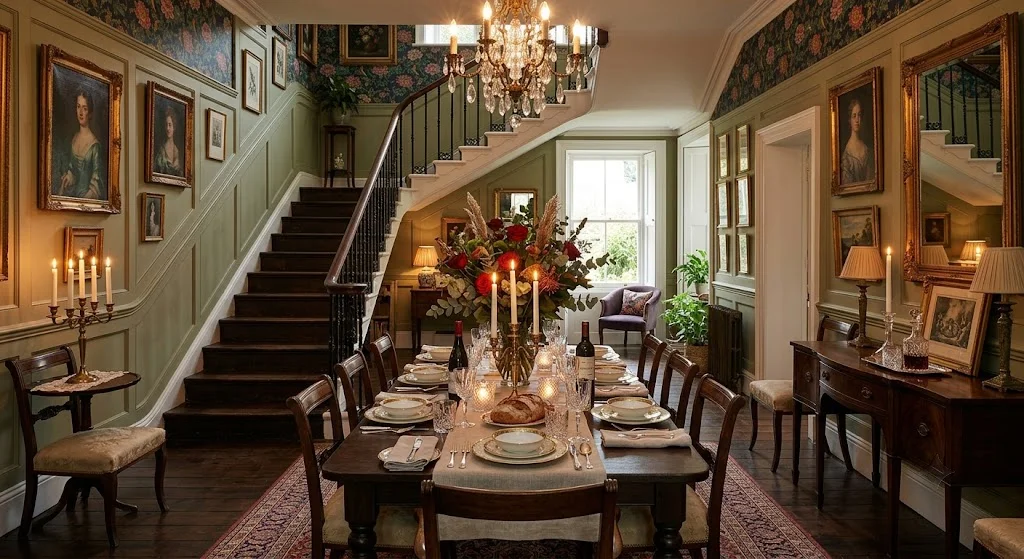
I’d only pursue this in a hallway at least 8-10 feet wide, enough to accommodate a table plus comfortable clearance for walking past during non-dining use.
Budget tier: low-to-mid, since it repurposes existing space ($200-600 for table and lighting.) Implementation tip: pair this with a nearby kitchen for practical serving convenience, since a hallway dining setup depends on proximity to food prep.
6. Multi-Functional Dining Spaces
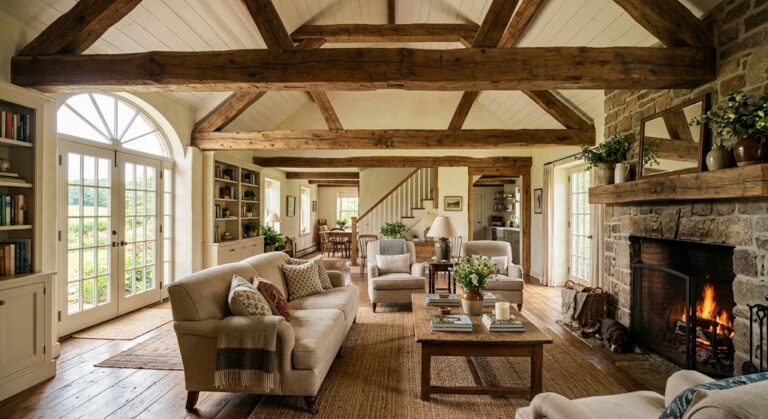
Rather than a room used solely for formal meals, dining spaces are increasingly layered with other functions — a home library wall, a work-from-home corner, or built-in storage that serves double duty, reflecting smaller home footprints and a desire for spaces that earn their square footage daily.
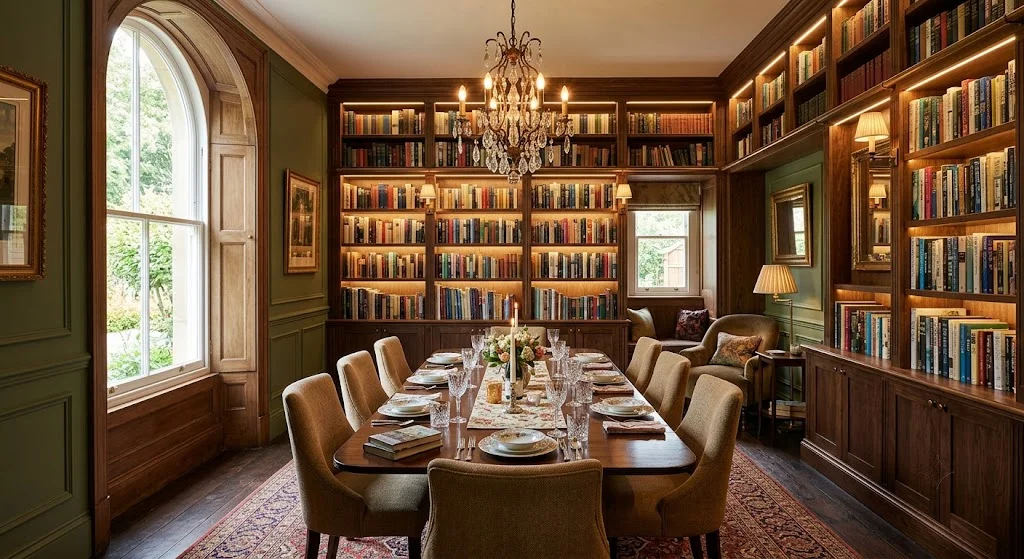
I’d choose one clear secondary function (library, workspace) rather than trying to blend several, and use built-ins to keep the secondary function’s materials contained and out of the way during actual meals.
Budget tier: mid-to-high, largely driven by built-in storage costs ($500-2,000+.) Implementation tip: a fold-down desk or a bookshelf wall both work well since they don’t compete with table and chair placement the way a bulkier secondary function might.
7. Moody, Saturated Color Palettes
Since dining rooms are most often used in the evening, they’re a natural place to experiment with deeper, richer colors without the daytime concern of feeling like you’re living in a dark space around the clock.
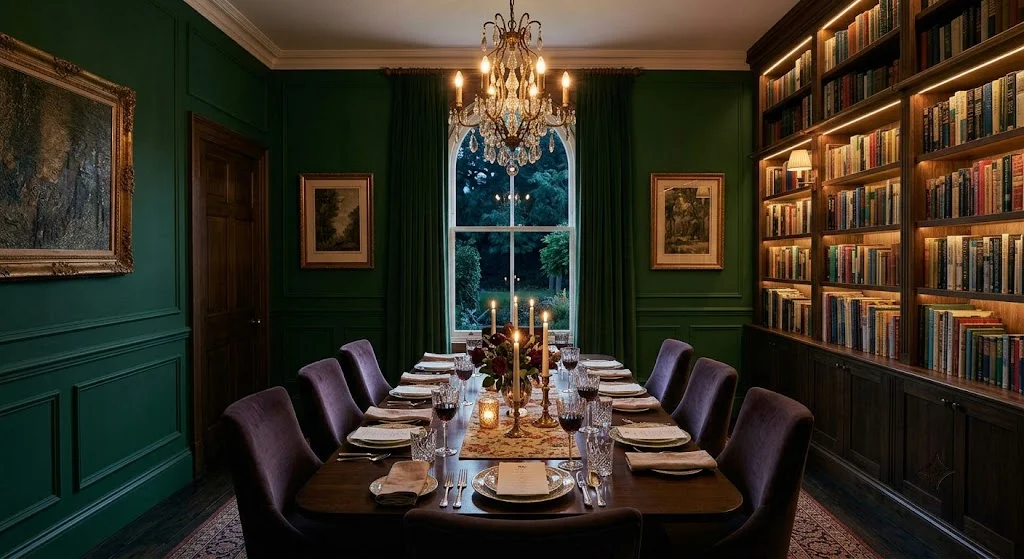
I’d choose colors that read as grounded rather than flat in evening lighting specifically — deep greens, aubergine, or a rich navy tend to hold their depth under warm lamp or candlelight better than a true black, which can go flat without enough light layering.
Budget tier: low-to-mid ($150-400 for paint on a standard-sized dining room.) Implementation tip: pair a moody wall color with the layered warm lighting trend above — the two work directly together, since darker walls depend on good lighting to avoid feeling simply dim.
8. The Round Table Comeback
After years of rectangular and oval tables dominating, round tables are having a genuine resurgence — they eliminate the “head of the table” hierarchy, encourage more even conversation across the group, and often fit more comfortably into smaller or irregularly shaped rooms.
I’d size a round table based on seating needs: a 42-48 inch diameter comfortably seats 4, while a 54-60 inch diameter accommodates 6, generally requiring less overall room footprint than a rectangular table seating the same number.
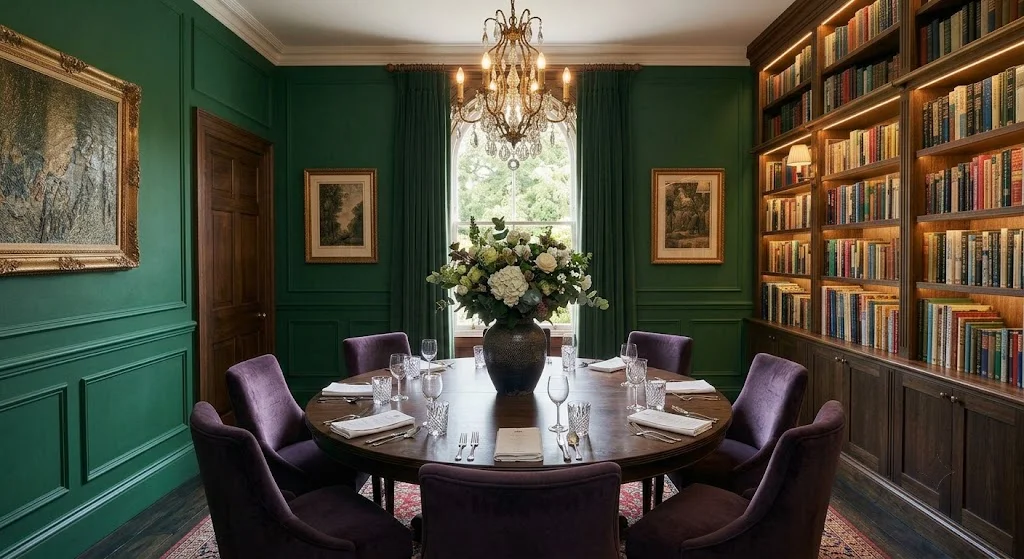
Budget tier: mid ($300-900 depending on material.) Implementation tip: a round table needs roughly 36 inches of clearance on all sides for chairs to pull out and guests to move around comfortably — measure your room against this before committing to a size.
9. Natural, Textural Materials Throughout
Alongside the architectural warmth trend, there’s a broader move toward genuinely tactile materials — a jute or wool rug, linen or wool table linens, and unlacquered or matte metal finishes — replacing the glossier, more polished dining room materials of recent years.
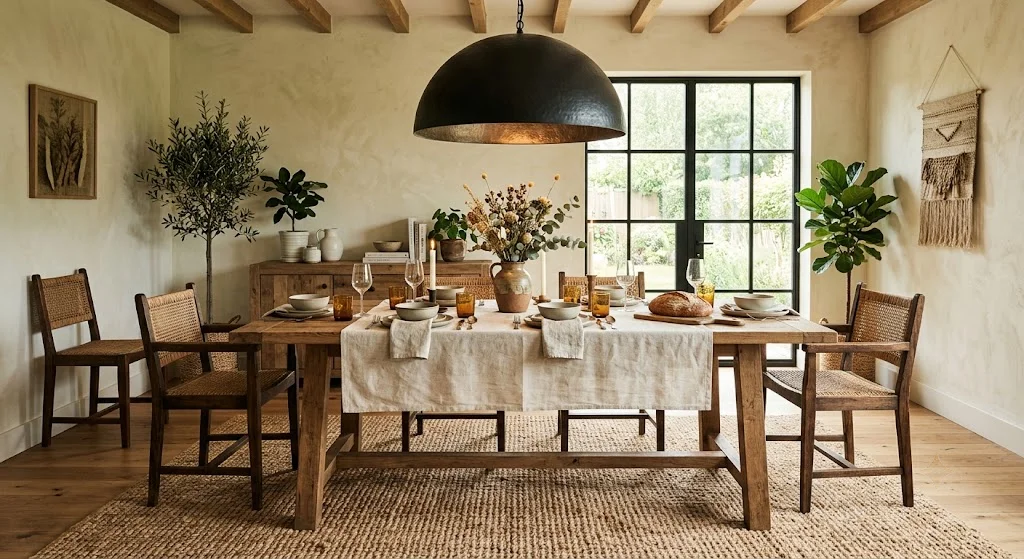
I’d introduce this primarily through the rug and lighting fixture material first, since these are lower-cost, lower-commitment ways to shift a room’s overall material story compared to replacing furniture or wall finishes.
Budget tier: low-to-mid ($100-350 for a rug and linens.) Implementation tip: choose a rug large enough that all chair legs stay on it even when pulled out from the table — a common sizing mistake in dining rooms specifically.
10. Intentional, Curated Tablescaping
Beyond the room’s permanent decor, the way the table itself is styled — even for everyday use, not just special occasions — is trending toward more intentional layering: a runner or linens, mixed candle heights, and a low, wide centerpiece that doesn’t block sightlines across the table.
I’d apply the same rule-of-three principle used in shelf and tray styling here: group centerpiece elements in odd numbers, varying height, keeping anything at eye-level height low and off to one side rather than centered where it blocks conversation.
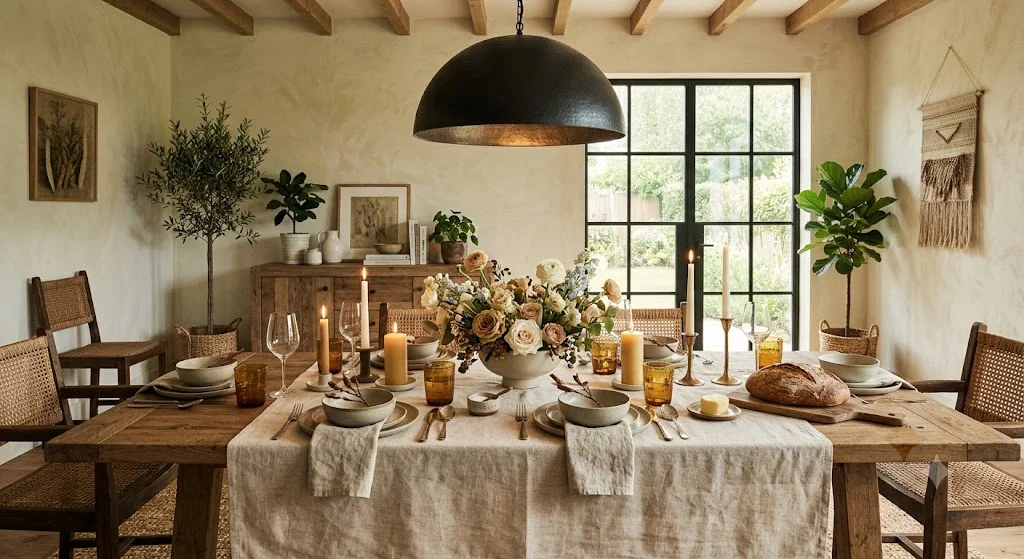
Budget tier: low ($30-100 for linens, candles, and a centerpiece vessel.) Implementation tip: keep centerpiece height under 14 inches if it’s positioned centrally, so seated guests can see each other across the table.
My Professional Guide to Updating a Dining Room for 2026
I’d start with lighting and color before furniture, since these two elements do the most to shift a dining room’s overall mood and are considerably less expensive to change than a full furniture replacement. A moody wall color paired with warm layered lighting alone can transform a dated, overly bright dining room into something that feels genuinely current.
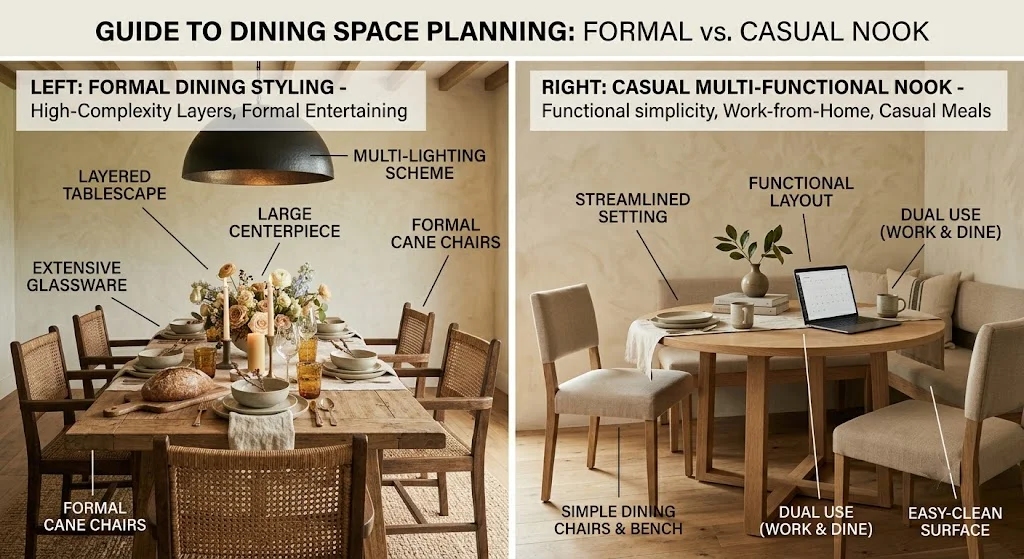
From there, I’d choose one or two trends to commit to fully rather than attempting all ten in a single room. A dining room is typically small enough that combining bold pattern, a moody palette, architectural millwork, and a curated art collection simultaneously starts to compete rather than complement.
Finally, I’d think about how the room is actually used before choosing between the formal-room trends (architectural millwork, moody colors) and the casual-space trends (nooks, multi-functional blending). A household hosting infrequently benefits more from the multi-functional or nook-style approaches, while a household that entertains regularly gets more value from investing in the room as a dedicated, occasion-worthy space.
Conclusion
Dining rooms in 2026 are trending toward intentional, layered spaces — architectural texture, warm statement lighting, and moody color for the rooms designed purely for gathering, alongside casual nooks and multi-functional blending for homes prioritizing flexibility. Choose the direction that matches how your household actually uses the space, implement lighting and color first since they offer the most impact for the investment, and commit to one or two trends fully rather than combining too many at once.
Frequently Asked Questions
What is the biggest dining room trend for 2026?
A shift back toward dedicated, intentional dining spaces after years of open-concept layouts, expressed through architectural detailing, warm layered lighting, and richer, moodier color palettes.
What color are dining rooms trending toward in 2026?
Deeper, saturated tones — including greens, aubergine, and rich navy — are trending, since dining rooms are typically used in the evening and can support darker colors without the all-day darkness concern of a living space.
Are round or rectangular dining tables more popular in 2026?
Round tables are seeing a genuine resurgence, valued for eliminating table hierarchy and fitting more efficiently into smaller or irregularly shaped rooms compared to a rectangular table seating the same number of guests.
Do I need a dedicated dining room to follow these trends?
No several 2026 trends specifically address homes without a dedicated dining room, including casual built-in nooks, hallway dining setups, and multi-functional spaces that blend dining with a library or workspace.