Porch Furniture Ideas
Front Porch Furniture Ideas: 11 Ways to Create a Welcoming Entrance
I’ve helped plan more front porch setups than I can count, and the ones that actually work long-term share a few things in common — furniture sized correctly for the porch’s actual square footage, materials genuinely suited to the local climate, and just enough styling to feel warm without overcrowding the entrance. Below are 11 front porch furniture ideas, each with real measurements, material guidance, and budget ranges to help you plan rather than just browse.
Before You Buy: The Core Planning Rules for the Front Porch Furniture Ideas
Walking clearance: Leave at least 36 inches of clear walking path from the front door to the steps, even with furniture in place — anything narrower makes the entrance feel obstructed rather than welcoming.
Measure before choosing a set: A standard porch seating arrangement (two chairs plus a small table) needs roughly 6×6 feet of usable space at minimum; a full sectional or larger conversation set needs closer to 10×10 feet.
Weather-rated materials only: Teak, powder-coated aluminum, synthetic (resin) wicker, and Polywood all resist moisture, sun, and temperature swings with minimal maintenance — natural wicker and untreated wood require significantly more upkeep in most climates.
1. Wicker Seating Set
A wicker loveseat paired with two matching chairs and a small coffee table creates a genuine conversation area, and works with nearly any home exterior style. Choose weather-resistant resin wicker over natural rattan if the porch is uncovered or in a humid climate.
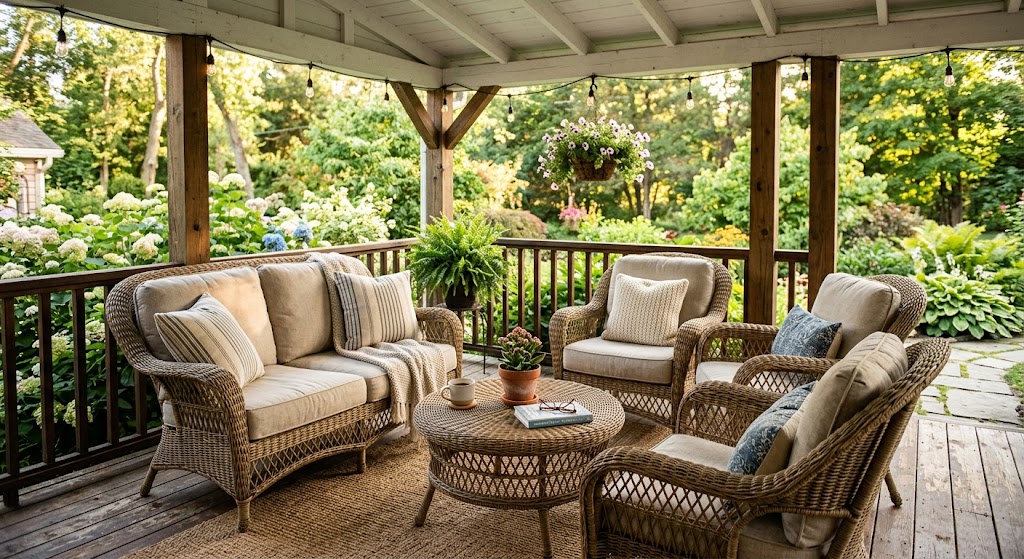
I’d size the coffee table to sit 14-18 inches from each seating piece, the same clearance rule that applies indoors, so everyone can reach a drink without straining or feeling cramped.
Budget tier: mid-to-high ($400-1,200 for a full set.) Best for: covered porches, family gathering spots.
2. Wooden Rocking Chairs
A pair of rocking chairs brings a timeless, relaxed feel, and holds up best outdoors in naturally rot-resistant woods like cedar, teak, or eucalyptus rather than standard pine or untreated softwood.
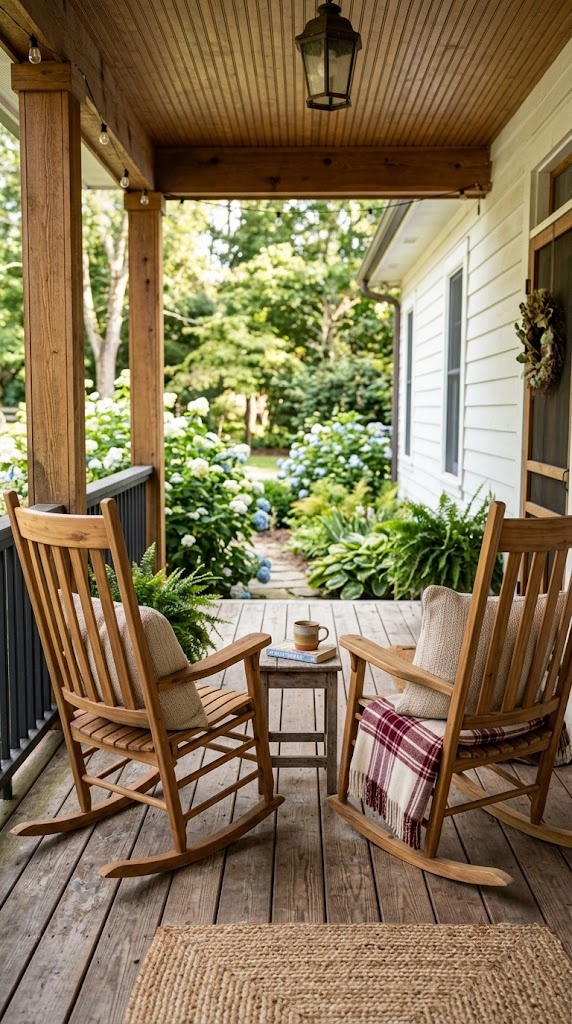
I’d angle the chairs slightly toward each other rather than facing straight out, which genuinely encourages conversation and makes the porch feel more intentionally arranged than a straight, formal row.
Budget tier: mid ($150-400 per chair depending on wood species.) Best for: traditional and farmhouse-style homes.
3. Modern Black Metal Furniture
Powder-coated aluminum or steel furniture suits homes with clean architectural lines, offering genuine durability without the maintenance natural materials require.
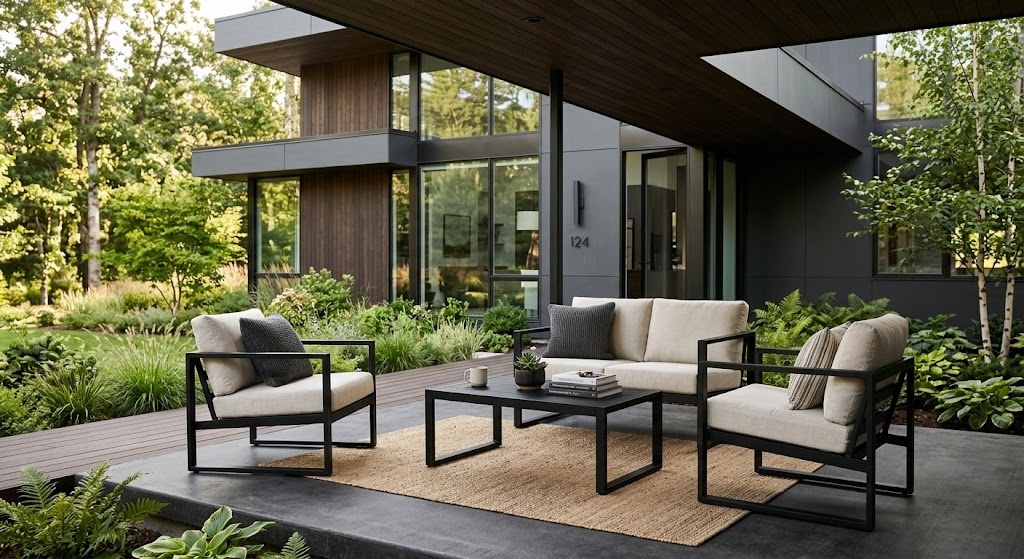
I’d pair black metal frames with thick, neutral outdoor cushions specifically, since bare metal seating without cushioning reads as more commercial patio furniture than a styled residential porch.
Budget tier: mid-to-high ($300-900 for a seating set.) Best for: modern or contemporary home exteriors.
4. Farmhouse Storage Bench
A bench — reclaimed wood or painted white — offers simple seating while doubling as hidden storage for gardening tools, outdoor cushions, or seasonal decor when built with a lift-top lid.
I’d size a bench to at least 48 inches long for two people to sit comfortably, and choose a storage version specifically if your porch lacks a separate closet or shed for seasonal items.
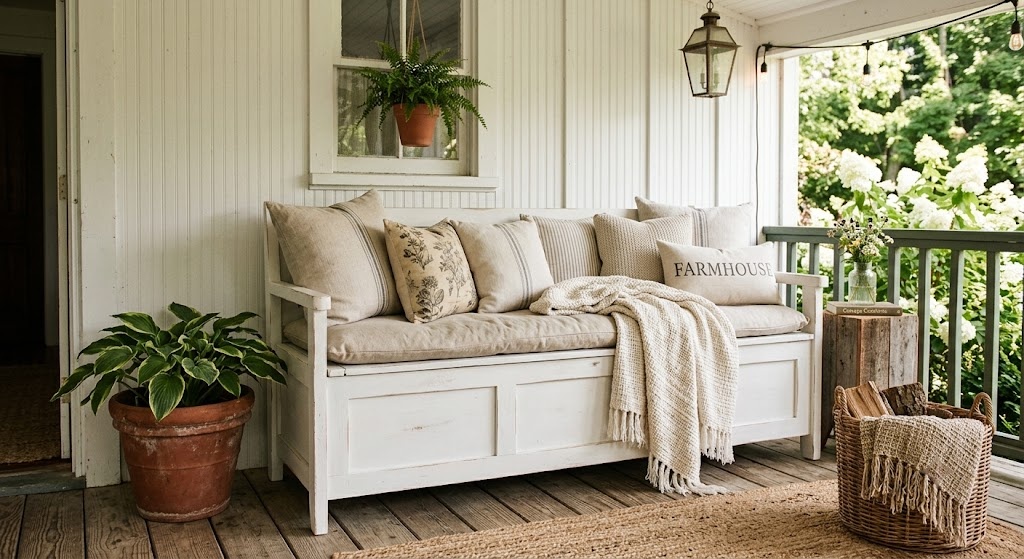
Budget tier: mid ($150-450.) Best for: farmhouse, cottage, or country-style homes.
5. Hanging Porch Swing
A porch swing adds movement and a genuine focal point, whether you choose a traditional wooden swing or a modern suspended daybed style.
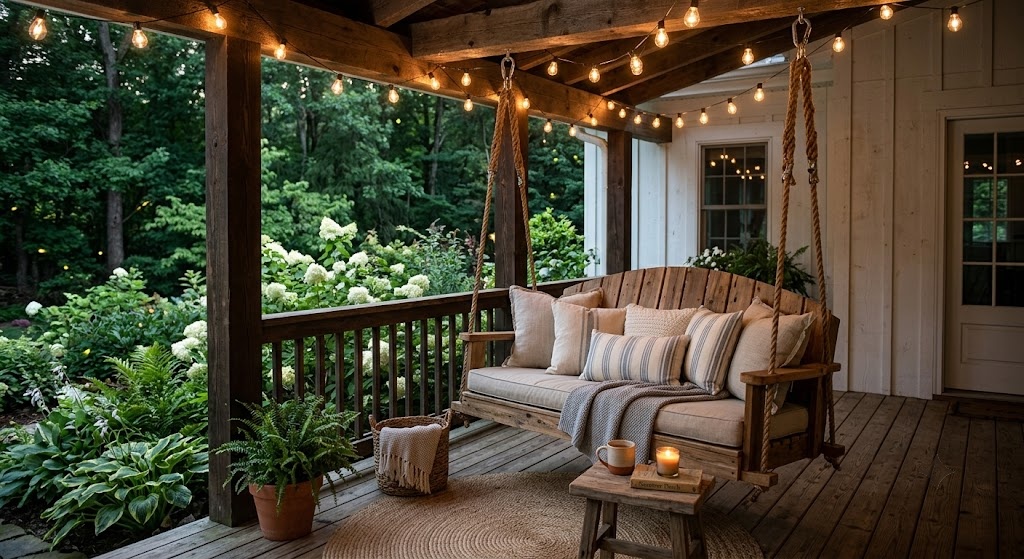
I’d confirm the ceiling structure can support at least 400-500 lbs before installation — this typically means anchoring into a ceiling joist or ledger board with eye bolts or lag screws rated for the combined weight of the swing frame, cushions, and occupants, not just the swing’s empty weight.
Budget tier: mid-to-high ($200-800 for the swing, plus installation hardware.) Best for: covered porches with adequate ceiling structure.
6. Compact Bistro Table Set
For a smaller porch, a round bistro table with two chairs creates a functional spot for morning coffee without overwhelming the available space.
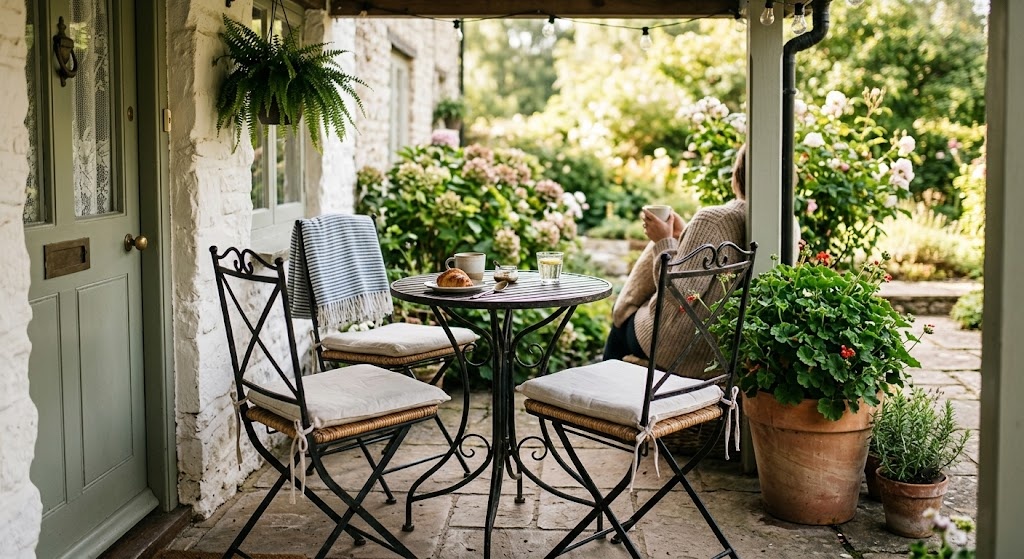
I’d choose a table between 24-30 inches in diameter for a genuinely small porch, and prioritize a foldable design specifically if the porch needs to accommodate other uses (like clear walking space) at different times.
Budget tier: low-to-mid ($100-350.) Best for: small porches, apartment entrances, condo patios.
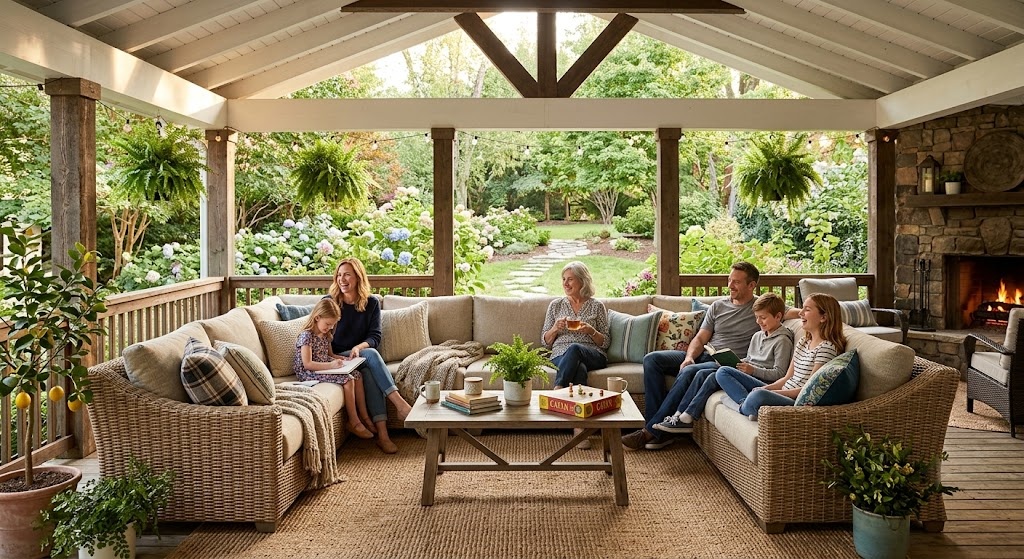
7. Outdoor Sectional Sofa
For larger, covered porches, a sectional creates a genuine living-room-like gathering space, best suited to households that entertain regularly or want a family-friendly outdoor lounging area.
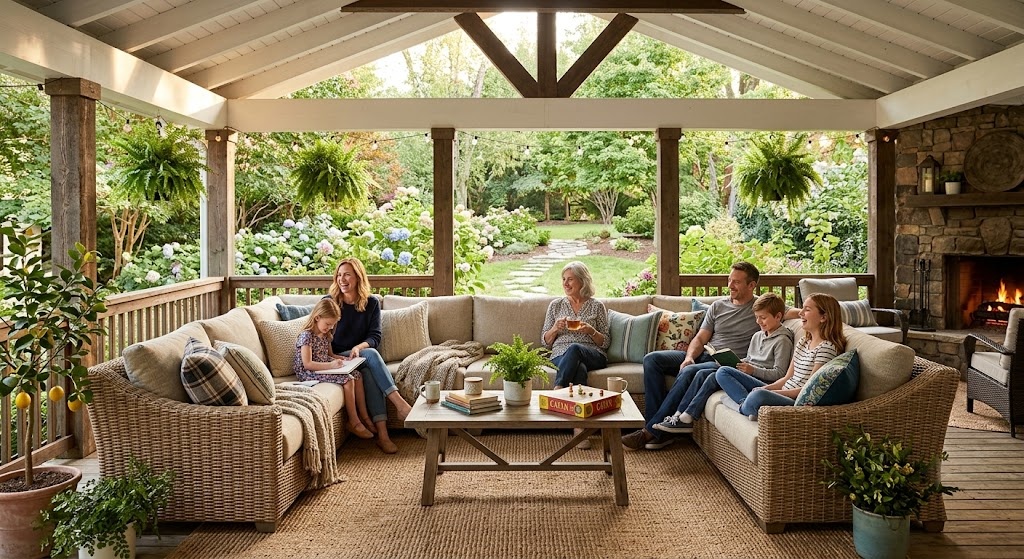
I’d confirm the porch has at least 10×10 feet of usable space before choosing a sectional, since undersizing this measurement is the most common mistake — a sectional that technically fits often leaves no walking clearance around it.
Budget tier: high ($800-2,500+.) Best for: large covered porches, households that entertain frequently.
8. Adirondack Chairs with a Side Table
Adirondack chairs remain a durable, comfortable classic, available in natural wood, painted finishes, or recycled plastic (often the lowest-maintenance option of the three).
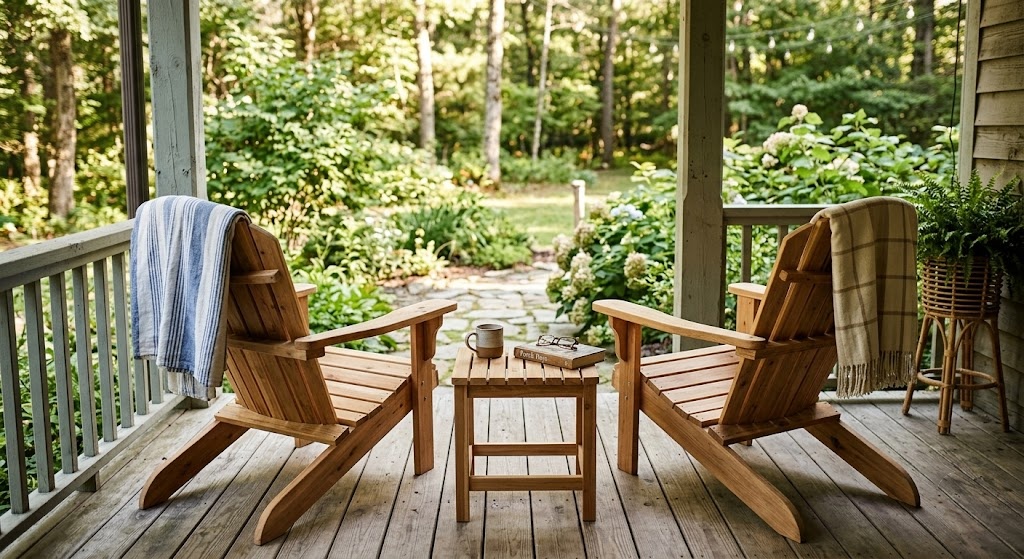
I’d place a small side table between two chairs specifically, sized to hold drinks or a book without requiring anyone to reach far from their seat — roughly 18-22 inches in height matches most Adirondack chair armrests well.
Budget tier: low-to-mid ($80-250 per chair.) Best for: casual, relaxed porches in any climate.
9. Weather-Resistant Lounge Chairs
For a porch prioritizing genuine relaxation over conversation-style seating, weather-resistant lounge chairs in Polywood, teak, or synthetic wicker hold up to sun and rain with minimal upkeep.
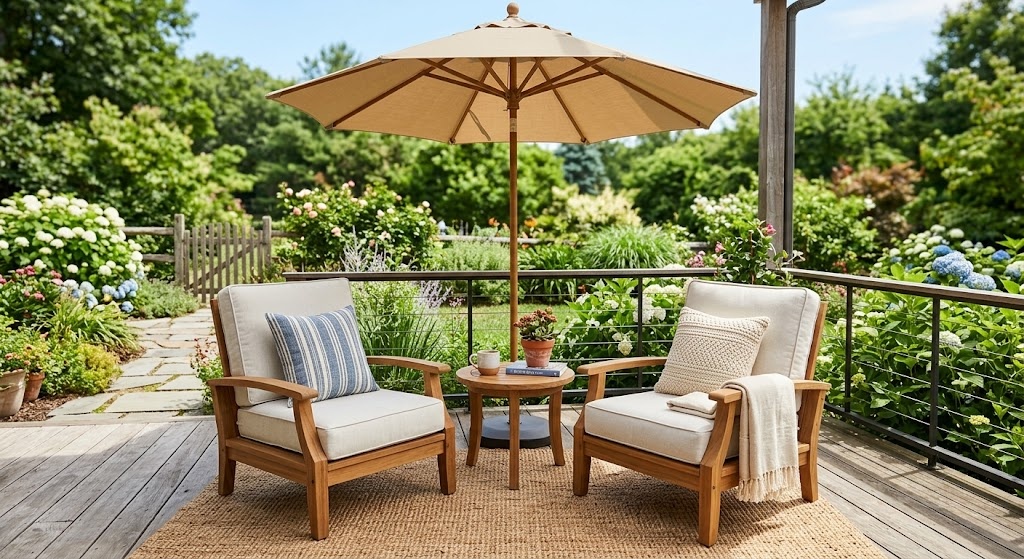
I’d pair lounge chairs with an umbrella or confirm the porch has adequate roof coverage specifically, since prolonged direct sun exposure shortens the lifespan of cushions and fabric faster than any other environmental factor.
Budget tier: mid ($150-500 per chair.) Best for: uncovered or partially covered porches with strong sun exposure.
10. Layered Textile Styling
Beyond the furniture itself, layering outdoor-rated cushions, throw pillows in mixed textures, and a weather-resistant outdoor rug ties a porch’s furniture together and adds the finishing, lived-in feel that bare furniture alone doesn’t achieve.
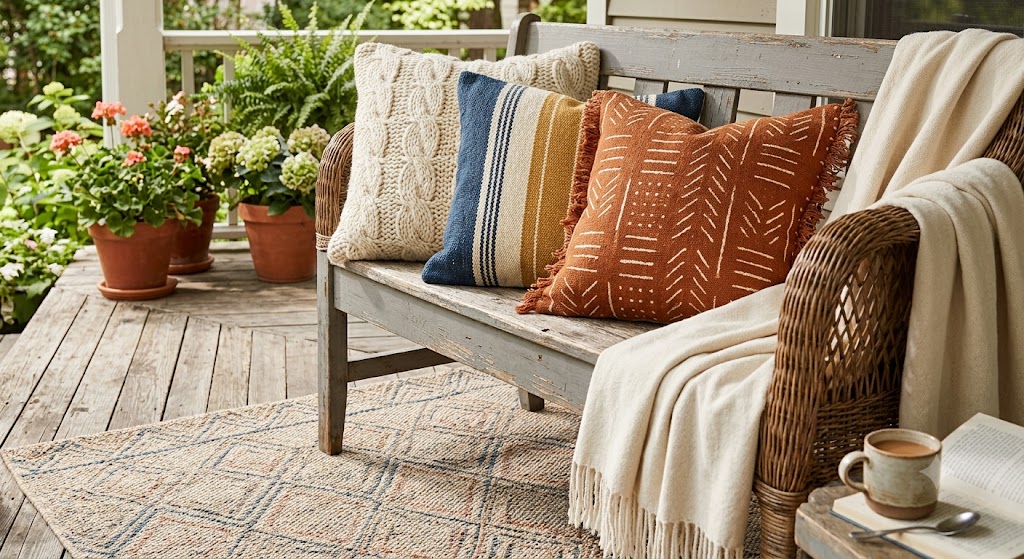
I’d choose fabrics specifically labeled for outdoor or marine use, since standard indoor textiles fade and degrade quickly outdoors even under a covered porch.
Budget tier: low ($50-200 for a full styling layer.) Best for: any porch setup, regardless of furniture style.
11. Functional Lighting and Planters
String lights, lanterns, and matching planters flanking the front door complete a porch’s welcoming feel and extend its usability into the evening, which furniture alone can’t achieve.
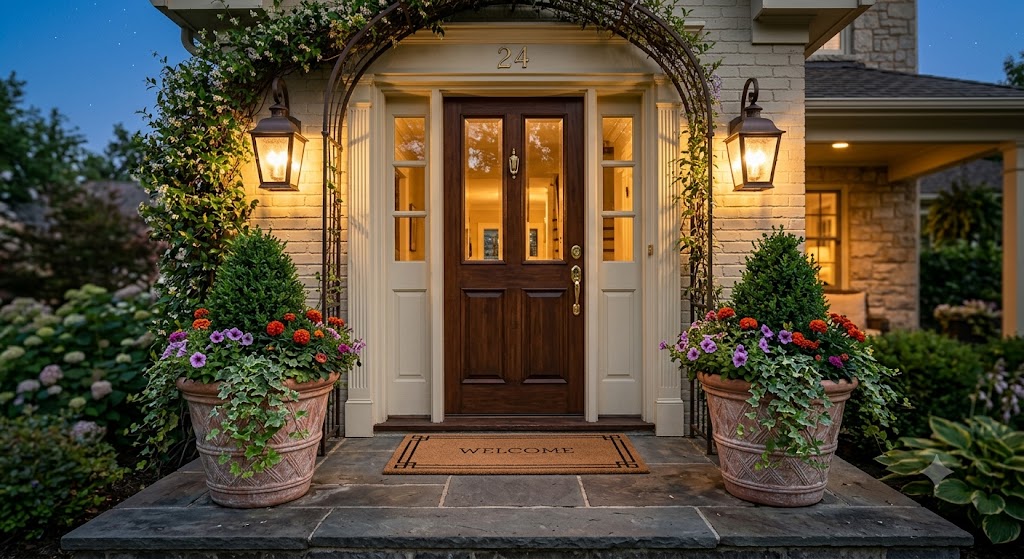
I’d choose solar-powered lanterns specifically if the porch lacks convenient outdoor outlets, and place matching planters symmetrically on either side of the door for an easy, reliable styling formula that works regardless of your broader furniture choices.
Budget tier: low ($40-150 for lighting and planters combined.) Best for: any porch, as a finishing layer.
Quick Tips Before Buying
- Measure your porch’s actual usable square footage before choosing a furniture set, not just eyeballing it.
- Leave at least 36 inches of clear walking space from the door to the steps.
- Choose weather-resistant materials (teak, powder-coated aluminum, resin wicker, Polywood) over natural, untreated materials for anything left outdoors long-term.
- Confirm any hanging furniture’s weight rating and mounting hardware before installation.
- Match furniture style to your home’s exterior — wood and wicker for farmhouse or traditional homes, clean-lined metal for modern ones.
My Professional Guide to Planning Front Porch Furniture
I always start by measuring the porch’s actual usable space and confirming the walking clearance rule before choosing any furniture, since this single measurement determines whether a full sectional or sectional-style seating is realistic, or whether a compact bistro set is genuinely the better fit.
From there, I choose materials based on the porch’s actual sun and weather exposure rather than appearance alone — an uncovered, south-facing porch needs more UV-resistant materials than a fully covered, shaded one, regardless of which style looks best in a photo.
Finally, I’d layer in textiles, lighting, and planters last, after the core furniture is settled. These finishing details do real work to make a porch feel complete, but they should support the furniture choice rather than drive it.
Conclusion
The right front porch furniture comes down to matching real measurements — usable square footage, walking clearance, weight ratings for hanging pieces — to your specific porch, then choosing weather-appropriate materials suited to your climate and sun exposure. Start with the furniture that fits your space and lifestyle, then layer in textiles and lighting to finish the look, and even a small porch can feel like a genuinely welcoming extension of your home.
Frequently Asked Questions
What is the best furniture for a small front porch?
Compact bistro sets, storage benches, and narrow chairs work best, since they provide functional seating without overcrowding a limited footprint — aim to keep at least 36 inches of clear walking space regardless of furniture choice.
Which outdoor furniture material lasts the longest?
Teak, powder-coated aluminum, synthetic (resin) wicker, and Polywood are among the most durable and low-maintenance options, resisting moisture and sun damage significantly better than natural wicker or untreated wood.
How do I make my front porch look cozy?
Layer outdoor-rated cushions, mixed-texture throw pillows, a weather-resistant rug, and warm lighting (lanterns or string lights) around your core seating — these finishing details matter as much as the furniture itself.
Is a porch swing safe to install on any porch?
Only if the ceiling structure can support the combined weight of the swing, cushions, and occupants — typically 400-500 lbs — anchored into a ceiling joist or ledger board with properly rated hardware, not just drywall or a finished ceiling surface alone.