15 Big Wall Decor Ideas That Make Any Room Feel Stylish
A large blank wall is one of the most common design problems I get asked about — it’s not that people don’t know decor exists, it’s that most decor guidance is scaled for a small accent wall, not a genuinely large, dominant surface. Below are 15 big wall decor ideas that actually account for scale, weight, and mounting the details that matter once you’re working with a wall large enough to anchor an entire room.
The Rules for Decorating a Large Wall
Hanging height: Center art or the main visual element at eye level — roughly 57-60 inches from the floor. Above furniture, leave 6-10 inches of clearance between the top of the furniture and the bottom of the piece.
Scale to the wall, not just the furniture: On a genuinely large wall, art or decor sized only to the sofa below it can look stranded in the surrounding empty space. I’d size the overall decor grouping to fill 60-75% of the wall’s visible width for it to read as intentional rather than centered-but-small.
Weight and anchoring: Large decor is often heavier than people expect. Mirrors, wood panels, and floor-to-ceiling shelving typically need wall anchors rated for their full weight, not just a standard picture hook check the piece’s weight before mounting, not after it’s already on the wall.
Leave breathing room: Even a large wall shouldn’t be filled edge to edge. Leaving visible negative space around a grouping is what separates “curated” from “crammed.”
1. Oversized Statement Artwork
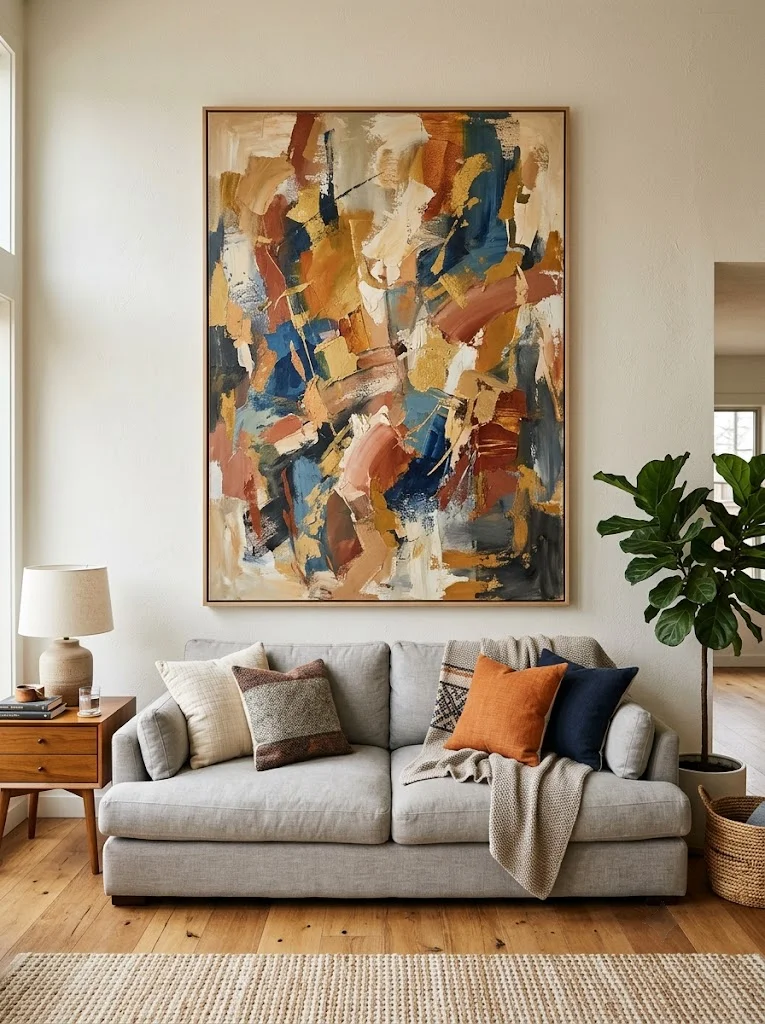
A single large canvas or framed print remains one of the most reliable choices for a big wall, since it avoids the spacing math a gallery wall requires while still commanding real visual presence.
I’d size the piece to at least two-thirds the width of the furniture below it, and confirm the mounting hardware is rated for the frame’s actual weight — large canvases and framed prints are often heavier than they look.
Best for: living rooms, bedrooms, dining rooms, entryways. Budget tier: mid-to-high ($100-500+ depending on size and medium.)
2. Large-Scale Gallery Wall
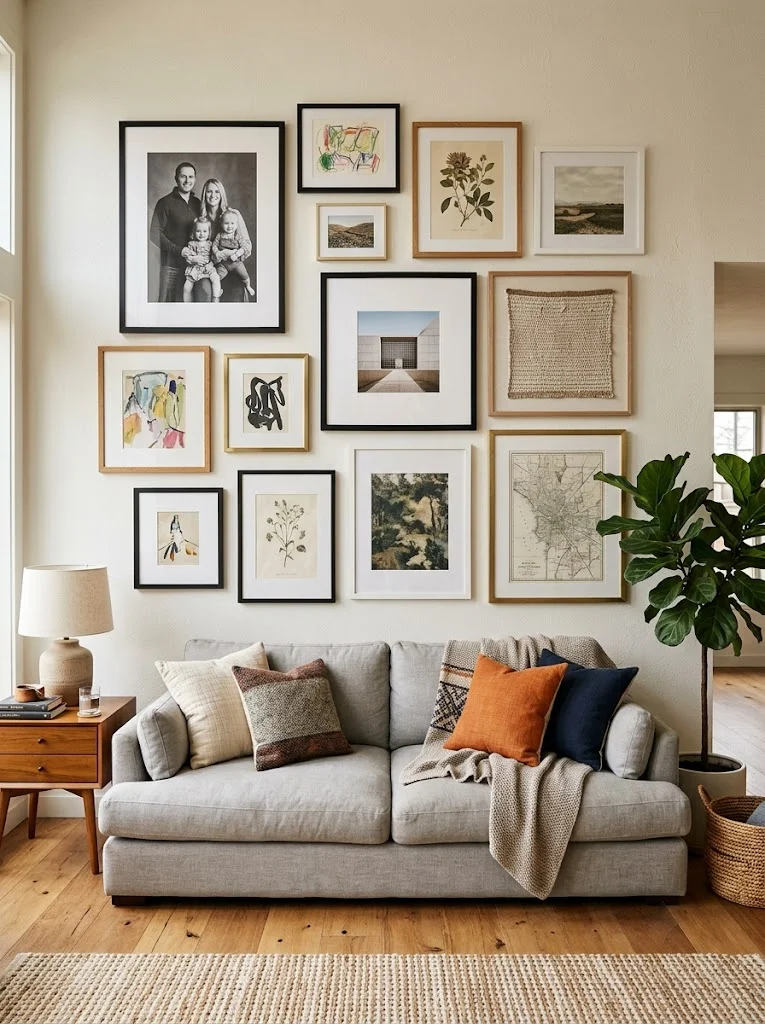
A gallery wall scaled for a big space can include 8-15+ frames rather than the smaller 4-6 frame groupings that suit an accent wall, giving you room to display photos, prints, and mixed media across the full surface.
I’d lay the entire arrangement out on the floor first, then transfer it to the wall using paper templates and painter’s tape — for a wall this size, adjusting the plan after frames are already hung is far more time-consuming than adjusting paper.
Best for: hallways, stairwells, living rooms. Budget tier: low-to-mid, since it can mix thrifted and new frames ($75-250 total.)
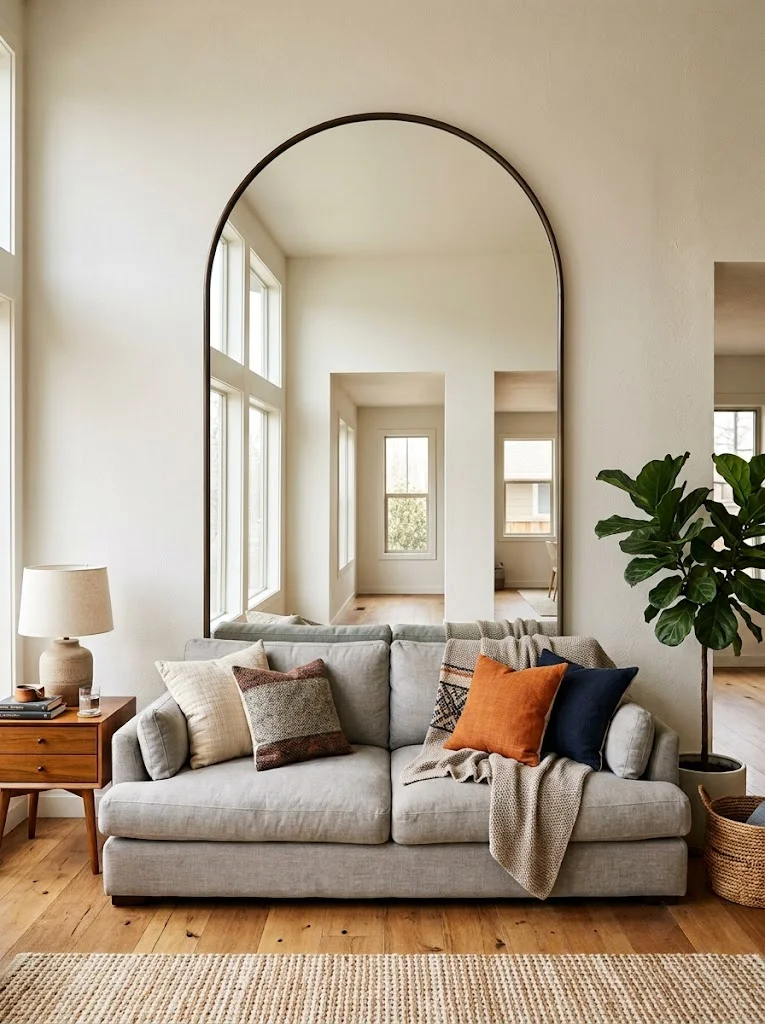
3. Oversized Mirror
A large mirror does double duty on a big wall — it fills the space visually while actively reflecting light and making the room feel larger, which matters more on a big wall than almost any other single design choice.
I’d confirm wall anchor weight ratings carefully here specifically, since large mirrors are frequently the heaviest single item people hang in a room, and a mirror that isn’t properly anchored is a genuine safety concern, not just a styling risk.
Best for: living rooms, entryways, dining rooms. Budget tier: mid-to-high ($150-500+.)
4. Floating Shelf Wall
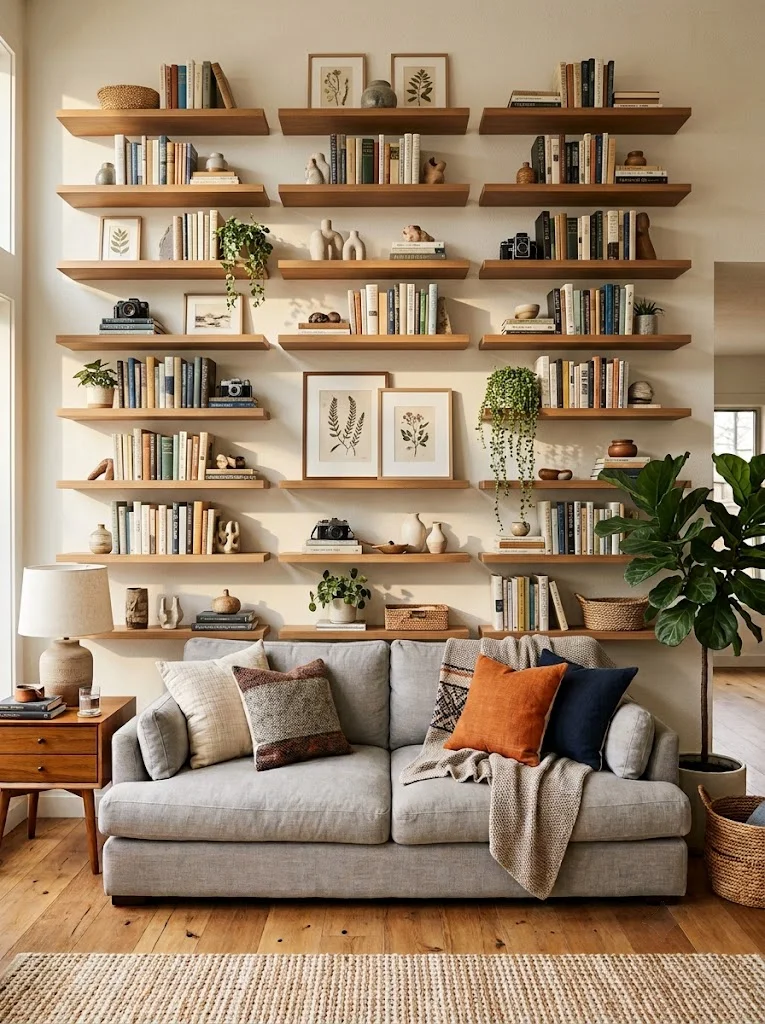
A run of floating shelves across a large wall combines storage and display, letting you layer books, art, and objects rather than committing to a single static arrangement.
I’d space shelves 10-12 inches apart vertically for comfortable styling room, and confirm the shelf brackets are rated for the combined weight of books and decor, since floating shelves are commonly under-anchored for what people actually load onto them.
Best for: living rooms, home offices, bedrooms. Budget tier: mid ($100-300 depending on shelf material and quantity.)
5. Wood Accent Panel Wall
Wood paneling — vertical slats, reclaimed boards, or a geometric pattern — adds genuine texture and depth that flat paint or a single piece of art can’t replicate on a wall this size.
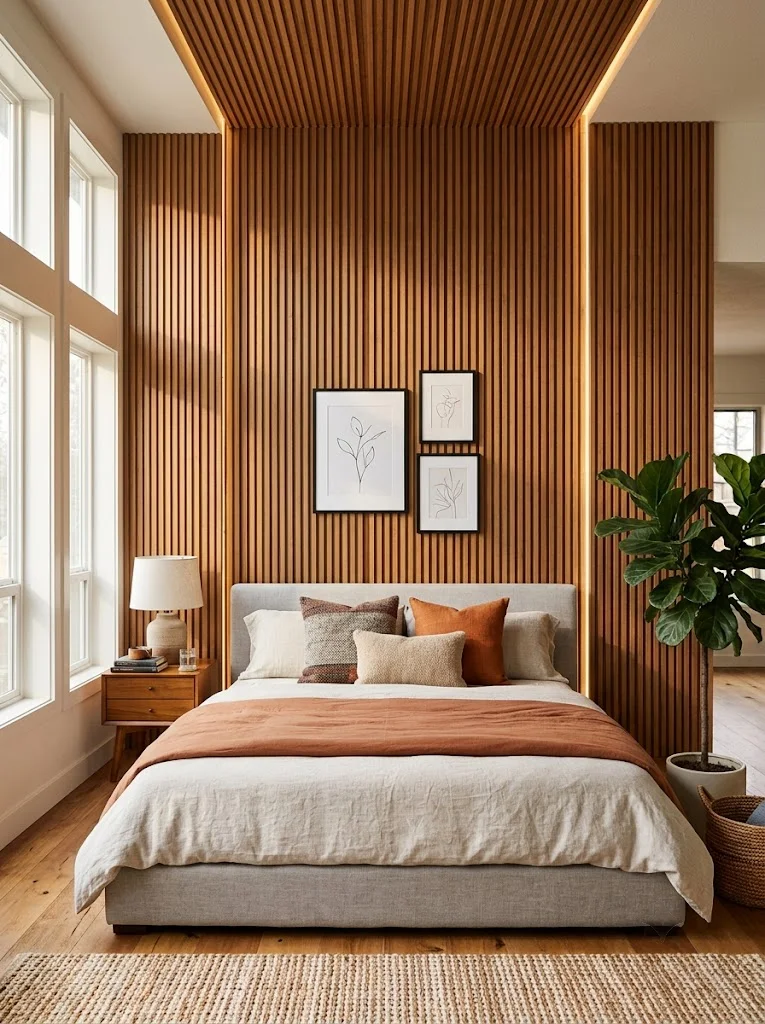
I’d plan the panel layout on paper first, accounting for any outlets, switches, or vents on the wall, since retrofitting panels around fixtures after installation is significantly harder than planning around them from the start.
Best for: behind a bed, sofa, or dining table. Budget tier: mid-to-high ($150-600+ depending on wood type and wall size.)
6. Woven Basket Wall Display
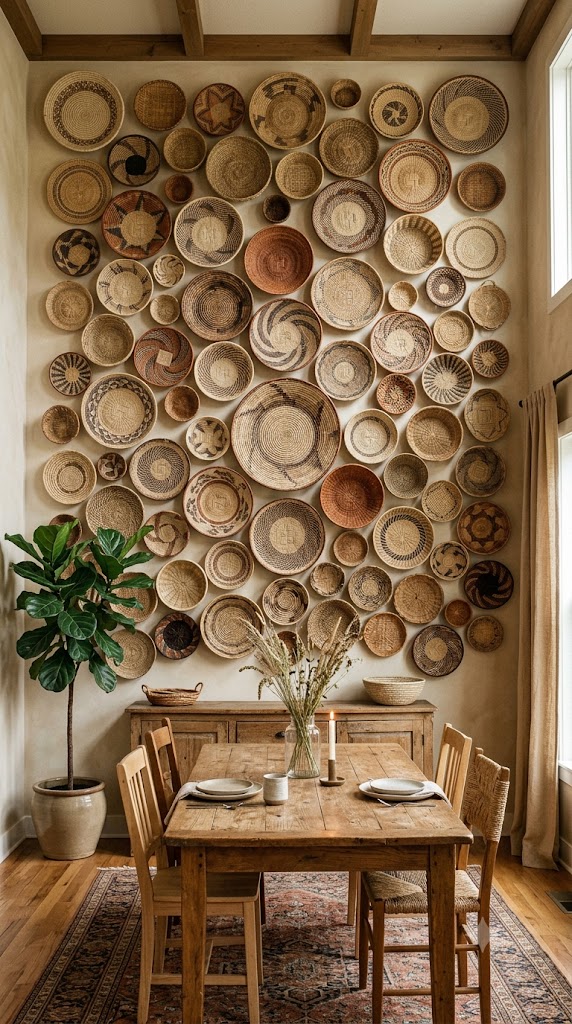
Grouping woven baskets in varying sizes across a large wall adds texture and warmth without the cost or weight concerns of framed art or mirrors, since baskets are typically lightweight regardless of their visual size.
I’d vary basket sizes deliberately (not a matched set) and keep spacing consistent at 2-3 inches between pieces, the same spacing rule that applies to a framed gallery wall.
Best for: dining rooms, living rooms, boho or farmhouse-styled spaces. Budget tier: low ($75-200 for a full grouping.)
7. Floor-to-Ceiling Bookshelves
Built-in or freestanding bookshelves that run the full height of a large wall turn empty space into genuine function, combining storage with display in a way that few other big wall ideas can match.
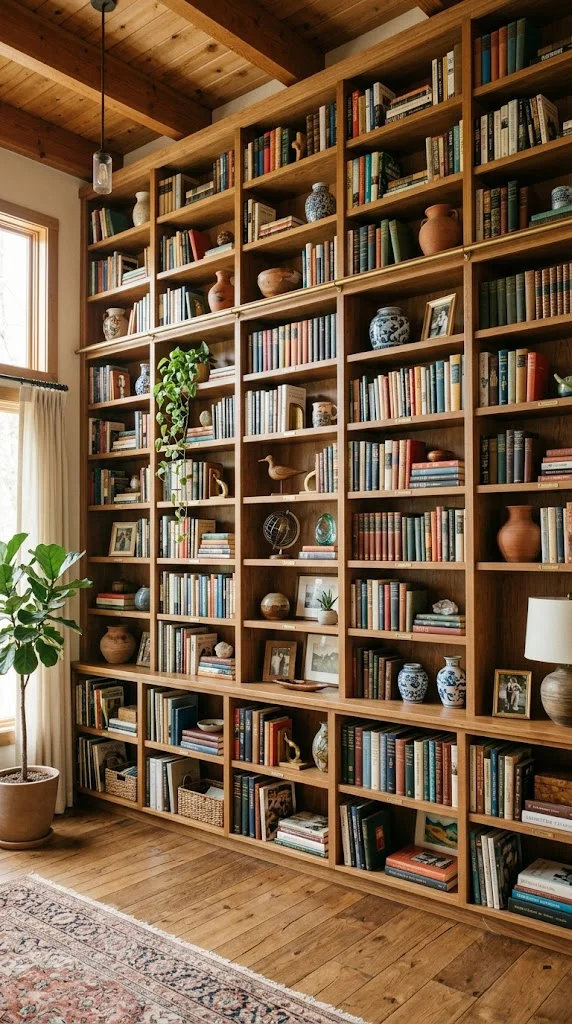
I’d mix practical storage (books) with decorative breaks (a vase, small art, plants) at roughly a 70/30 ratio, since fully packed shelves read as storage while fully decorative shelves waste the storage opportunity a wall this size offers.
Best for: home offices, living rooms. Budget tier: high, especially for built-in versions ($500-2,000+, lower for freestanding units.)
8. Living Wall or Plant Display
Wall-mounted planters, a vertical living wall system, or preserved moss panels bring color and texture to a large wall without needing any framed art or heavy mounted objects.
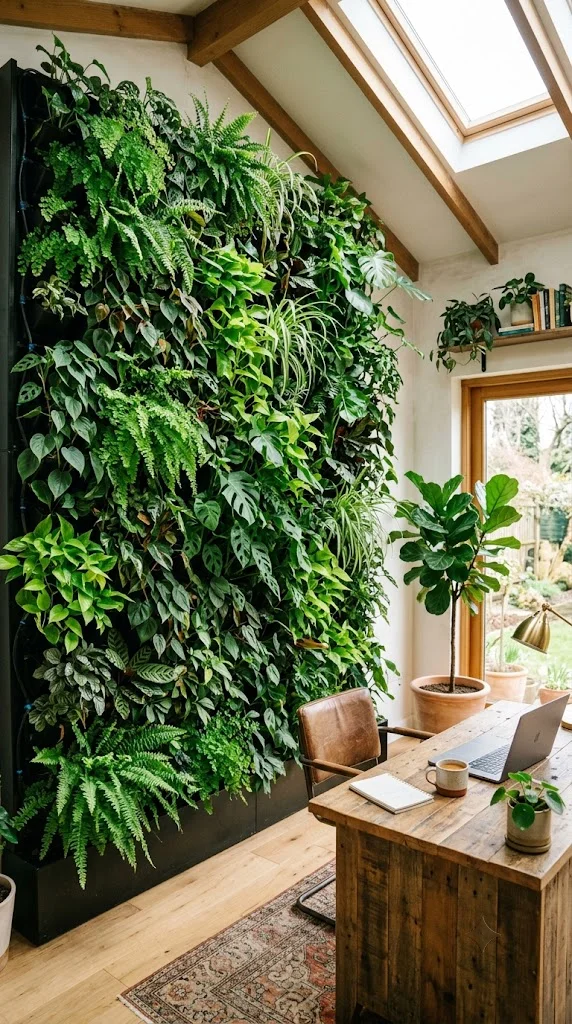
I’d choose low-maintenance plants (pothos, philodendron) for a genuine living wall specifically, since a wall-mounted plant display that requires daily attention across a dozen or more plants becomes a maintenance burden fast on a wall this scale.
Best for: living rooms, home offices, sunrooms. Budget tier: low-to-mid ($75-250, more for a full irrigated living wall system.)
9. Large-Scale Wall Mural
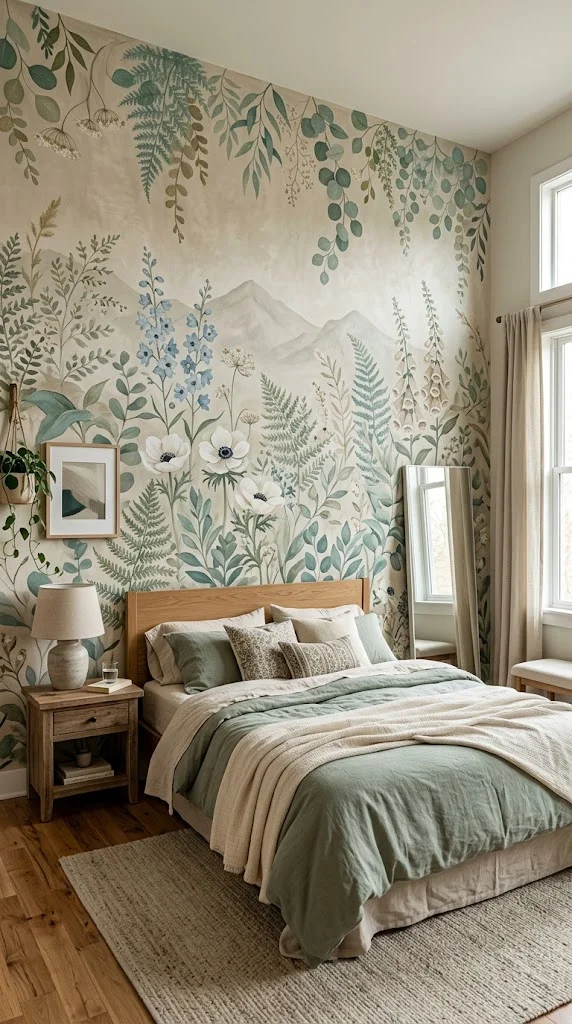
A mural — painted, wallpapered, or a large photographic print — covers a big wall’s full visual field in one cohesive image, avoiding any spacing or arrangement decisions entirely.
I’d choose a mural scale and subject that suits the room’s actual proportions and existing color palette, since an overly busy or high-contrast mural on a genuinely large wall can dominate a room more than intended once fully installed.
Best for: bedrooms, dining rooms, statement entryways. Budget tier: mid-to-high ($200-800+ depending on material and installation.)
10. Decorative Plates or Sculptural Wall Objects
Ceramic plates, sculptural wall pieces, or artistic dimensional objects add texture and visual interest that flat framed art sometimes lacks, especially effective at genuinely large scale where dimension reads more clearly from a distance.
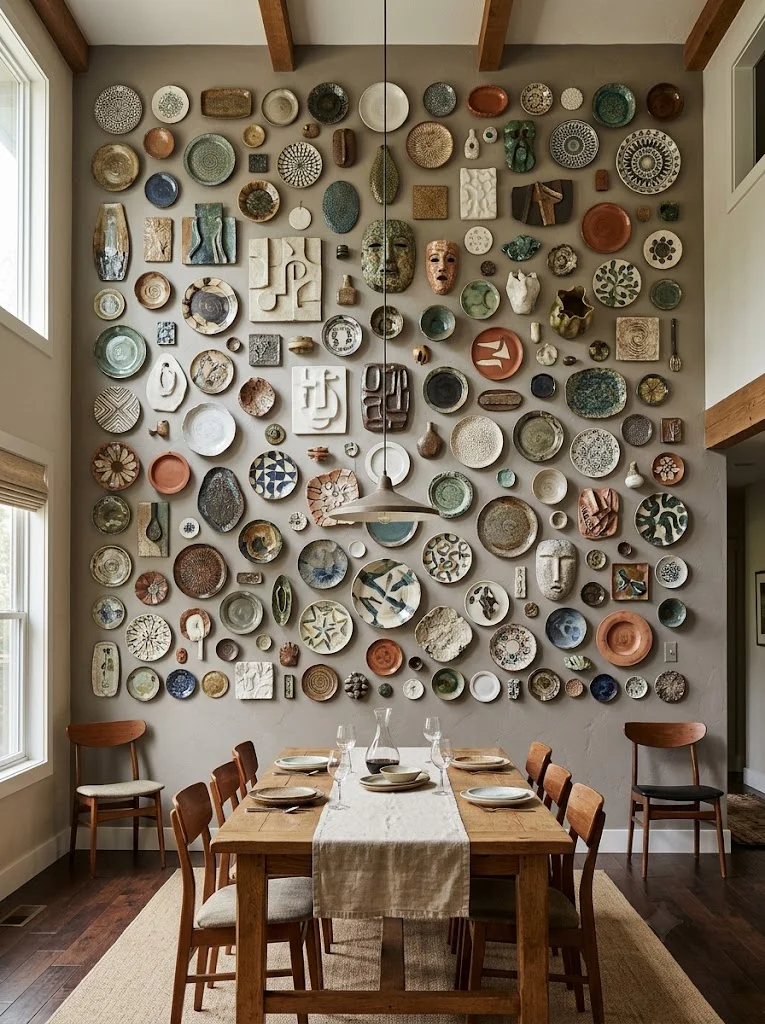
I’d vary the shapes and depths within the grouping specifically, since a large wall gives shadows and dimensional variation room to actually register visually in a way a smaller wall wouldn’t allow.
Best for: dining rooms, living rooms, hallways. Budget tier: mid ($100-350 for a full grouping.)
11. Architectural Wall Molding
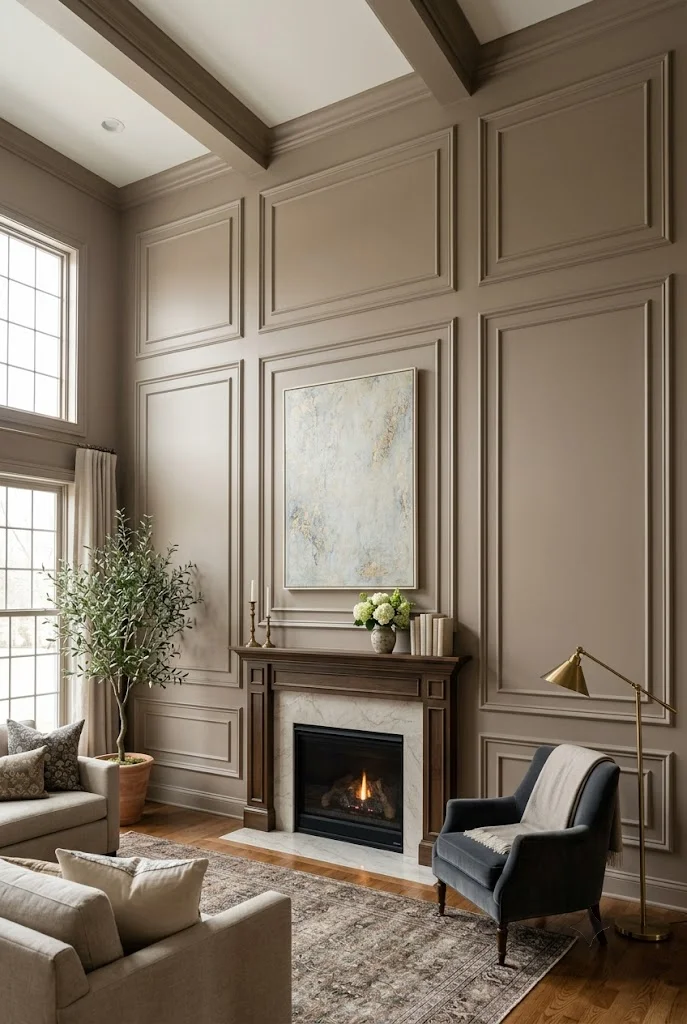
Picture-frame molding or wall paneling adds dimensional, architectural interest to a large wall without requiring any hung art at all, and can serve as a backdrop for a smaller, more minimal piece layered on top later.
I’d paint the molding the same color as the wall for subtle, sophisticated texture, or a contrasting color/finish for a bolder statement — both work well at large scale, but I’d commit to one direction rather than mixing partial contrast.
Best for: living rooms, dining rooms, entryways. Budget tier: mid-to-high ($200-600+ depending on molding style and wall size.)
12. Statement Wall Clock
An oversized clock functions as both a focal point and a practical fixture, and on a large wall it can genuinely anchor the space the way a piece of art would, without needing a supporting gallery arrangement around it.
I’d avoid pairing an oversized clock with a busy gallery wall nearby on the same large surface, since the clock’s shape and function already draw significant visual weight on their own.
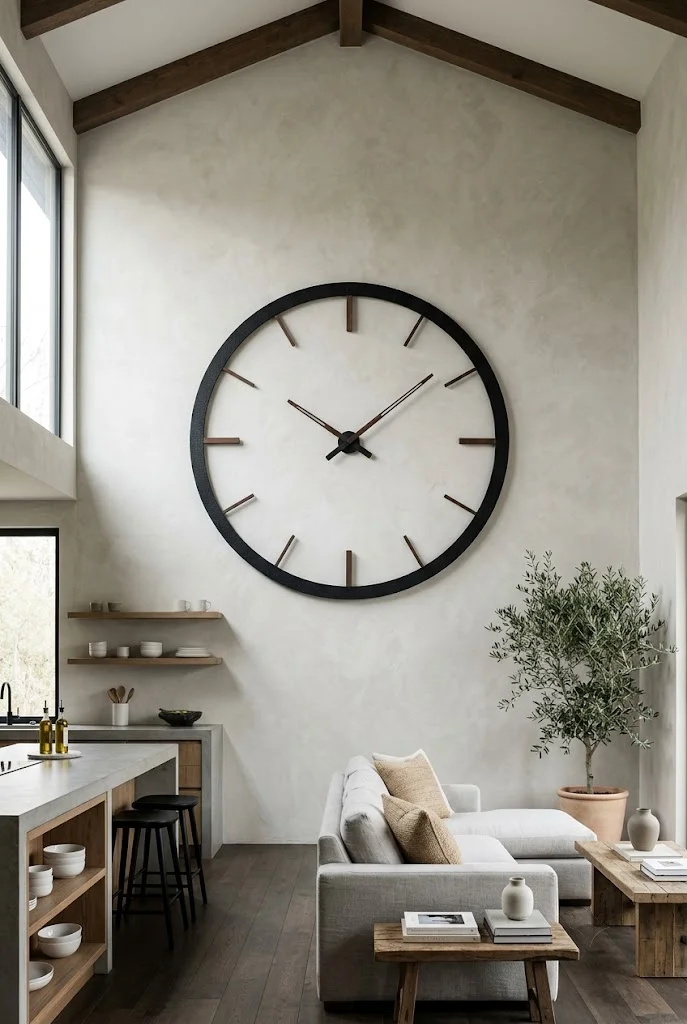
Best for: kitchens, home offices, living rooms. Budget tier: low-to-mid ($50-200.)
13. Layered Mixed-Texture Display
Combining several materials — canvas art, a wood accent piece, metal wall decor, a woven element — across one large wall creates a richer, more dimensional look than any single material could achieve alone.
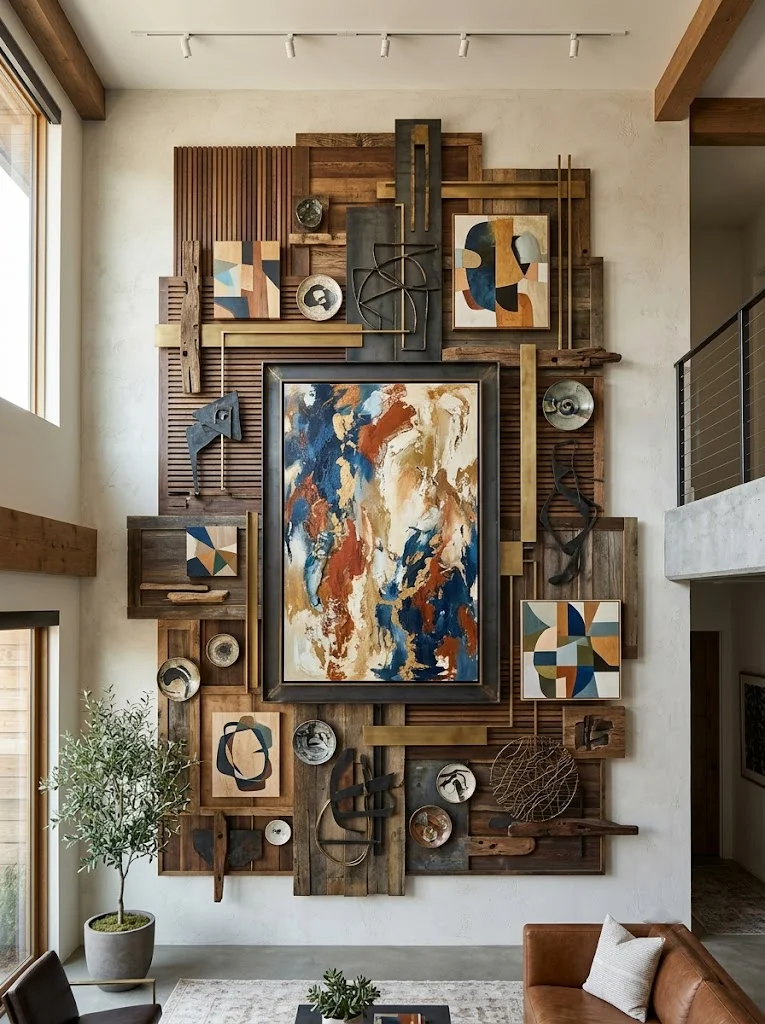
I’d choose one unifying element (a consistent color thread, or matching metal finishes across different pieces) to tie the mixed materials together, since fully unrelated textures without any common thread can start to look accidental rather than intentionally layered.
Best for: living rooms, home offices. Budget tier: varies widely based on chosen elements ($150-500+.)
14. Wall Sconces or Picture Lighting
Dedicated lighting — wall sconces flanking art, or picture lights mounted above a large piece — adds function and evening ambiance while making whatever decor is already on the wall stand out more prominently after dark.
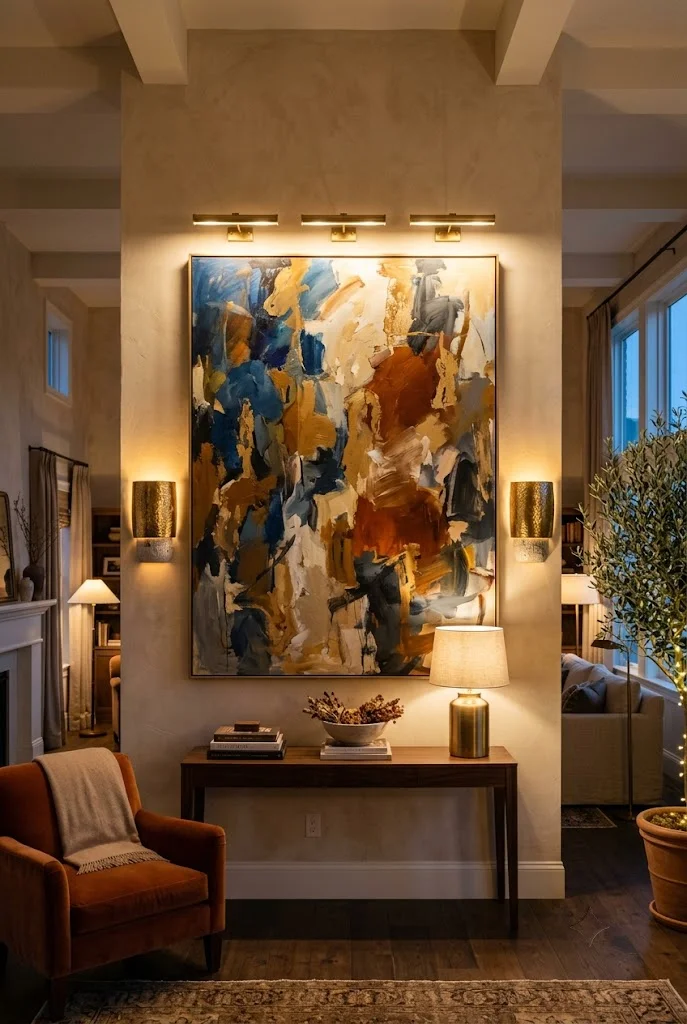
I’d choose warm white bulbs (2700-3000K) specifically for this application, and confirm sconce placement doesn’t interfere with the artwork or shelving it’s meant to highlight, which is a common spacing mistake on a wall with multiple layered elements.
Best for: living rooms, dining rooms, hallways. Budget tier: mid ($100-350 for fixtures and installation.)
15. Personal Collection Display
Family photographs, travel finds, or a meaningful personal collection arranged thoughtfully (using the same gallery spacing and layout planning as idea #2) turns a large wall into something genuinely specific to your home rather than a generic design choice.
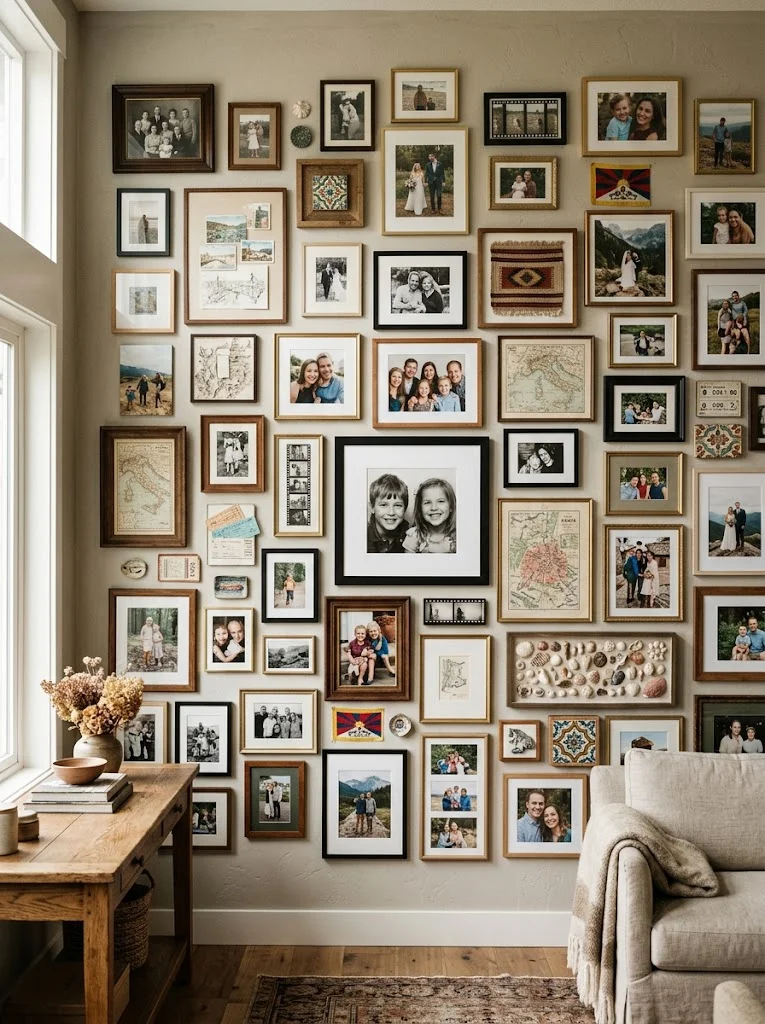
I’d rotate or refresh a portion of a personal collection display periodically, since large personal walls benefit from feeling current rather than static, unlike more permanent choices like molding or a mural.
Best for: hallways, staircases, living rooms. Budget tier: low, since it typically uses items already owned ($30-100 for framing.)
My Professional Guide to Planning a Large Wall
I always start by measuring the wall’s actual dimensions and identifying any fixed elements — outlets, vents, windows — before choosing decor, since a large wall’s scale makes it easy to underestimate how much space you’re actually working with until it’s measured precisely.
From there, I check weight and anchoring requirements before falling in love with a specific piece. This matters disproportionately more on a large wall than a small one, since the decor people choose for big walls (oversized mirrors, floor-to-ceiling shelving, wood paneling) tends to be genuinely heavy, and the consequences of poor anchoring are more serious at that scale.
Finally, I’d choose one primary approach — a single statement piece, a gallery wall, a mural — rather than mixing several competing large-scale ideas on the same wall. A big wall can absolutely support one bold, dominant choice; it rarely looks intentional when trying to do two or three simultaneously.
Conclusion
A large blank wall is an opportunity, not a problem to minimize — but decorating it well depends on scaling your choices to the wall’s actual size, checking weight and mounting requirements before installation, and committing to one clear approach rather than combining too many ideas at once. Measure first, choose a direction, and even a genuinely oversized wall becomes one of the more rewarding spaces to design in the whole room.
Frequently Asked Questions
What is the best way to decorate a large blank wall?
Oversized artwork, a large-scale gallery wall, an oversized mirror, or floor-to-ceiling shelving are among the most effective options, chosen based on whether you want a single statement piece or a layered, detailed display.
How high should large wall art be hung?
Center the piece at eye level, roughly 57-60 inches from the floor. Above furniture, leave 6-10 inches of clearance between the top of the furniture and the bottom of the art.
Do I need special anchors for large or heavy wall decor?
Yes, in most cases. Large mirrors, wood paneling, and floor-to-ceiling shelving typically exceed the weight rating of a standard picture hook and need wall anchors rated for their actual weight — check this before mounting, not after.
Should big wall decor match the furniture in the room?
It doesn’t need to match exactly, but coordinating colors, materials, or finishes with the furniture below creates a more cohesive look than choosing wall decor in complete isolation from the rest of the room.
Related Posts
- 20 Beautiful Wall Decor Living Room Ideas
- Shelf Decor Ideas
- 25 Small Apartment Living Room Ideas 2026