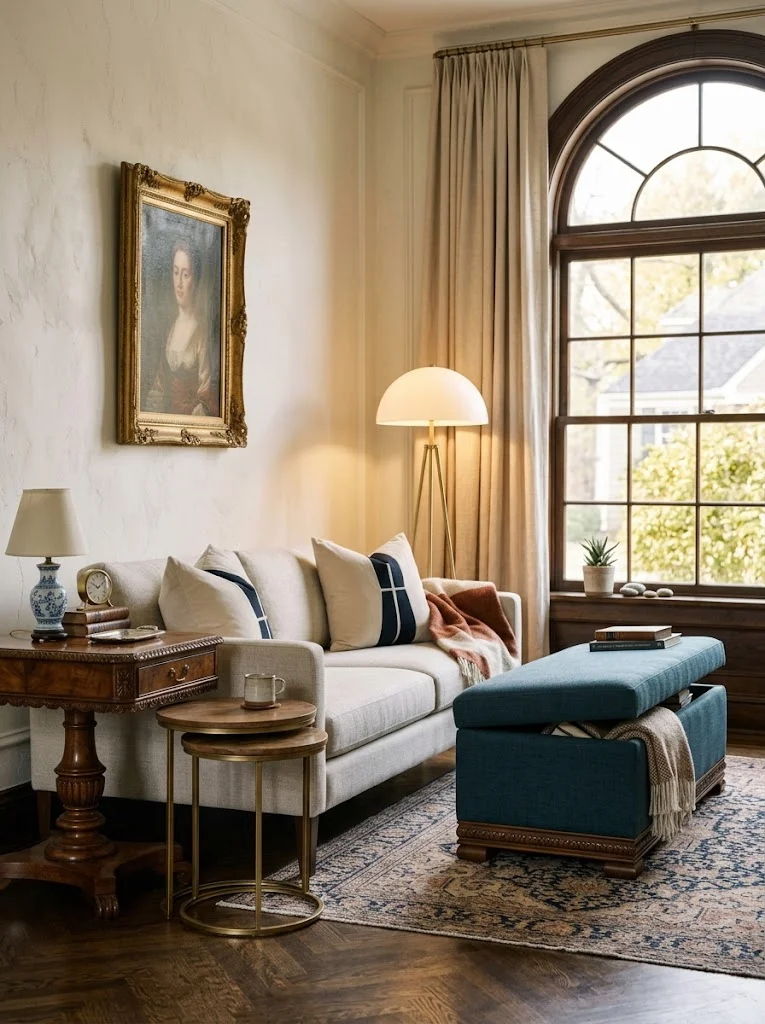
Front Room Decor Ideas: 15 Ways to Style Your Home’s First Impression
I’ve noticed the front room gets treated differently than other living spaces — it’s often the room guests see first, sometimes the most formal space in the house, and in many homes (especially older or UK-style layouts) it’s a distinct room from the main family living area. Below are 15 front room decor ideas, each with practical styling guidance, plus a breakdown of what people are actually searching for when they look up this topic, so the ideas genuinely match real intent rather than generic living room content repackaged.
What People Are Actually Searching For
“Front room” means slightly different things depending on who’s searching, and understanding that intent shapes which ideas actually apply:
- Front room decor ideas — the broad entry search, often from someone in the UK or with an older-style home where front room is the standard term for the main living/sitting room.
- Front room vs living room — a genuine point of confusion; in many homes these are the same space, but in some layouts (particularly older homes with a separate formal room near the entrance) they’re distinct.
- Small front room ideas — a very common modifier, since front rooms in older or terraced/townhouse-style homes are frequently smaller than a modern open-concept living room.
- Front room layout ideas — reflects a common practical challenge: front rooms often have a fireplace, bay window, or awkward door placement that constrains furniture arrangement more than a standard rectangular room.
- Front room decorating ideas on a budget — the budget modifier appears across nearly every home decor search category, and front room is no exception.
- Formal front room ideas — reflects searches from people treating this space as a more polished, guest-facing room rather than the everyday family living space.
1. Define the Room’s Purpose First
Before choosing decor, I’d decide whether this front room functions as your primary everyday living space or a more formal, guest-facing room — the styling approach genuinely differs. A daily-use front room needs comfortable, durable furniture; a formal front room can prioritize aesthetics over heavy daily wear.
Best for: any front room, as a starting decision point. Budget tier: free — this is a planning step.
2. Work With a Bay Window as a Focal Point
Many front rooms, especially in older or traditional homes, include a bay window — I’d lean into this as a natural focal point rather than working around it, positioning a window seat, a reading chair, or your primary seating to face or incorporate the bay’s extra depth.
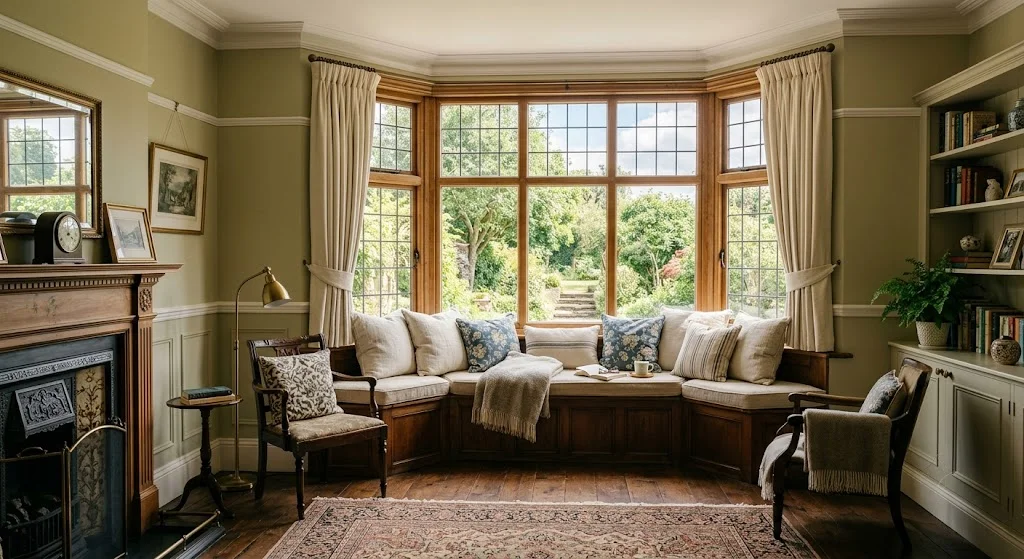
Best for: traditional or period-style homes with an existing bay window. Budget tier: low-to-mid ($50-300 for a window seat cushion or small reading chair.)
3. Style Around a Fireplace
If your front room has a fireplace — common in older layouts where this was historically the main heated room — I’d arrange seating to face it as the natural focal point, and style the mantel with the same height-variation and rule-of-three principles used in shelf styling.
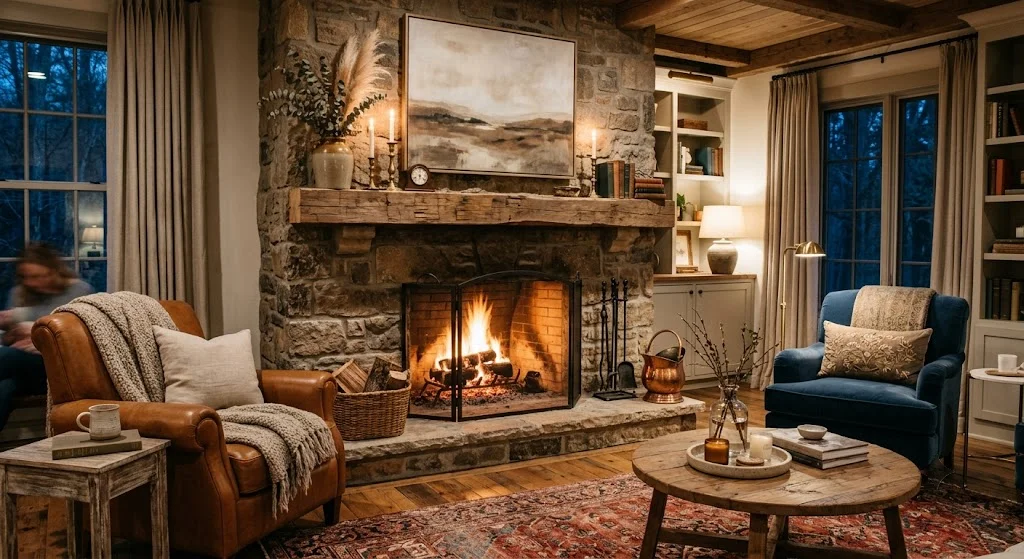
Best for: homes with an existing fireplace, period or traditional-style front rooms. Budget tier: low ($30-100 for mantel styling.)
4. Choose a Formal, Cohesive Color Palette
For a front room intended as a more polished, guest-facing space, I’d commit to a more restrained, cohesive color palette (2-3 colors maximum) compared to a casual family room, which can support more eclectic color mixing.
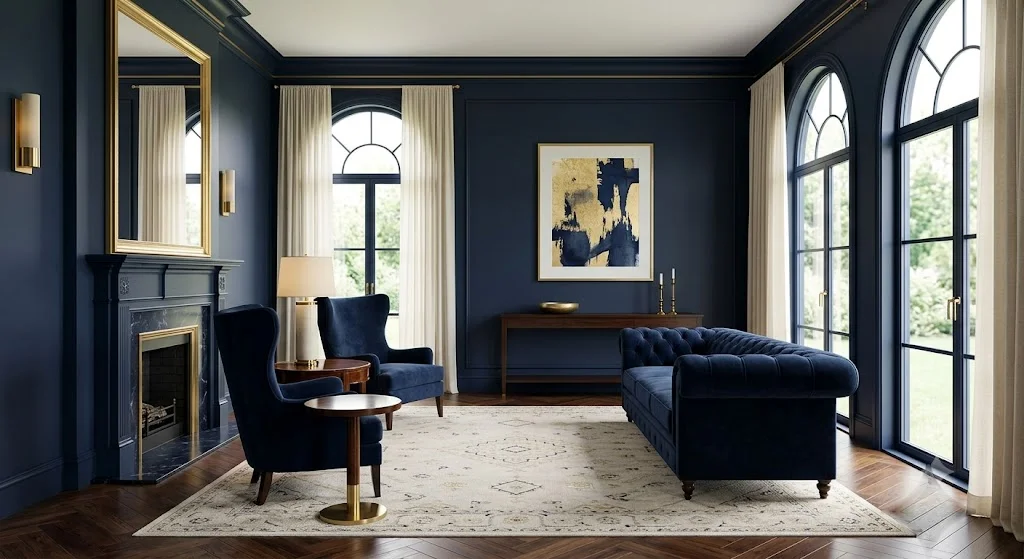
Best for: formal front rooms. Budget tier: low-to-mid ($100-300 for paint and key textiles.)
5. Layer Traditional and Modern Furniture
Mixing an antique or vintage piece (an inherited side table, a traditional armchair) with cleaner-lined modern furniture keeps a front room from feeling either dated or sterile, especially relevant in older homes with existing period architectural details.
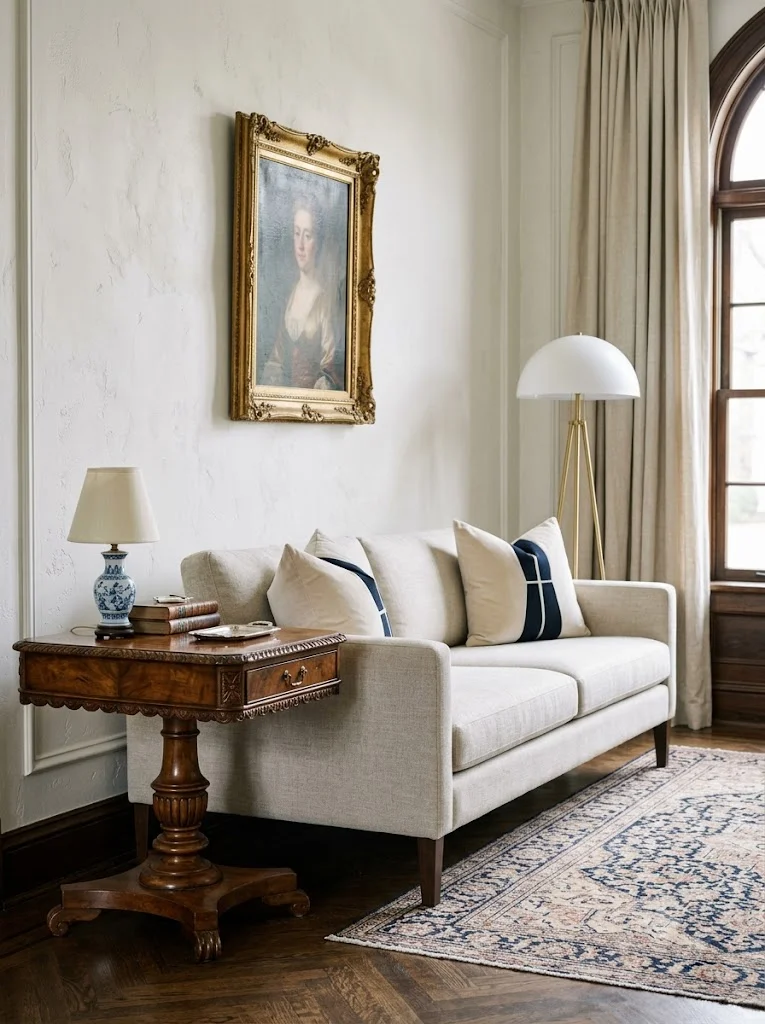
Best for: period homes wanting a updated-but-not-stripped-of-character look. Budget tier: varies widely by pieces chosen.
6. Maximize a Small Front Room With Multi-Functional Furniture
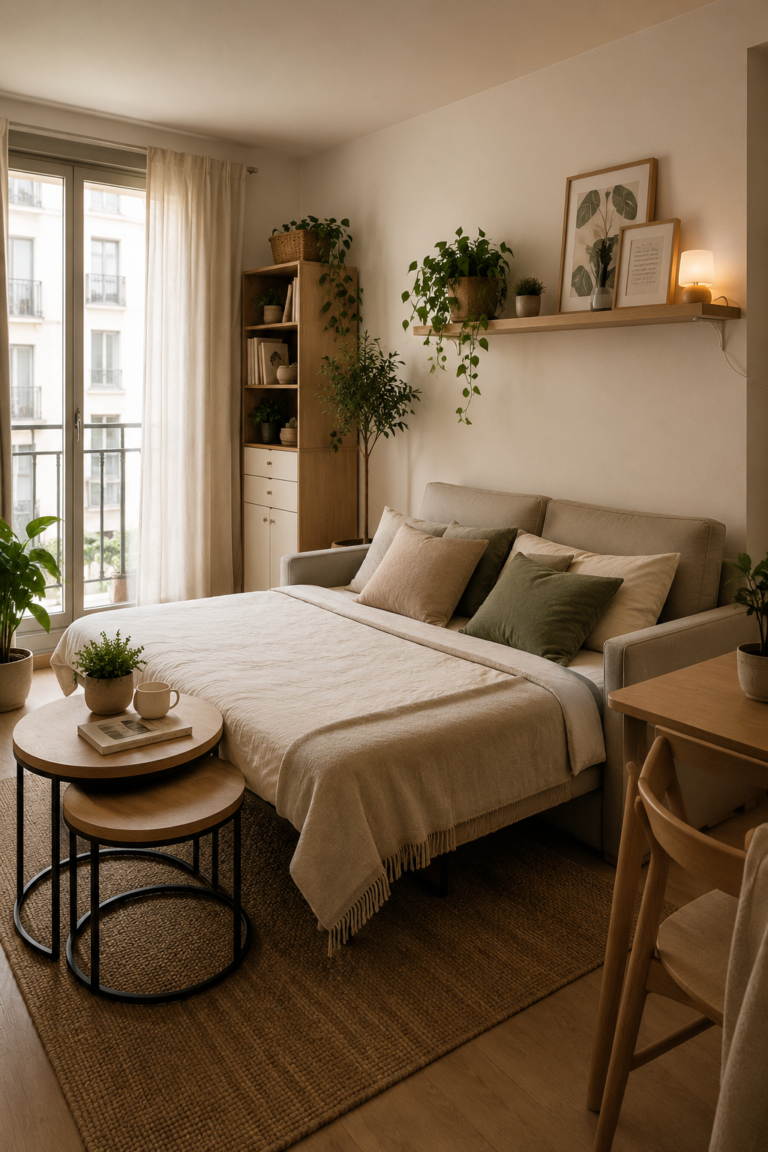
Front rooms in terraced or townhouse-style homes are frequently smaller than a modern living room — I’d prioritize furniture that pulls double duty (a storage ottoman, nesting tables) the same way you would in any genuinely small living space.
(This connects directly to the multi-functional furniture strategies covered in our small apartment living room ideas guide.)
Best for: small front rooms, under roughly 150 square feet. Budget tier: low-to-mid ($75-250.)
7. Solve Awkward Door and Traffic Flow Issues
Front rooms near a home’s entrance often have more door placements and traffic paths cutting through the seating area than a typical living room. I’d prioritize keeping at least a 30-36 inch clear walking path from any door to the room’s main circulation route before finalizing furniture placement.
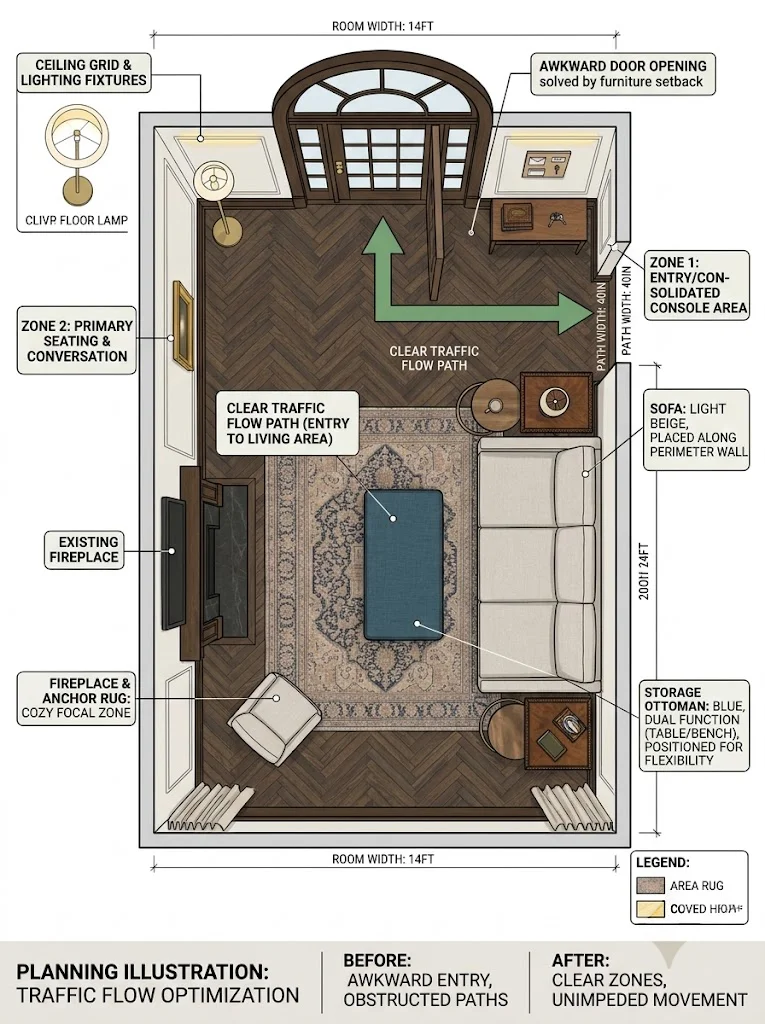
Best for: front rooms adjacent to an entryway or with multiple doors. Budget tier: free — this is a layout consideration, not a purchase.
8. Add a Statement Rug to Define the Space
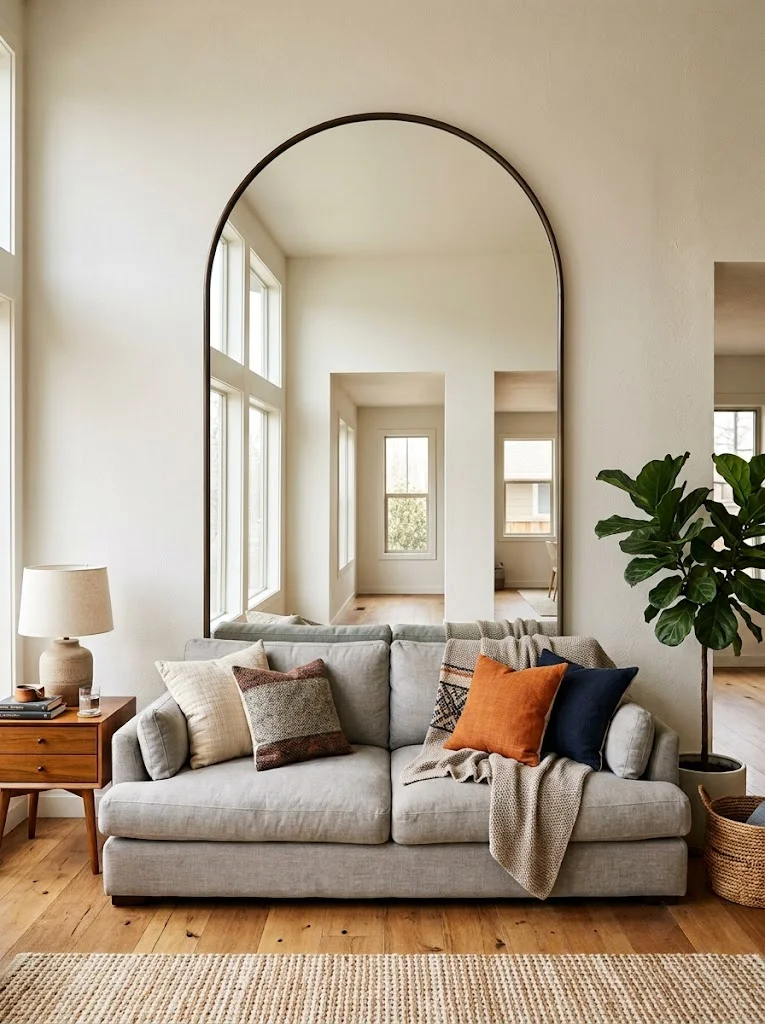
In open-plan homes where the front room isn’t fully separated from adjacent areas, a well-sized rug (following the same front-legs-minimum rule as any living room) visually defines the front room as its own zone.
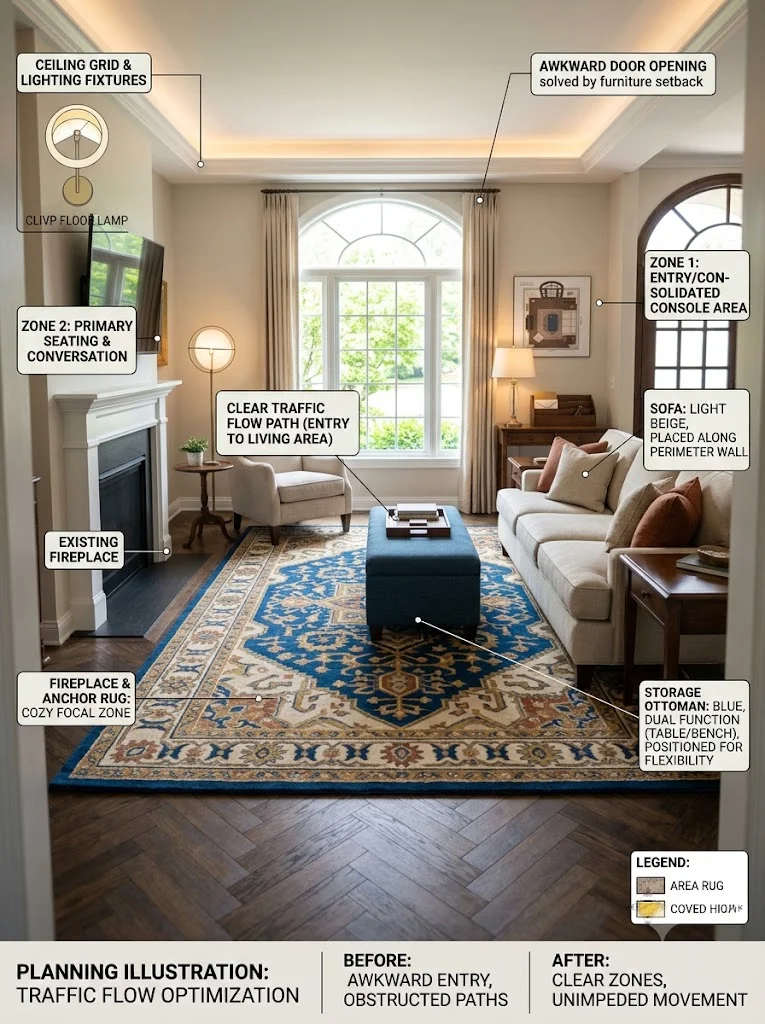
Best for: open-plan layouts. Budget tier: mid ($100-350 depending on size and material.)
9. Prioritize Symmetry for a Formal Look
Two matching chairs flanking a fireplace or window, or a symmetrical furniture arrangement centered on the room’s focal point, reads as more formal and polished — well suited to a front room intended primarily for guests rather than daily lounging.
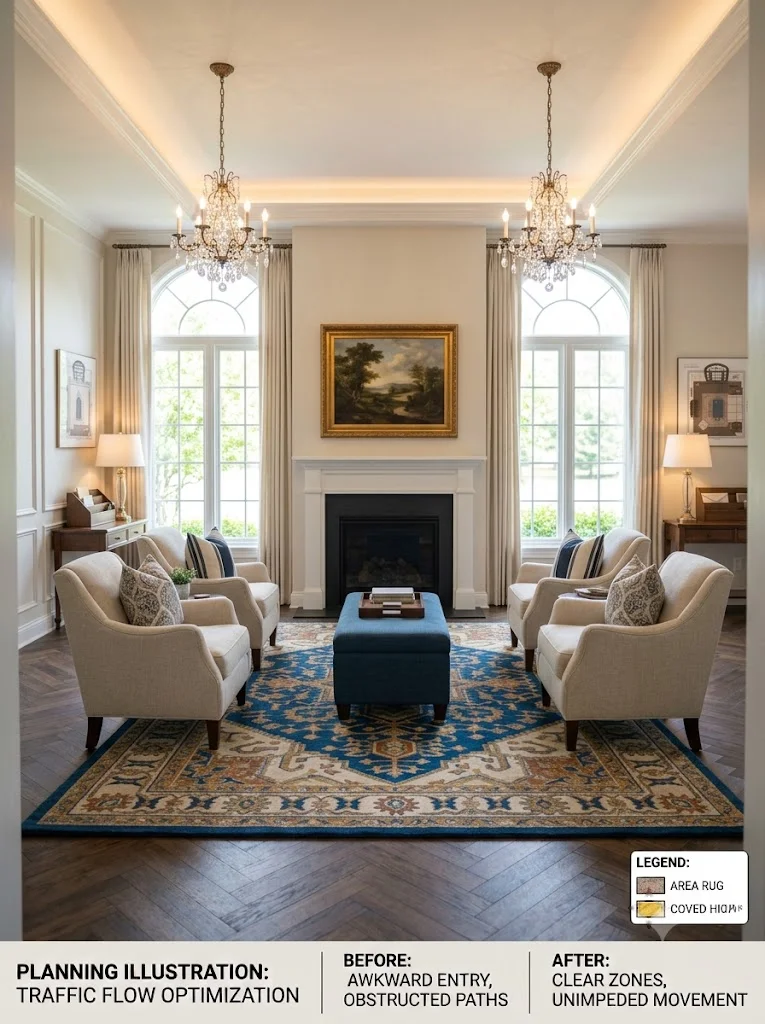
Best for: formal front rooms with a clear central focal point. Budget tier: mid-to-high, since symmetry often requires matching furniture pairs ($200-600.)
10. Introduce Pattern Through Textiles, Not Walls
For a front room wanting personality without a full commitment to patterned wallpaper, I’d introduce pattern through pillows, a rug, or curtains instead — lower cost, easier to update, and less risk if your taste changes.
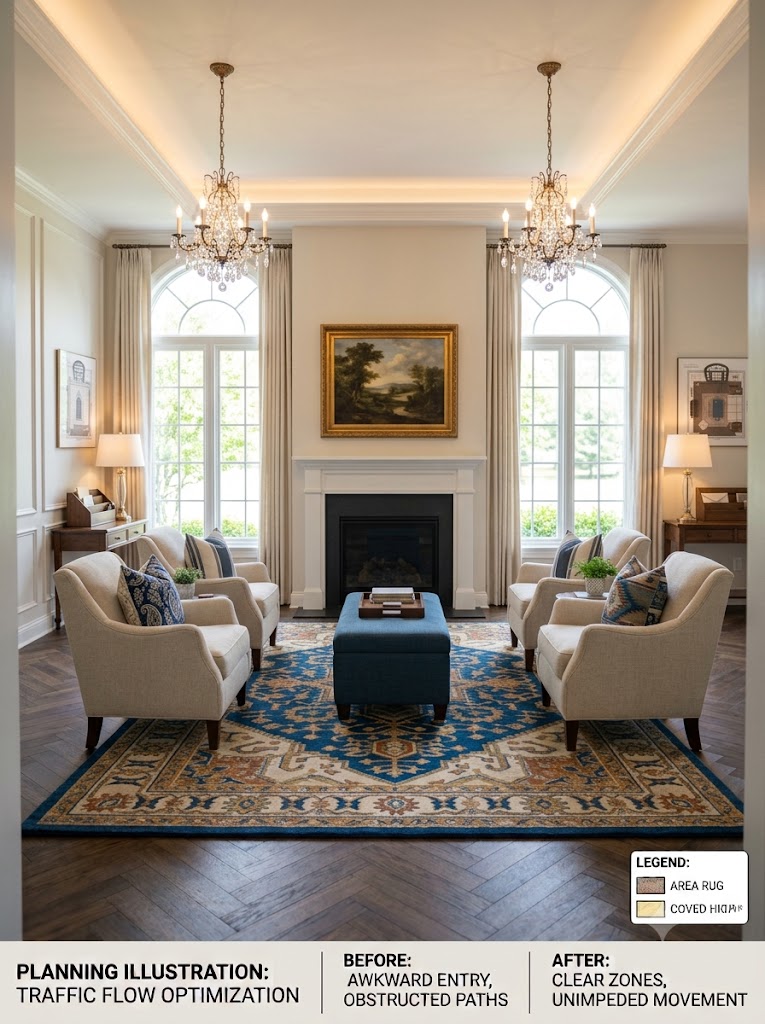
Best for: any front room wanting personality with flexibility. Budget tier: low ($40-150.)
11. Use Layered Lighting for a Welcoming First Impression
Since a front room is often the first space guests see, I’d apply the same layered-lighting principle used in bedrooms and living rooms — an ambient source, a table or floor lamp, and warm bulbs (2700-3000K) — rather than relying on a single overhead fixture that can feel stark to someone walking in.
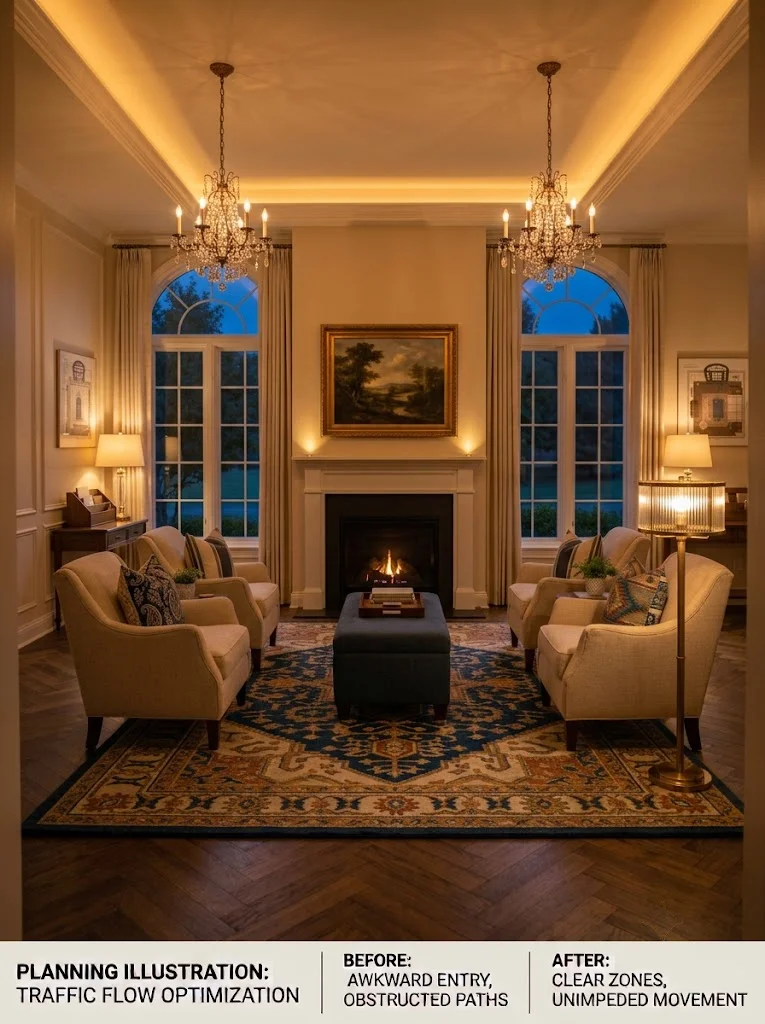
Best for: any front room, especially formal or guest-facing ones. Budget tier: low-to-mid ($75-200.)
12. Display Curated Personal Items, Not Everyday Clutter
A front room benefits from feeling personal without feeling like the household’s everyday catch-all — I’d display a curated selection of meaningful objects (framed photos, a few books, art) rather than the full range of daily-use items that might live in a family room instead.
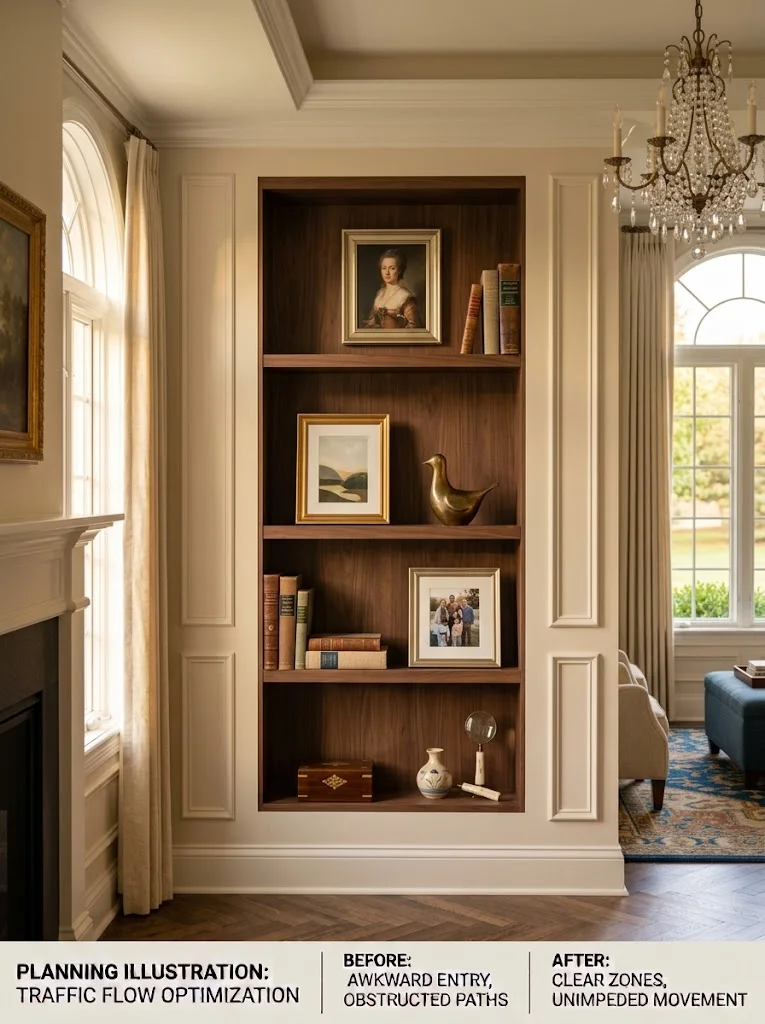
Best for: front rooms doubling as a more formal or guest-facing space. Budget tier: low, often using items already owned.
13. Choose Durable Fabrics for a Family-Use Front Room
If your front room functions as the household’s primary everyday living space rather than a formal room, I’d prioritize performance fabrics (stain-resistant weaves, darker or patterned upholstery that hides wear) over delicate materials that suit a purely formal room better.
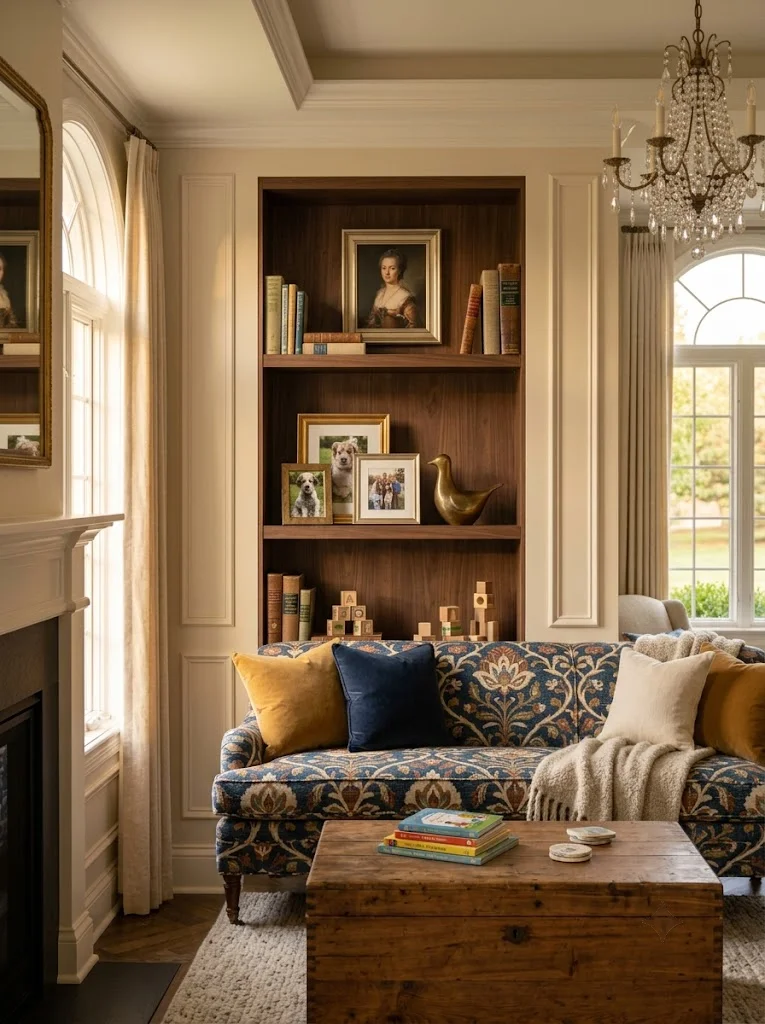
Best for: front rooms used daily by families, especially with kids or pets. Budget tier: mid, since performance fabrics often cost more than standard options.
14. Add Architectural Interest With Molding or Trim
Front rooms in period homes often have existing picture rail or molding — I’d preserve and highlight this with paint (matching or contrasting the wall color) rather than covering it, since original architectural detail is difficult and costly to replicate if removed.
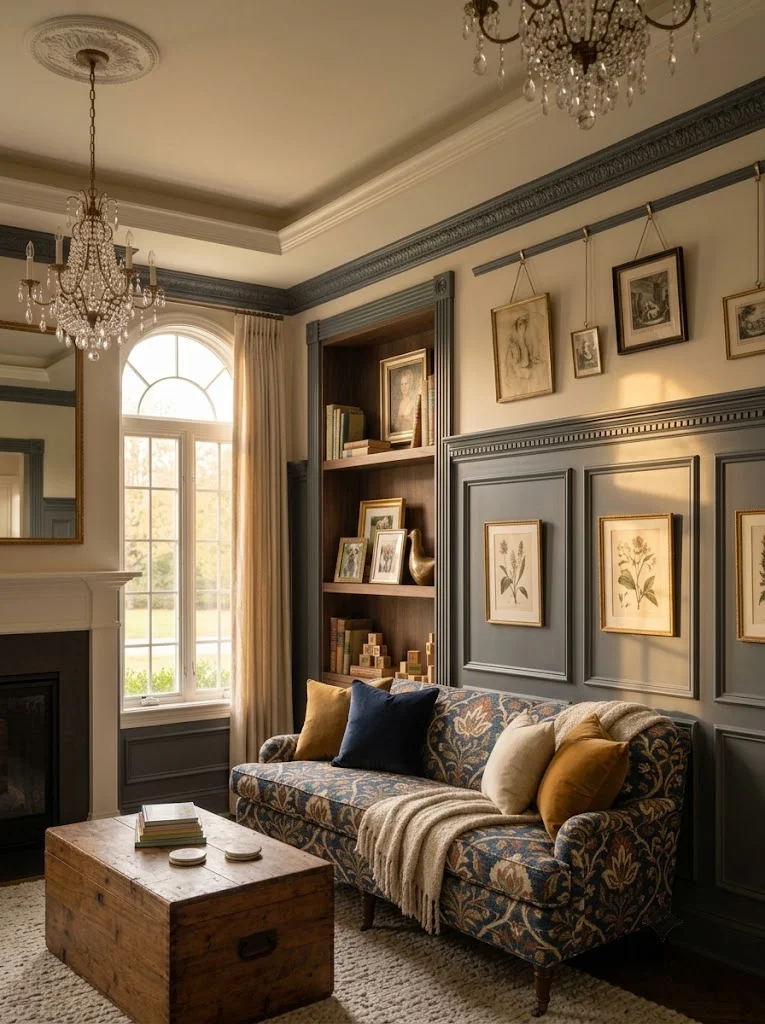
Best for: period or traditional homes with existing trim details. Budget tier: low, if preserving existing features ($50-150 for paint.)
15. Balance Formality With One Relaxed Element
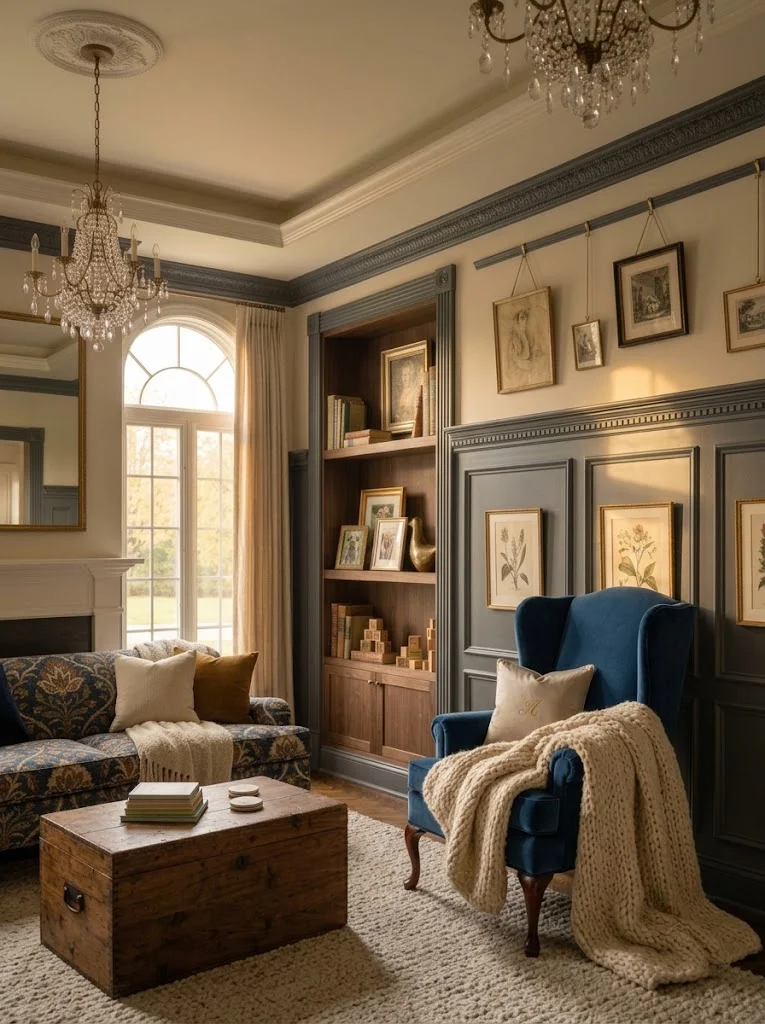
Even a more formal front room benefits from one genuinely comfortable, relaxed element — a soft throw, an oversized cushion, a well-worn reading chair — so the space doesn’t feel entirely off-limits for actual daily use.
Best for: formal front rooms wanting to remain genuinely livable. Budget tier: low ($30-100.)
My Professional Guide to Decorating a Front Room
I always start by clarifying the room’s real function before anything else — a front room trying to be both a formal guest space and an everyday family room often ends up serving neither well. Decide which purpose matters more, and let that decision guide fabric choices, layout, and how much “precious” decor to introduce.
From there, I work with the room’s existing architecture rather than against it. Bay windows, fireplaces, and original trim are common in the older or traditional homes where “front room” is the standard term, and these features are genuinely difficult to replicate if ignored or covered — they’re usually worth designing around as focal points.
Finally, I’d prioritize the first-impression details specifically if this room is guest-facing: layered lighting, a curated (not cluttered) display of personal items, and a clear walking path from the entrance. These matter disproportionately more here than in a purely private family space.
Conclusion
A front room’s decor should follow directly from its actual role in your home — formal and guest-facing, or the household’s primary everyday living space. Work with existing architectural features like a fireplace or bay window as focal points, solve for traffic flow near entrances, and layer in personal touches thoughtfully rather than treating the room as a generic living space. Get the room’s purpose clear first, and the styling decisions become considerably easier.
Frequently Asked Questions
What’s the difference between a front room and a living room?
In many homes these terms are used interchangeably, but in some layouts — particularly older or period homes — the front room refers specifically to a more formal room near the entrance, distinct from a separate family or living room used for everyday relaxing.
How do I decorate a small front room?
Prioritize multi-functional furniture, a well-proportioned rug to define the space, and a restrained color palette — the same principles that apply to any small living room, with extra attention to traffic flow if the room sits near an entrance.
How can I make my front room feel welcoming for guests?
Layered lighting (avoiding a single harsh overhead fixture), a curated rather than cluttered display of personal items, and a clear walking path from the entrance all contribute to a front room feeling genuinely welcoming on first impression.
Should a front room be formal or casual?
This depends on how your household actually uses the space — a front room serving as the primary everyday living area should prioritize comfort and durable fabrics, while one used mainly for guests can lean more formal and curated.