10 Backyard Fence Landscaping Ideas for Style and Privacy
The most effective backyard fence landscaping ideas combine one privacy element (evergreen shrubs, bamboo, or climbing vines) with one visual layer (flower beds, lighting, or a painted backdrop). Climbing vines on a trellis and layered evergreen shrubs are the two highest-impact, lowest-cost options for softening a plain fence while adding real privacy. Staggering plant heights rather than lining everything up in a single row creates a more natural, professionally landscaped look
I’ve landscaped a lot of fence lines, and the ones that actually look designed — not just planted — always combine height variation with one consistent material or color thread running the length of the fence. Below are 10 backyard fence landscaping ideas, each with materials, exact steps, a styling tip, and a ready-to-use image prompt so you can visualize the result before you dig a single hole.
. Climbing Vines for Natural Charm
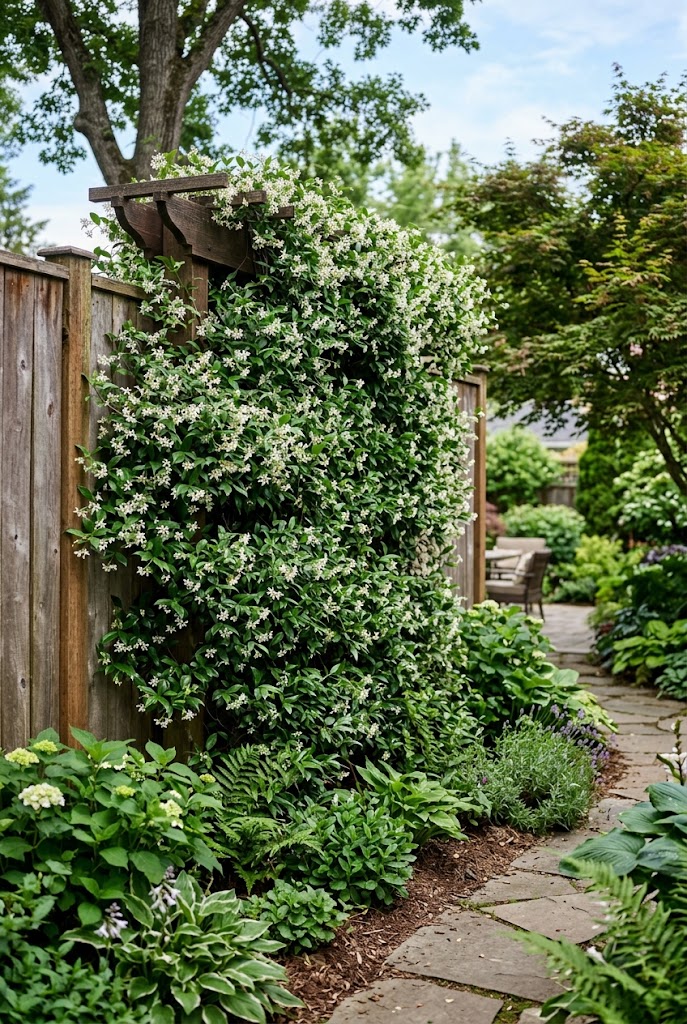
Climbing vines are one of the fastest ways to soften a bare fence, since they use vertical space rather than ground area and fill in within a single growing season with the right species.
What You’ll Need: climbing perennial (clematis, jasmine, or ivy), a trellis or wire guide system, mulch, all-purpose fertilizer.
Quick How-To: Install a trellis or wire guide against the fence before planting. Plant the climber at the base and loosely tie the first growth to the guide to establish direction. Mulch around the base to retain moisture.
Styling Tip: Choose a perennial climber for low-maintenance, multi-year coverage rather than replanting annuals each season.
2. Tall Ornamental Grasses
Ornamental grasses add movement and softness along a fence line with very little ongoing maintenance once established, and they work well even in narrow planting strips.
What You’ll Need: ornamental grass varieties (feather reed grass, fountain grass), compost, mulch.
Quick How-To: Space grass clumps according to their mature spread (typically 18–24 inches apart), plant with compost mixed into the soil, and mulch around the base. Cut back to a few inches above ground each late winter.
Styling Tip: Mix two or three grass heights along the fence rather than a single uniform variety for a layered, professionally landscaped look.
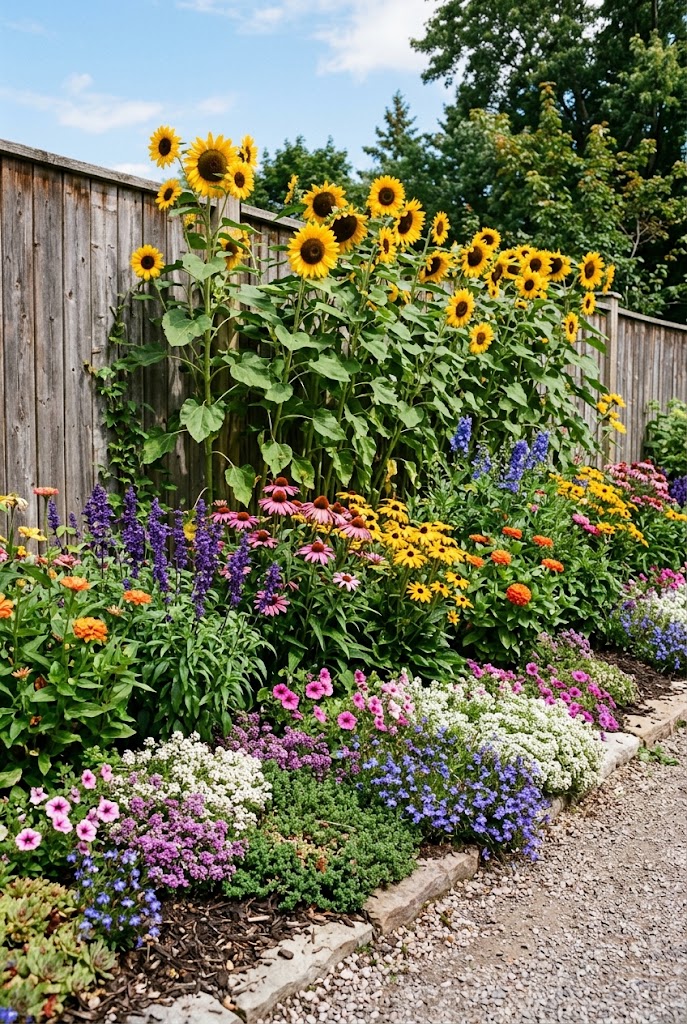
3. Layered Flower Beds
A flower bed built directly against the fence transforms it into a colorful backdrop, and layering by height creates the kind of depth that reads as intentional landscaping rather than a random planting.
What You’ll Need: tall back-row flowers (hollyhocks, sunflowers), mid-height plants (coneflower, salvia), low-growing groundcover (creeping phlox, sedum), compost.
Quick How-To: Plant tallest flowers directly against the fence, mid-height varieties in a middle row, and groundcover along the front edge. Work compost into the soil before planting each row.
Styling Tip: Repeat two or three colors throughout the bed rather than planting every available color — repetition reads as designed, not scattered.
4. Evergreen Privacy Shrubs
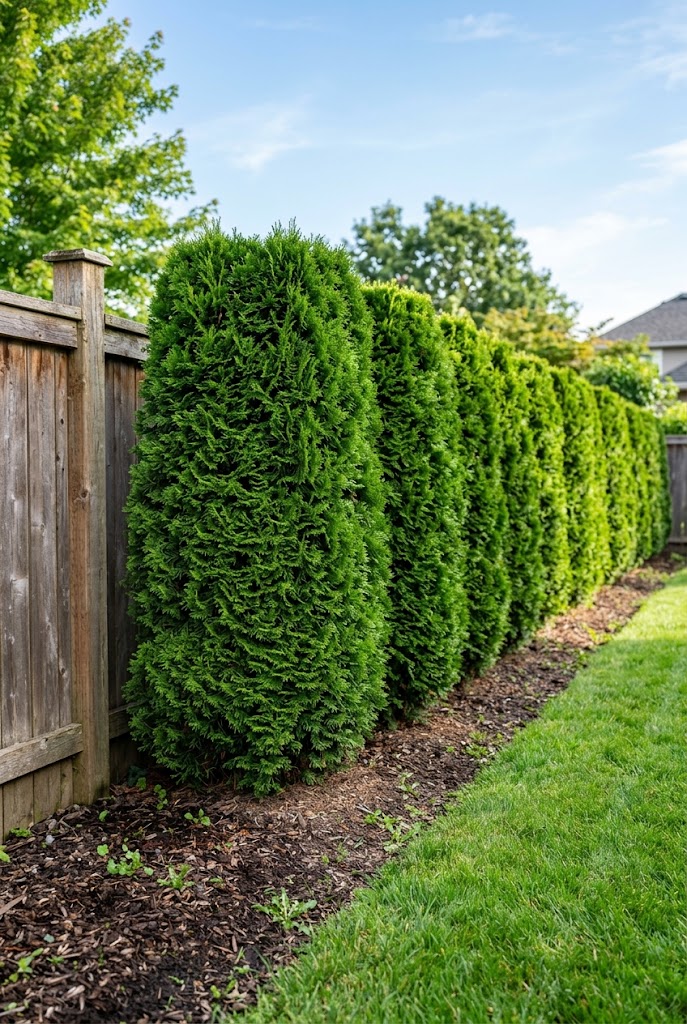
Evergreen shrubs are the most reliable option for year-round privacy, since they hold their foliage through winter when most other plants have died back, and they also help buffer sound from neighboring yards.
What You’ll Need: evergreen shrubs (boxwood, privet, or arborvitae), compost, mulch, hedge trimmers.
Quick How-To: Space shrubs according to their mature width to avoid future overcrowding. Plant with compost, mulch around the base, and trim to a consistent height and shape once established.
Styling Tip: Stagger shrubs in a slightly zigzag line rather than a perfectly straight row for a more natural, layered privacy screen.
5. Vertical Hanging Planters
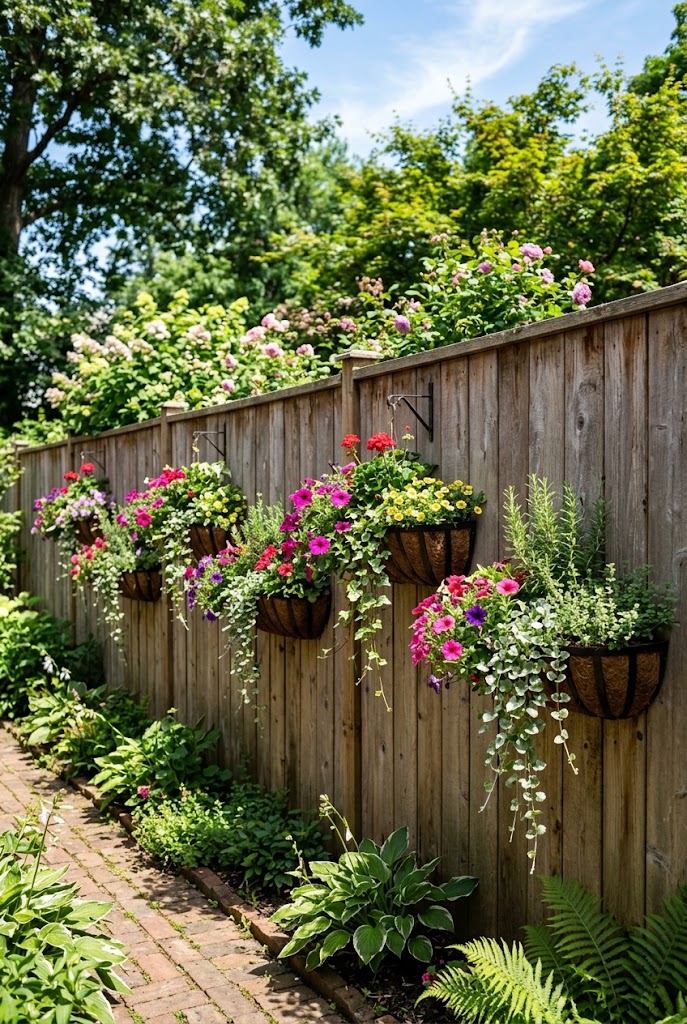
Hanging planters mounted directly on the fence add greenery without using any ground space at all, making this the best option for small yards or fence lines with limited soil access.
What You’ll Need: fence-mounted hanging planter brackets or pockets, potting soil, flowers, herbs, or trailing plants.
Quick How-To: Install brackets or fabric planter pockets at even intervals along the fence. Fill with potting soil and plant trailing flowers, herbs, or succulents depending on sun exposure.
Styling Tip: Water hanging planters more frequently than ground plants — they dry out faster due to increased air exposure on all sides.
6. Fence Lighting Accents
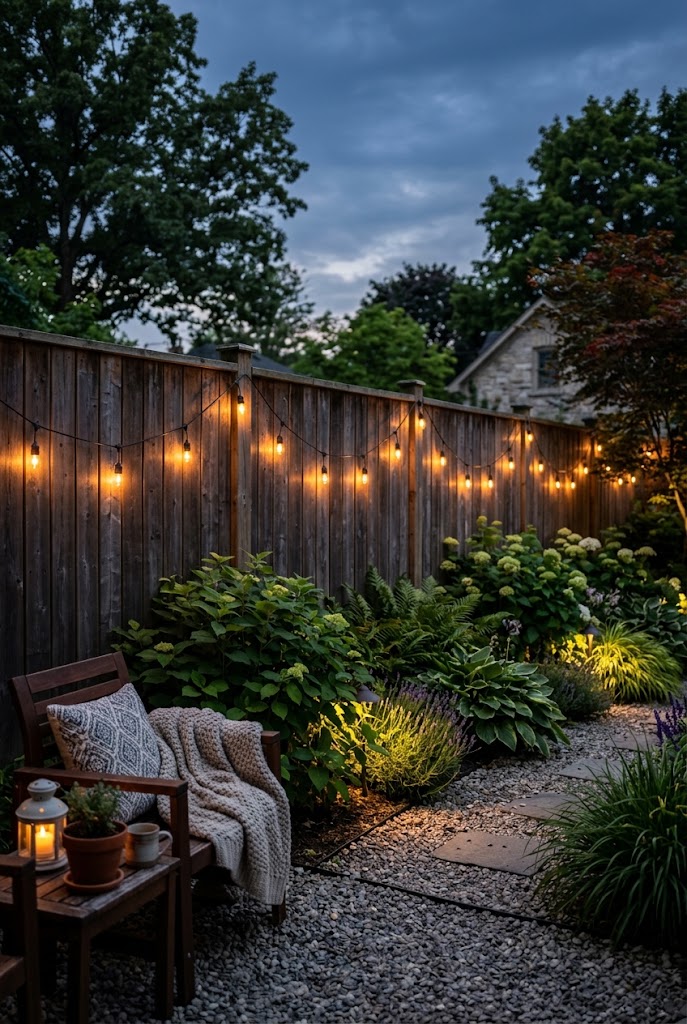
Adding lighting along the fence extends the usable hours of your backyard and highlights your landscaping after dark, turning a daytime-only feature into an evening focal point too.
What You’ll Need: solar or low-voltage string lights, spotlights or uplights, mounting clips or stakes.
Quick How-To: Decide whether to highlight plants (low-mounted lights pointing up into foliage) or wash the fence itself in light (higher-mounted, angled lights). Install according to your chosen effect, spacing evenly along the fence length.
Styling Tip: Choose warm-toned bulbs (2700K–3000K) over cool white for a cozier backyard atmosphere.
7. Rock Border With Low Plants
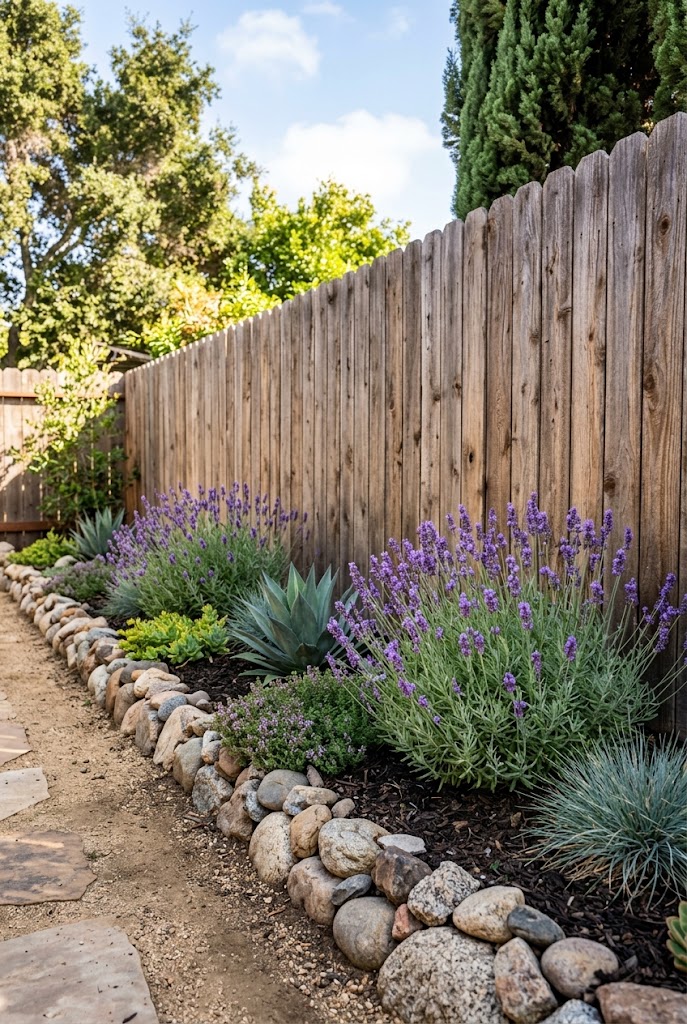
A rock border at the base of the fence creates a clean, defined edge that also helps prevent weeds and grass from creeping into the planting area, keeping maintenance lower long-term.
What You’ll Need: landscaping rocks or river stones in mixed sizes, landscape fabric, drought-tolerant low plants (lavender, sedum).
Quick How-To: Lay landscape fabric along the fence base first to suppress weeds. Arrange rocks in mixed sizes on top, then plant drought-tolerant low-growers through cut openings in the fabric.
Styling Tip: Mix at least two rock sizes and one or two tones for a natural look — uniform, single-size rock reads as more artificial.
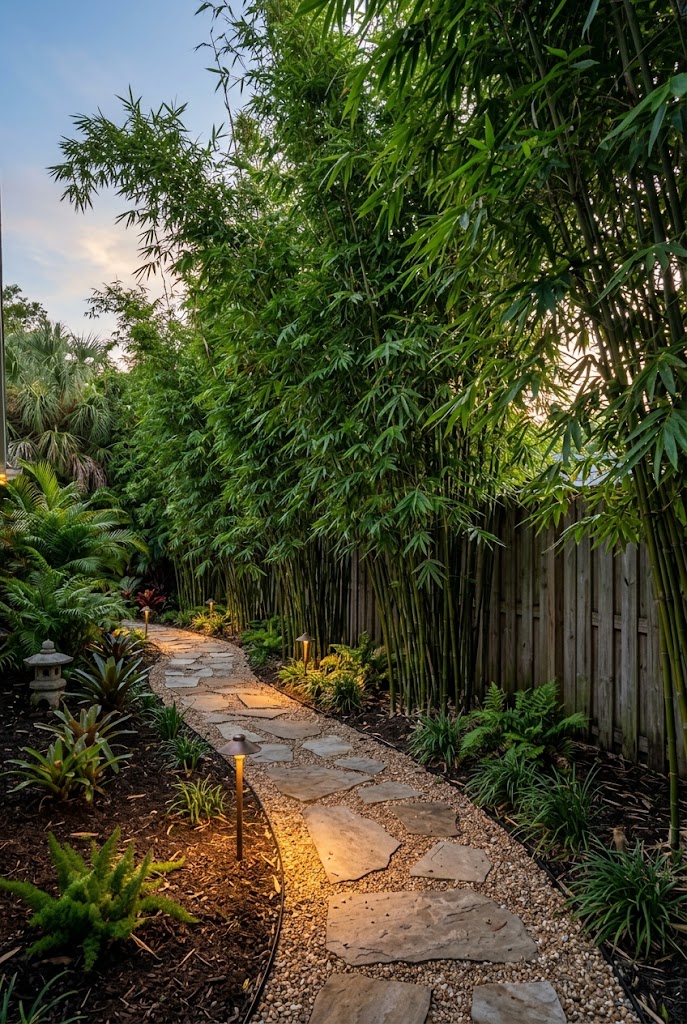
8. Bamboo Privacy Screen
Bamboo grows quickly and creates a dense, tropical-feeling privacy screen faster than most shrubs, making it a strong choice when you need coverage sooner rather than after several growing seasons.
What You’ll Need: clumping bamboo variety (not running bamboo), root barrier if planting near property lines, compost, mulch.
Quick How-To: Choose a clumping variety specifically to avoid invasive spreading. Install a root barrier if planting near a property line, then plant with compost and mulch heavily around the base.
Styling Tip: Always confirm “clumping” rather than “running” on the plant tag — running bamboo can spread aggressively and become difficult to control.
9. Painted Fence Backdrop
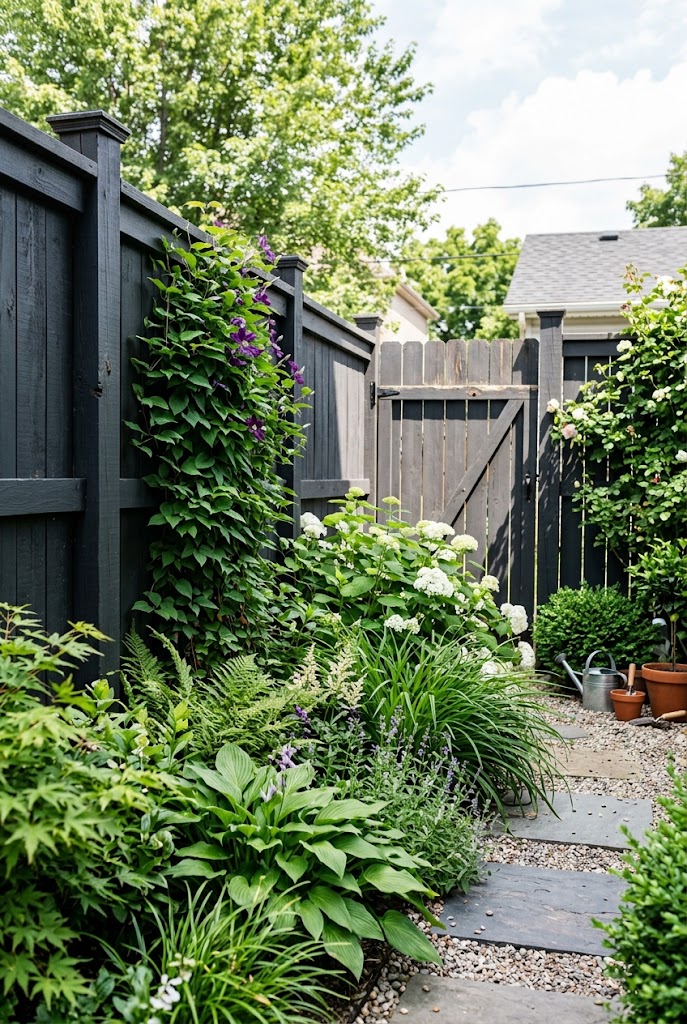
Painting the fence itself — a solid color, an ombre gradient, or a simple mural — turns it into a design feature on its own, which is especially effective for plain wood or vinyl fences that don’t yet have any plantings established.
What You’ll Need: exterior-grade paint or stain, painter’s tape, brushes or a sprayer, drop cloths.
Quick How-To: Clean and lightly sand the fence surface if needed. Apply painter’s tape for any pattern or color-blocking, then apply paint in thin, even coats, allowing full drying time between coats.
Styling Tip: A deep charcoal or matte black fence makes surrounding greenery appear more vibrant by contrast — a popular technique in modern backyard design.
10. Vertical Pallet Herb Garden
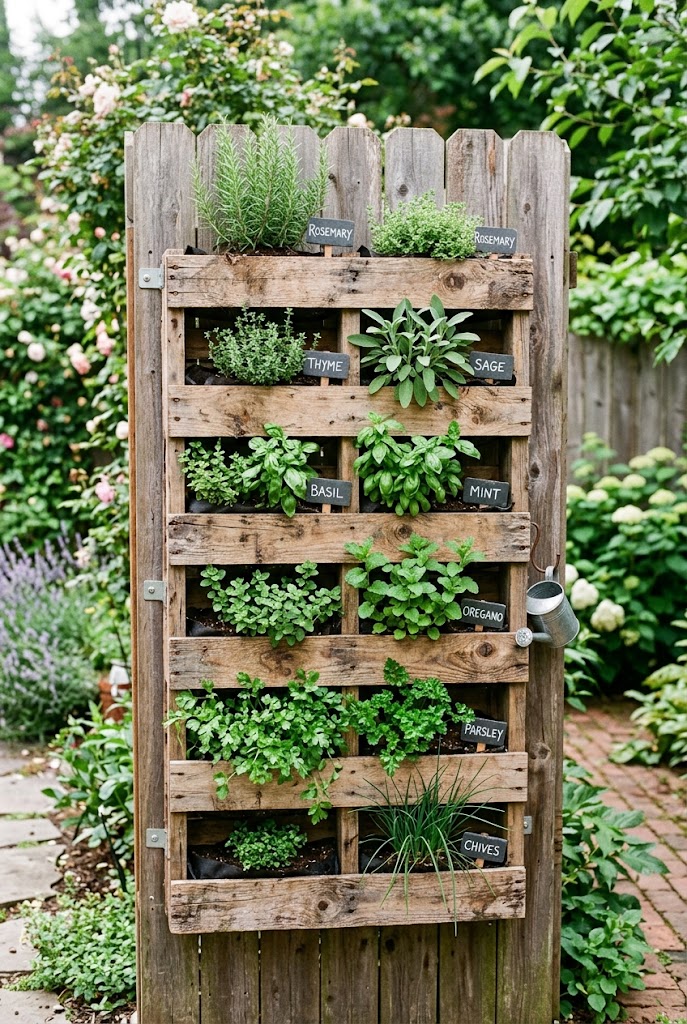
An upcycled wood pallet mounted against the fence and filled with herbs or succulents is a budget-friendly, functional landscaping addition that works especially well for small yards wanting an edible garden without dedicating ground space.
What You’ll Need: one wood pallet, landscape fabric, potting soil, herb or succulent starts, mounting brackets or fence screws.
Quick How-To: Line the back and bottom of the pallet slats with landscape fabric to hold soil in place. Fill each slot with potting soil and plant herbs or succulents. Mount securely against the fence at a comfortable height.
Styling Tip: Let the pallet cure vertically (propped up) for a few days after planting before mounting — it helps the soil settle and reduces spillage during installation.
My Professional Guide
Budget Breakdown by Approach
- Budget Refresh: $30–$150 — hanging planters, rock border, a pallet herb garden
- Mid-Range Upgrade: $150–$500 — flower beds, ornamental grasses, fence lighting
- Full Privacy Landscaping: $500–$2,000+ — evergreen shrub rows, bamboo screening, professional installation
Matching Plants to Your Climate
Always confirm hardiness zone compatibility before choosing evergreens, bamboo, or perennial climbers — a plant that thrives in one region can struggle or fail entirely a few zones over, so check your local zone before purchasing.
Sunlight Mapping
Observe your fence line’s sun exposure across a full day before planting — a “sunny” fence in the morning can be shaded by midafternoon depending on nearby trees or structures, which affects which plants will actually thrive there.
Maintenance by Idea
Evergreen shrubs and bamboo need periodic trimming to control size; ornamental grasses need an annual cutback; rock borders and painted fences need the least ongoing maintenance of anything on this list.
Conclusion
A backyard fence doesn’t have to stay a plain boundary line — combining one privacy element with one visual layer, and staggering heights rather than planting in a single straight row, is what turns a basic fence into a designed feature. Start with the lowest-effort option that matches your yard’s sun exposure and climate zone, then build outward with additional layers as time and budget allow.
FAQ
What’s the fastest way to add privacy along a backyard fence?
Bamboo (clumping varieties) and fast-growing climbing vines on a trellis provide the quickest visible coverage, often within a single growing season, compared to slower-growing evergreen shrubs.
How do I landscape a fence line without much sunlight?
Choose shade-tolerant options like ivy, hostas, or ferns rather than sun-dependent flowering plants, and confirm each plant’s light requirements before purchasing.
What plants work best for a low-maintenance fence line?
Ornamental grasses, sedum, and lavender are among the lowest-maintenance choices, requiring minimal watering and only an annual trim once established.
Can I landscape a chain-link fence to make it more attractive?
Yes — climbing vines, hanging planters, or a lattice panel attached to the chain-link are all effective ways to soften and add privacy to a chain-link fence.
How far apart should I plant shrubs along a fence for privacy?
Space shrubs according to their mature width listed on the plant tag, typically 2–4 feet apart for most evergreen privacy varieties, to allow for full growth without overcrowding.
Is bamboo a good choice for fence privacy landscaping?
Yes, as long as you choose a clumping (not running) variety and install a root barrier if planting near property lines, since running bamboo can spread aggressively.