Living Room Wall Decor Ideas: 12 Ways to Transform a Blank Wall
I’ve styled enough living room walls to know that the best results come from matching the decor type to both the wall’s scale and how the room actually functions — a wall behind a reading chair calls for something different than a wall the whole room faces. Below are 12 living room wall decor ideas, each with real sizing and placement guidance to help a blank wall become the room’s actual focal point.
The Core Rules
Hanging height: Center the main visual element at eye level, roughly 57-60 inches from the floor, or 6-8 inches above furniture when hanging above a sofa or console.
Scale first: Choose decor sized to the wall and furniture below it — a single piece should be roughly two-thirds the width of the sofa or console it’s paired with, while a full wall treatment (paneling, wallpaper) should cover the wall’s natural boundaries rather than stopping short.
One clear approach per wall: Combining several bold ideas (a metal sculpture, a gallery wall, and vibrant wallpaper) on the same wall competes for attention rather than reading as intentional — pick one primary direction and let secondary elements support it.
1. Oversized Wall Art
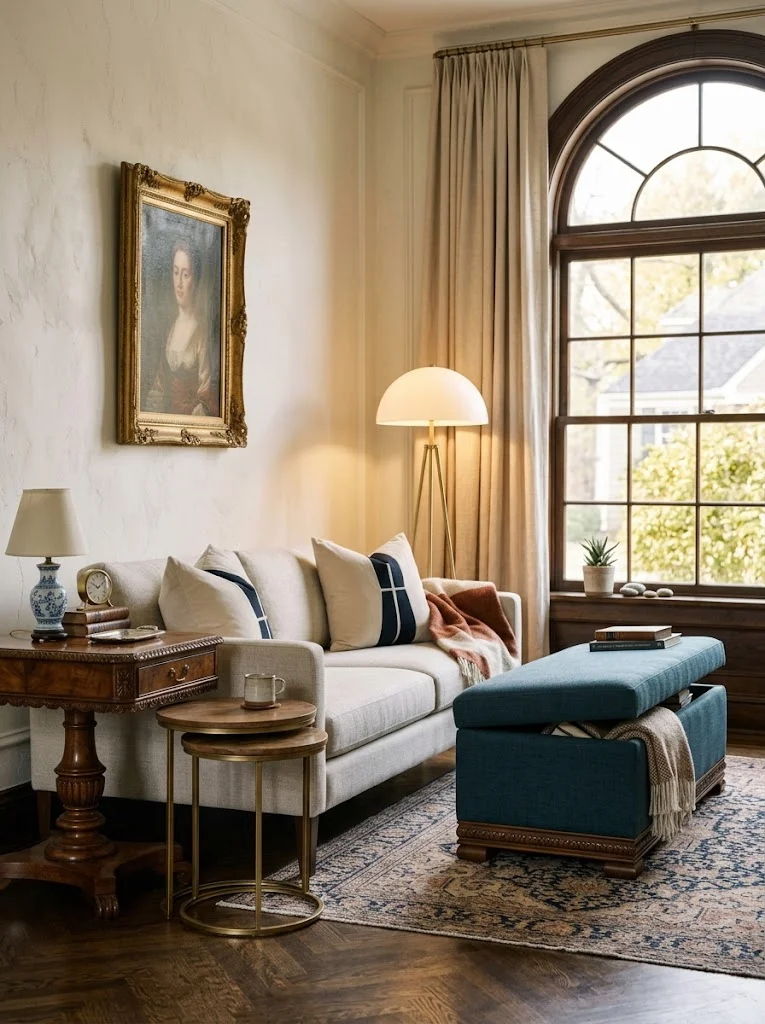
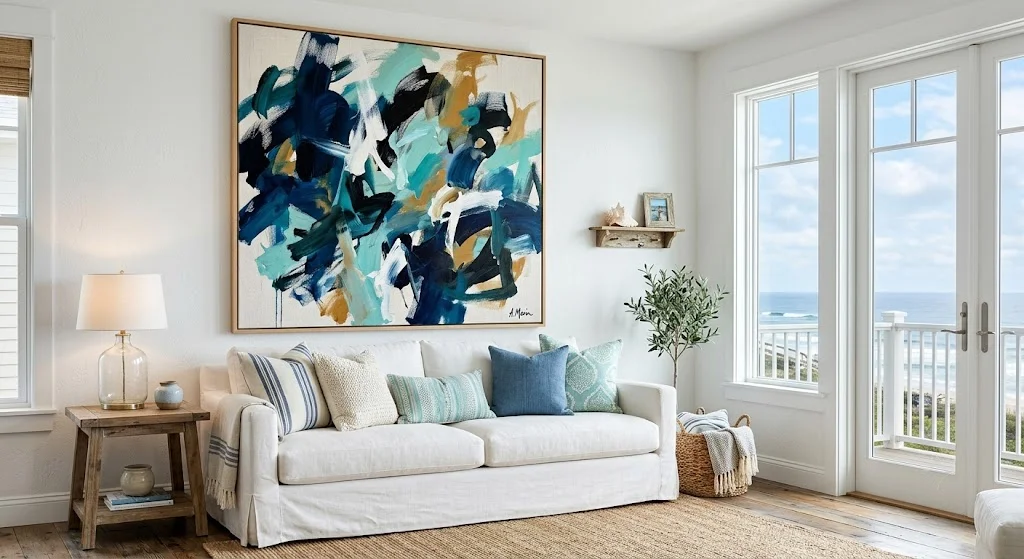
A single large photo or painting instantly becomes a room’s focal point, and works whether you choose a high-contrast piece that draws immediate attention or a more understated one that lets the room’s other features shine.
I’d size the piece to roughly two-thirds the width of the sofa or furniture grouping it’s paired with, and confirm mounting hardware is rated for the frame’s actual weight before hanging.
Budget tier: mid-to-high ($100-500+ depending on size and medium.)
2. Curated Gallery Wall
Grouping several pieces — art, mirrors, small shelves, wall sculptures — into one arrangement adds personality and visual rhythm that a single piece can’t achieve on its own.
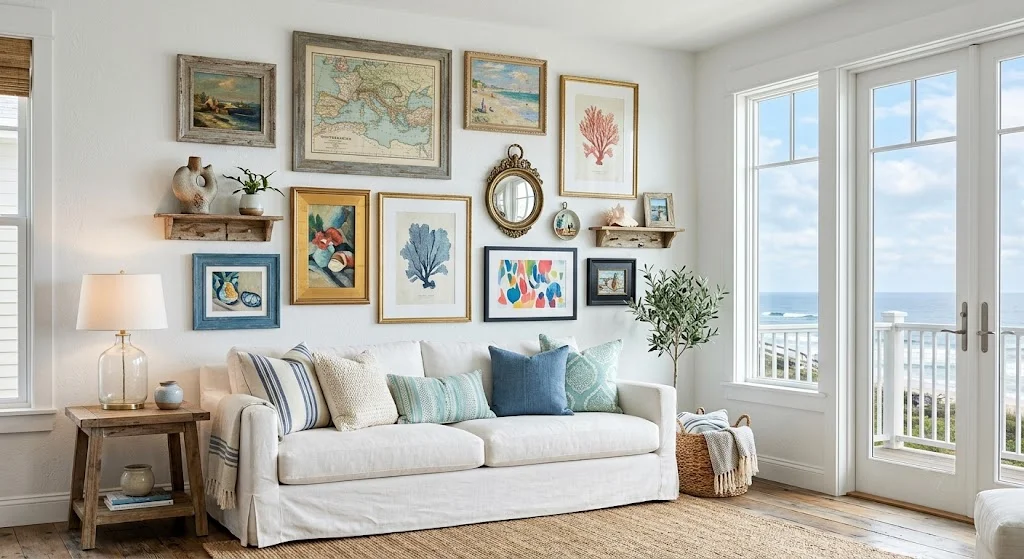
I’d lay the full arrangement on the floor first, keeping 2-3 inches of spacing between individual pieces, and choose either a matched color palette or a consistent frame finish to keep an otherwise eclectic mix feeling curated rather than random.
Budget tier: low-to-mid, since it mixes well with thrifted finds ($75-250.)
3. Decorative Mirrors
A mirror fills wall space while making the room feel more open, reflecting light and adding depth in a way flat art can’t. A single oversized mirror reads as an elegant statement, while several smaller mirrors clustered together add movement and sparkle.
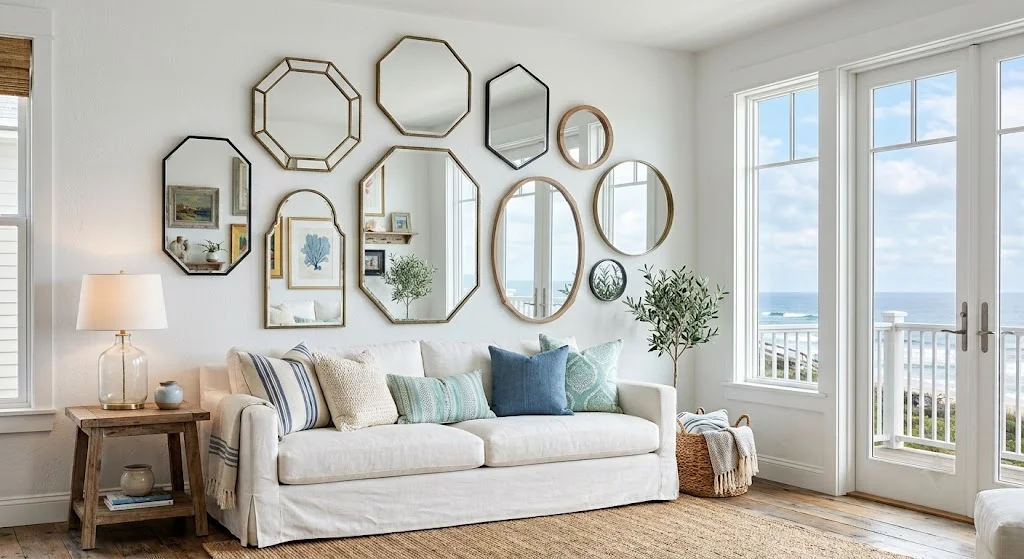
I’d position mirrors to catch natural light from a nearby window specifically, and keep one consistent frame finish across a cluster even while varying the shapes.
Budget tier: mid-to-high ($100-400+.)
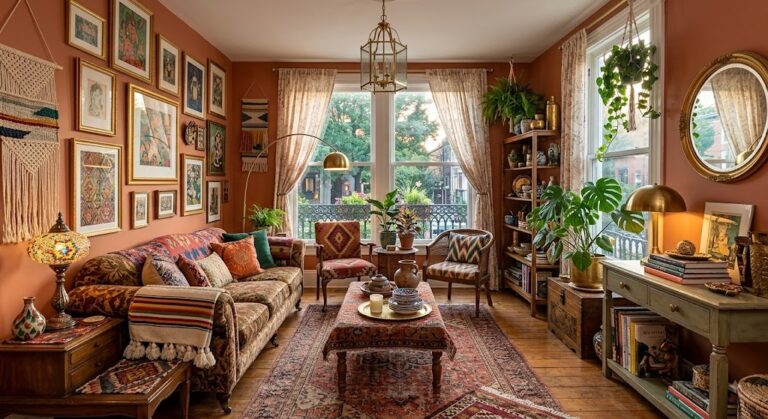
4. Boho Wall Hangings
A macrame tapestry or textural woven wall hanging adds a relaxed, bohemian layer to a living room, and typically comes in neutral, taupe-leaning tones that pair easily with almost any existing color scheme.
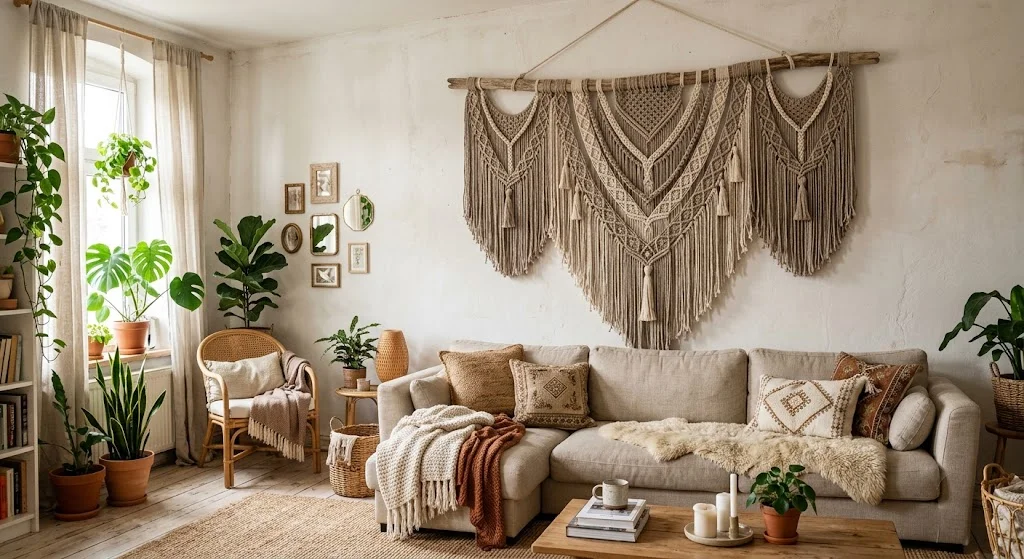
I’d size the hanging generously for a tall wall — a piece that’s too small tends to get visually lost rather than reading as a genuine focal point.
Budget tier: low-to-mid ($40-150.)
5. Sculptural Metal Wall Accents
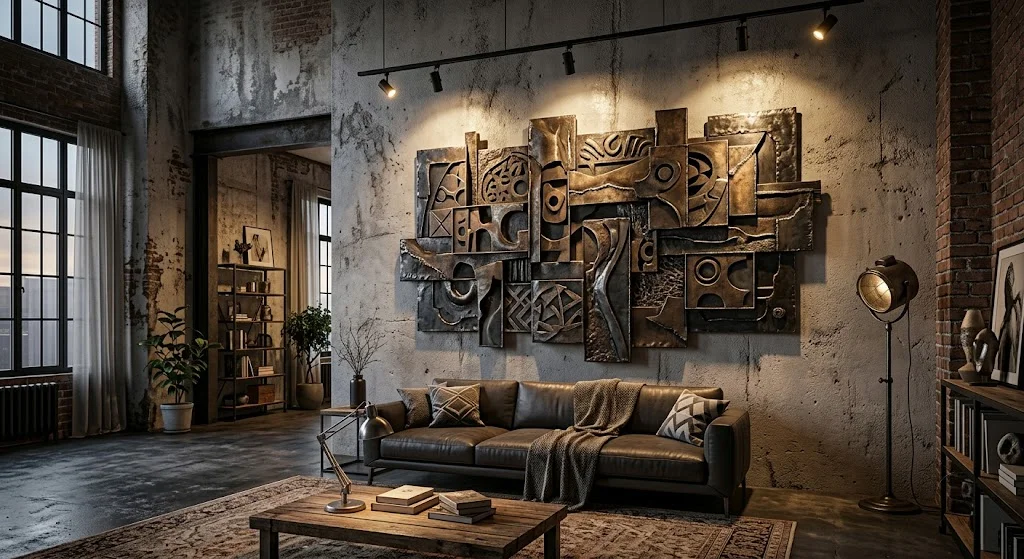
Metal wall art introduces dimension that a flat print or painting can’t, whether you choose a warm gold finish for a glamorous feel or raw, unfinished metal for an industrial edge.
I’d confirm the mounting hardware matches the piece’s actual weight here specifically, since dimensional metal art is often heavier than a comparably sized framed print.
Budget tier: mid-to-high ($100-350+.)
6. Wall-Mounted Shelving
Floating shelves combine decoration with genuine storage and display space, letting you style a wall with books, plants, and personal objects rather than committing to a single fixed piece.
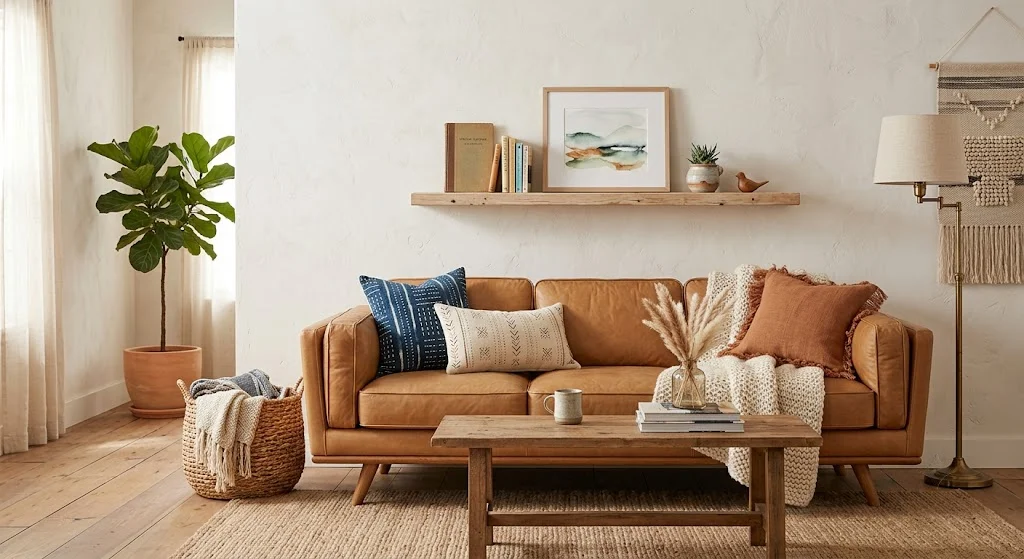
I’d space shelves 10-12 inches apart vertically for comfortable styling room, and confirm bracket weight ratings before loading shelves with books, which add up in weight faster than people expect.
Budget tier: mid ($75-250 depending on shelf material and quantity.)
7. Wall Planters and Greenery
Wall-mounted planters bring living color and texture to a living room wall, drawing the eye upward while filling the space with a genuinely natural element that static decor can’t replicate.
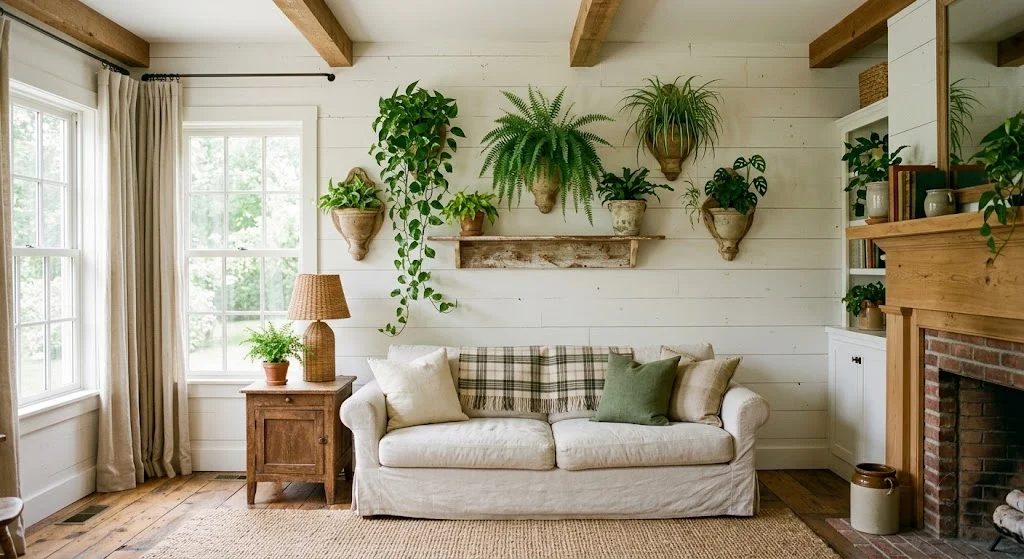
I’d choose low-maintenance plants (pothos, philodendron) for wall-mounted applications specifically, since they’re harder to water and monitor than a floor or table plant, and confirm the wall gets adequate light for whatever you choose.
Budget tier: low-to-mid ($40-150.)
8. Oversized Statement Clock
A large wall clock is both decorative and genuinely functional, and the simple, high-contrast lines of a clock face create a bold statement piece that suits nearly any home style.
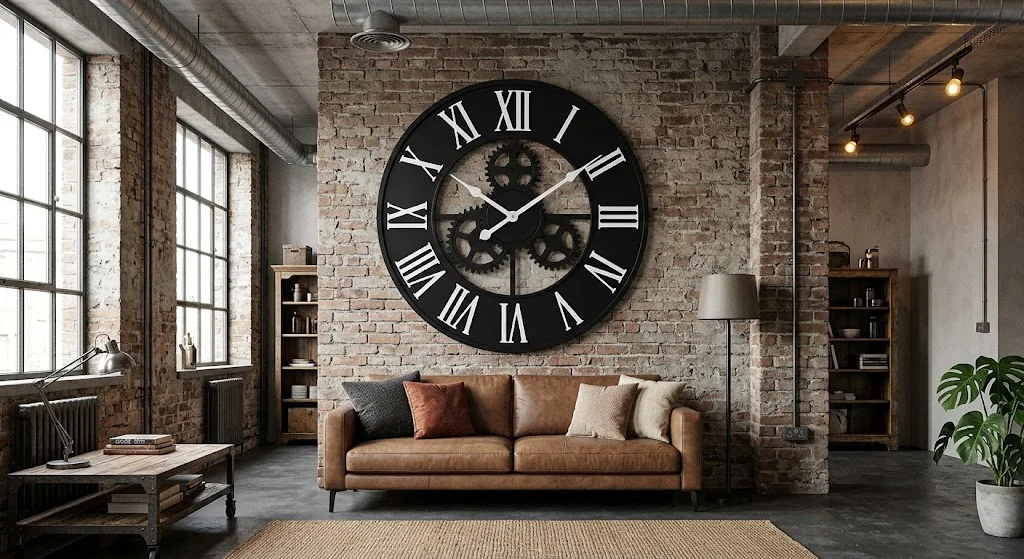
I’d avoid pairing an oversized clock with a busy gallery wall on the same surface, since the clock’s shape and function already carry significant visual weight on their own.
Budget tier: low-to-mid ($50-200.)
9. Wall Sconces for Layered Light
Sconces add function and warmth simultaneously — flanking a piece of art, framing a window, or brightening a dark corner that overhead lighting alone doesn’t reach well.
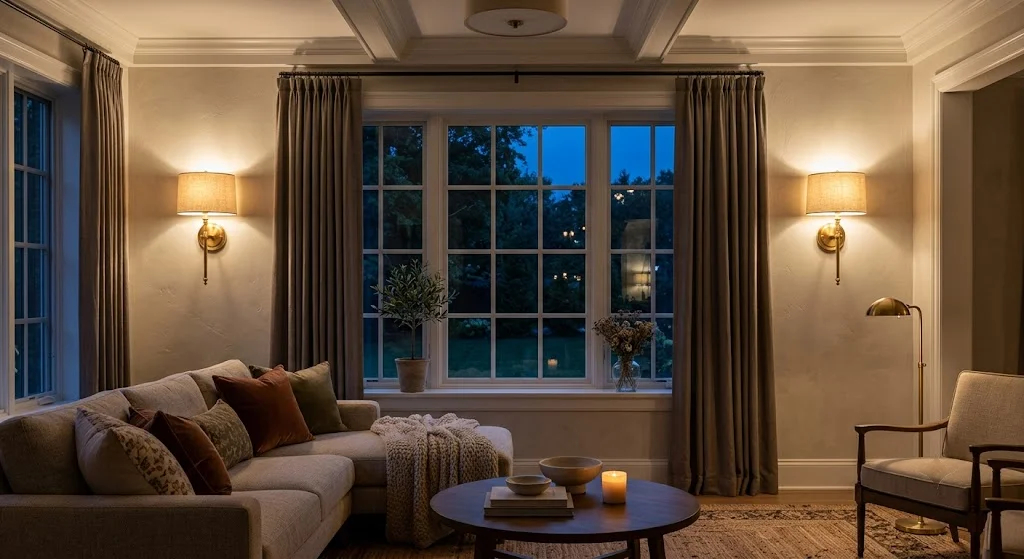
I’d choose warm white bulbs (2700-3000K) for this application, and position sconces to actually highlight nearby art or a reading chair rather than placing them purely for symmetry.
Budget tier: mid ($100-350 for fixtures and installation.)
10. Functional Wall Storage
Turning a blank wall into stylish, functional storage — for hats, bags, or other frequently used items — works especially well in a living room that doubles as an entryway-adjacent space.
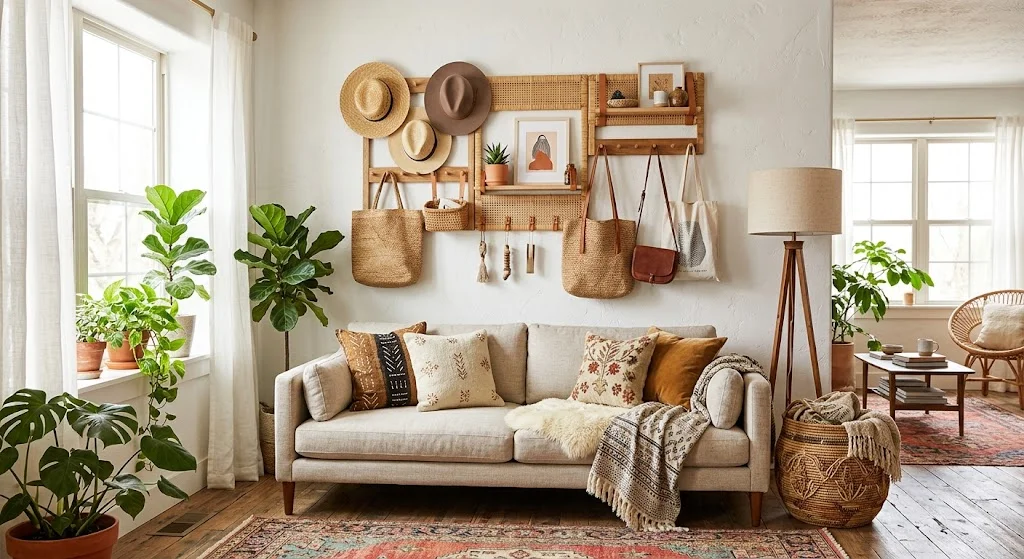
I’d match the organizer’s material to the room’s overall style (sleek metal for modern spaces, faded copper or wicker for rustic ones) so the storage reads as intentional decor rather than a purely utilitarian add-on.
Budget tier: low-to-mid ($40-150.)
11. Floor-to-Ceiling Bookcase
A large bookcase makes genuine use of empty wall space while adding real storage capacity, and can read as either a polished, color-coordinated display or a cozy, eclectic collection depending on how you style it.
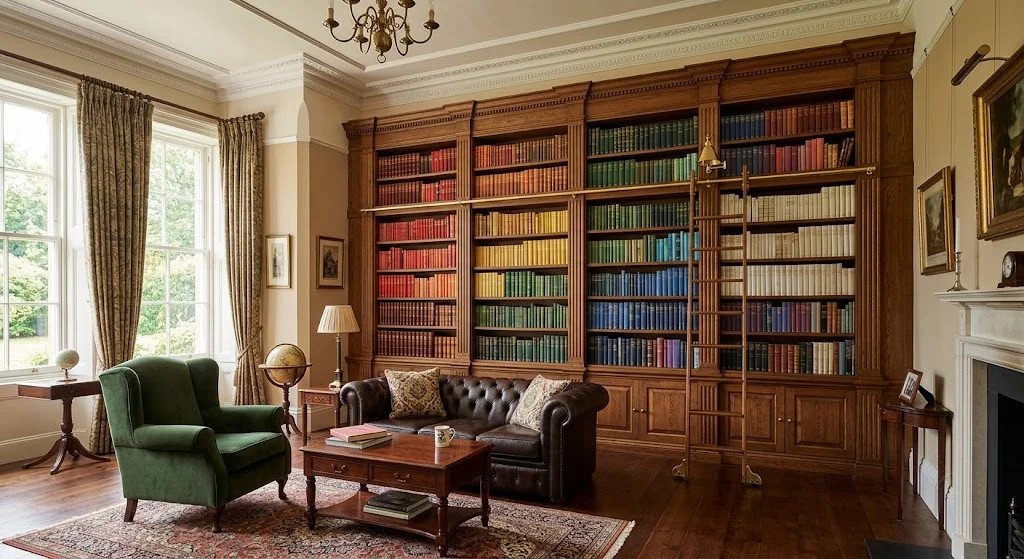
I’d mix practical storage (books) with decorative breaks (a vase, small art, plants) at roughly a 70/30 ratio, so the bookcase reads as styled rather than purely functional shelving.
Budget tier: high, especially for built-in versions ($400-1,500+, lower for freestanding units.)
12. Wallpaper or Wall Paneling
Wallpaper — whether a realistic brick pattern for an industrial feel or a bright botanical print for a bolder statement — transforms a blank wall into the room’s most engaging feature. Wall paneling (board-and-batten or wainscoting) achieves a similar dimensional effect through texture rather than pattern.
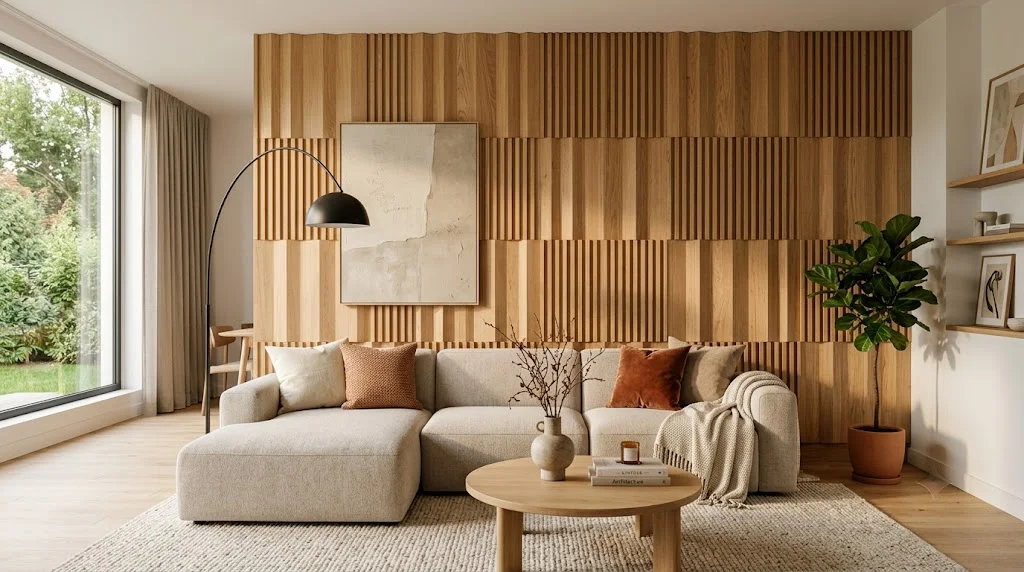
I’d choose wallpaper specifically when you want color or pattern to carry the wall’s visual interest, and paneling when you want dimension and texture without needing pattern — both work especially well behind a sofa or as a fireplace backdrop.
Budget tier: mid-to-high ($150-600+ depending on material and wall size.)
My Professional Guide to Choosing Living Room Wall Decor
I always start by identifying the wall’s role in the room — is it the main focal point everyone faces, or a secondary wall people glance at while doing something else? A focal wall can support a bolder, larger-scale choice, while a secondary wall often works better with something quieter, like shelving or a smaller grouped display.
From there, I check the practical requirements — mounting weight, hanging height, and spacing — before falling in love with a specific piece, since these details determine whether the finished result actually looks intentional once installed.
Finally, I’d choose one clear decor direction per wall rather than combining several bold ideas at once. A living room can absolutely support one confident choice on each of its walls; it rarely looks as polished trying to combine multiple competing statements on a single surface.
Conclusion
A blank living room wall is one of the easiest opportunities to add real personality and function to a home. Whether you choose a single oversized piece, a curated gallery wall, functional shelving, or a full wallpaper treatment, matching the decor’s scale to the wall and committing to one clear direction will do more for the finished look than any single expensive piece alone.
Frequently Asked Questions
What is the best wall decor for a large living room wall?
Oversized art, a full gallery wall, or a large mirror all work well for genuinely large walls, since they carry enough visual weight to fill the space without needing multiple competing elements.
How high should living room wall art be hung?
Center the piece at eye level, roughly 57-60 inches from the floor, or 6-8 inches above furniture when hanging art above a sofa or console.
Should wall decor match my living room furniture?
It doesn’t need to match exactly, but coordinating colors, materials, or finishes with nearby furniture creates a more cohesive look than choosing wall decor in complete isolation.
Is wallpaper or paint better for a living room accent wall?
Wallpaper adds pattern and color in one step and works well for a bold statement, while paint paired with molding or paneling adds dimension through texture rather than pattern — the right choice depends on whether you want color or texture to carry the visual interest.
Note: This article covers similar ground to a broader wall-decor guide already on this site. Before publishing, I’d recommend choosing one as the primary target for “living room wall decor” and treating the other as a more specific sub-topic (for example, this one focused on decor types, the other on hanging/spacing rules) to avoid both competing for the same search term.